Valencia Travel Guide: Family Routes from the Historic Centre to the Coast
A family route through Valencia’s old town, Turia Gardens and the City of Arts and Sciences, with our map, photos and places we ate.
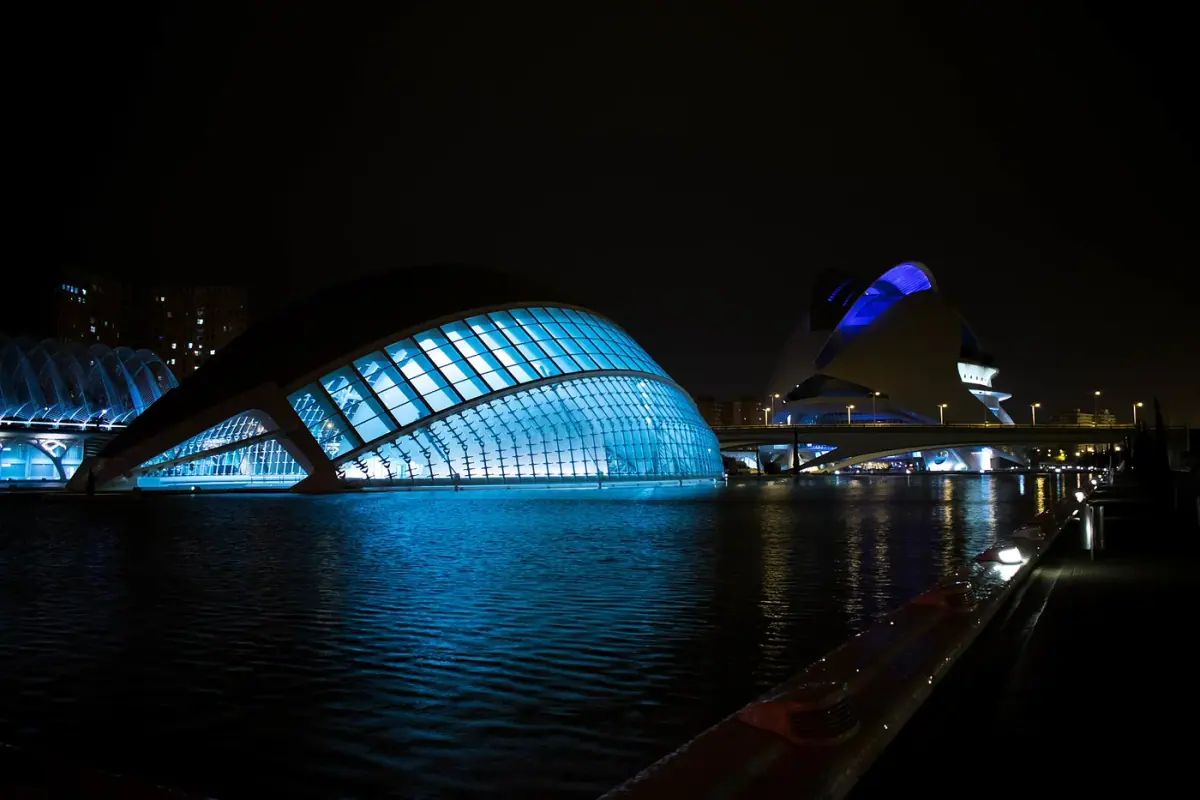
Valencia brings a historic centre, contemporary architecture and the seaside together in one city. We visited for a day from Madrid, but fitting every marker on our map into one day is not realistic. This guide helps you make one main choice for a day trip and explore other areas on separate days if staying longer.
In Ciutat Vella, the Silk Exchange, cathedral and old city gates form nearby clusters. El Carmen’s museums suit a quieter, content-focused outing. Turia’s former riverbed is a green backbone from the centre towards contemporary architecture; you need not walk the whole park. Considering the City of Arts and Sciences and the coast separately from a museum day makes a more flexible family plan.
The stops below come from our own map. We combined two Malvarrosa markers and treat Patriarca’s museum and church together because they describe one complex. The food layer’s three businesses have a separate section. Choose places using photographs, location links and visit summaries to build your own day.
Before you go: key notes
Can you visit Valencia as a day trip from Madrid?
Yes; the high-speed train takes about two hours, and we also visited for a day from Madrid. Choosing either the historic centre or the City of Arts and Sciences makes a more comfortable pace in one day.
Is Valencia suitable for children?
With Europe’s largest aquarium, Oceanogràfic, the enormous Gulliver playground in Turia Gardens and beaches, it is one of Spanish cities most loved by families.
What should you eat in Valencia?
Paella is a must in its birthplace; horchata with fartons makes a sweet break distinctive to Valencia.
Plan at a family pace: The days below are suggested itineraries based on the locations on the map. Shorten the route to suit your time inside museums and monuments; approximate visit lengths exclude queues and transport.
Suggested itinerary
| Duration | Route choice | How to simplify it |
|---|---|---|
| Day trip: history first | Silk Exchange → Central Market → Santa Catalina → Cathedral → Desamparados → Serranos → El Carmen | Choose one museum; do not make the coast and science complex compulsory that day. |
| Day trip: contemporary architecture with children | City of Arts and Sciences → Umbracle → nearby Turia section | Choose which building to enter ahead. Not every complex ticket covers the same things. |
| Extend to 2–3 days | El Carmen museums; Marina and Malvarrosa as a separate day/branch | Treat the coast separately from the historic centre. |
Tickets and tours: Timed tickets for popular places such as Oceanogràfic can sell out ahead. Browse Valencia tickets and tours on Tiqets to compare skip-the-line admission and guided tours.


Where to stay in Valencia with kids
We visited Valencia as a day trip by train from Madrid; for those who want to stay, here are the areas. With kids, where your hotel is decides how often you’ll say “shall we head back?”; being able to return for a midday break is a big relief.
| Area | Good for | Watch out | Stay |
|---|---|---|---|
| Ciutat Vella (old town) | Cathedral, market and old town within walking distance | Some streets are narrow and lively in the evening | See on Booking |
| Ruzafa | A neighbourhood with cafés, parks and a local feel | Lively on weekend nights | See on Booking |
| City of Arts and Sciences | Families who want to be near the Oceanogràfic and the Turia park | Bus or a long walk to the old town | See on Booking |
| Malvarrosa and Cabanyal | Staying by the sea | 20–30 minutes to the centre by tram or bus | See on Booking |
What we look at when choosing: A lift (does the stroller fit without folding?), being close to the train or metro, a family room for three or an apartment with a kitchen, and air conditioning in summer.
Accommodation: Compare hotels and apartments in Valencia on Booking.com; choosing free cancellation keeps your plans flexible.
Contents
- Before you go: key notes
- Where to stay in Valencia with kids
- Southern centre and Russafa
- Turia and contemporary architecture
- Historic centre: market and cathedral
- Silk Exchange (Llotja de la Seda)
- Valencia Cathedral
- González Martí Museum of Ceramics and Decorative Arts
- Patriarca Church and Museum
- Temple Church and Palace Surroundings
- Santos Juanes Church
- Desamparados Basilica
- Santa Catalina Church
- Central Market (Mercat Central)
- Ciutat Vella (Historic Centre)
- El Carmen and the northern centre
- Marina and the Mediterranean coast
- Food and drink stops
- Sources and visitor information
Southern centre and Russafa
Valencia Bullring (Plaça de Bous)
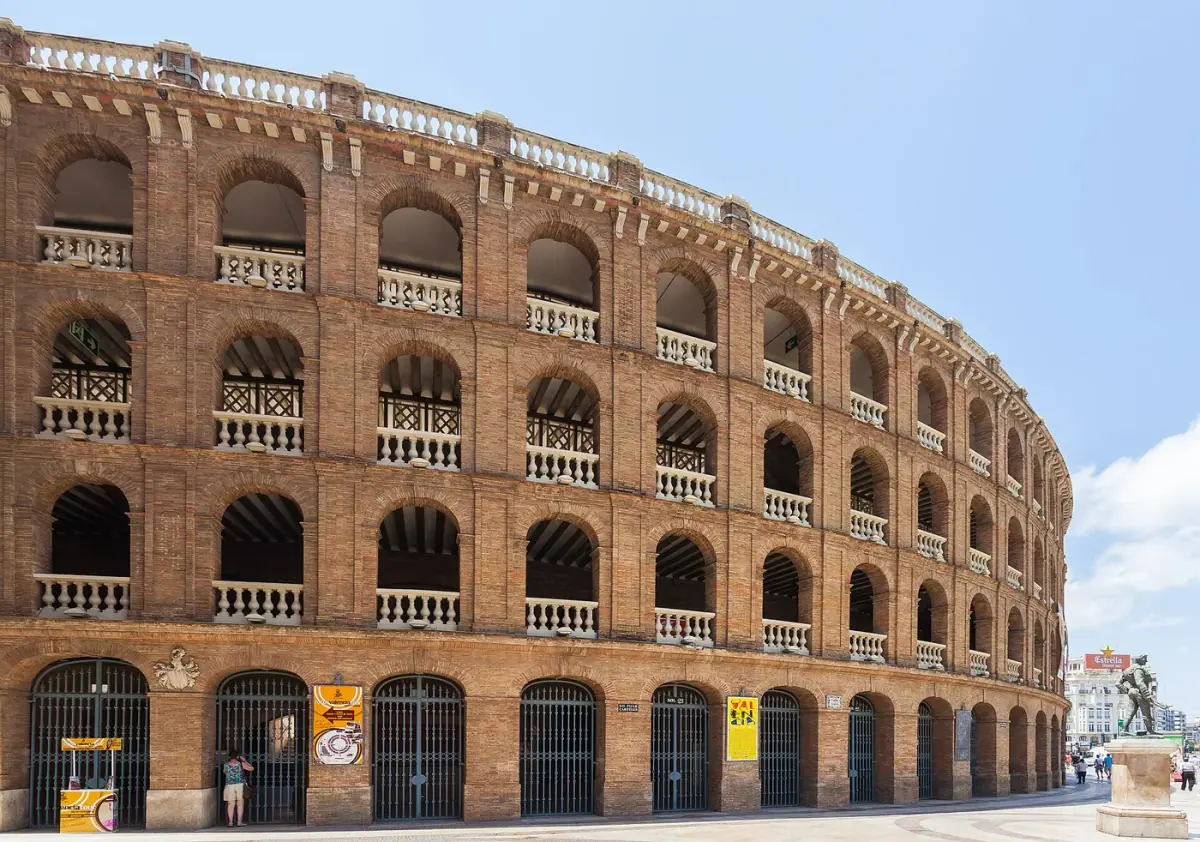

Plaça de Bous is a prominent southern-centre building with ringed façades and a large circular form. We discuss architecture and cultural history rather than recommending events. Viewing the exterior and entering the arena are different visits; event or tour access depends on the current programme.
Make the exterior a short family stop, considering the Bullfighting Museum as a separate content choice. Two map markers do not automatically cover the same visit. Information source.
Why go? Inspired by Roman amphitheatres, the brick arena beside the North Station is among the city’s most impressive nineteenth-century buildings. Its arcaded façade offers architectural spectacle immediately after leaving the train.
Visit summary
- Area: Southern centre and Russafa
- Highlight: Circular arena architecture
- Suggested visit length: About 15–25 minutes for the exterior
- Type of visit: Exterior view / interiors subject to programme
- Admission: Paid admission · can be visited with the Bullfighting Museum.
- Nearby map stops: Bullfighting Museum, Russafa Market (Mercado de Ruzafa)
- Open map: Search for this place on Google Maps
Bullfighting Museum
The Bullfighting Museum presents objects and history related to bullfighting traditions. Its content is a separate decision from viewing the arena exterior; this section does not recommend watching an event. Consider the subject and exhibits’ suitability for your child’s age beforehand.
Pair it geographically with the arena marker. If uninterested in this tradition, see the exterior architecture and continue to Russafa or the historic centre. Information source.
Why go? Costumes and documents explain bullfighting’s controversial but longstanding Spanish tradition. It is also a way to enter the arena and see the stands.
Visit summary
- Area: Southern centre and Russafa
- Highlight: Historical objects of bullfighting culture
- Suggested visit length: About 30–45 minutes
- Type of visit: Indoors
- Admission: Paid admission.
- Nearby map stops: Valencia Bullring (Plaça de Bous), Russafa Market (Mercado de Ruzafa)
- Open map: Search for this place on Google Maps
Russafa Market (Mercado de Ruzafa)
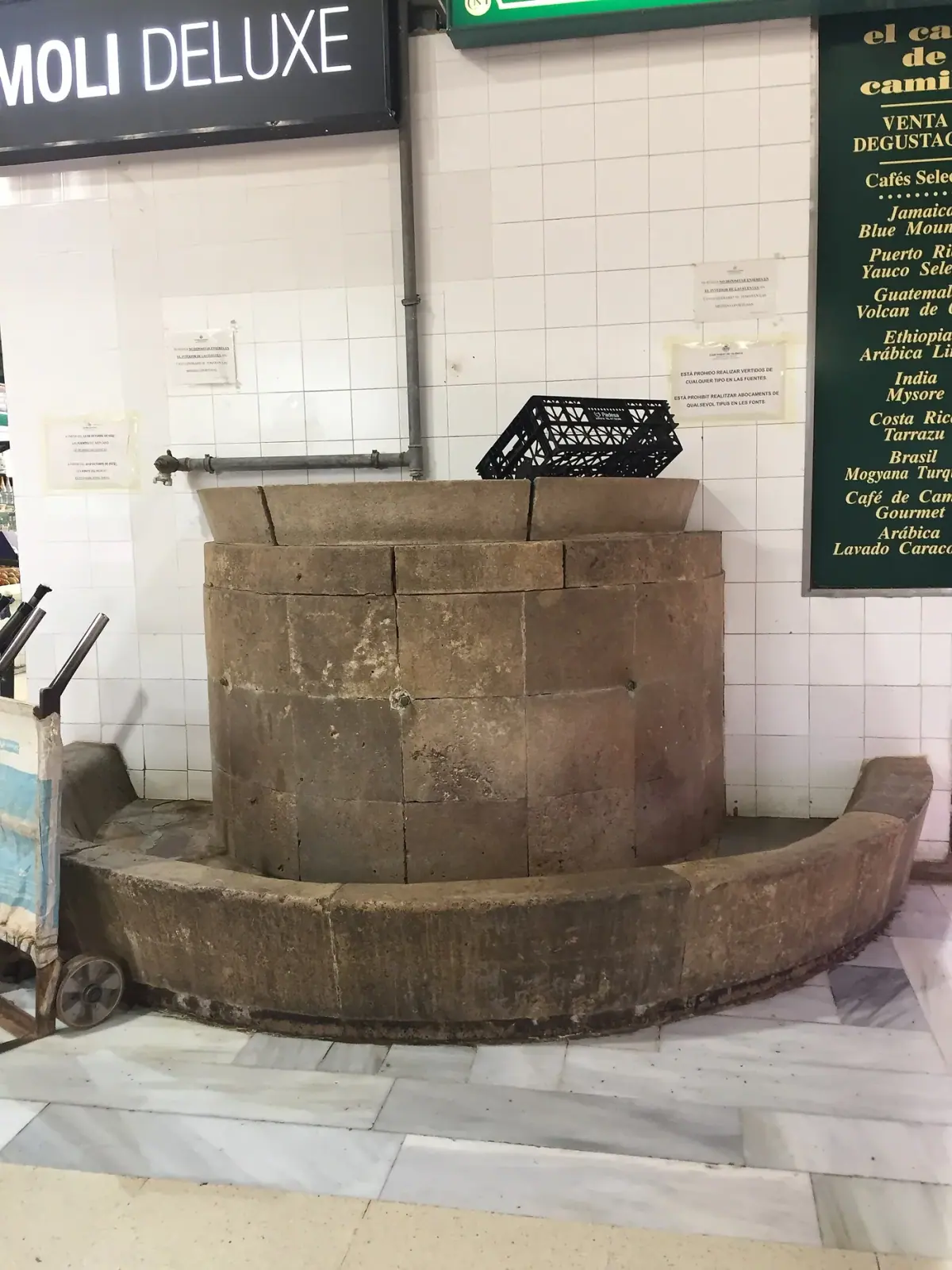

Russafa Market shows everyday neighbourhood use rather than historic-centre monuments. Study its plan, façades and links to nearby streets without turning it into a list of food businesses. Stall access and hours depend on the day.
Choose a short family pause on the southern-centre branch. It is not an architectural copy replacing Central Market, but a different neighbourhood experience. Information source.
Why go? The colourful neighbourhood market is the heart of Russafa, one of the city’s liveliest and most local areas. A great starting point for seeing non-touristy Valencia.
Visit summary
- Area: Southern centre and Russafa
- Highlight: Neighbourhood market and local urban rhythms
- Suggested visit length: About 20–30 minutes
- Type of visit: Indoors / neighbourhood walk
- Admission: Free
- Nearby map stops: Bullfighting Museum, Valencia Bullring (Plaça de Bous)
- Open map: Search for this place on Google Maps
Colón Market (Mercado de Colón)
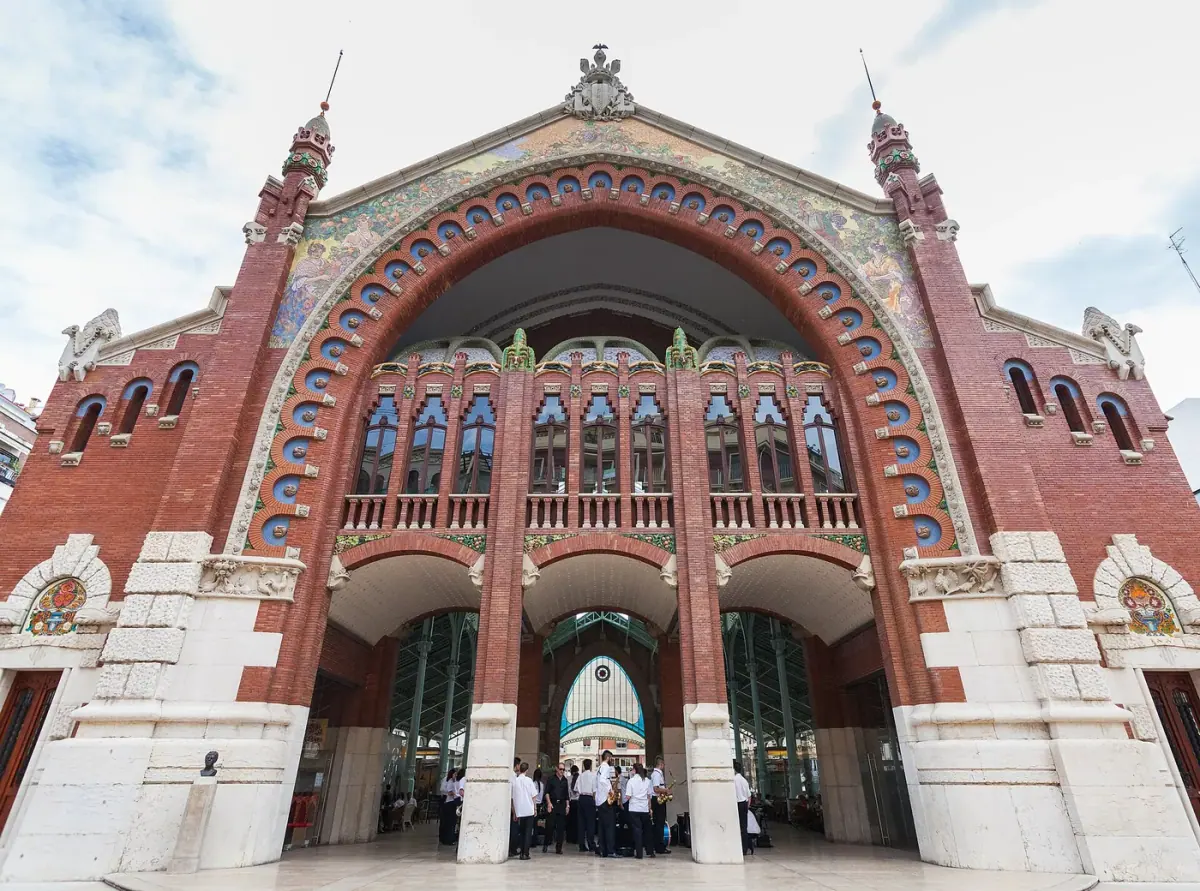

Mercado de Colón’s shell and large roof offer architectural interest separate from current dining uses. We therefore consider it more than a shopping address. Comparing exterior decoration and the open interior enriches a short visit.
Add a family break, but do not assume we tried a particular business here. Compare its location with Russafa and southern-centre stops; the two markets are not on the same street. Information source.
Why go? The Art Nouveau building, decorated with ceramics and ironwork, now holds cafés and restaurants. A stylish city setting for a horchata and fartons break.
Visit summary
- Area: Southern centre and Russafa
- Highlight: Modernist market architecture
- Suggested visit length: About 20–40 minutes
- Type of visit: Indoors / exterior view
- Admission: Free
- Nearby map stops: Bullfighting Museum, Valencia Bullring (Plaça de Bous)
- Open map: Search for this place on Google Maps
Turia and contemporary architecture
City of Arts and Sciences (Ciutat de les Arts i les Ciències)
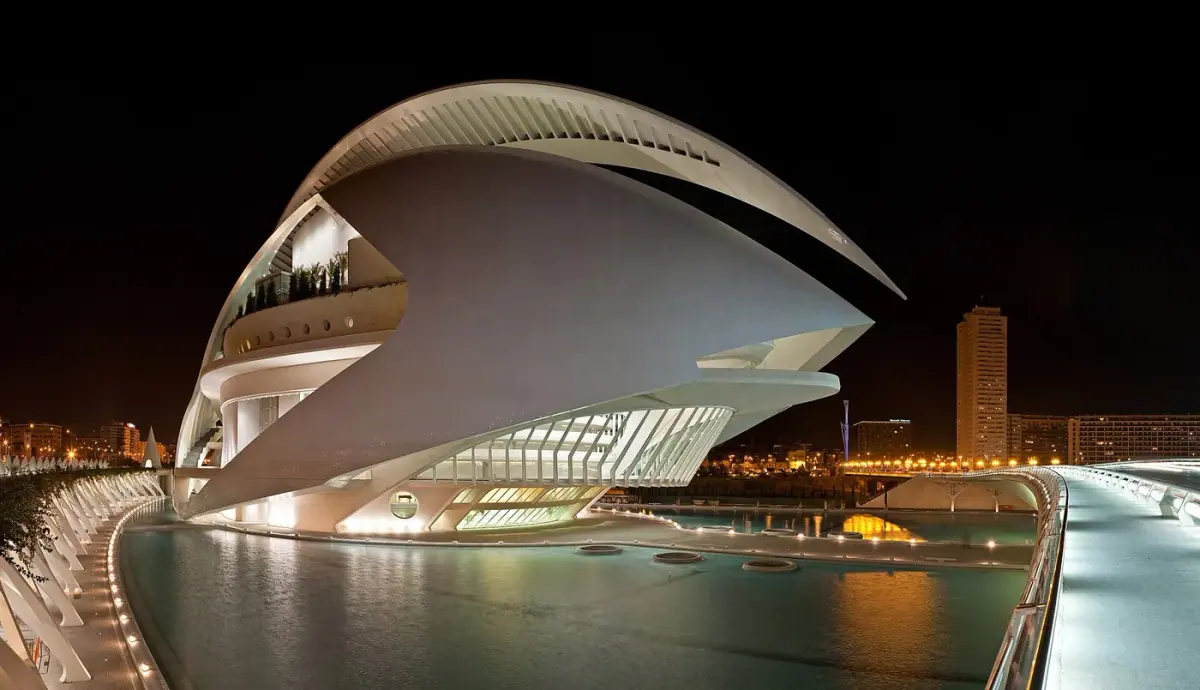

The City of Arts and Sciences is a large complex of different buildings and visiting options, not a single museum room. Viewing white structures with reflecting water outside is an architectural outing in itself; choosing the science museum or another interior requires separate time and tickets. We do not list every building beyond the mapped complex as a separate visited stop.
Choose your family aim first: an architectural walk or a long science visit? They need different amounts of time. Combine it geographically with Umbracle and a nearby Turia section. Allow independent time for this area rather than adding every historic-centre museum to the same day. Information source.
Why go? Santiago Calatrava’s white futuristic buildings over turquoise pools resemble a science-fiction film. With Europe’s largest aquarium, Oceanogràfic, and an interactive science museum, one day may not suffice for children.
Visit summary
- Area: Turia and contemporary architecture
- Highlight: Contemporary architecture and science destinations
- Suggested visit length: About 60–90 minutes around the exterior; half a day including interiors
- Type of visit: Outdoors / selected interiors
- Admission: Outdoor areas free. Oceanogràfic about €35–40 per adult (ages 4–12 reduced); Science Museum and Hemisfèric about €8–9; combination tickets offer better value.
- Nearby map stops: Umbracle, Fallas Museum (Museo Fallero)
- Open map: Search for this place on Google Maps
Fallas Museum (Museo Fallero)
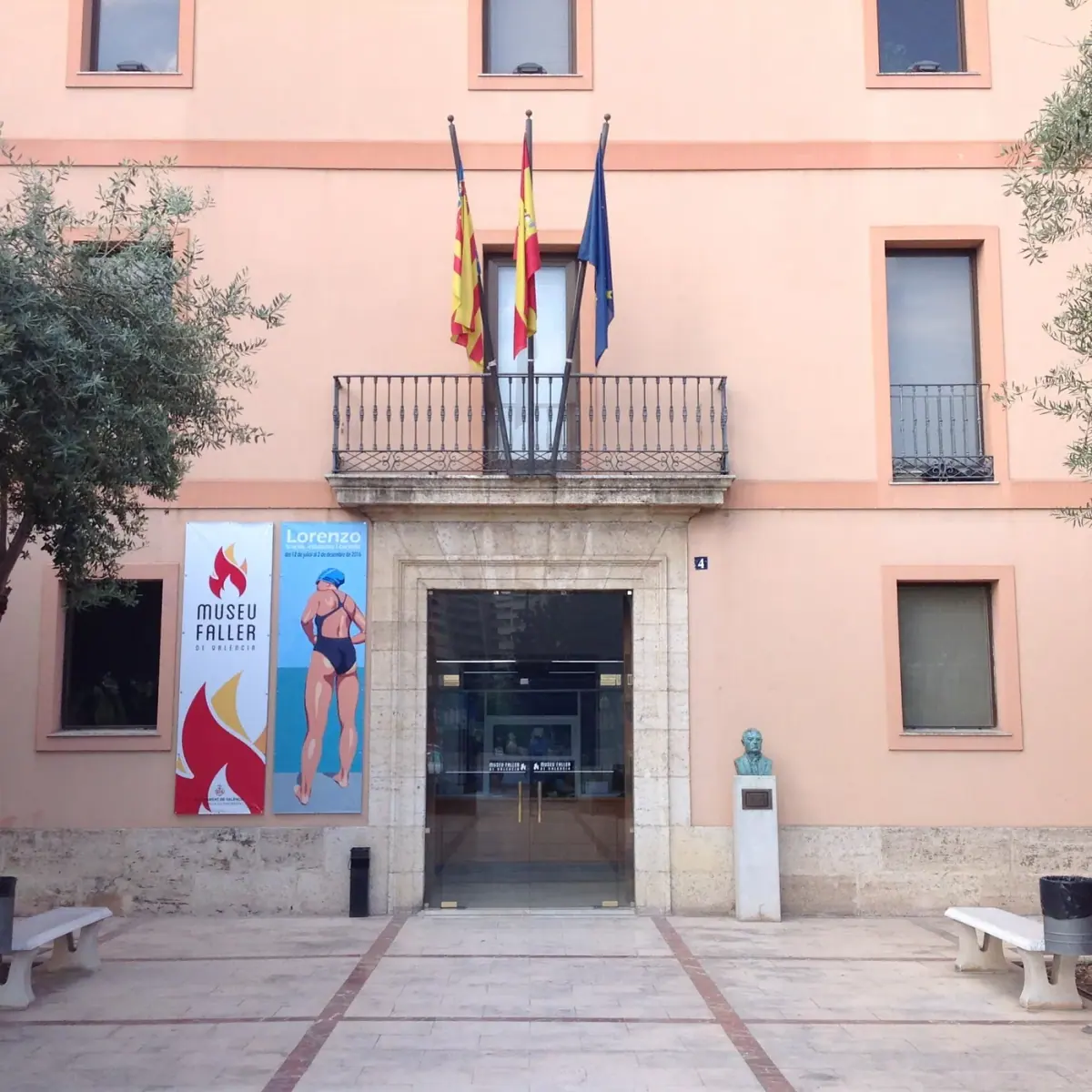

The Fallas Museum introduces Valencia’s festival culture even outside festival dates. Look at the celebration tradition through figures, costumes and narrative details. Do not treat it as a place where the festival itself takes place every day.
Children interested in colours and figures may find it different from art galleries. Compare its location with the City of Arts and Sciences branch; leave outdoor breaks if choosing two long interior visits. Information source.
Why go? Giant figures saved from burning by public vote at each March Fallas festival are displayed here. Colourful, humorous sculptures make both children and adults smile.
Visit summary
- Area: Turia and contemporary architecture
- Highlight: Preserved festival figures
- Suggested visit length: About 60–90 minutes
- Type of visit: Indoors
- Admission: Paid admission · about €2.
- Nearby map stops: Umbracle, City of Arts and Sciences (Ciutat de les Arts i les Ciències)
- Open map: Search for this place on Google Maps
Umbracle
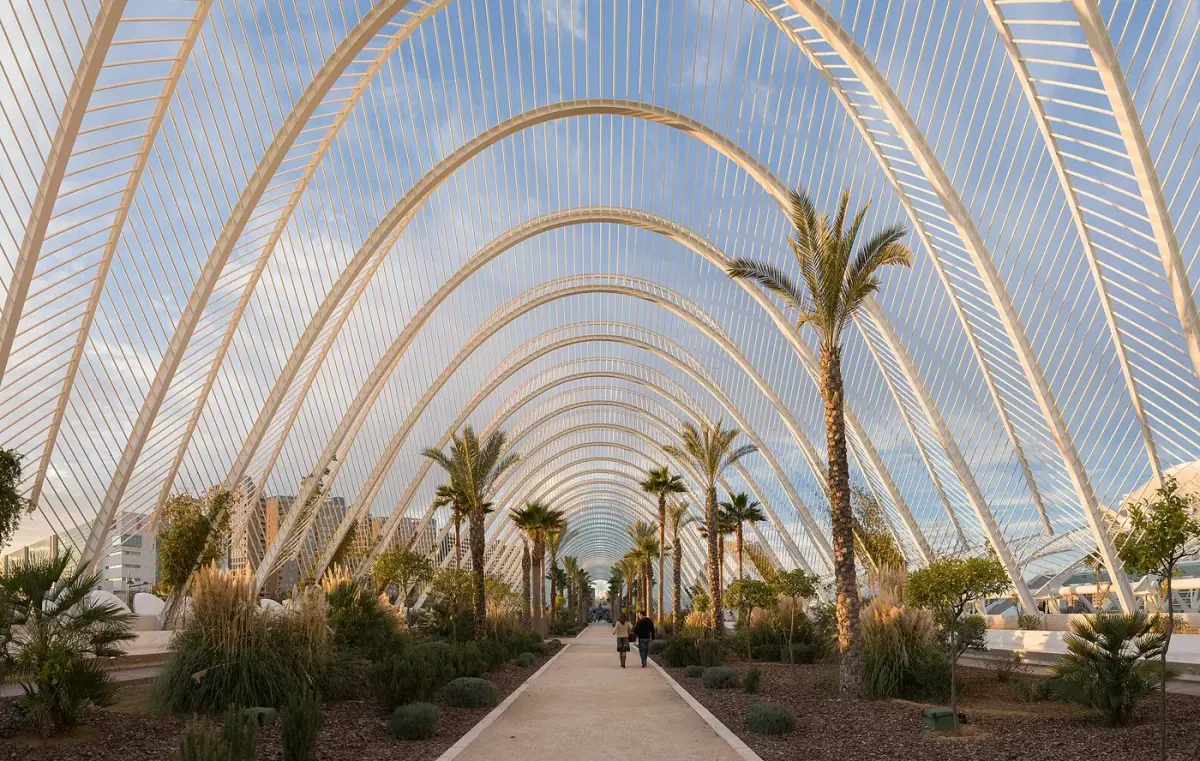

Umbracle combines plants and a long architectural structure in an outdoor experience beside the City of Arts and Sciences. Walk through its rhythm and shadows instead of only photographing the complex from afar. Do not assume equal access to areas with different uses and events.
A short family outdoor section before or after a major interior visit. Choosing a nearby park stretch is more practical than adding the entire Turia walk. Information source.
Why go? A white-arched garden of palms and plants offers an elevated walkway over the City of Arts and Sciences. Free and shaded, particularly refreshing on hot days.
Visit summary
- Area: Turia and contemporary architecture
- Highlight: Plants and rhythmic architectural structure
- Suggested visit length: About 30–45 minutes
- Type of visit: Outdoor walk
- Admission: Free (outdoors)
- Nearby map stops: City of Arts and Sciences (Ciutat de les Arts i les Ciències), Fallas Museum (Museo Fallero)
- Open map: Search for this place on Google Maps
Turia Gardens
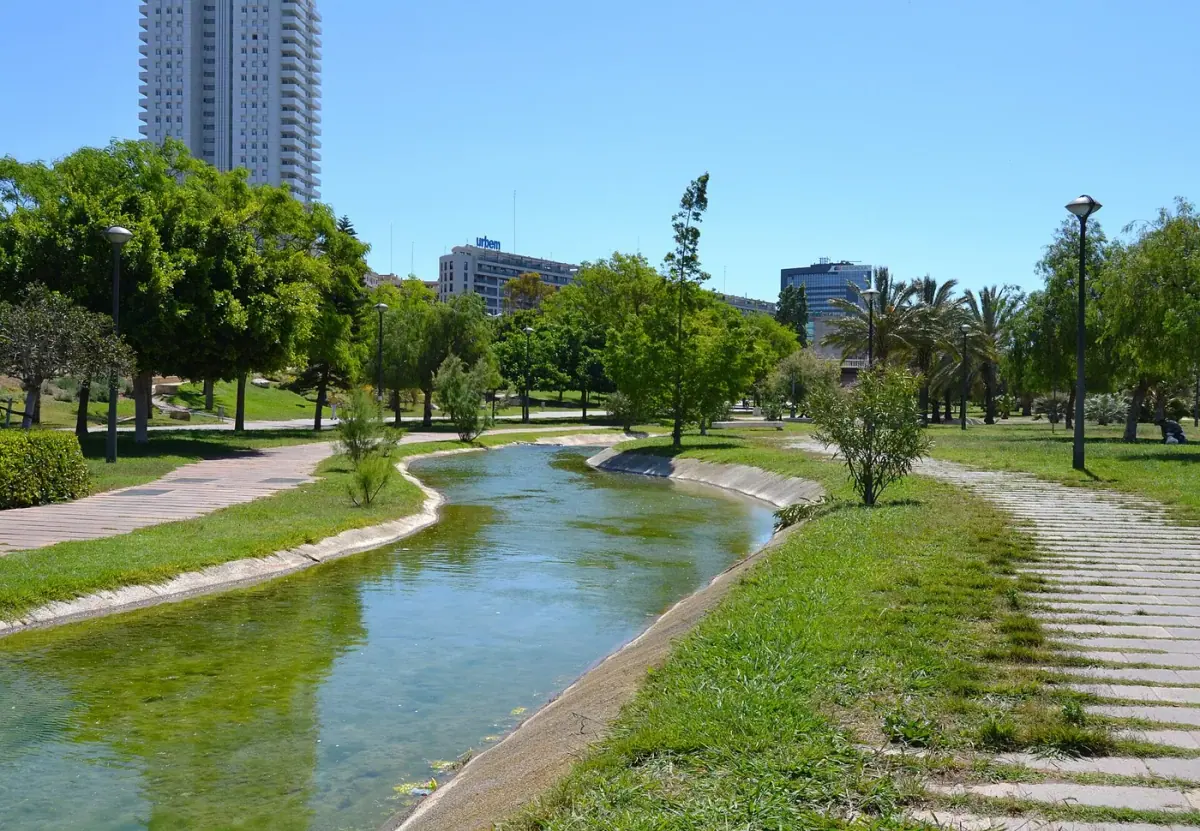

Turia Gardens form a broad green corridor across the city; one map point does not mean you can see the whole park at a glance. Choose entrances and exits for the area you are visiting and walk a short stretch. Observe spaces beneath bridges and the different landscaped sections.
A strong option for balancing a museum day with family outdoor time. You need not walk all the way between the historic centre and science complex; divide it according to energy. Information source.
Why go? The former riverbed, diverted after a major flood, became an enormous nine-kilometre park. At its giant Gulliver playground, children climb and slide over a giant.
Visit summary
- Area: Turia and contemporary architecture
- Highlight: Green backbone in a former riverbed
- Suggested visit length: About 45–90 minutes for a selected section
- Type of visit: Outdoor walk
- Admission: Free; Gulliver playground also free.
- Nearby map stops: Fallas Museum (Museo Fallero), Umbracle
- Open map: Search for this place on Google Maps
Historic centre: market and cathedral
Silk Exchange (Llotja de la Seda)
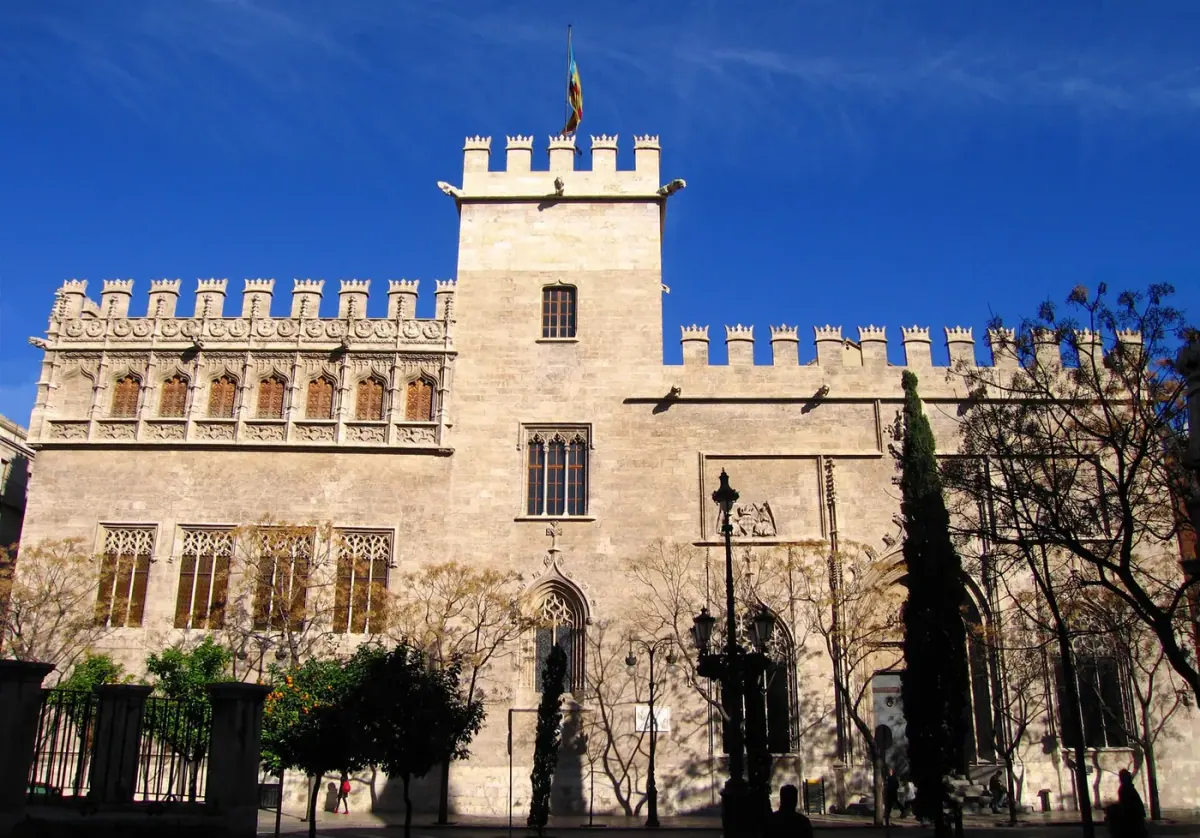

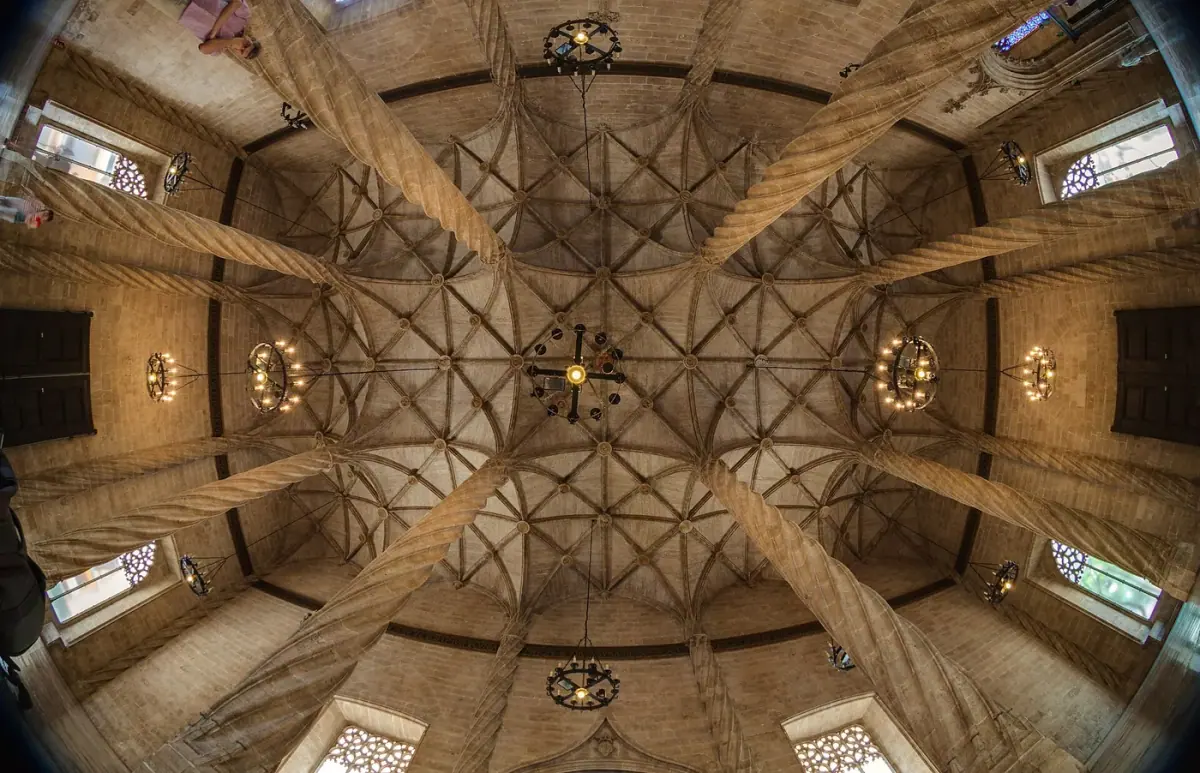
The Silk Exchange reveals Valencia’s commercial past in a monumental building. This is civic architecture related to trade, not a place of worship. Looking at supports, proportions and decoration and considering scale alongside use makes the visit meaningful.
Following column shapes and their joins overhead may be more tangible for children than a long history explanation. Pair it with Central Market and Santos Juanes nearby. UNESCO status does not oblige a long visit; allow a focused hour according to interest. Information source.
Why go? The UNESCO-listed Gothic exchange’s trading hall has twisted columns and a palm-like ceiling. A beautiful testament to medieval Valencia’s commercial wealth.
Visit summary
- Area: Historic centre: market and cathedral
- Highlight: Commercial history and civic Gothic architecture
- Suggested visit length: About 45–75 minutes
- Type of visit: Indoors / exterior view
- Admission: Paid admission · about €2; free Sundays and public holidays.
- Nearby map stops: Santos Juanes Church, Central Market (Mercat Central)
- Open map: Search for this place on Google Maps
Valencia Cathedral
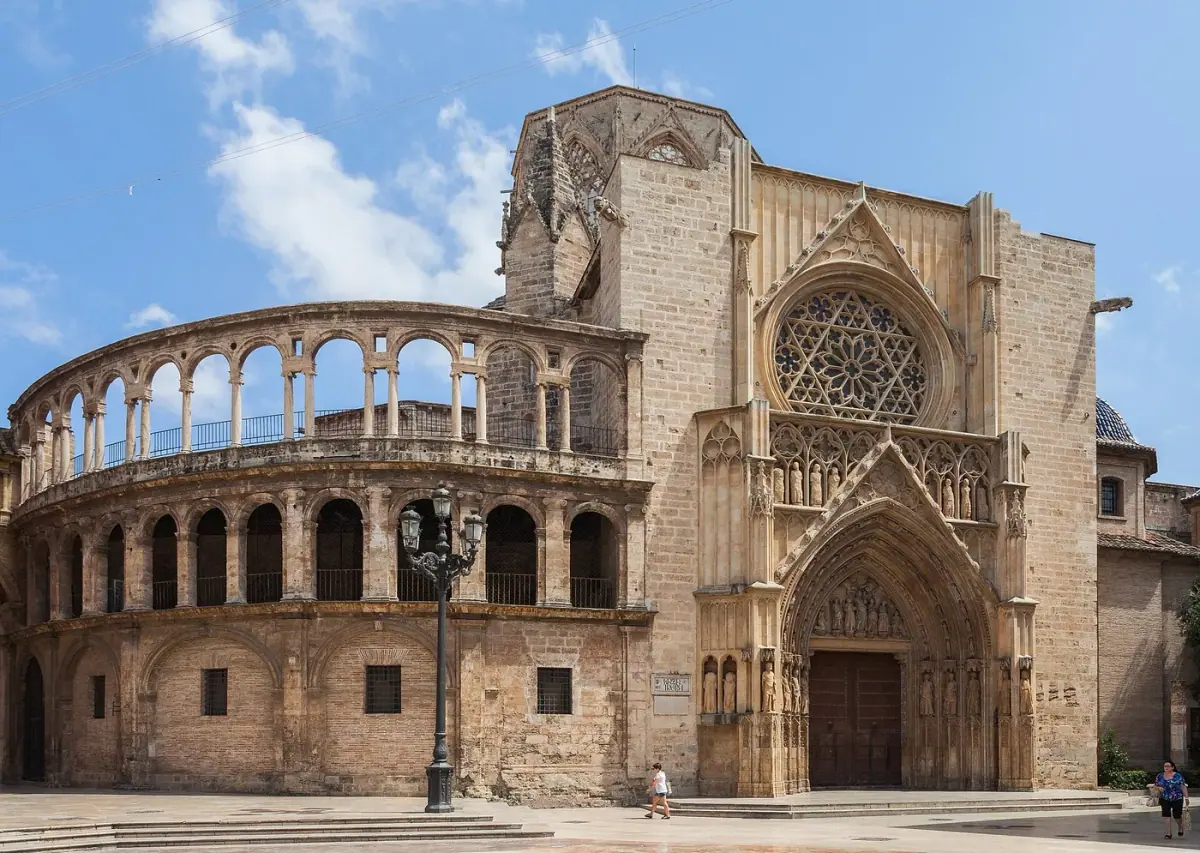

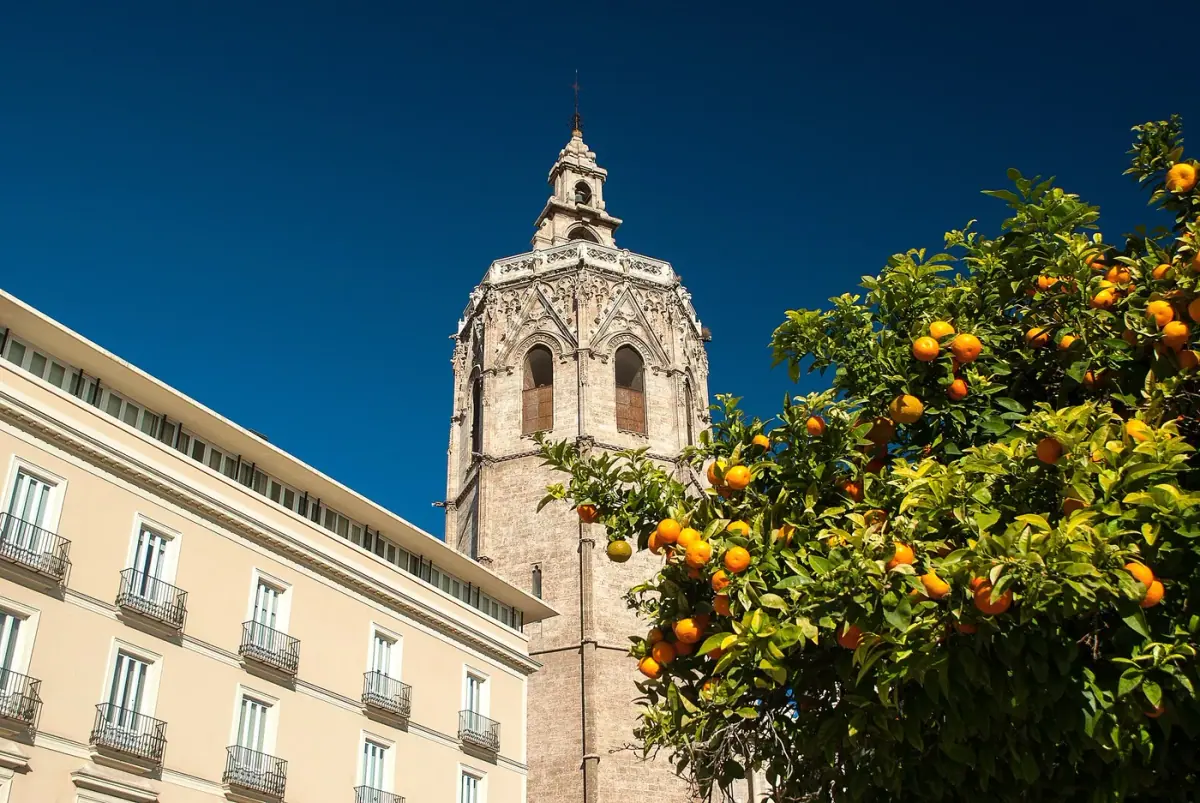
Valencia Cathedral is not one uninterrupted architectural style: traces of different periods meet here. Follow this variety from exterior doors into the interior. Cathedral, tower climb and special-area access may differ; check official visitor coverage.
A couple of architectural details and lighting focal points suffice with children. Make it the main interior on a central route with Desamparados and Santa Catalina. Plan without treating tourist access as fixed despite worship schedules. Information source.
Why go? A chalice believed to be the Holy Grail is kept in a cathedral chapel. Climbing Miguelete tower for views over tiled roofs is another lovely part.
Visit summary
- Area: Historic centre: market and cathedral
- Highlight: Different architectural periods combined
- Suggested visit length: About 60–90 minutes
- Type of visit: Indoors / exterior view
- Admission: Paid admission · about €8–9 per adult (audio guide and museum included); Miguelete tower costs extra.
- Nearby map stops: Desamparados Basilica, Santa Catalina Church
- Open map: Search for this place on Google Maps
González Martí Museum of Ceramics and Decorative Arts
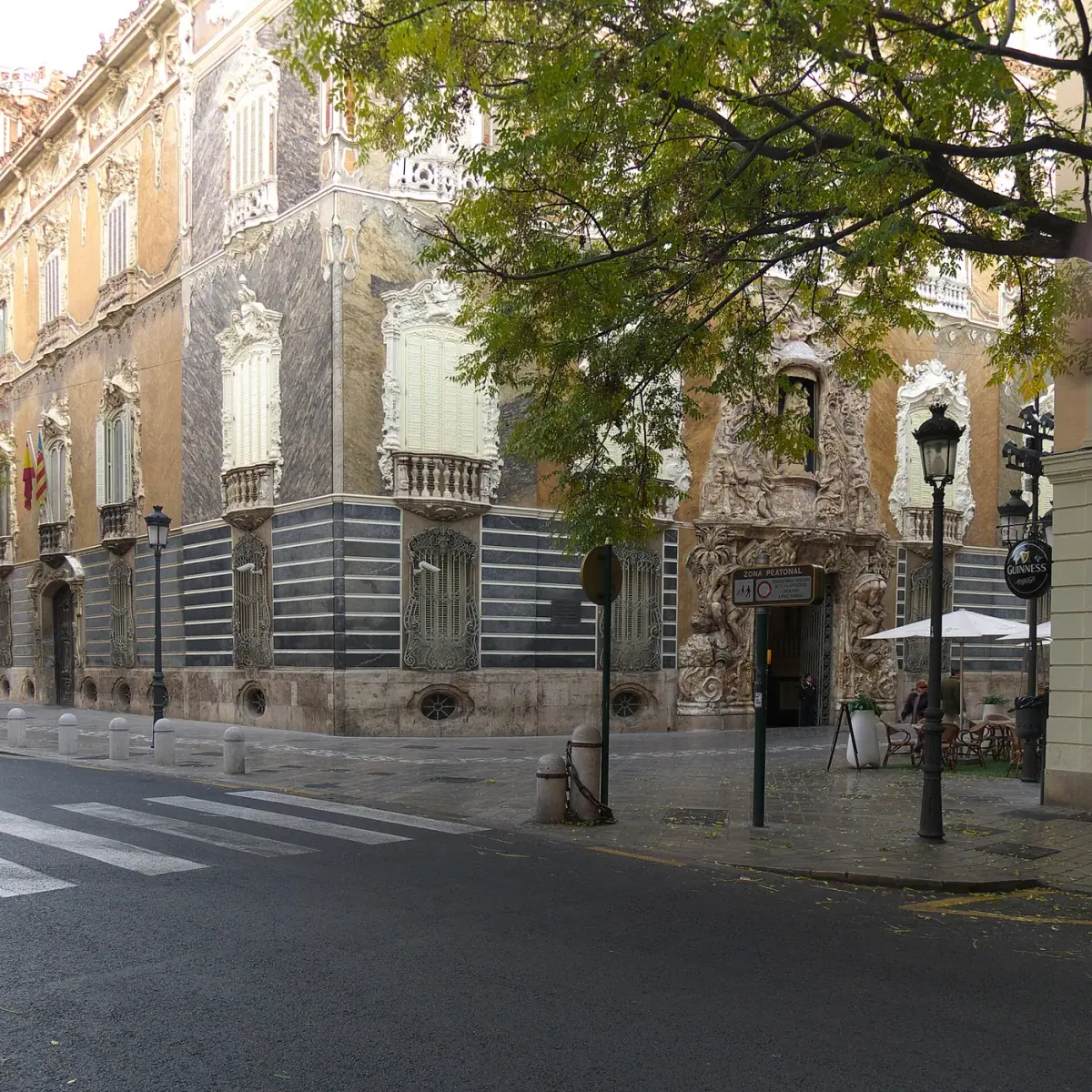

The Ceramics Museum’s building and collection stand out together. The ornate entrance of the Marqués de Dos Aguas Palace is an architectural stop even without entering. Comparing ceramics by use, pattern and technique helps explain local craft culture.
Searching for colours and motifs gives a concrete family starting point. Add it to the central branch near Patriarca; reduce other museums if choosing a long collection visit. Palace exterior and museum interior do not fit the same time allowance. Information source.
Why go? The extraordinary Rococo façade of alabaster and carvings alone deserves a look. Ornate carriages and the ceramics collection inside also interest children.
Visit summary
- Area: Historic centre: market and cathedral
- Highlight: Palace façade and ceramic culture
- Suggested visit length: About 60–90 minutes
- Type of visit: Indoors / exterior view
- Admission: Paid admission · about €3; free Saturday afternoons and Sunday mornings.
- Nearby map stops: Patriarca Church and Museum, Santa Catalina Church
- Open map: Search for this place on Google Maps
Patriarca Church and Museum
Although church and museum appear as separate markers, we describe one Patriarca complex here. Worship space and museum collection offer different experiences; check open sections and entry coverage separately. This avoids unnecessary returns caused by treating one place as two neighbourhood stops.
Meaningful for families interested in painting and religious architecture. Pair it with a central walk near the Ceramics Museum; choosing one rather than two long interior visits may be easier with a small child. Information source.
Why go? Renaissance courtyard and works by masters such as Caravaggio and El Greco make a quiet artistic treasure. Children often ask most about the crocodile legend attached to the entrance wall.
Visit summary
- Area: Historic centre: market and cathedral
- Highlight: Religious art and historic college complex
- Suggested visit length: About 60–90 minutes
- Type of visit: Indoors
- Admission: Paid admission.
- Nearby map stops: González Martí Museum of Ceramics and Decorative Arts, Santa Catalina Church
- Open map: Search for this place on Google Maps
Temple Church and Palace Surroundings
The Temple marker indicates historic buildings known as church and palace rather than a single museum. Looking at façade arrangements and surrounding urban fabric makes a brief architectural outing. Do not assume unrestricted tourist access to an administrative building.
Plan it as a northeastern branch from the historic centre. Check current access with the relevant institution if entering; an exterior family look also works. Information source.
Why go? The area takes its name and history from the Knights Templar’s former properties. An interesting stop for telling knight stories in quiet streets.
Visit summary
- Area: Historic centre: market and cathedral
- Highlight: Religious and administrative buildings in the city
- Suggested visit length: About 20–30 minutes
- Type of visit: Exterior view / conditional interior access
- Admission: Free (exterior view)
- Nearby map stops: Desamparados Basilica, Valencia Cathedral
- Open map: Search for this place on Google Maps
Santos Juanes Church
Santos Juanes allows comparison of commercial and religious architecture around Central Market and the Silk Exchange. View the exterior in context; this area is more than passing one monument. Check open areas and restoration effects if choosing an interior visit.
Rather than three long family visits, balance an exchange interior, market passage and church exterior. Information source.
Why go? After years of restoration, the Baroque ceiling frescoes have regained their brilliance. A short, impressive addition directly opposite Central Market.
Visit summary
- Area: Historic centre: market and cathedral
- Highlight: Religious architecture on the market square
- Suggested visit length: About 30–45 minutes
- Type of visit: Indoors / exterior view
- Admission: Paid admission.
- Nearby map stops: Central Market (Mercat Central), Silk Exchange (Llotja de la Seda)
- Open map: Search for this place on Google Maps
Desamparados Basilica
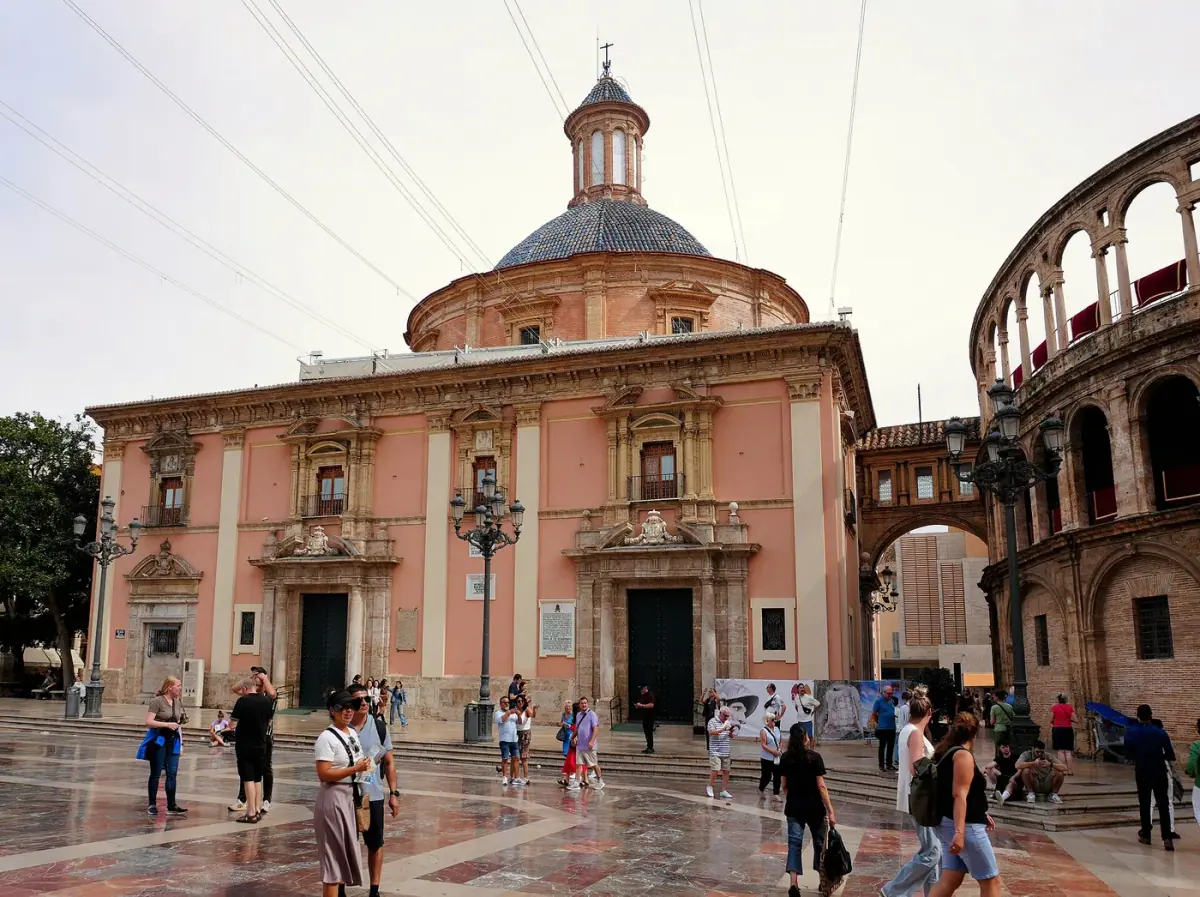

Desamparados has its own identity among religious buildings near the cathedral. Do not treat it merely as an extension of its neighbour; the interior layout and worship use offer a different experience. Make a short, respectful visit according to current worship and tourist entry conditions.
A second long family interior after the cathedral is not compulsory. Seeing the exterior and surrounding open space also helps explain the area. Information source.
Why go? Dedicated to Valencia’s patron saint; at the March Fallas festival, a Virgin figure in the square outside is covered with thousands of flowers. A place to see the heart of local religious life.
Visit summary
- Area: Historic centre: market and cathedral
- Highlight: The city’s living religious centre
- Suggested visit length: About 20–40 minutes
- Type of visit: Indoors / exterior view
- Admission: Free
- Nearby map stops: Valencia Cathedral, Santa Catalina Church
- Open map: Search for this place on Google Maps
Santa Catalina Church
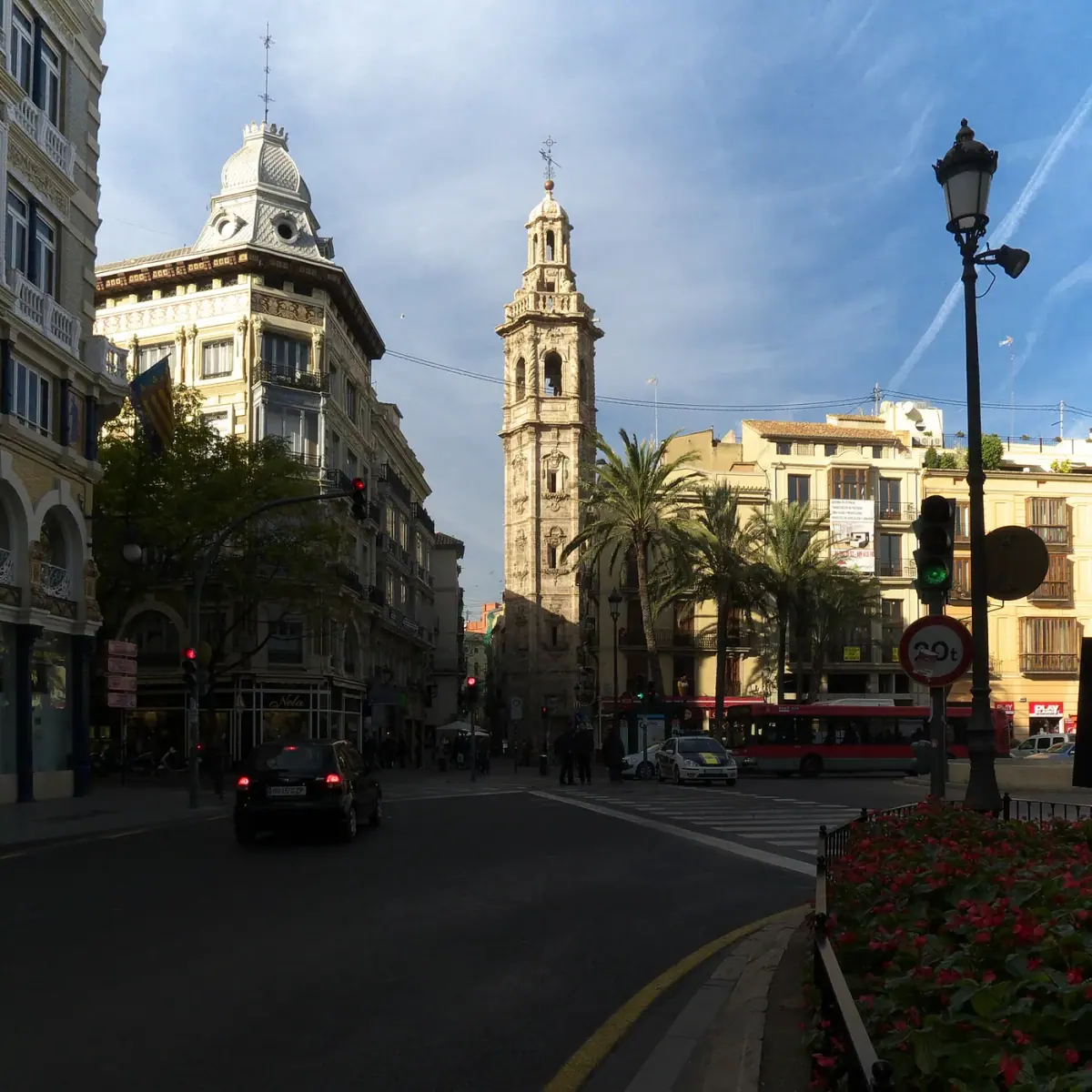

Santa Catalina is a short religious-architecture stop on the busy historic-centre walk. Consider church and tower’s urban impact separately, beyond a name in directions. Check current arrangements for interior or tower access.
Pair it with the cathedral and market on the same central branch. Instead of similar long visits to several churches with children, focusing on a few exterior details may suffice. Information source.
Why go? Its hexagonal Baroque bell tower is among the city’s most elegant; together with the historic horchata shop beside it, a classic stop.
Visit summary
- Area: Historic centre: market and cathedral
- Highlight: Church and tower skyline in the city centre
- Suggested visit length: About 20–40 minutes
- Type of visit: Indoors / exterior view
- Admission: Free
- Nearby map stops: Ciutat Vella (Historic Centre), Valencia Cathedral
- Open map: Search for this place on Google Maps
Central Market (Mercat Central)
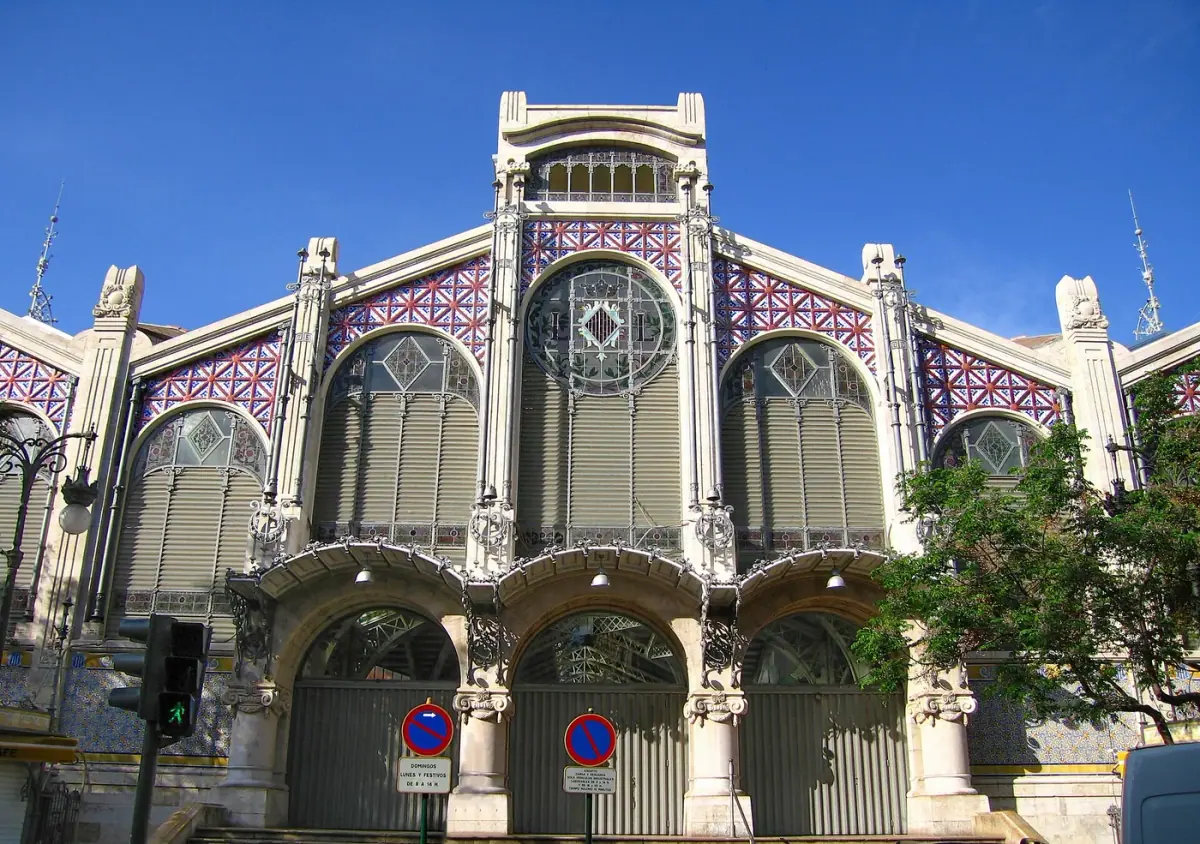

Central Market is a visit in its own right for its roof and urban life, not just food shopping. Look up at steel and glass to shift attention from stalls to architecture. Activity depends on day and time; equal liveliness or open stalls are not guaranteed.
Combine it with the Silk Exchange and Santos Juanes nearby. Take a short family break; as no note records eating at a particular stall, we add no vendor recommendations. Information source.
Why go? One of Europe’s largest and loveliest covered markets, an Art Nouveau masterpiece with a glass dome and ceramic decoration. Fresh juice and colourful stalls are enjoyable for children too.
Visit summary
- Area: Historic centre: market and cathedral
- Highlight: The market’s Modernist shell
- Suggested visit length: About 30–45 minutes
- Type of visit: Indoors / market walk
- Admission: Free
- Nearby map stops: Santos Juanes Church, Silk Exchange (Llotja de la Seda)
- Open map: Search for this place on Google Maps
Ciutat Vella (Historic Centre)
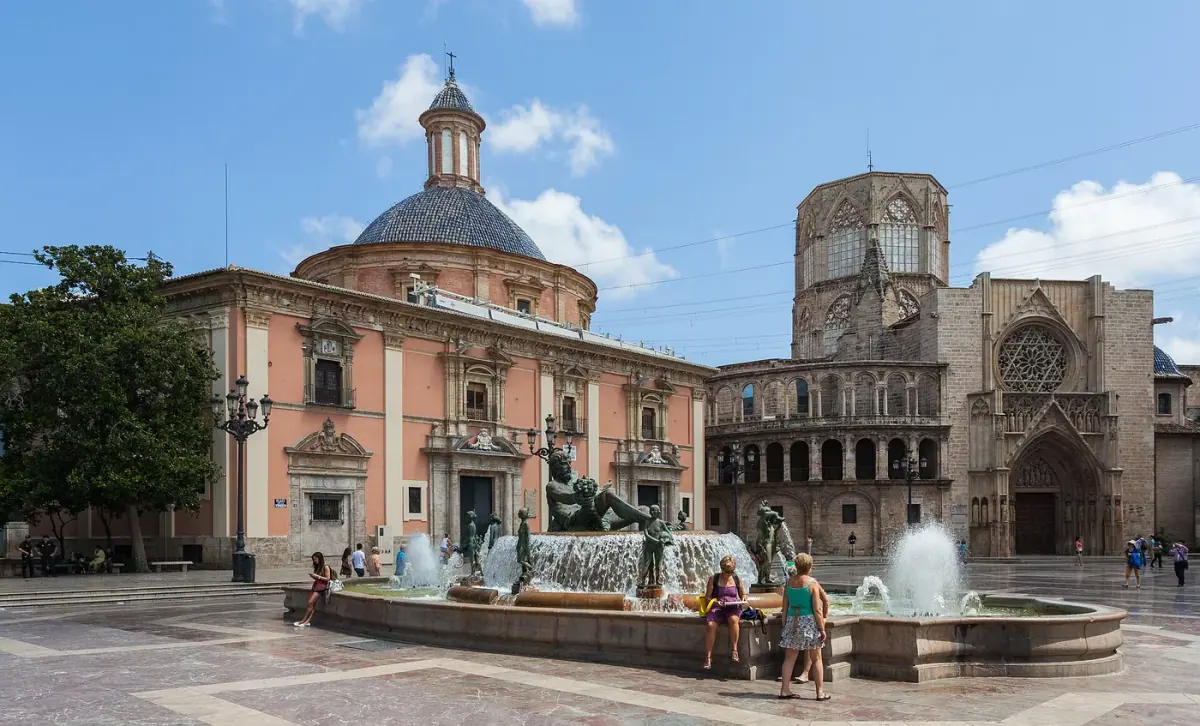

Ciutat Vella is a broad historic area containing other central markers, not one building. Explore streets, square connections and changing façades rather than counting it as a separate transport destination. The exchange, cathedral and market entries detail this area.
Choose a short family loop instead of completing every neighbourhood street. Adding individual building visits below lengthens total time; the neighbourhood duration does not include them all. Information source.
Why go? Valencia’s heart of narrow streets, squares and centuries-old buildings. Wandering without a plan and pausing in small squares is a good way to know the city.
Visit summary
- Area: Historic centre: market and cathedral
- Highlight: Old urban fabric connecting monuments
- Suggested visit length: About 60–120 minutes for selected streets
- Type of visit: Neighbourhood walk
- Admission: Free (outdoors)
- Nearby map stops: Santa Catalina Church, Central Market (Mercat Central)
- Open map: Search for this place on Google Maps
El Carmen and the northern centre
Serranos Towers (Torres de Serranos)
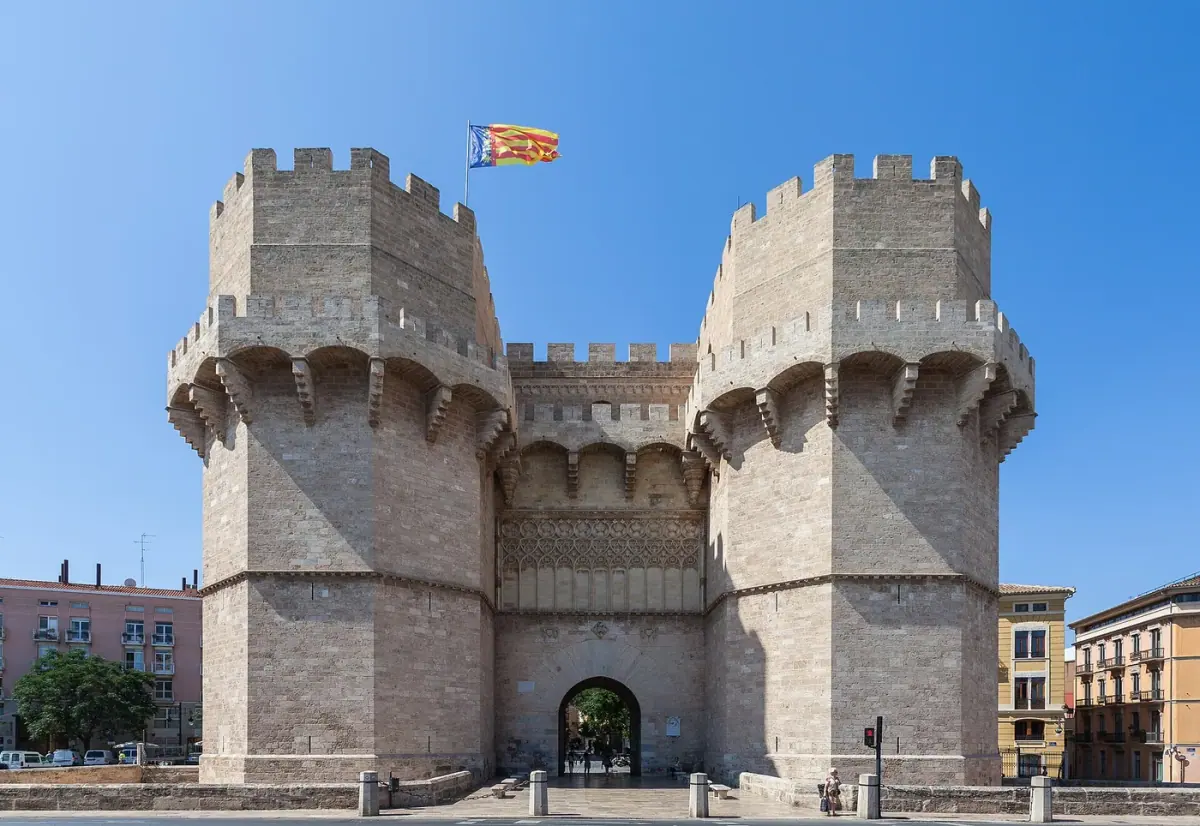

Serranos is a gateway for understanding the old city boundary and entrances. Seeing its two towers and central passage from outside explains the defensive role. Climbing is a separate decision involving views and stairs.
Check open areas and physical conditions before a family climb. A meaningful stop between El Carmen and Turia; place it within the area route rather than a final task after the whole historic centre. Information source.
Why go? The grandest surviving medieval gateway; climbing for views over Turia Gardens and the city is enjoyable. The Fallas festival’s opening call is also made here.
Visit summary
- Area: El Carmen and the northern centre
- Highlight: Old city gateway
- Suggested visit length: About 30–45 minutes
- Type of visit: Exterior view / stair climb
- Admission: Paid admission · about €2; free Sundays and public holidays.
- Nearby map stops: Corpus Museum (Casa de las Rocas), CCCC (Centre del Carme)
- Open map: Search for this place on Google Maps
Benlliure House Museum
Benlliure House Museum focuses on an artist’s living environment rather than large collection halls. Considering house, studio and garden together takes the works beyond pictures hanging on walls. Check open areas on the current municipal page.
Add it to El Carmen if seeking a smaller-scale family art visit. Choose one or two focal points rather than connecting all nearby museums in one programme. Information source.
Why go? Painter José Benlliure’s home, studio and hidden garden make one of the city’s most romantic corners. Ideal for escaping the busy centre and resting in a quiet garden.
Visit summary
- Area: El Carmen and the northern centre
- Highlight: An artist’s life and home environment
- Suggested visit length: About 45–75 minutes
- Type of visit: Indoors / garden
- Admission: Paid admission · about €2; free Sundays.
- Nearby map stops: CCCC (Centre del Carme), El Carmen Neighbourhood
- Open map: Search for this place on Google Maps
Valencia Museum of Fine Arts
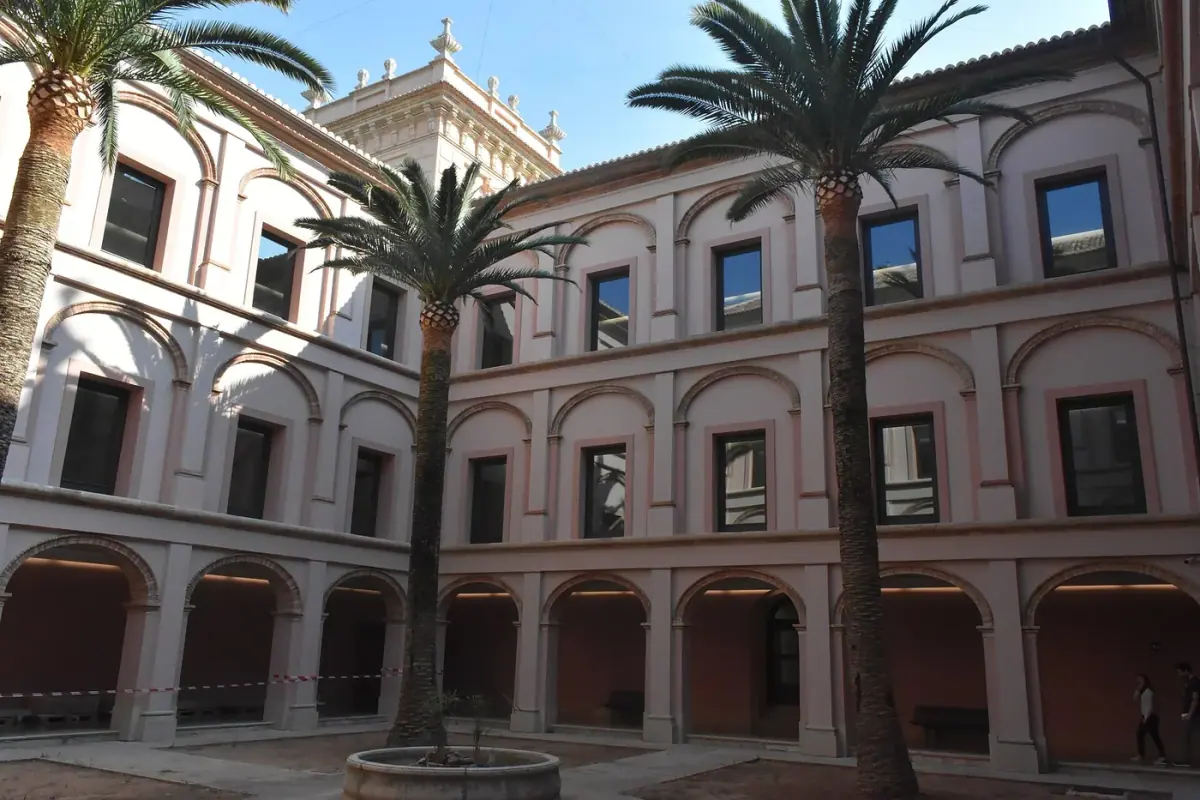

The Fine Arts Museum is a main collection option for spending longer on Valencia’s artistic heritage. Selecting a few works or periods is more rewarding than surveying every room, particularly with children. Examine frames, colours and figures together.
Consider it with Serranos and the northern-centre branch, checking the riverbed crossing on the map. It is not on the same short-stop scale as smaller museums; give it dedicated time. Information source.
Why go? One of Spain’s leading art museums, with free viewing of Velázquez, Goya and Sorolla. Beside Turia Gardens, it combines easily with a park day.
Visit summary
- Area: El Carmen and the northern centre
- Highlight: Painting collection and art history
- Suggested visit length: About 90–120 minutes
- Type of visit: Indoors
- Admission: Free
- Nearby map stops: Serranos Towers (Torres de Serranos), Corpus Museum (Casa de las Rocas)
- Open map: Search for this place on Google Maps
L’Iber Museum of Miniatures and Toy Soldiers
L’Iber tells history through little figures and arrangements rather than large paintings. Comparing a whole miniature scene with individual details lends itself to a family observation game. Toy soldiers do not mean every section suits small children equally.
It can be a main museum choice in El Carmen. Select a few scenes instead of finishing the collection; balance it with an outdoor neighbourhood walk. Information source.
Why go? More than a million miniature figures make one of the world’s largest toy-soldier collections. Huge battle scenes and tiny details fascinate children for minutes.
Visit summary
- Area: El Carmen and the northern centre
- Highlight: Historical scenes built with tiny figures
- Suggested visit length: About 60–90 minutes
- Type of visit: Indoors
- Admission: Paid admission.
- Nearby map stops: Corpus Museum (Casa de las Rocas), CCCC (Centre del Carme)
- Open map: Search for this place on Google Maps
Corpus Museum (Casa de las Rocas)
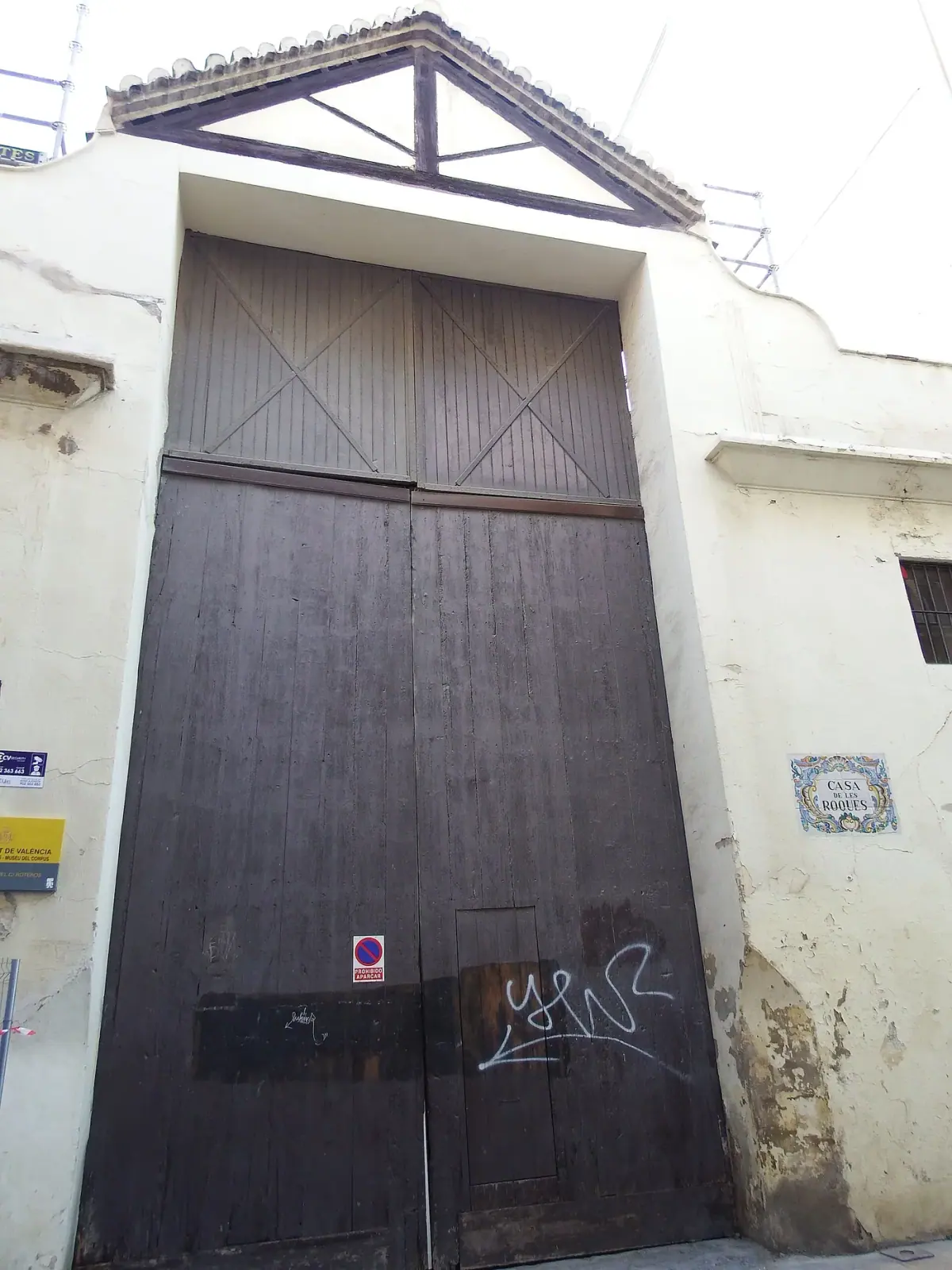

Casa de las Rocas preserves large ceremonial carts and figures used in Corpus celebrations. Even the building’s tall doorway shows these objects exceed ordinary room scale. Seeing the museum does not mean a procession takes place that day; the visit explores the tradition through its objects.
Talk with children about large figures and the carts’ uses. Plan a short interior visit on the Serranos and El Carmen branch. It does not repeat the same tradition as the Fallas Museum. Information source.
Why go? The enormous wooden carts used in the Corpus Christi procession are kept here. Their colours and size surprise children.
Visit summary
- Area: El Carmen and the northern centre
- Highlight: Ceremonial carts and city festival
- Suggested visit length: About 45–60 minutes
- Type of visit: Indoors
- Admission: Paid admission · about €2; free Sundays.
- Nearby map stops: Serranos Towers (Torres de Serranos), CCCC (Centre del Carme)
- Open map: Search for this place on Google Maps
Valencia Prehistory Museum
The Prehistory Museum explores Valencia through earlier communities’ material culture, beyond churches and palaces. Looking at tools’ materials and shapes raises tangible questions about everyday life in the past. Select a few object types rather than every display case.
An alternative main museum for archaeology-minded families. Do not add all El Carmen’s other interiors that day; leave time outdoors. Information source.
Why go? A free museum explaining the region’s history from cave dwellers to Roman times in a child-friendly way. A replica cave and reconstructions make it educational and enjoyable.
Visit summary
- Area: El Carmen and the northern centre
- Highlight: The region’s archaeological past
- Suggested visit length: About 90–120 minutes
- Type of visit: Indoors
- Admission: Free
- Nearby map stops: El Carmen Neighbourhood, CCCC (Centre del Carme)
- Open map: Search for this place on Google Maps
CCCC (Centre del Carme)
CCCC combines a historic setting with current culture and exhibitions. Consider courtyard architecture and exhibition content separately; a show on one date may not be a permanent collection for a later visit. Checking the programme reveals its family appeal.
Choose it as an art focus on an El Carmen walk. To reduce a long family museum list, keep it to a selected exhibition or courtyard visit. Information source.
Why go? Gothic and Renaissance courtyards of a former monastery host free contemporary art exhibitions. Its quiet courtyard is a cool El Carmen break.
Visit summary
- Area: El Carmen and the northern centre
- Highlight: Contemporary culture in a historic building
- Suggested visit length: About 60–90 minutes
- Type of visit: Indoors / exhibition
- Admission: Free
- Nearby map stops: Benlliure House Museum, El Carmen Neighbourhood
- Open map: Search for this place on Google Maps
El Carmen Neighbourhood
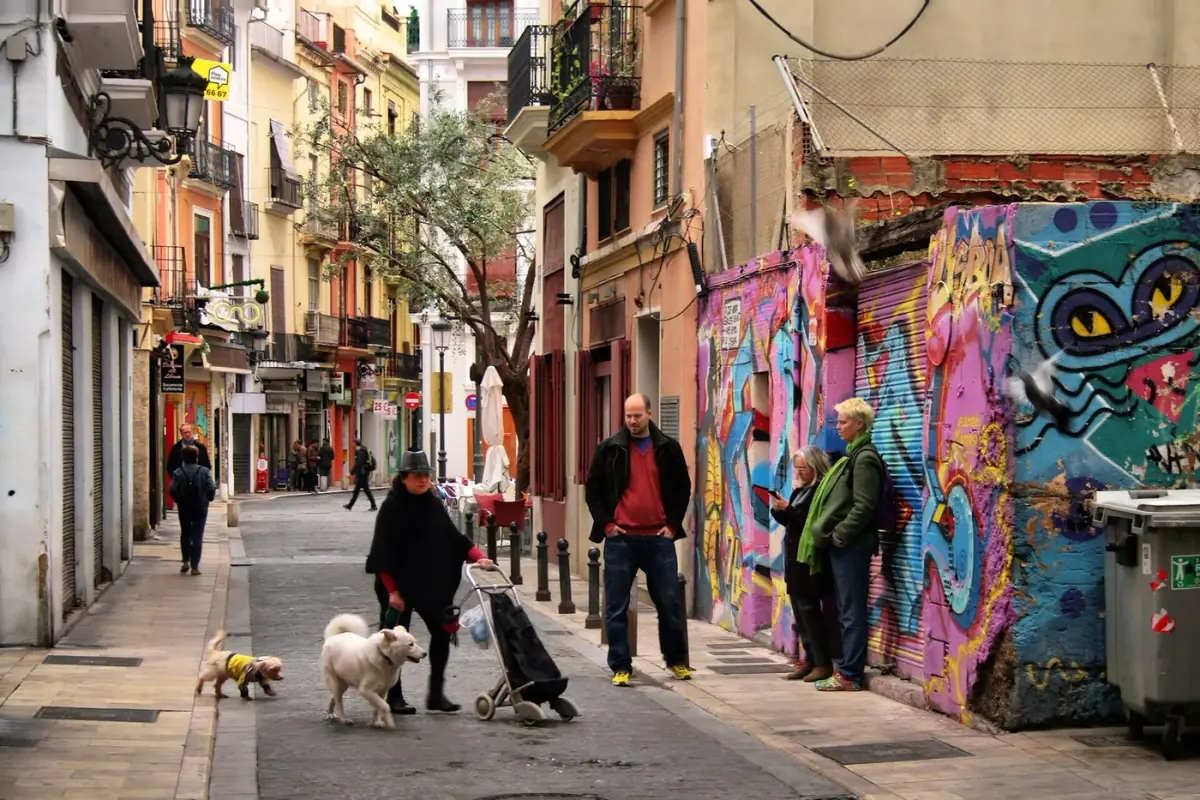

El Carmen is a more detailed neighbourhood branch within Ciutat Vella, not a second distant city centre. Choose a walk among narrow streets, museum entrances and small open spaces. Cultural institutions allow one or two interiors to complement it.
Choosing one family museum and spending the rest outside is more flexible than touring every institution consecutively. Connect it with Serranos and the Corpus Museum branch. Information source.
Why go? Murals, old walls and narrow streets make Valencia’s most bohemian and colourful neighbourhood. Hunting for street art is a fun game for children too.
Visit summary
- Area: El Carmen and the northern centre
- Highlight: Museums and historic street fabric
- Suggested visit length: About 45–90 minutes
- Type of visit: Neighbourhood walk
- Admission: Free (outdoors)
- Nearby map stops: CCCC (Centre del Carme), Benlliure House Museum
- Open map: Search for this place on Google Maps
Marina and the Mediterranean coast
Malvarrosa Beach
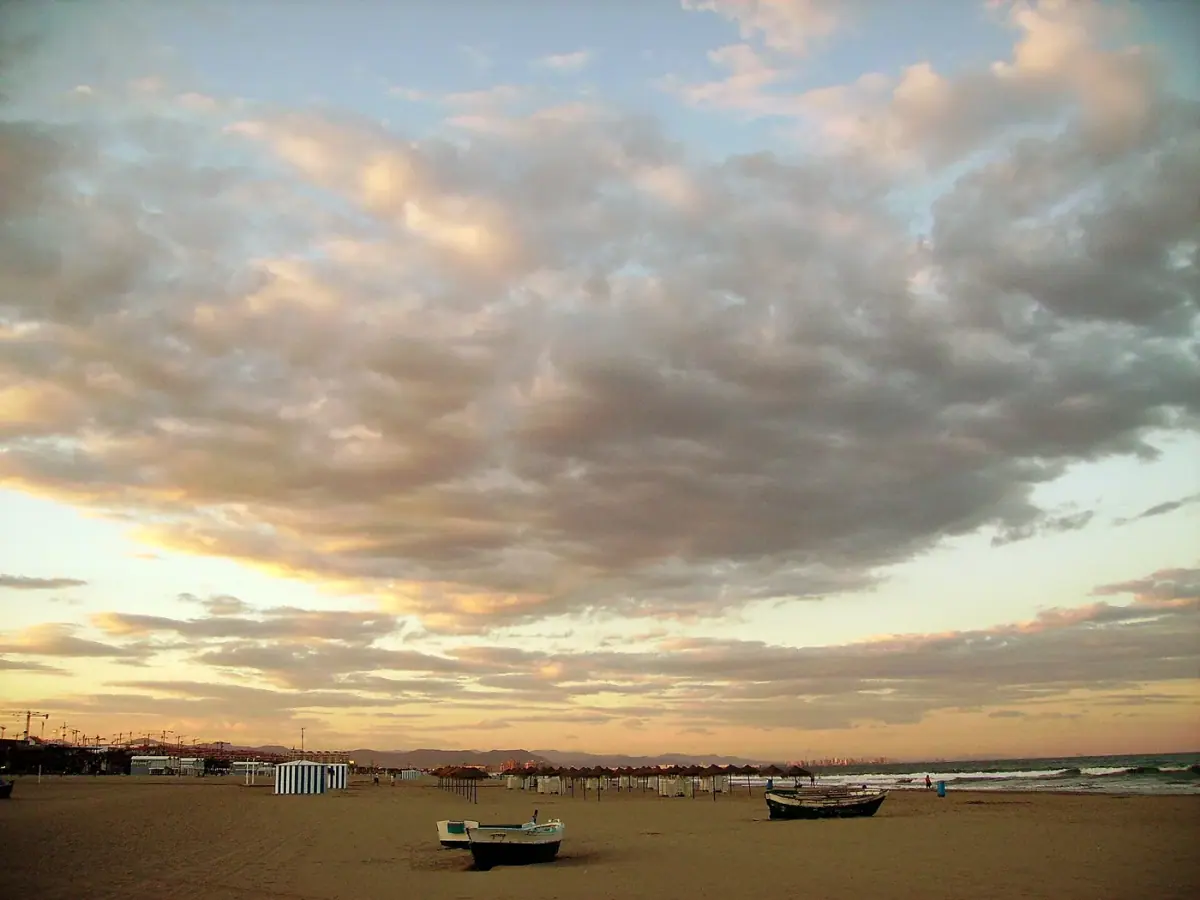

We combined the map’s two Malvarrosa entries into one stop. Visiting can mean walking the broad coast and seeing the city’s Mediterranean face as well as swimming. Swimming, facilities and weather are seasonal; do not expect the same beach day year-round.
Separate family coast time is more comfortable than a rushed trip between central museums. Pair it with the Marina. Plan transport from the historic centre separately; apparent proximity on a map does not guarantee a short walk. Information source.
Why go? A wide fine-sand beach and long promenade offer a Mediterranean holiday minutes from the centre by tram. Sand and sea for children, a coastal paella break for adults.
Visit summary
- Area: Marina and the Mediterranean coast
- Highlight: City beach and broad coast
- Suggested visit length: About 60–120 minutes
- Type of visit: Outdoors / coastal walk
- Admission: Free (outdoors)
- Nearby map stops: Valencia Marina Area
- Open map: Search for this place on Google Maps
Valencia Marina Area
The Marina combines harbour buildings, open waterfront space and new uses. Explore the city’s maritime trade and coastal relationship rather than simply listing seaside dining venues. The marker represents a broad area.
Adjust family waterfront walking time to weather and interest. Combine it with Malvarrosa on a coastal day without walking the whole beach. Plan a separate branch from central museums. Information source.
Why go? The port renovated for the America’s Cup has walkways, yachts and sea views. Ideal for a relaxed waterfront walk before the beach.
Visit summary
- Area: Marina and the Mediterranean coast
- Highlight: Old port and contemporary waterfront use
- Suggested visit length: About 45–75 minutes
- Type of visit: Outdoors / coastal walk
- Admission: Free (outdoors)
- Nearby map stops: Malvarrosa Beach
- Open map: Search for this place on Google Maps
Food and drink stops
The three places on Valencia’s food layer come from the list we tried and recorded. As one name specifies takeaway, we do not assume a seated restaurant. Check current service format and location before planning a meal.
The list below keeps the map’s food and drink choices separate. Menus, prices, opening times and booking conditions can change; check the linked business listing and its own page before visiting. The order here is not a quality ranking.
| Place | Known for | Average price (per person) | Location |
|---|---|---|---|
| Arrocería Ricepaella Delivery Take Away Nearby stop: Ciutat Vella (Historic Centre) | Valencian paella to take away | ~€10–25 | Open map |
| Horchatería de Santa Catalina Nearby stop: Santa Catalina Church | Horchata with fartons in a historic setting | Up to ~€10 | Open map |
| 100 Montaditos Nearby stop: Santa Catalina Church | Dozens of mini-sandwich varieties | Up to ~€10 | Open map |
Open the food plan separately: filter by area and search places →
Sources and visitor information
Tourist visits to the cathedral and other worship spaces may differ from worship hours. The City of Arts and Sciences is not a museum where one ticket covers everything; choose sections on its official site. The bullring and Bullfighting Museum are separate map markers; we discuss arena architecture and the museum’s cultural history separately, without event recommendations.
The selection of stops comes from a personal My Maps map. Information sources appear in the relevant paragraphs. Individual location links are Google Maps searches using place names. Nearby pairings are based on map locations; check actual walking routes on the map.
- Personal Valencia map
- Visit València official tourism guide
- Valencia municipal museums
- City of Arts and Sciences
- Spanish Ministry of Culture Ceramics Museum
Our travel map
The personal map behind this guide’s stops. Toggle layers to explore sights and any food and drink markers separately.