Madrid Travel Guide: Family Squares, Museums and Food Routes
Family itineraries for Madrid’s Royal Palace, Prado, Retiro and historic centre. Plan with our personal map, photographs and places where we ate.
Madrid’s squares, major art museums and neighbourhood streets complement one another on the same trip. On our Spanish journey, we stayed in Madrid for three nights, visited Valencia for a day and then continued by train to Barcelona. This guide turns our map of the places we explored into family-friendly area routes.
The palace and Almudena lie at the western end of the historic centre, while Prado and Retiro form the eastern branch. Treating them separately rather than as opposite ends of the same day makes it easier to explore the neighbourhoods between without rushing. The major museums are not interchangeable: Prado focuses on classical painting, Reina Sofía on modern art, and Thyssen on a broader chronological selection. Choose by interest rather than visiting them all.
The three plans below are flexible options you can reduce to two if including a Valencia day. We pair museum visits with outdoor breaks for children; the map’s food and drink places appear separately with nearby stops. We recorded these businesses after trying each one, but as detailed opinions on individual dishes were not shared, we add no personal ratings. Start by opening the map and choosing an area.
Before you go: key notes
How many days should you spend in Madrid?
Three days is ideal for the palace, Prado and Retiro; we stayed for three nights too, travelling to Valencia and back by train for one day.
Is Madrid suitable for children?
Very easy to explore. Rowboats in Retiro Park, sunset at the Temple of Debod, the Royal Palace and San Ginés churros are favourites with children.
Is the Prado Museum free?
There are free entry periods for everyone during the final two evening hours on weekdays and on Sunday afternoons; under-18s always enter free. Allow for queues during free hours.
How do you get from Madrid to Barcelona?
By high-speed train in about 2.5–3 hours. We also continued from Madrid to Barcelona by train.
Where should you stay in Madrid?
The Plaza Mayor and Sol area is the most central for exploring on foot. We stayed at B&B Hotel Madrid Centro Plaza Mayor on Calle Atocha.
Plan at a family pace: The days below are suggested itineraries based on the locations on the map. Shorten the route to suit your time inside museums and monuments; approximate visit lengths exclude queues and transport.
Suggested itinerary
| Plan | Geographical flow | Family pace |
|---|---|---|
| Centre and palace day | Plaza Mayor → Cuchilleros → Plaza de la Villa → Almudena → Royal Palace → Isabel II | If allowing time for the palace, do not add a museum. La Latina can be a separate extension. |
| Art and park day | Prado or Thyssen → Neptune → San Jerónimo → Retiro → Puerta de Alcalá → Cibeles | One major museum and a park are easier to break up than a long chain of galleries. |
| Gran Vía and northwest day | Gran Vía → Plaza de España → Cervantes → Cerralbo or Debod | Reina Sofía and Barrio de las Letras are another option; choose among these if including a Valencia day. |
Tickets and tours: Timed tickets for popular places such as the Royal Palace and Prado can sell out ahead. Browse Madrid tickets and tours on Tiqets to compare skip-the-line admission and guided tours.


Where to stay in Madrid with kids
We stayed 3 nights at the B&B Hotel Madrid Centro Plaza Mayor. With kids, where your hotel is decides how often you’ll say “shall we head back?”; being able to return for a midday break is a big relief.
| Area | Good for | Watch out | Stay |
|---|---|---|---|
| Sol, Plaza Mayor and Ópera | First-timers; most main sights within walking distance | Can be crowded and noisy in the evening | See on Booking |
| Retiro and Salamanca | Families wanting the park nearby and calm, orderly streets | Higher prices | See on Booking |
| Around Atocha | Close to the Valencia and Barcelona trains; walking distance to the Prado | The station area is busy | See on Booking |
| Chamberí | A local, quiet neighbourhood with good metro links | Metro or a 20–30 minute walk to the centre | See on Booking |
What we look at when choosing: A lift (does the stroller fit without folding?), being close to the train or metro, a family room for three or an apartment with a kitchen, and air conditioning in summer.
Accommodation: Compare hotels and apartments in Madrid on Booking.com; choosing free cancellation keeps your plans flexible.
Contents
- Before you go: key notes
- Where to stay in Madrid with kids
- Palace and historic western centre
- Gran Vía and the northwest
- La Latina and the southern centre
- Prado, Cibeles and Retiro
- Barrio de las Letras and Atocha
- Food and drink stops
- Sources and visitor information
Palace and historic western centre
Almudena Cathedral
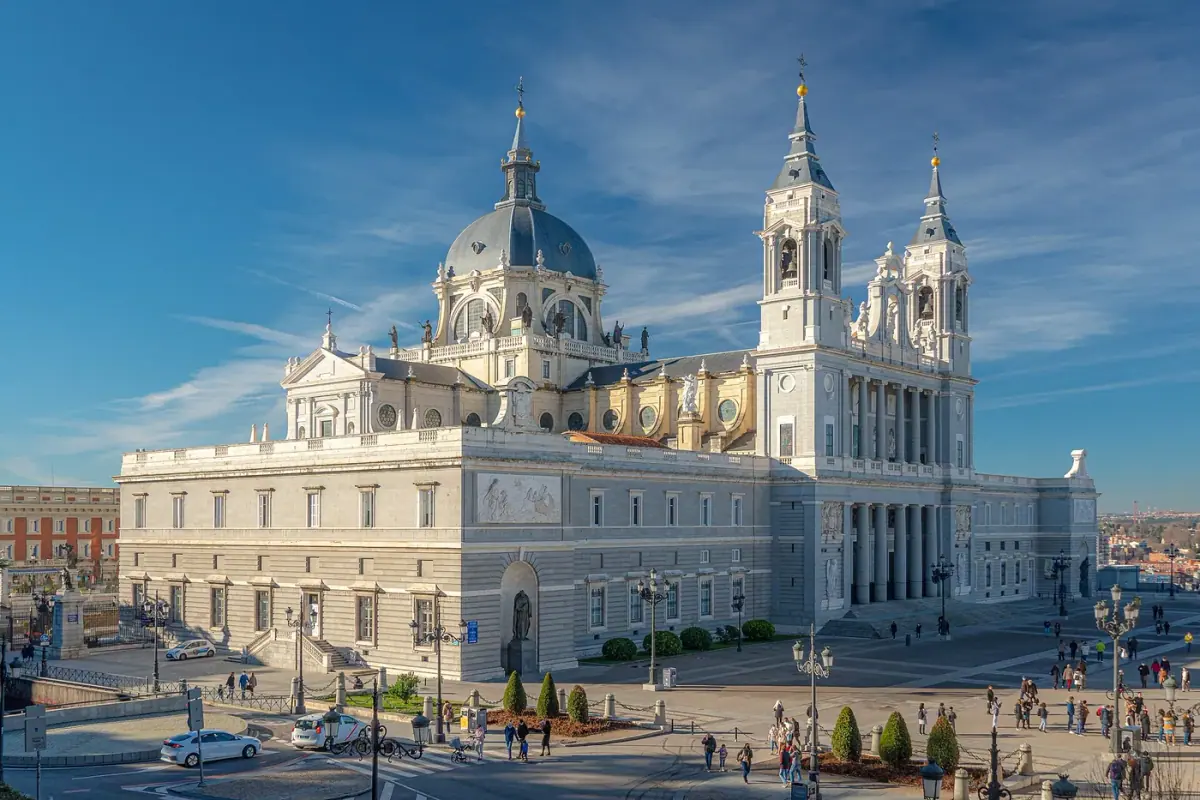

Almudena complements the palace surroundings with religious architecture. Looking at the two buildings facing each other helps explain the capital’s ceremonial space. Access to the main worship area, museum and upper sections may differ; check current coverage.
Combine a short family interior visit with a square walk. The lower church/crypt marker is explained separately below as another section of the same building with different access, not a second city cathedral. Information source.
Why go? Completed in 1993 after more than a century of construction, the cathedral stands opposite the Royal Palace. The colourful modern ceiling decoration in its neo-Gothic interior offers a very different experience from older cathedrals.
Visit summary
- Area: Palace and historic western centre
- Highlight: Cathedral opposite the Royal Palace
- Suggested visit length: About 45–75 minutes
- Type of visit: Indoors / exterior view
- Admission: Cathedral free; museum and dome charge admission.
- Nearby map stops: Almudena Crypt (Santa María la Real), Emir Mohamed I Park
- Open map: Search for this place on Google Maps
Sacramento Church (Armed Forces Cathedral)
Sacramento, also known today as the Armed Forces Cathedral, is a separate building, not Almudena. The former convent church’s present function shows how Madrid’s buildings change use over time. Make a short visit to the façade and, if open, the interior.
It fits the historic-centre branch between the palace and Plaza de la Villa. Check worship and security conditions; do not interpret its institutional role as unrestricted museum entry. Information source.
Why go? Hidden in a narrow street, this Baroque church has one of Madrid’s most ornate interiors. A small treasure a few steps away from the busy main route.
Visit summary
- Area: Palace and historic western centre
- Highlight: From convent church to cathedral
- Suggested visit length: About 20–40 minutes
- Type of visit: Exterior view / indoors
- Admission: Free
- Nearby map stops: Plaza de la Villa, Almudena Crypt (Santa María la Real)
- Open map: Search for this place on Google Maps
Almudena Crypt (Santa María la Real)
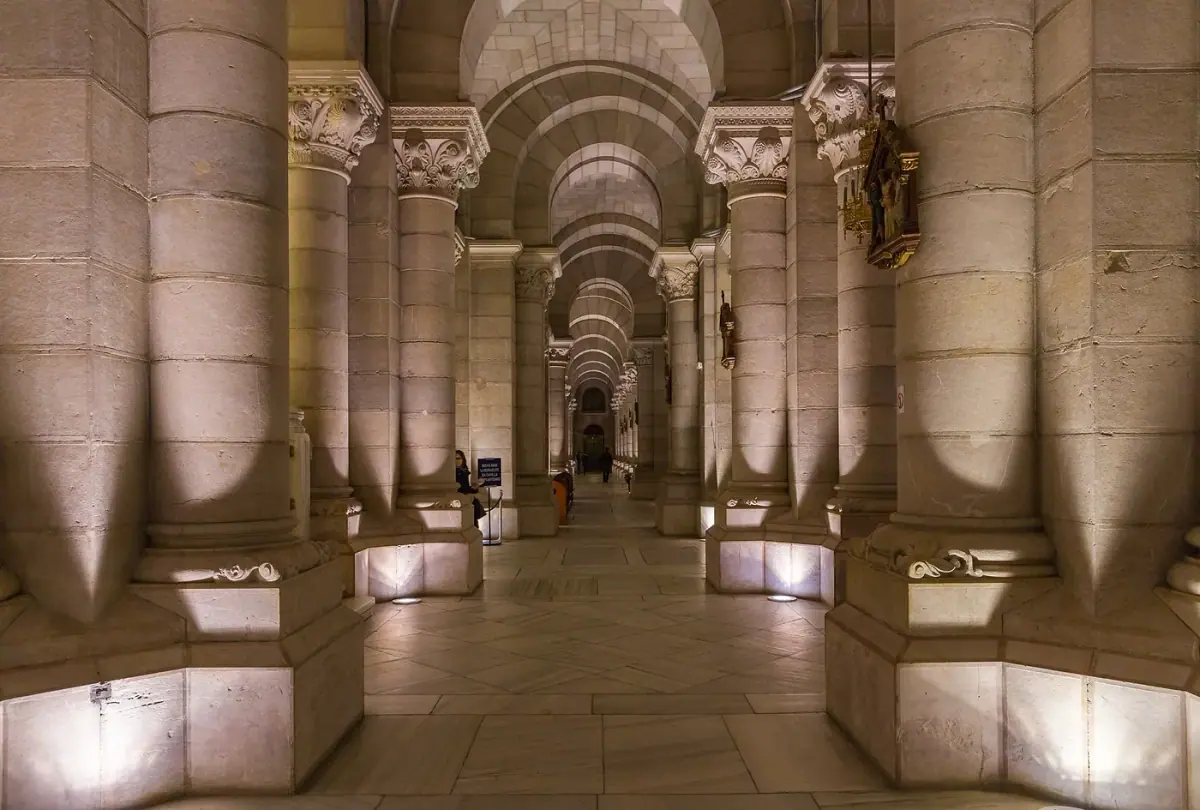

The map’s St Mary Royal of the Almudena marker corresponds, by location and its entrance around Calle Mayor, to the lower church/crypt. Although related to the main cathedral, it has different entry arrangements and atmosphere. We therefore describe two sections rather than duplicating them as independent cathedrals.
If interested in entering, check current worship and visitor access directly. Families need not allocate long visits to both main cathedral and crypt; choose according to architectural interests. Information source.
Why go? With hundreds of columns and dim light, the neo-Romanesque crypt beneath the cathedral has a completely different atmosphere from the building above. Free and quiet, it offers a cool break on hot days.
Visit summary
- Area: Palace and historic western centre
- Highlight: Lower church distinct from the main cathedral
- Suggested visit length: About 30–45 minutes
- Type of visit: Indoors
- Admission: Free
- Nearby map stops: Almudena Cathedral, Emir Mohamed I Park
- Open map: Search for this place on Google Maps
San Miguel Market
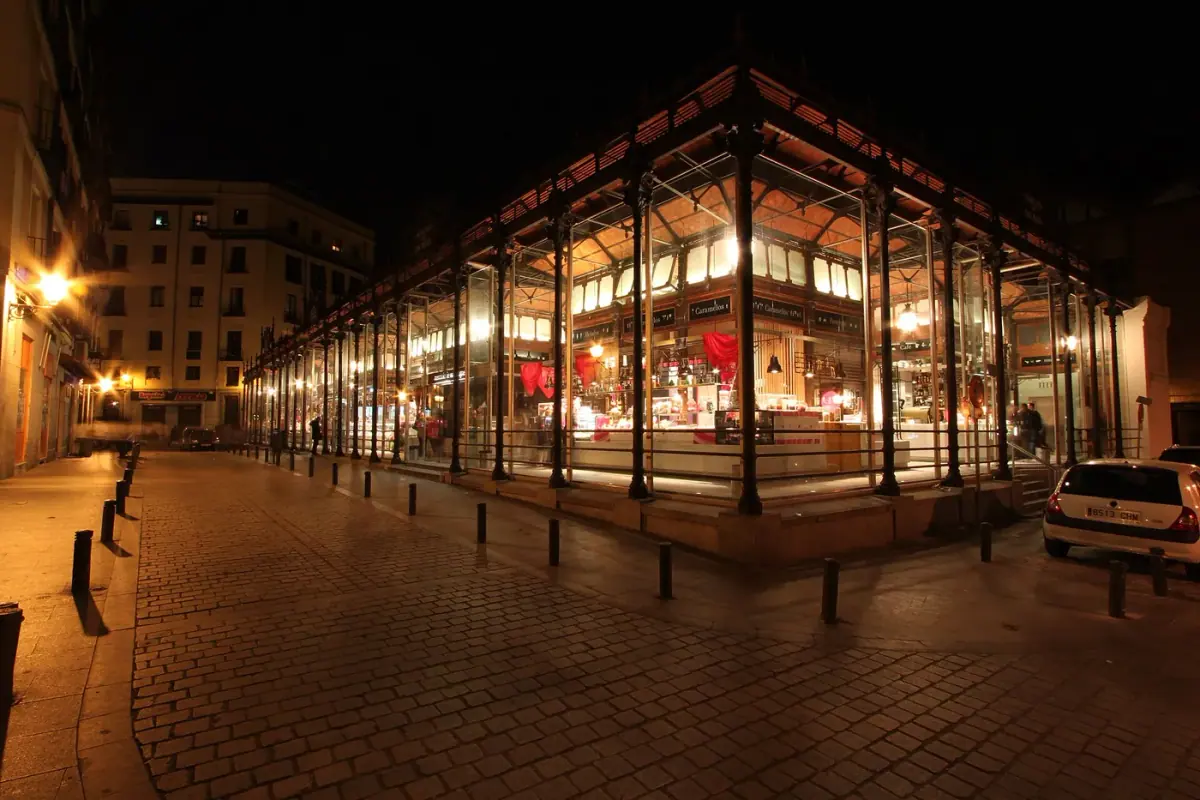

San Miguel’s historic iron structure has architectural value beyond a food break. But an important current planning note applies: the operator’s official site announces temporary closure from 7 January for heritage conservation work. Do not finalise an indoor meal plan without confirmation of reopening.
You can view the exterior around Plaza Mayor. Rather than tying a family meal solely to this market, choose a suitable alternative from the tried businesses below. Do not treat old guides’ opening hours as current. Information source.
Why go? The 1916 iron-and-glass market is one of Madrid’s most elegant buildings. Wandering tapas stalls inside and tasting a bite of everything gives a quick introduction to Spanish cooking.
Visit summary
- Area: Palace and historic western centre
- Highlight: Historic iron market building
- Suggested visit length: About 15–20 minutes outside; extend if access is confirmed
- Type of visit: Exterior view / check closure
- Admission: Free (food costs extra).
- Nearby map stops: Plaza de la Villa, Plaza Mayor
- Open map: Search for this place on Google Maps
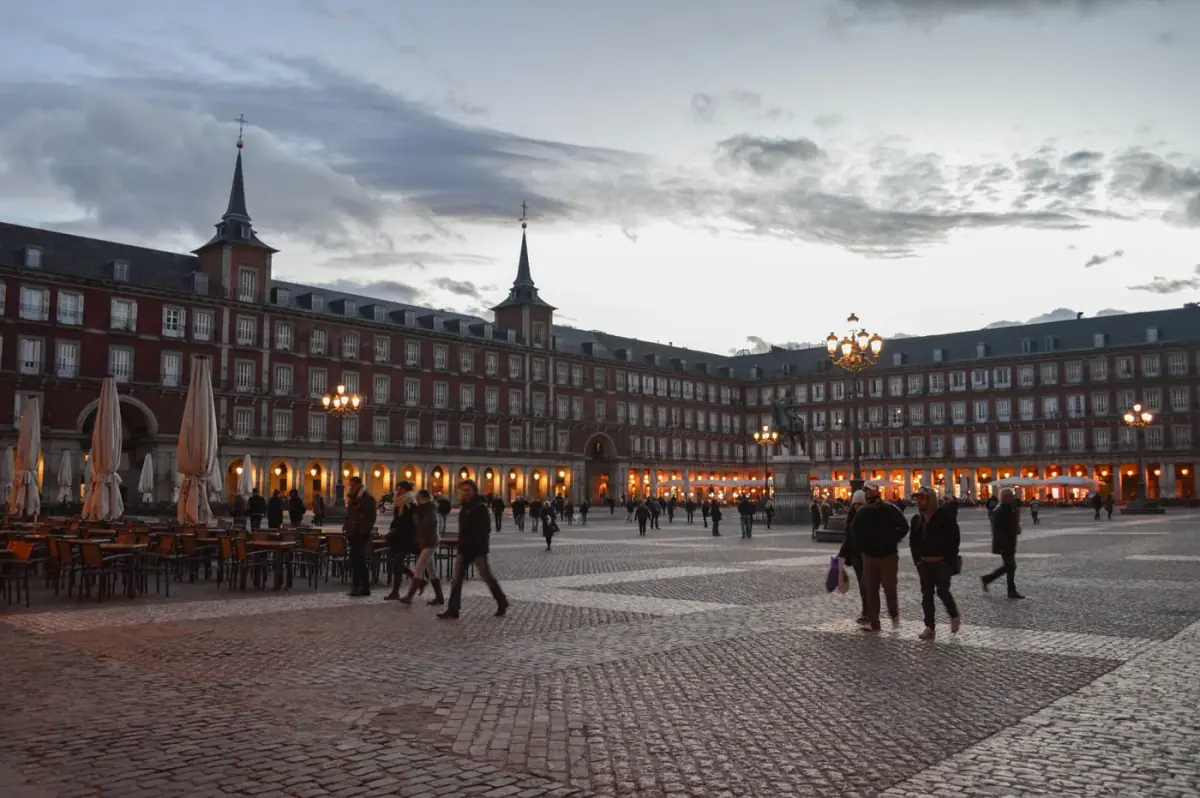
Plaza Mayor
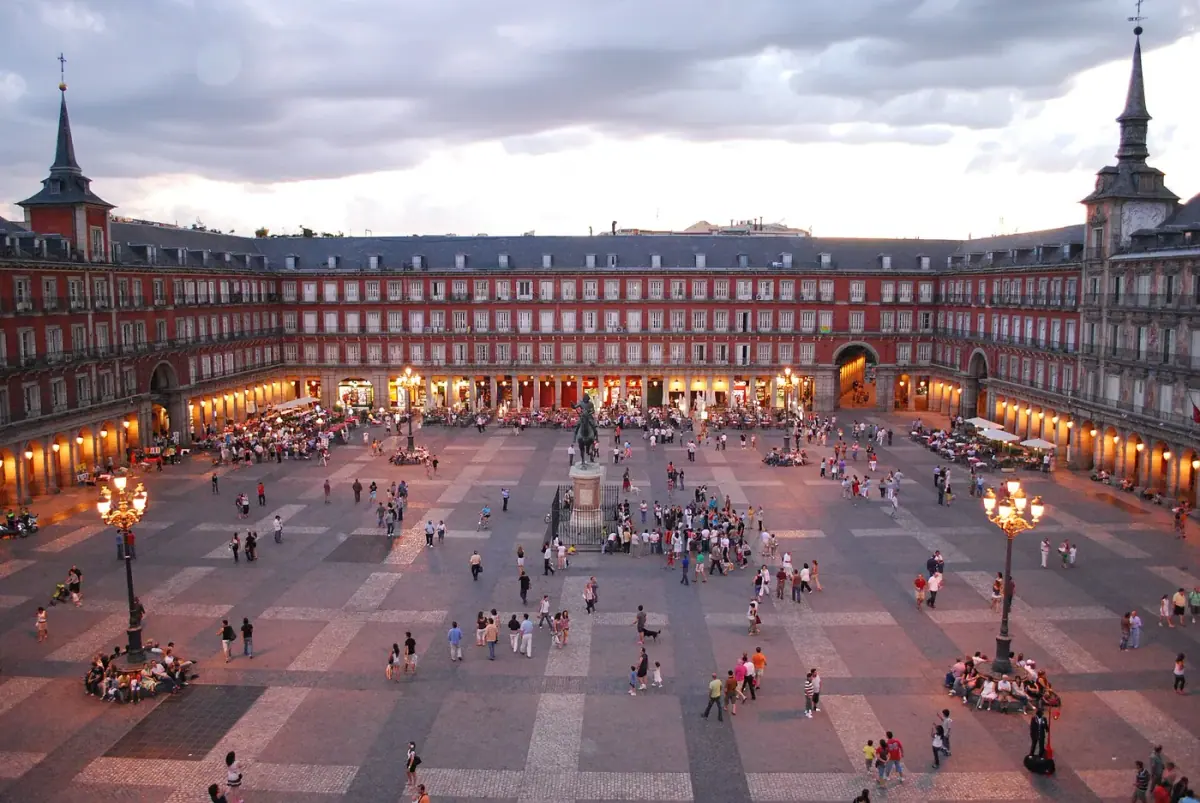

At Plaza Mayor, the overall façade composition and passages opening onto the square matter more than a single monument. Taking in the perspective from one end, then examining arches and details, helps reveal how it forms a public stage.
Plan it as a free outdoor section with children. Make a loop towards Cuchilleros and Plaza de la Villa; not every surrounding business needs to be counted as a travel recommendation. Information source.
Why go? A vast enclosed square that has hosted everything from bullfights to royal ceremonies for four hundred years. Enter through an arch and the uniform surrounding façades suddenly take you to another era.
Visit summary
- Area: Palace and historic western centre
- Highlight: Historic square enclosed by coordinated façades
- Suggested visit length: About 30–45 minutes
- Type of visit: Outdoor walk
- Admission: Free (outdoors)
- Nearby map stops: San Miguel Market, Calle de Cuchilleros
- Open map: Search for this place on Google Maps
Plaza de Isabel II
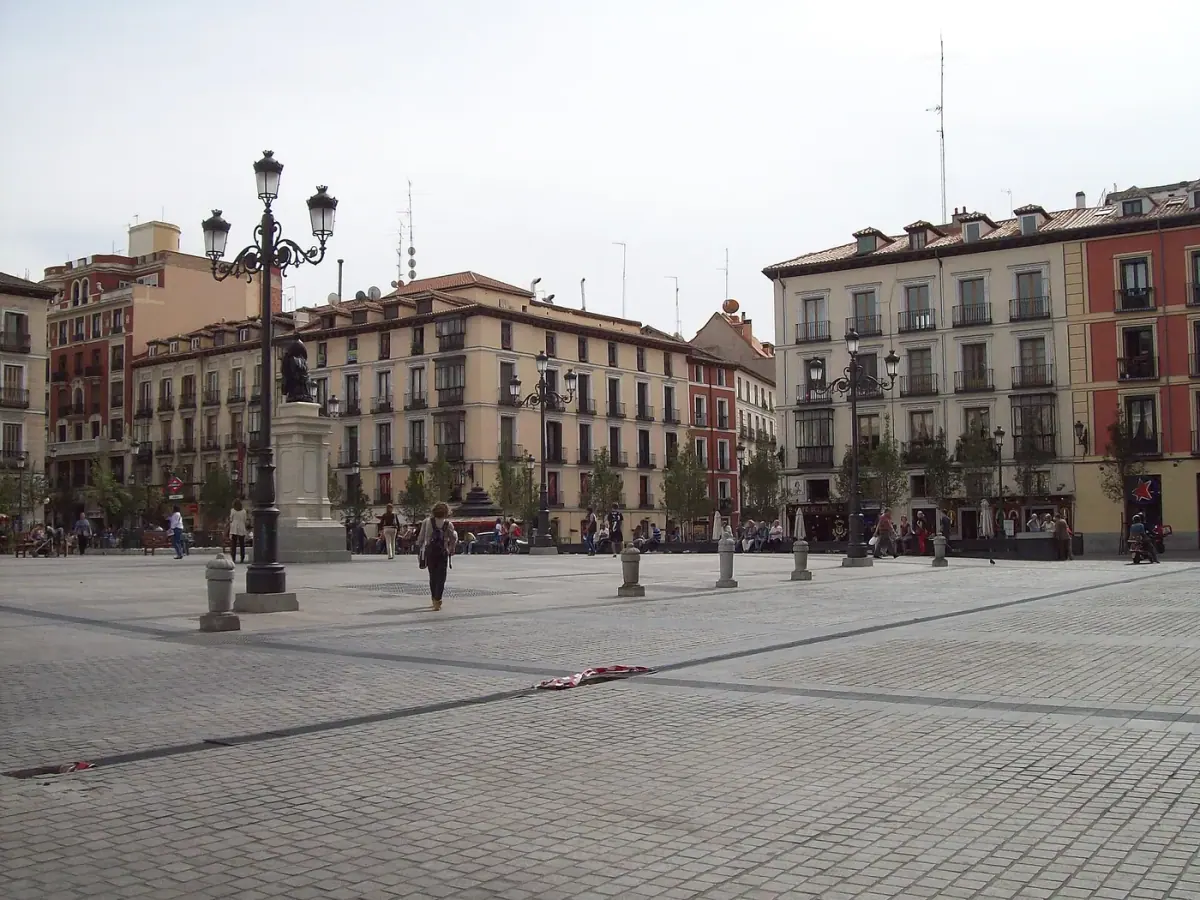

Plaza de Isabel II is a place to orient yourself and pause on a walk around the palace and opera. Seeing Teatro Real with the surrounding open space, rather than only photographing its façade, explains its place in the city. A square visit does not include the theatre interior.
Shorten the family centre route here or continue towards the palace. Do not assume every nearby institution’s entrance is open to tourists. Information source.
Why go? The square in front of Teatro Real is a natural stop between the palace and Puerta del Sol. Old water-channel remains in the metro station are an interesting surprise too.
Visit summary
- Area: Palace and historic western centre
- Highlight: Square around Teatro Real
- Suggested visit length: About 15–25 minutes
- Type of visit: Outdoor walk
- Admission: Free (outdoors)
- Nearby map stops: Teatro Real, San Miguel Market
- Open map: Search for this place on Google Maps
Calle de Cuchilleros
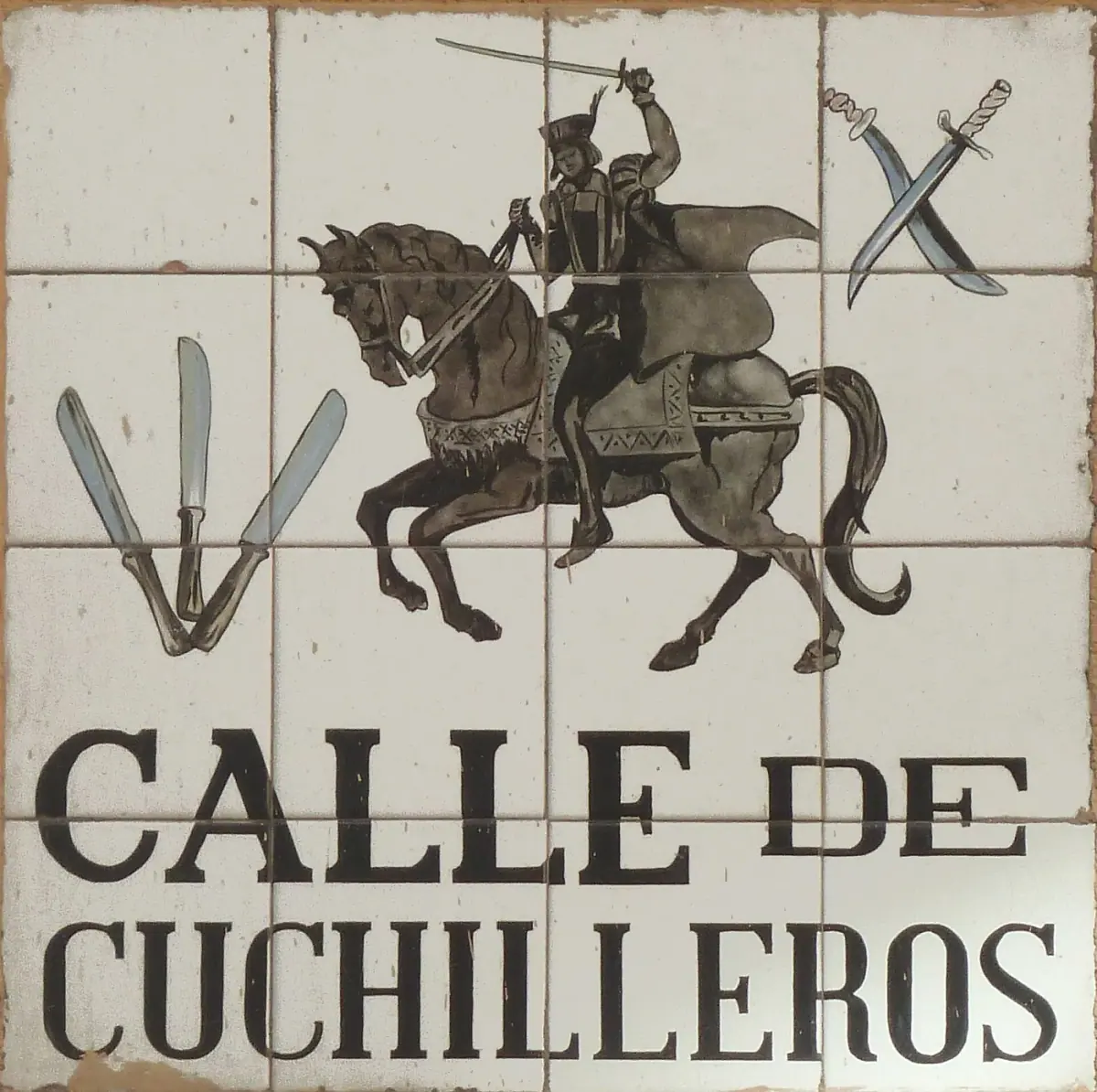

Cuchilleros marks the shift from Plaza Mayor’s orderly open space into narrower historic streets. Read it on foot through changes in level and façades, rather than simply as a street of dining addresses. Individual business assessments stay in the separate food list.
A short family branch can link towards Plaza de la Villa and La Latina. Where there are steps or slopes, check alternative stroller connections on site. Information source.
Why go? This sloping, winding street below Plaza Mayor is one of old Madrid’s most distinctive corners. Botín, known as the world’s oldest restaurant, is here too.
Visit summary
- Area: Palace and historic western centre
- Highlight: Transition between square and historic streets
- Suggested visit length: About 15–25 minutes
- Type of visit: Street walk
- Admission: Free (outdoors)
- Nearby map stops: San Miguel Market, Plaza Mayor
- Open map: Search for this place on Google Maps
Real Casa de Correos
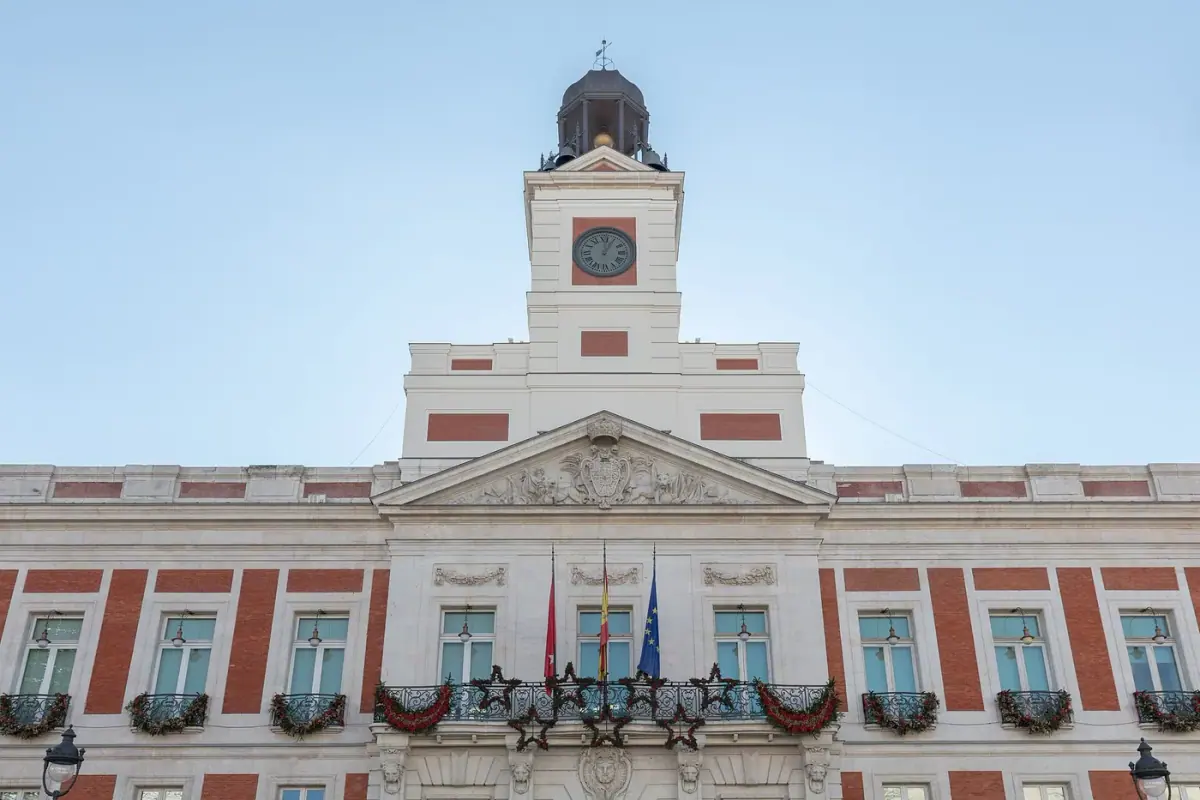

With its clock tower, Real Casa de Correos is one of Madrid’s public landmarks. Its current administrative function shows a living institution beyond its name as an old post office. Seeing the façade does not mean unrestricted access inside.
Add a short stop to the centre walk. The relationship between clock and square is a tangible subject for children; do not assume special-day crowds or events on your visit date. Information source.
Why go? The Kilometre Zero plaque in front of this Puerta del Sol building marks the starting point of all Spain’s roads. Spain’s New Year tradition of eating twelve grapes beneath the clock tower is broadcast from here.
Visit summary
- Area: Palace and historic western centre
- Highlight: Puerta del Sol’s administrative building and clock
- Suggested visit length: About 15–20 minutes
- Type of visit: Exterior view
- Admission: Free (exterior view)
- Nearby map stops: Plaza Mayor, Calle de Cuchilleros
- Open map: Search for this place on Google Maps
Emir Mohamed I Park
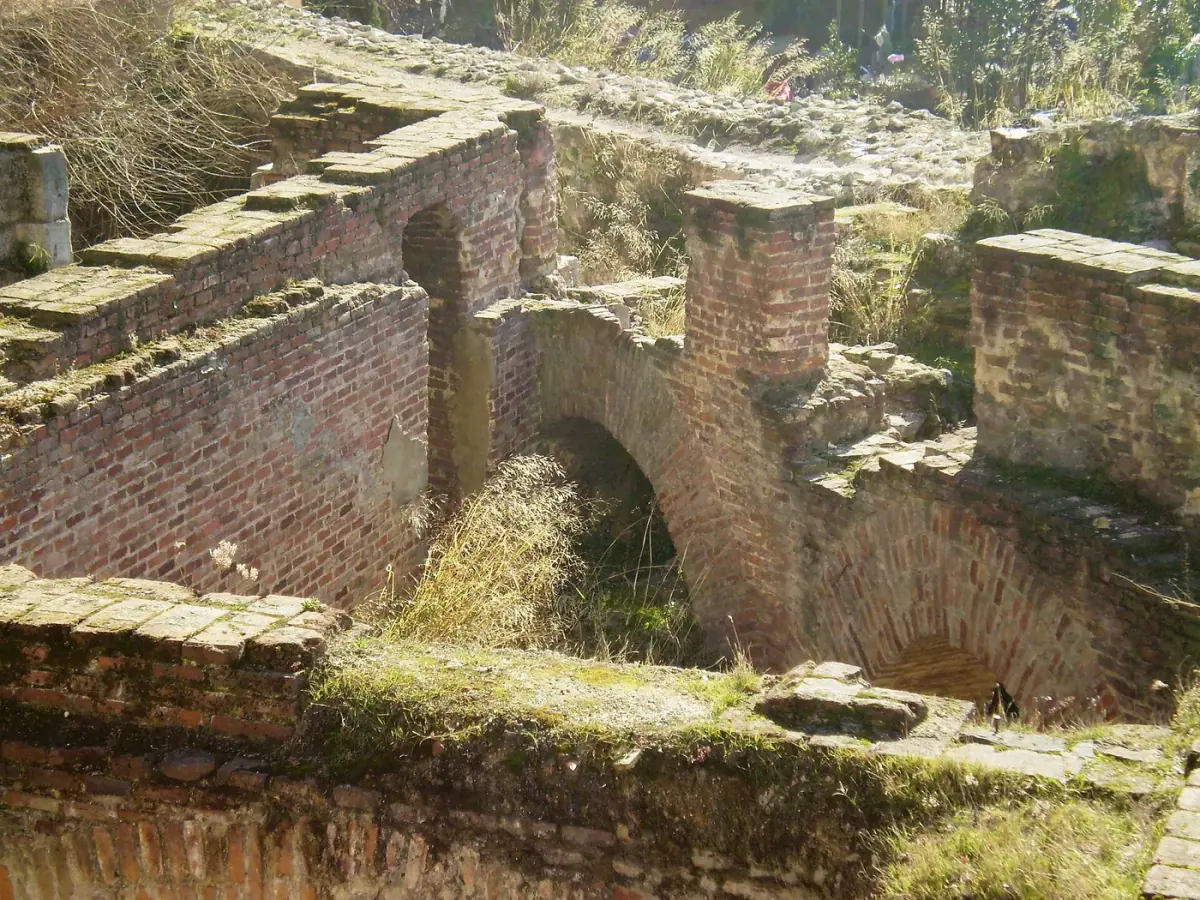

Emir Mohamed I Park adds a layer of Madrid’s earlier periods to the palace and cathedral route. Consider the ruins as pieces of history preserved in the city rather than expecting a large archaeological park.
A short, concrete family history stop. Check current entry and open-area arrangements; allow for changes in level south of the cathedral with a stroller. Information source.
Why go? This small park holds Moorish wall remains showing Madrid’s ninth-century Umayyad foundation. One of the rare places to see the city’s Arab origins in situ.
Visit summary
- Area: Palace and historic western centre
- Highlight: Traces of Madrid’s early urban history
- Suggested visit length: About 20–30 minutes
- Type of visit: Outdoors / around ruins
- Admission: Free (outdoors)
- Nearby map stops: Almudena Crypt (Santa María la Real), Almudena Cathedral
- Open map: Search for this place on Google Maps
Plaza de la Villa
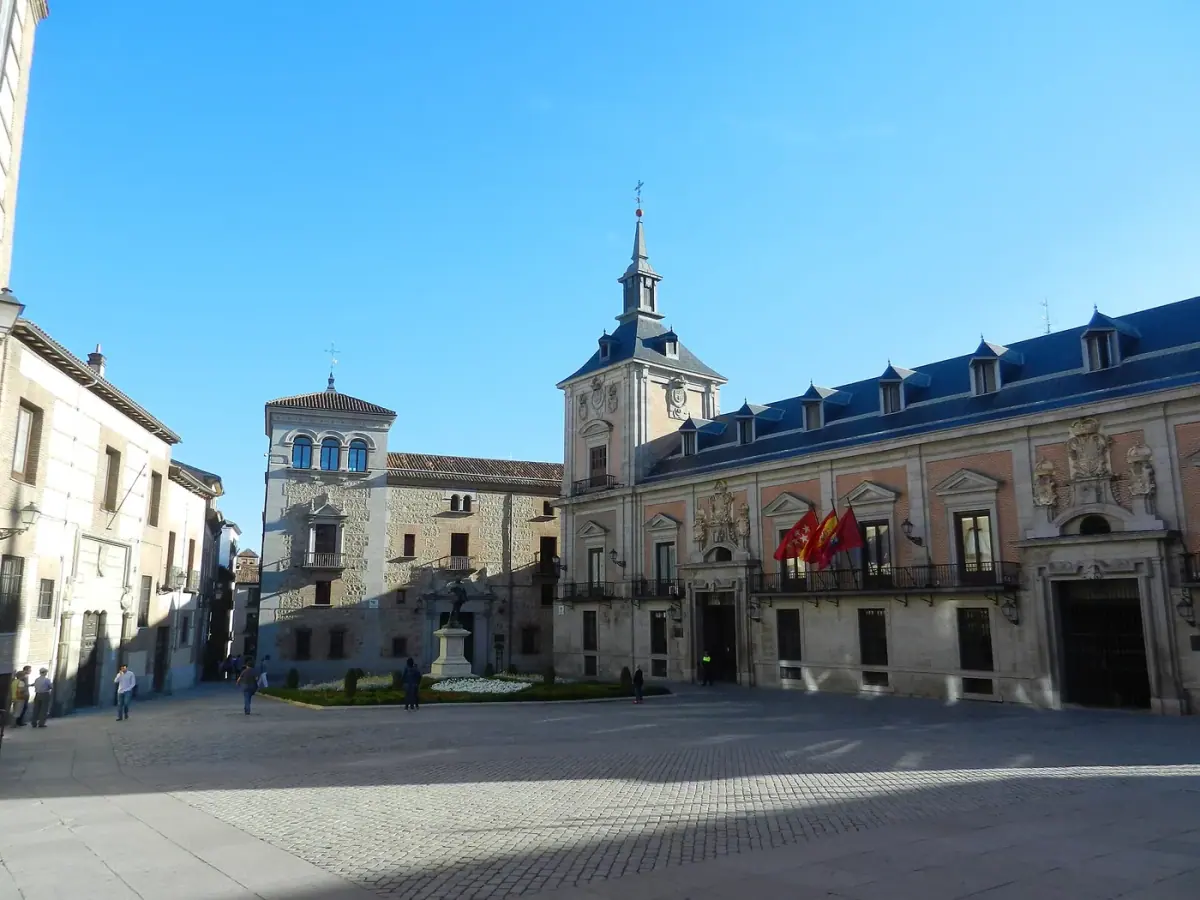

Plaza de la Villa shows a historic Madrid scale distinct from grand palaces and boulevards. Examining façades from different periods together with the square’s boundaries helps explain civic urban life. Do not treat it as just a small gap to pass through.
A short family observation and rest stop. Add it to the historic-centre flow between Plaza Mayor and Almudena; building interiors require separate access confirmation. Information source.
Why go? A quiet square bringing together some of Madrid’s oldest buildings, with Gothic, Plateresque and Baroque side by side. A corner evoking medieval Madrid after busy streets.
Visit summary
- Area: Palace and historic western centre
- Highlight: Historic civic urban fabric
- Suggested visit length: About 20–30 minutes
- Type of visit: Outdoor walk
- Admission: Free (outdoors)
- Nearby map stops: San Miguel Market, Sacramento Church (Armed Forces Cathedral)
- Open map: Search for this place on Google Maps
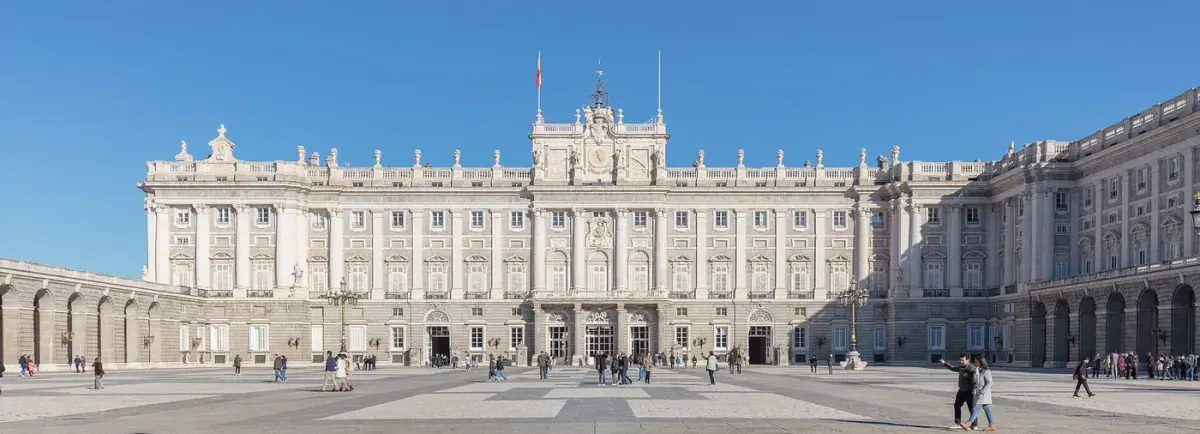
Royal Palace of Madrid
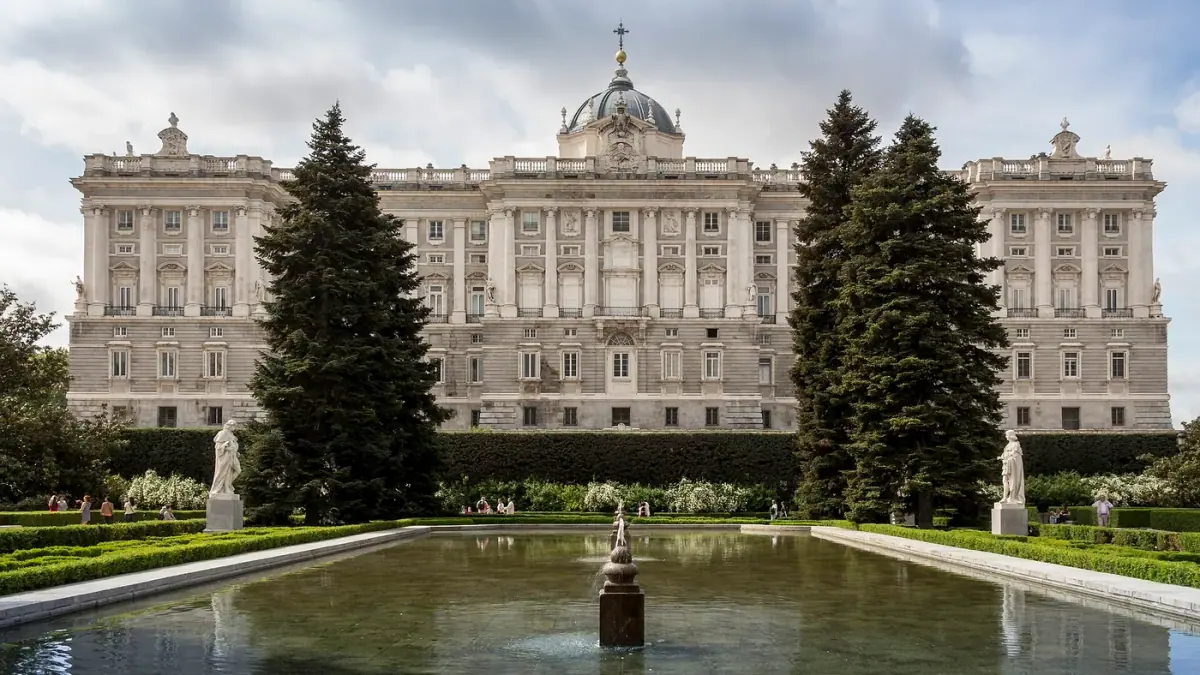

The Royal Palace is a major visit combining the scale of its façade with the ceremonial world inside. Room decoration, furniture and artworks are parts of a representational function rather than independent objects. Choose official coverage without assuming every special section opens on the same ticket or date.
If touring the palace as a family, do not fill that day with major painting museums. Almudena and nearby squares can form the complementary outdoor route. Seeing only the façade and surroundings is also valid on a short city trip; not entering does not mean missing the palace area. Information source.
Why go? With over 3,000 rooms, it is one of Western Europe’s largest royal palaces. The Throne Room, Stradivarius violin collection and royal pharmacy offer a fairy-tale visit for children too.
Visit summary
- Area: Palace and historic western centre
- Highlight: Royal ceremonial rooms and monumental palace scale
- Suggested visit length: About 90–150 minutes
- Type of visit: Indoors / exterior view
- Admission: Paid admission · about €14 per adult; ages 5–16 reduced, under-5s free. Free for EU citizens during the last two afternoon hours Monday–Thursday.
- Nearby map stops: Almudena Cathedral, Almudena Crypt (Santa María la Real)
- Open map: Search for this place on Google Maps
Teatro Real
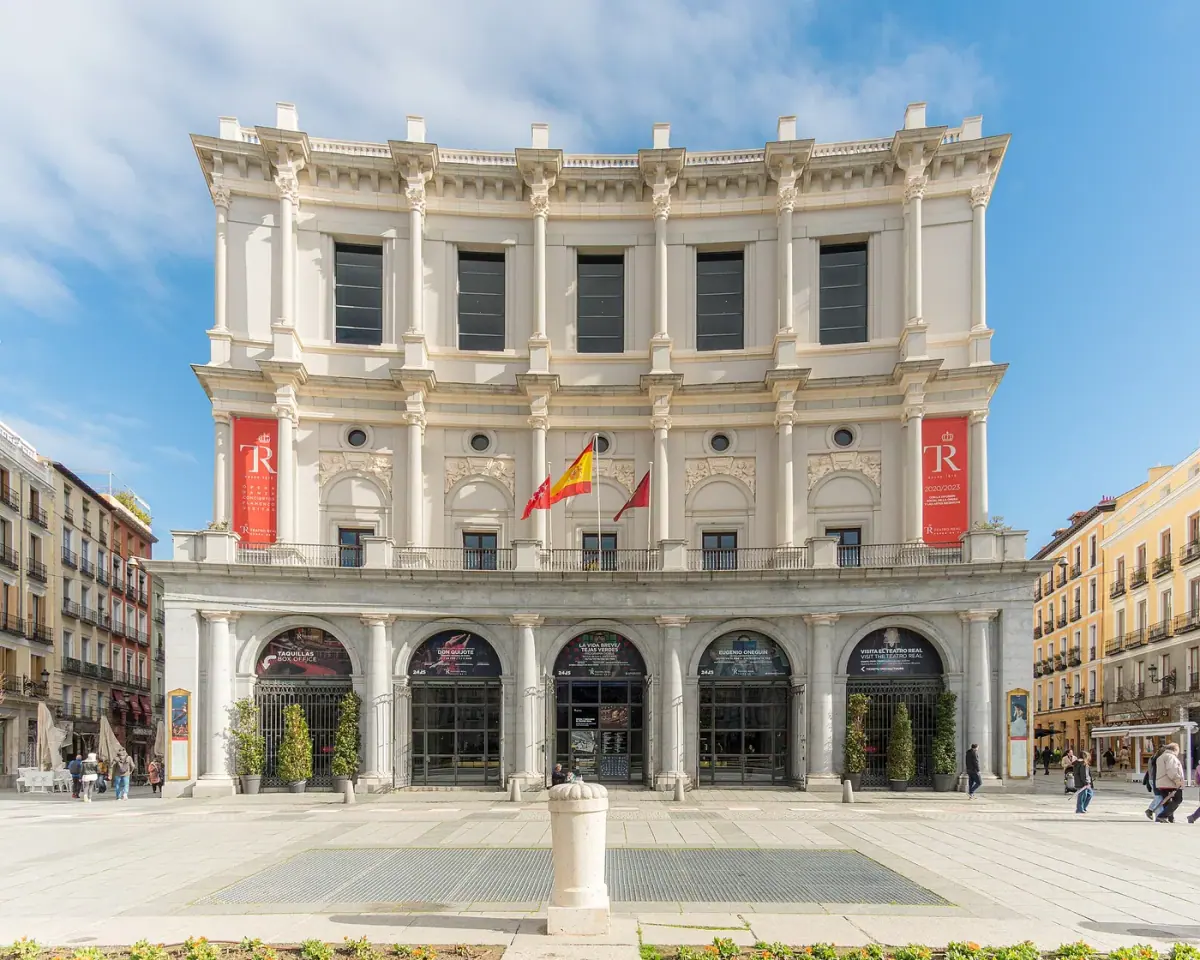

At Teatro Real, a building tour and attending a performance are different programmes. An architectural visit may reveal the relationship between stage and audience areas; accessible sections vary with rehearsals and events. Choose the programme type and duration beforehand with children.
Combine it with Isabel II and the palace area. We do not equate a long opera evening with a short daytime building tour; the map marker does not review a particular performance. Information source.
Why go? Spain’s leading opera house; guided tours can reveal backstage areas and magnificent halls. Finding performance tickets can crown a Madrid evening.
Visit summary
- Area: Palace and historic western centre
- Highlight: The opera house’s stage world
- Suggested visit length: About 45–75 minutes
- Type of visit: Scheduled indoor visit / exterior view
- Admission: Paid admission · guided tour; performances require separate tickets.
- Nearby map stops: Plaza de Isabel II, Plaza de la Villa
- Open map: Search for this place on Google Maps
Gran Vía and the northwest
Temple of Debod
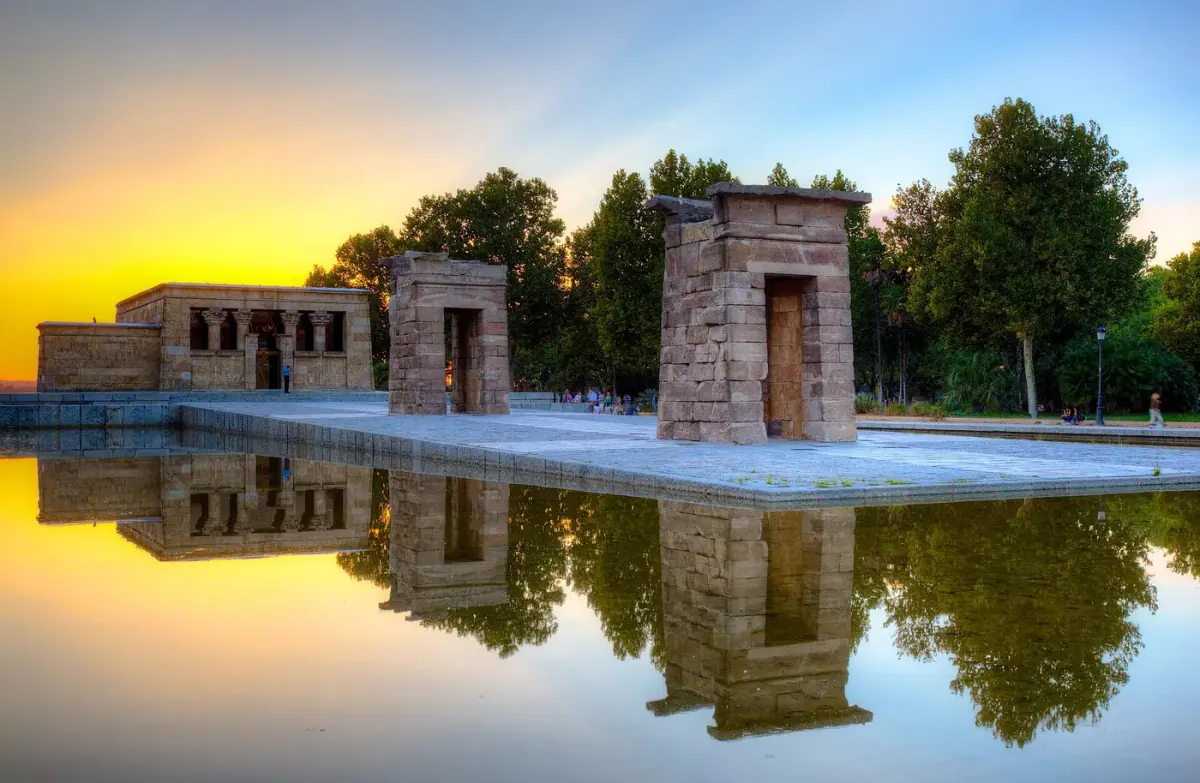

Unlike Madrid’s other monuments, Debod is a historic temple of Egyptian origin. Explore it as a building moved from another geography, not an example of Spanish palace architecture. An exterior visit and limited-capacity interior access are separate plans.
Allow family time in the surrounding park without making sunset compulsory. Check the municipal booking system if entering. Combine it with the Plaza de España and Cerralbo branch. Information source.
Why go? A genuine 2,200-year-old Egyptian temple, saved from flooding during the construction of Egypt’s Aswan Dam and gifted to Spain. Its sunset reflection in the pool is one of Madrid’s loveliest views.
Visit summary
- Area: Gran Vía and the northwest
- Highlight: Egyptian temple relocated to Madrid
- Suggested visit length: About 30–45 minutes
- Type of visit: Exterior view / reserved interior visit
- Admission: Free (interior visit by reservation).
- Nearby map stops: Cerralbo Museum, Plaza de España
- Open map: Search for this place on Google Maps
Metrópolis Building
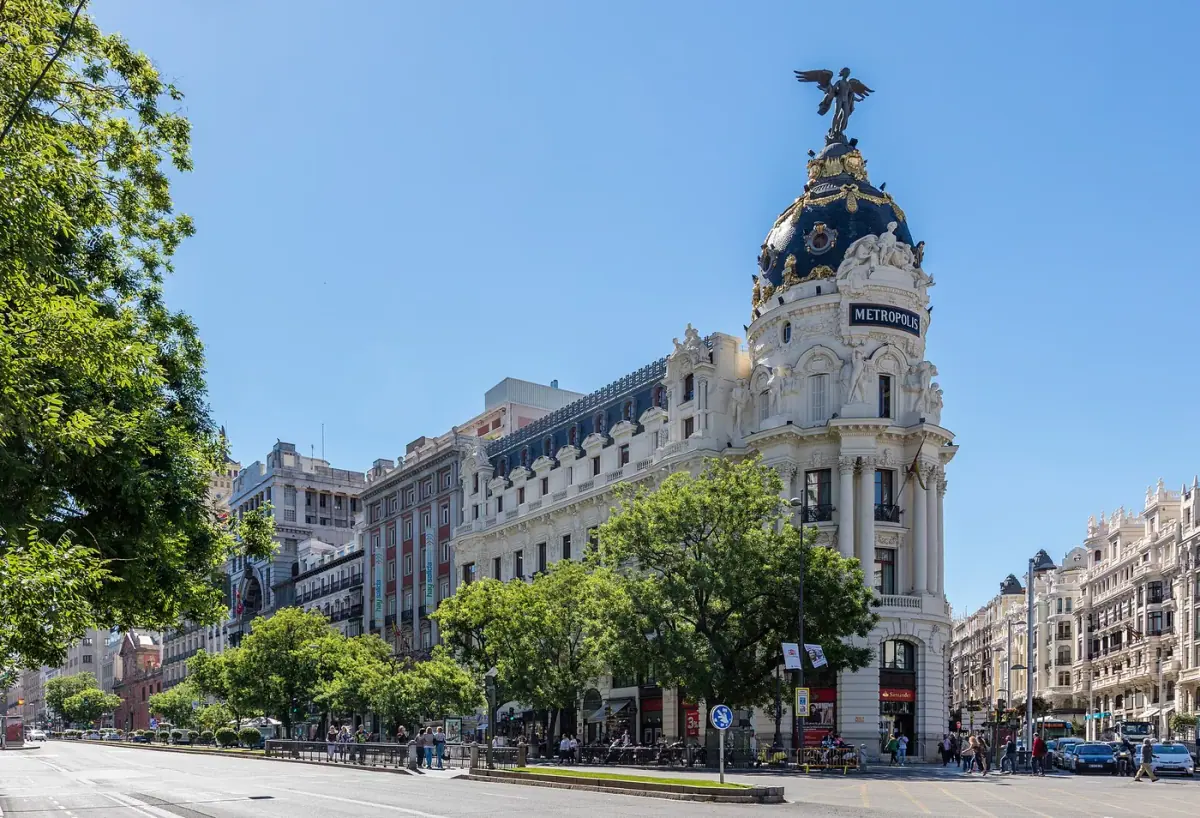

Metrópolis defines the corner around Gran Vía and Alcalá. To see its dome and façade decoration as a whole, look from a safe pedestrian point opposite rather than only from immediately below. Its current commercial use does not mean every section is open to visitors.
A short architectural stop on a Gran Vía walk. At busy junctions with children, continue without leaving the pedestrian route for photographs. Information source.
Why go? With a winged Victory statue atop its dome, Madrid’s most photographed building marks the start of Gran Vía. The view from the corner where Alcalá meets Gran Vía is an iconic city image.
Visit summary
- Area: Gran Vía and the northwest
- Highlight: Corner façade and domed city skyline
- Suggested visit length: About 10–15 minutes
- Type of visit: Exterior view
- Admission: Free (exterior view)
- Nearby map stops: Círculo de Bellas Artes, Espacio Fundación Telefónica
- Open map: Search for this place on Google Maps
Espacio Fundación Telefónica
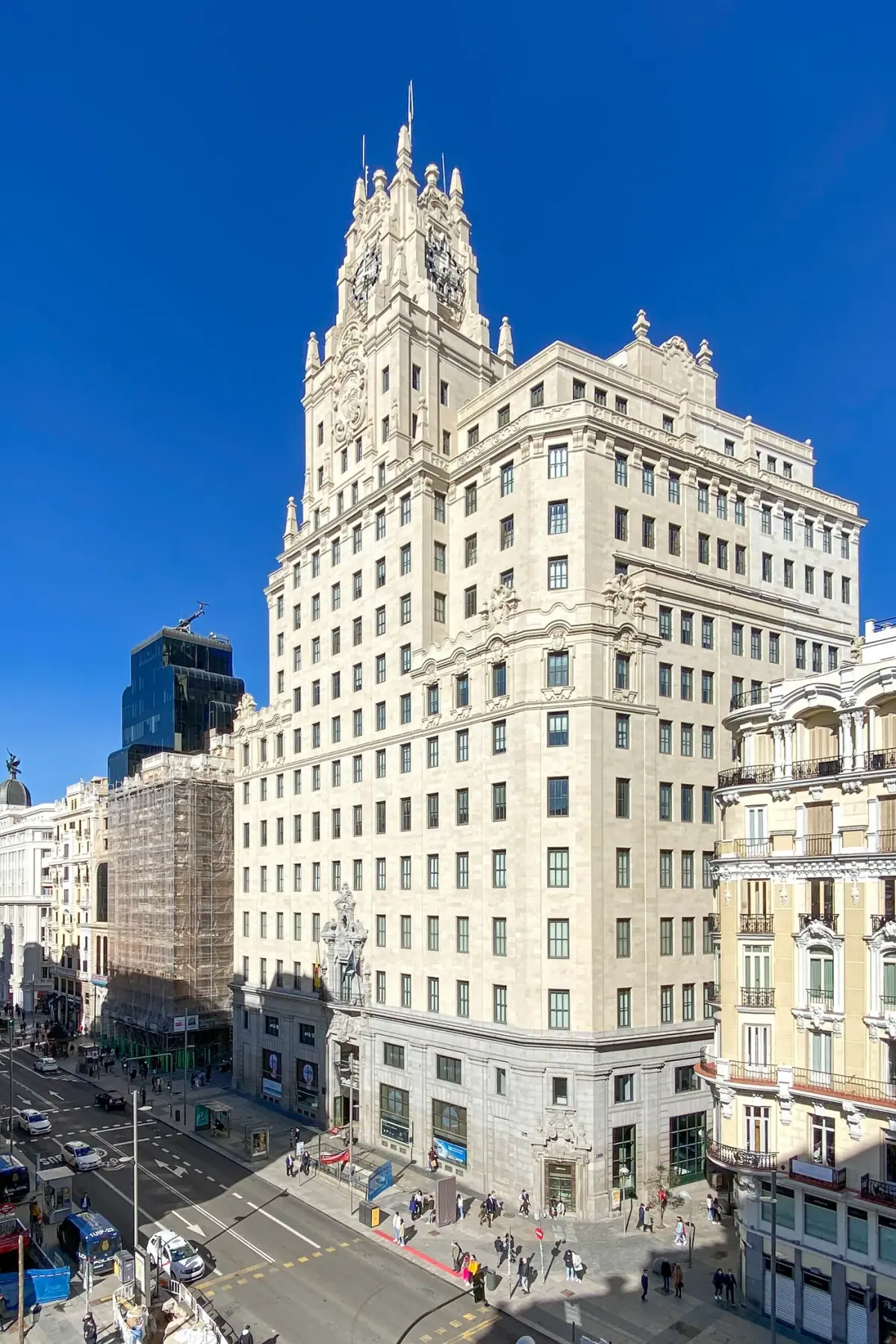

Fundación Telefónica offers exhibitions on how communication and technology change social life. Comparing old devices with current communications can make a tangible family topic. Check the programme to distinguish permanent interpretation from temporary shows.
Choose it as the main indoor alternative on a Gran Vía walk. Check ticket or registration conditions without assuming all exhibitions open that day or suit the same ages. Information source.
Why go? Free exhibitions on technology and communication history in the building known as Gran Vía’s first skyscraper. Old phones and calculators catch children’s attention.
Visit summary
- Area: Gran Vía and the northwest
- Highlight: Communication technologies and culture
- Suggested visit length: About 60–90 minutes
- Type of visit: Indoors / exhibition
- Admission: Free
- Nearby map stops: Gran Vía, Metrópolis Building
- Open map: Search for this place on Google Maps
Gran Vía
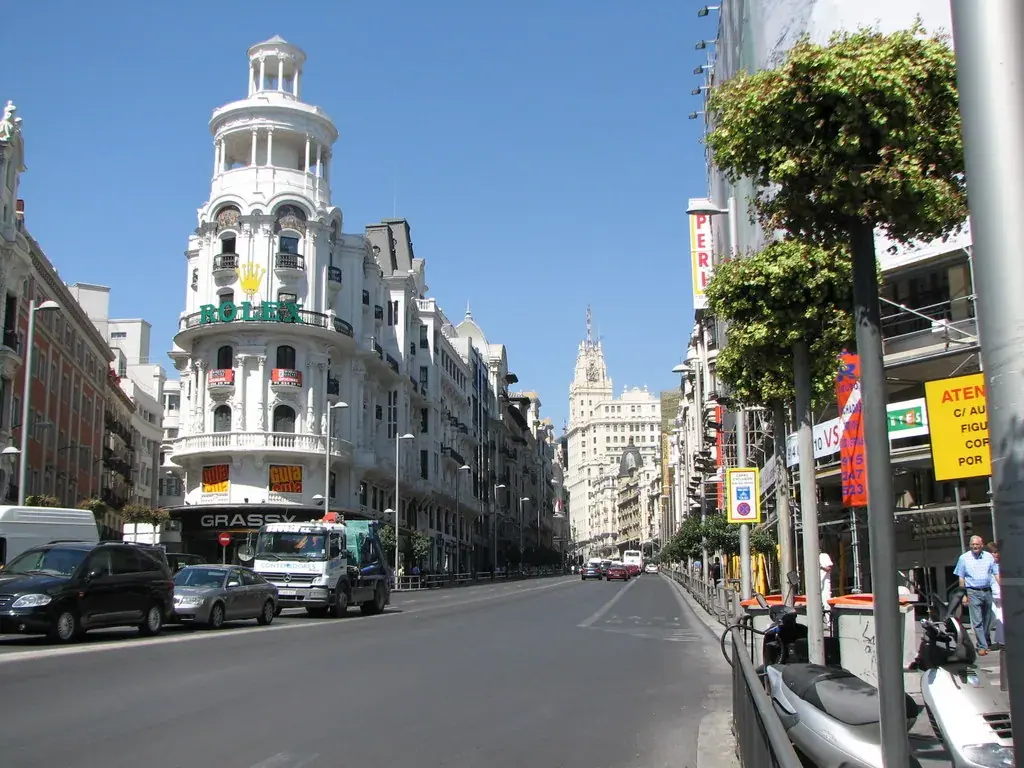

Exploring Gran Vía means looking beyond shop windows to the upper floors and rooflines shaping the city view. You need not walk its full length; choose a section between Metrópolis, Telefónica and Plaza de España according to interest.
With children, use suitable wider spaces for longer pauses on busy pavements and junctions. Plan an architectural walk without making shopping its purpose. Information source.
Why go? Madrid’s Broadway: a main street full of grand early-twentieth-century buildings, cinemas and theatres. Walking when the evening lights come on is a great way to feel the city’s energy.
Visit summary
- Area: Gran Vía and the northwest
- Highlight: Metropolitan façades and performing arts
- Suggested visit length: About 45–75 minutes for a selected section
- Type of visit: Avenue walk
- Admission: Free (outdoors)
- Nearby map stops: Espacio Fundación Telefónica, Metrópolis Building
- Open map: Search for this place on Google Maps
Cervantes Monument
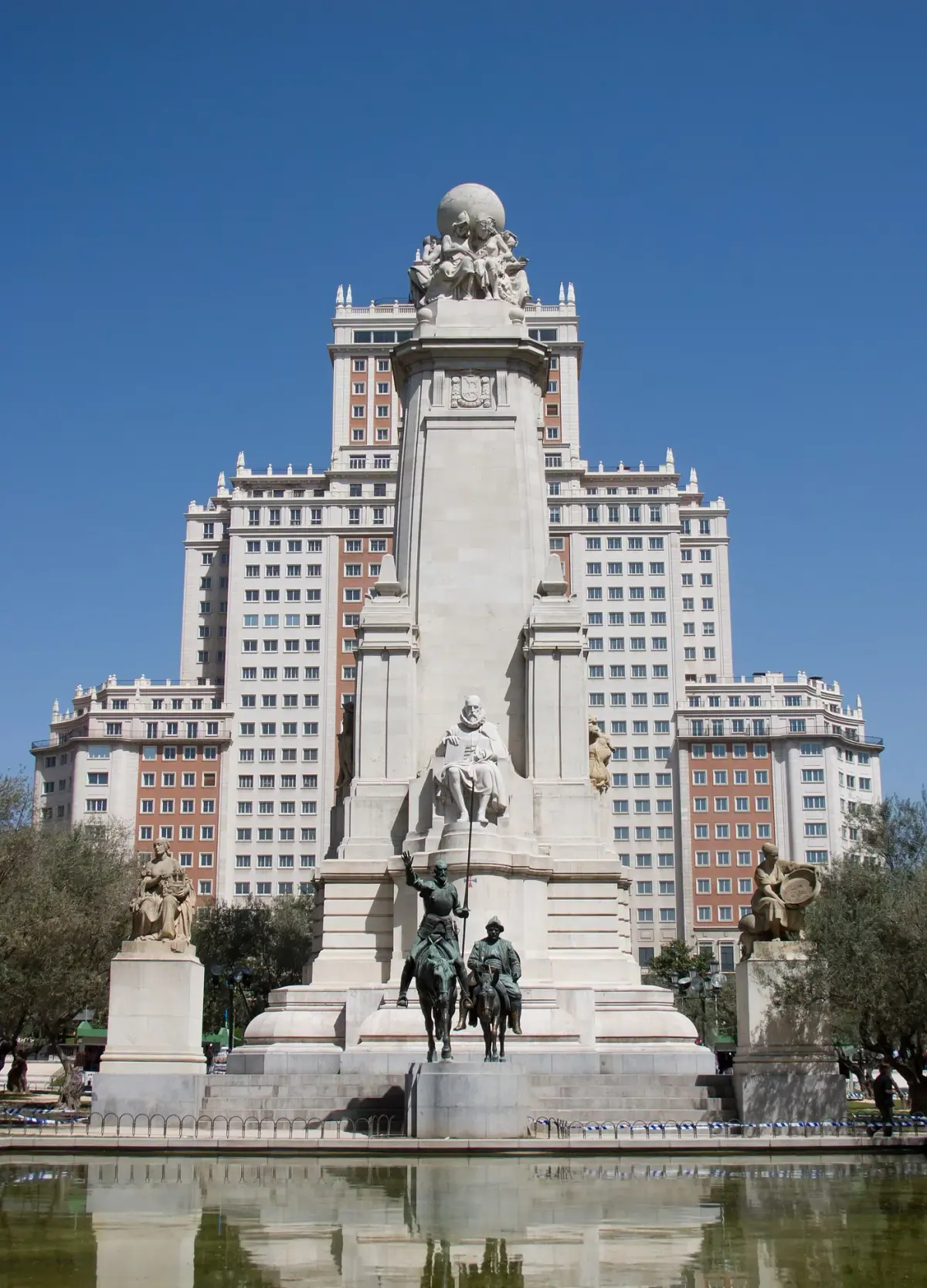

The Cervantes Monument is a short stop for looking at how literature is represented in a city square. Examining the whole monument and lower figure groups separately offers more than simply reading the author’s name.
Talk briefly about the story’s characters with children. It shares the space of Plaza de España; the two markers require no separate travel time. Information source.
Why go? In Plaza de España, bronze Don Quixote and Sancho Panza stand before their author, Cervantes. A lovely photo spot for introducing the famous novel’s characters to children.
Visit summary
- Area: Gran Vía and the northwest
- Highlight: Public representation of an author and fictional characters
- Suggested visit length: About 15–20 minutes
- Type of visit: Exterior view
- Admission: Free (outdoors)
- Nearby map stops: Plaza de España, Cerralbo Museum
- Open map: Search for this place on Google Maps
Plaza de España
Plaza de España shifts from Gran Vía’s busy street walk to a broader open space. Seeing the surrounding tall buildings and square together reveals Madrid’s different periods of urban growth. The Cervantes Monument is a separate marker within this area.
Take a short family break, then choose Cerralbo or Debod. Do not make two interior visits and a long street walk compulsory in one programme. Information source.
Why go? The renewed square, with its Don Quixote statue, greenery and surrounding skyscrapers, is a meeting point for modern Madrid. Within walking distance of the Temple of Debod and Sabatini Gardens.
Visit summary
- Area: Gran Vía and the northwest
- Highlight: Broad public space west of Gran Vía
- Suggested visit length: About 25–40 minutes
- Type of visit: Outdoor walk
- Admission: Free (outdoors)
- Nearby map stops: Cervantes Monument, Cerralbo Museum
- Open map: Search for this place on Google Maps
Madrid History Museum
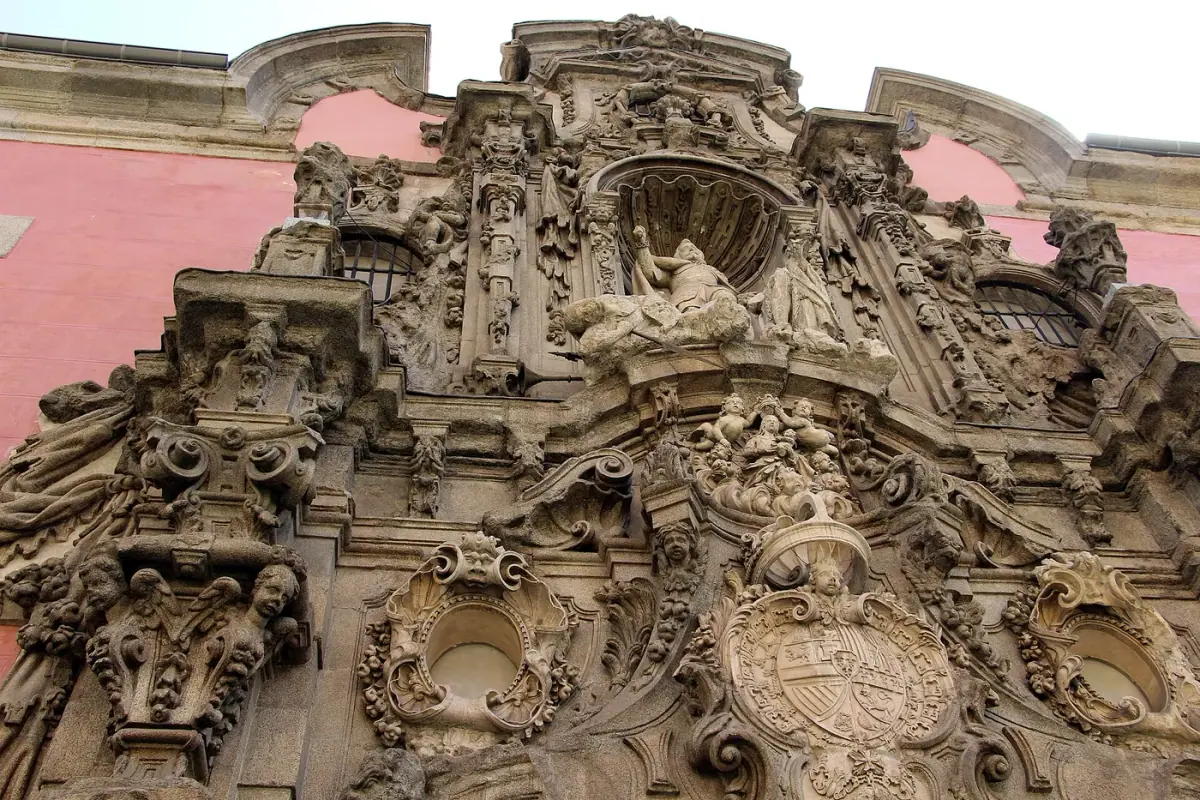

Madrid’s History Museum offers objects and images for relating how the city changed after seeing its monuments. It encourages thinking about past city life beyond present-day palaces and squares. Choose a few depictions and compare them with today’s map.
It may suit a more focused family city-history visit. Plan it as a northern Gran Vía branch; do not treat it as another doorway in the Prado museum area. Information source.
Why go? A former orphanage with a striking Baroque doorway houses a huge nineteenth-century model of Madrid. Free admission makes it a great introduction to understanding the city’s growth.
Visit summary
- Area: Gran Vía and the northwest
- Highlight: Collection tracing the city’s development
- Suggested visit length: About 60–90 minutes
- Type of visit: Indoors
- Admission: Free
- Nearby map stops: Espacio Fundación Telefónica, Gran Vía
- Open map: Search for this place on Google Maps
Círculo de Bellas Artes
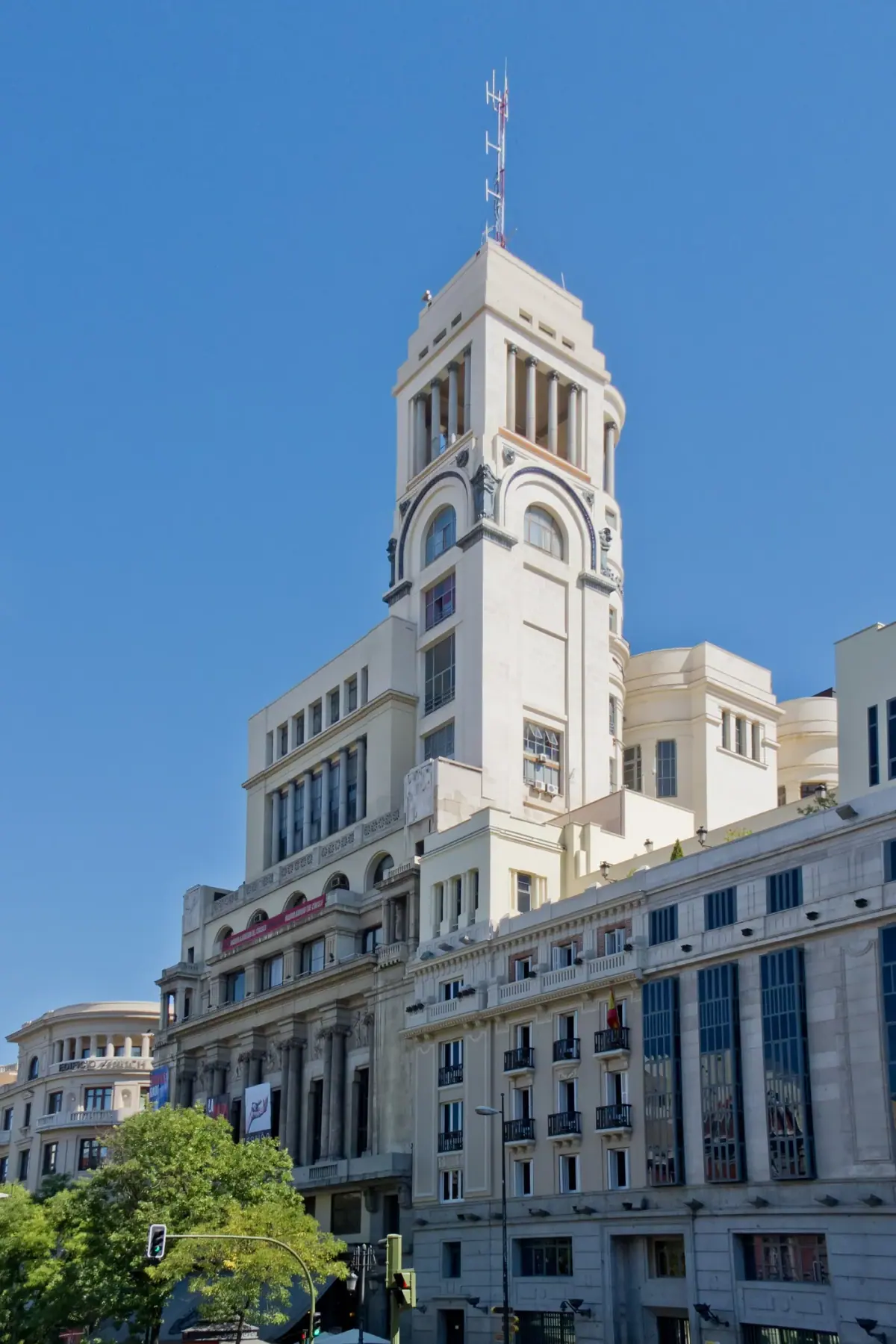

Círculo de Bellas Artes is a cultural institution with varied spaces and programmes, not a single-purpose museum. Exhibitions, events and upper-level access may have different conditions. Choose your purpose first, then confirm tickets and accessible sections.
For a family terrace visit, check child access and current conditions. Its location fits a walk around Metrópolis; do not assume every floor permits unrestricted circulation. Information source.
Why go? Its rooftop terrace offers a direct view of Gran Vía and the Metrópolis dome. One of Madrid’s most famous viewpoints, especially at sunset.
Visit summary
- Area: Gran Vía and the northwest
- Highlight: Cultural institution and city perspectives
- Suggested visit length: About 30–90 minutes depending on the chosen programme
- Type of visit: Exterior view / exhibition / terrace where accessible
- Admission: Rooftop terrace charges admission.
- Nearby map stops: Metrópolis Building, Espacio Fundación Telefónica
- Open map: Search for this place on Google Maps
Cerralbo Museum
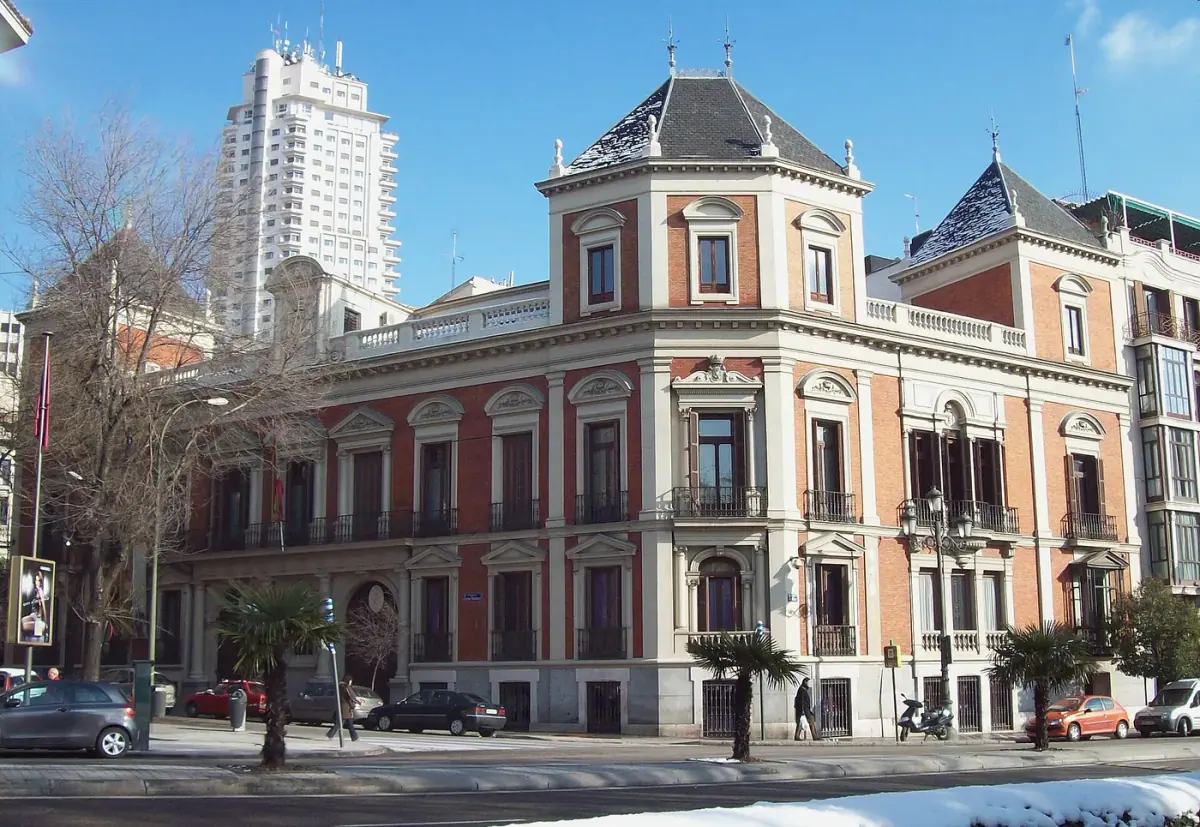

Cerralbo displays artworks in palace or residential rooms, unlike a neutral white gallery. Looking at furniture, objects and decoration together shows how a collector’s life is represented. With children, focus on a few rooms and object types.
Choose it as a main indoor visit around Plaza de España and Debod. Check room access and circulation conditions on the official site. Information source.
Why go? A nineteenth-century aristocrat’s home preserved with its furnishings and collection; the ballroom dazzles. A small, quiet hidden museum vividly showing life in that period.
Visit summary
- Area: Gran Vía and the northwest
- Highlight: A collector’s life in a historic home
- Suggested visit length: About 60–90 minutes
- Type of visit: Indoors
- Admission: Paid admission · about €3; free Thursday evenings and Sundays.
- Nearby map stops: Plaza de España, Cervantes Monument
- Open map: Search for this place on Google Maps
La Latina and the southern centre
Toledo Gate (Puerta de Toledo)
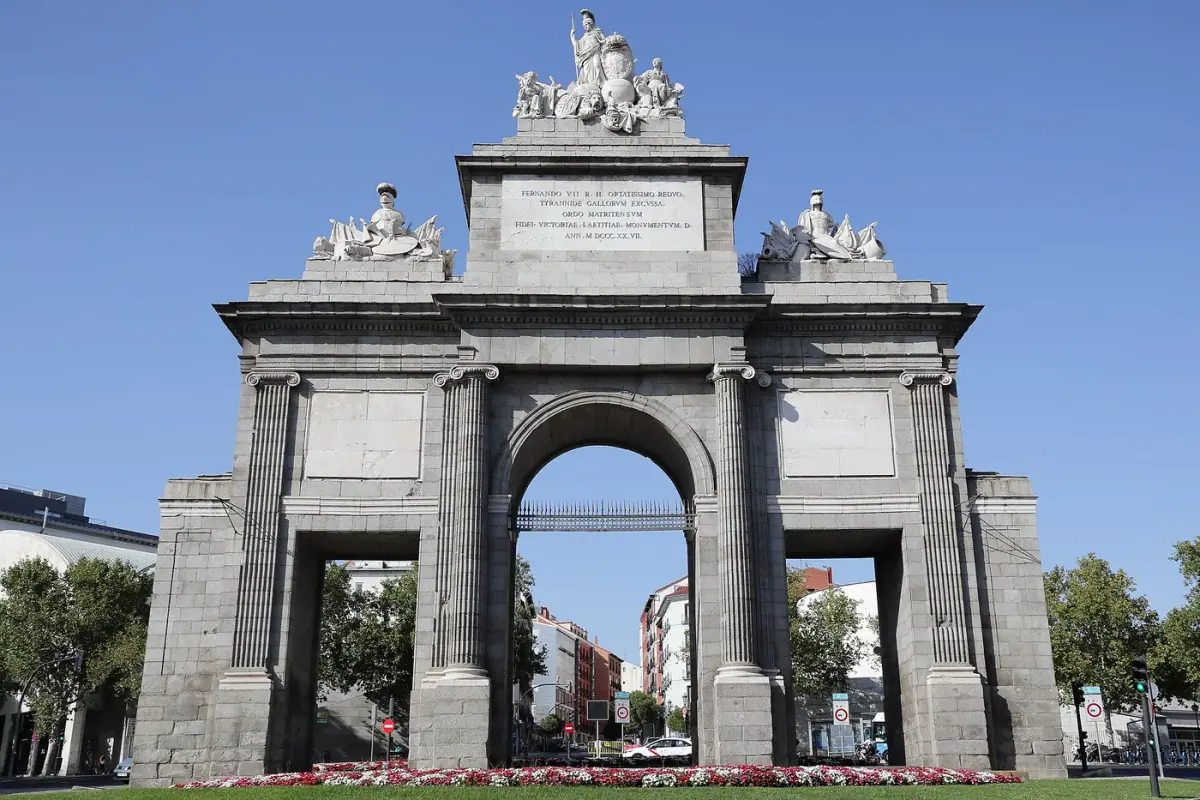

Puerta de Toledo shows how old city entrances became monuments of representation. Its arches and upper sculptures reveal more than a simple passage on a road. Choose a safe pedestrian viewpoint in the surrounding traffic.
A short exterior visit suffices with children. Pair it with the La Latina and San Francisco el Grande branch; do not confuse it with Puerta de Alcalá north of the centre. Information source.
Why go? Begun in Napoleon’s era and later dedicated to the Spanish king, this triumphal arch marks the old city’s southern entrance. Part of the route from La Latina down to the Manzanares.
Visit summary
- Area: La Latina and the southern centre
- Highlight: Monumental city gate
- Suggested visit length: About 15–20 minutes
- Type of visit: Exterior view
- Admission: Free (outdoors)
- Nearby map stops: San Francisco el Grande Basilica, Calle de la Cava Baja
- Open map: Search for this place on Google Maps
Calle de la Cava Baja
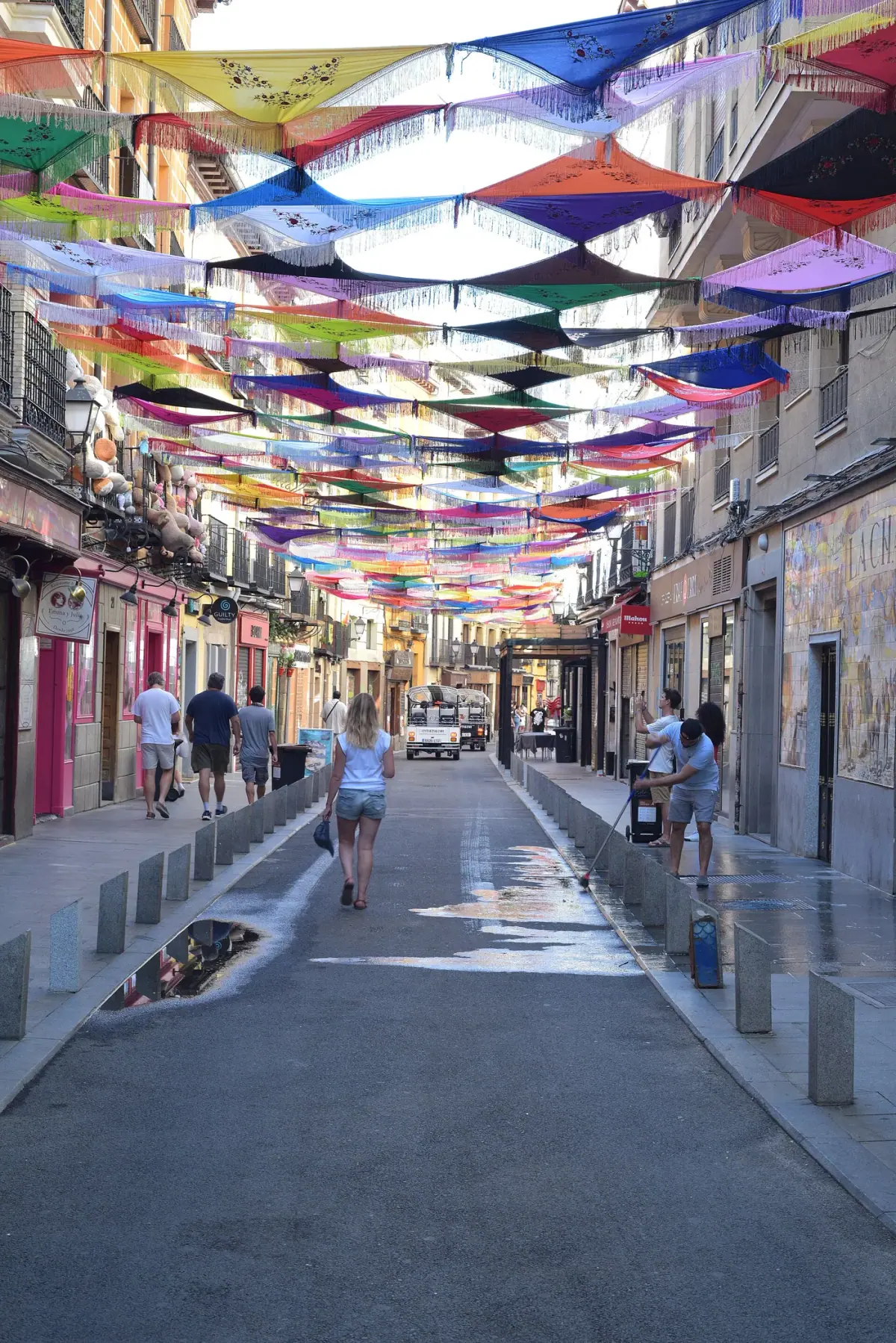

Cava Baja is a walking route for seeing La Latina’s street fabric and everyday life. Although known for dining businesses, this section does not rank restaurants; façades, passages and urban scale are its subject.
Choose a family meal from the tried places below according to location. Extend the street walk towards Puerta de Toledo or San Francisco; not all southern-centre markers share this short street. Information source.
Why go? Built over the old city moat, it is now Madrid’s most famous tapas street. Moving between bars and trying small plates in the evening is an enjoyable expression of Spanish life.
Visit summary
- Area: La Latina and the southern centre
- Highlight: La Latina’s historic street rhythm
- Suggested visit length: About 20–30 minutes
- Type of visit: Street walk
- Admission: Free (outdoors)
- Nearby map stops: San Francisco el Grande Basilica, Toledo Gate (Puerta de Toledo)
- Open map: Search for this place on Google Maps
San Francisco el Grande Basilica
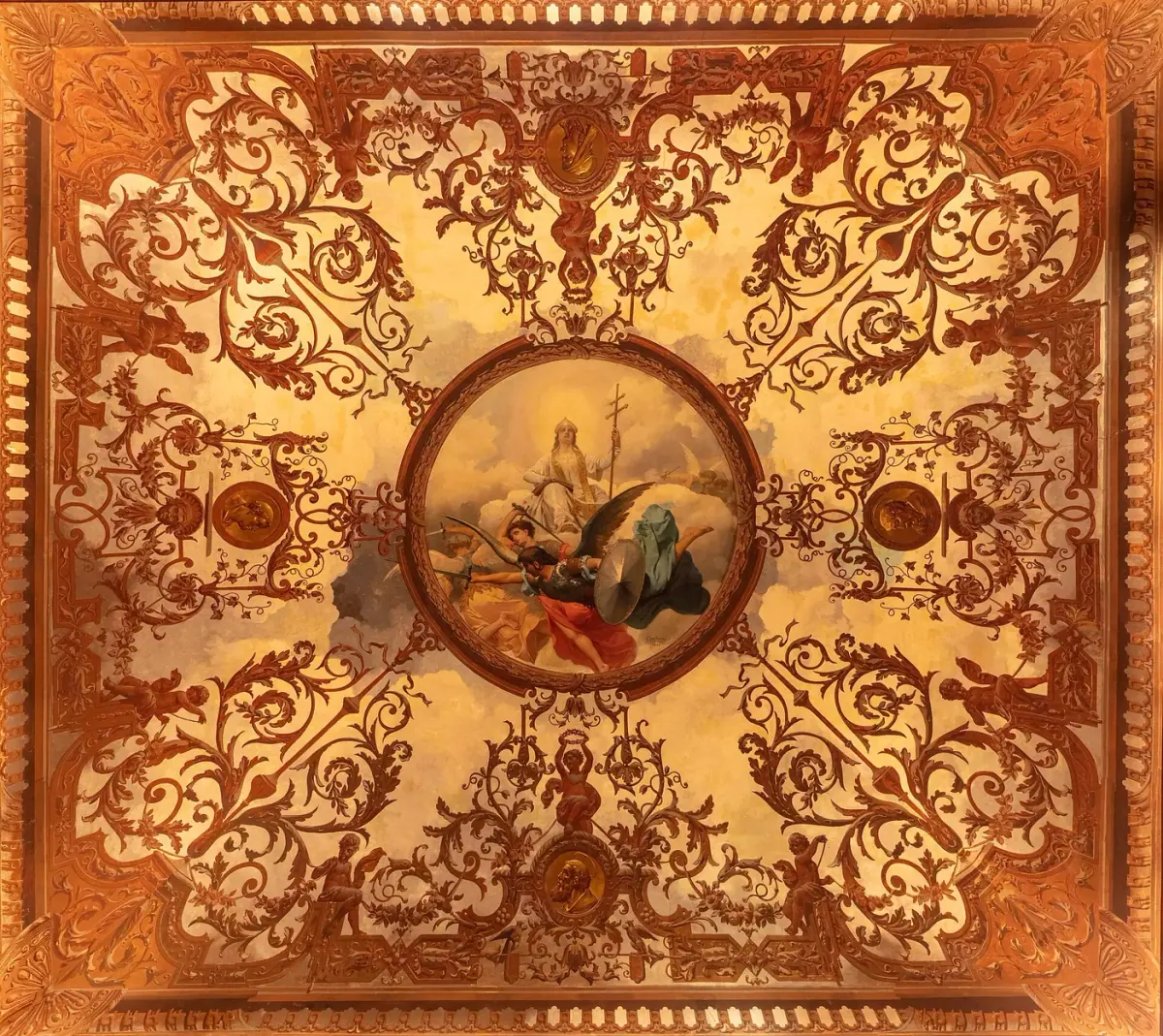

San Francisco el Grande stands out in the southern centre for its expansive interior and dome. Inside, look at the space’s overall proportions and light as well as individual artworks. Do not assume tourist and worship access share times and coverage.
A focused family interior visit is possible. Relate it geographically to Cava Baja and Puerta de Toledo; if you have already toured a cathedral at length, keep this to the exterior. Information source.
Why go? Its dome is considered among the world’s largest after Rome’s Pantheon and St Peter’s. Guided tours reveal a Goya painting and ornate chapels.
Visit summary
- Area: La Latina and the southern centre
- Highlight: Large dome and religious art
- Suggested visit length: About 45–60 minutes
- Type of visit: Indoors / exterior view
- Admission: Paid admission (guided visit).
- Nearby map stops: Toledo Gate (Puerta de Toledo), Calle de la Cava Baja
- Open map: Search for this place on Google Maps
Prado, Cibeles and Retiro
Alcalá Gate (Puerta de Alcalá)
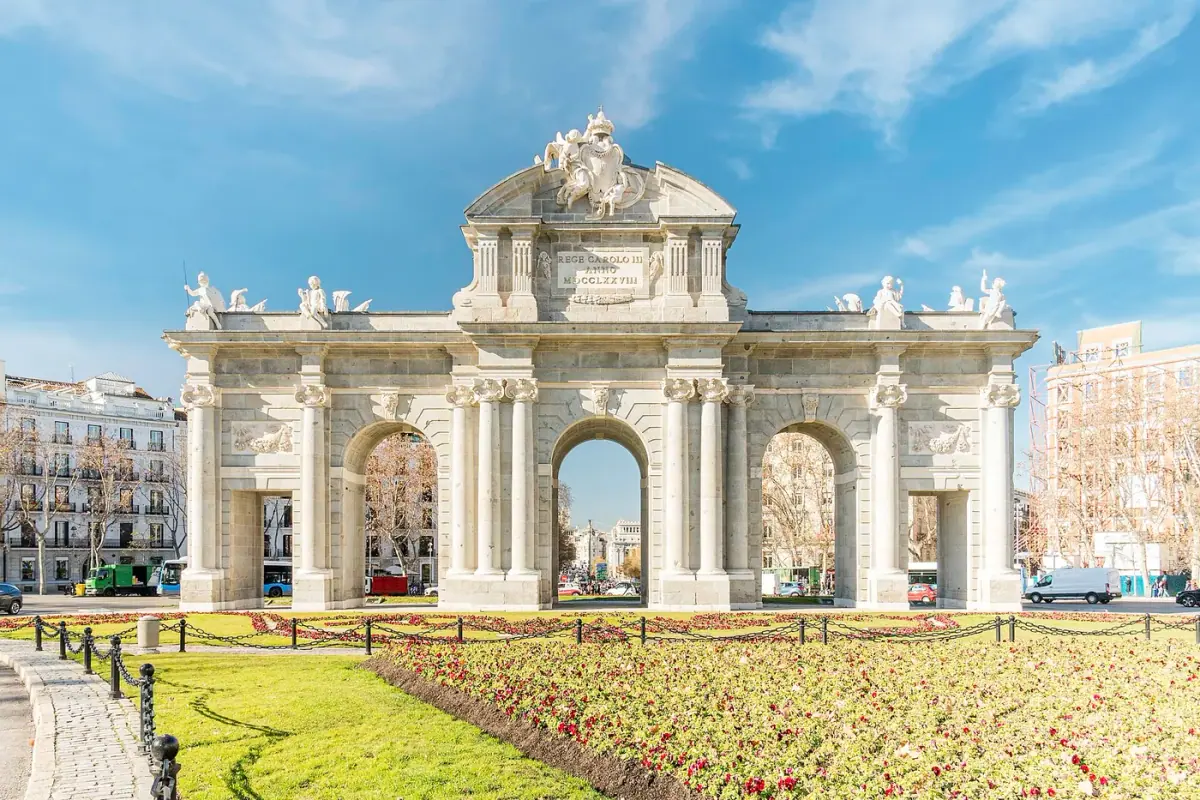

Puerta de Alcalá combines the Retiro route with monumental urban architecture. Compare its openings and sculptures from two directions, but safe pedestrian areas suffice without entering the traffic island.
Take a short family stop between Retiro and the Cibeles branch. It is not the same structure or neighbourhood as Puerta de Toledo; there is no need to collect both gates in one short walk. Information source.
Why go? Older even than Paris’s Arc de Triomphe, this Neoclassical gate is a Madrid landmark. Beside Retiro Park’s entrance, it is particularly impressive when lit at night.
Visit summary
- Area: Prado, Cibeles and Retiro
- Highlight: Eighteenth-century city monument
- Suggested visit length: About 15–20 minutes
- Type of visit: Exterior view
- Admission: Free (outdoors)
- Nearby map stops: National Archaeological Museum, Plaza de Cibeles
- Open map: Search for this place on Google Maps
Fisherman’s Cottage (Casita del Pescador)
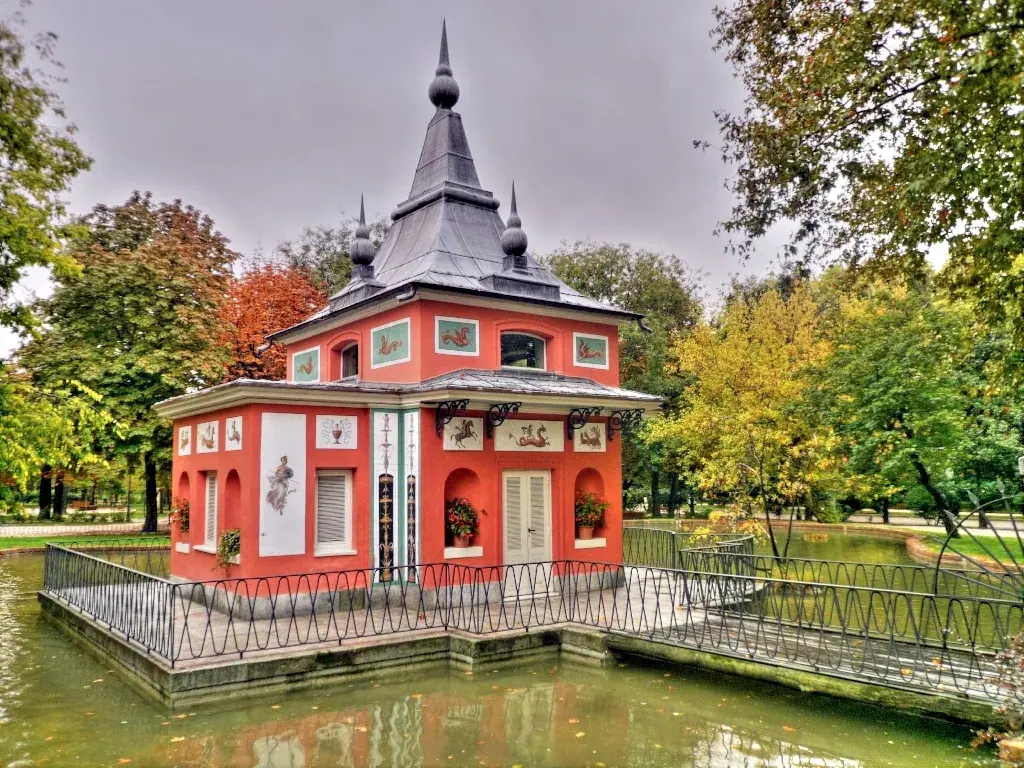

Casita del Pescador is a small building stop within Retiro’s extensive park. Its position surrounded by an artificial water feature and connected by a little bridge shows a design world different from grand palaces. Do not assume the interior is always freely accessible.
A destination within the park can make family walking easier. You need not cross the entire park for this marker; check its location against your chosen entrance and exit. Information source.
Why go? A fairy-tale cottage beside a small lake in Retiro Park. An endearing corner for children to discover within the park.
Visit summary
- Area: Prado, Cibeles and Retiro
- Highlight: Small romantic building in Retiro
- Suggested visit length: About 15–20 minutes
- Type of visit: Exterior view
- Admission: Free (exterior view)
- Nearby map stops: Retiro Park, Alcalá Gate (Puerta de Alcalá)
- Open map: Search for this place on Google Maps
San Jerónimo el Real Church
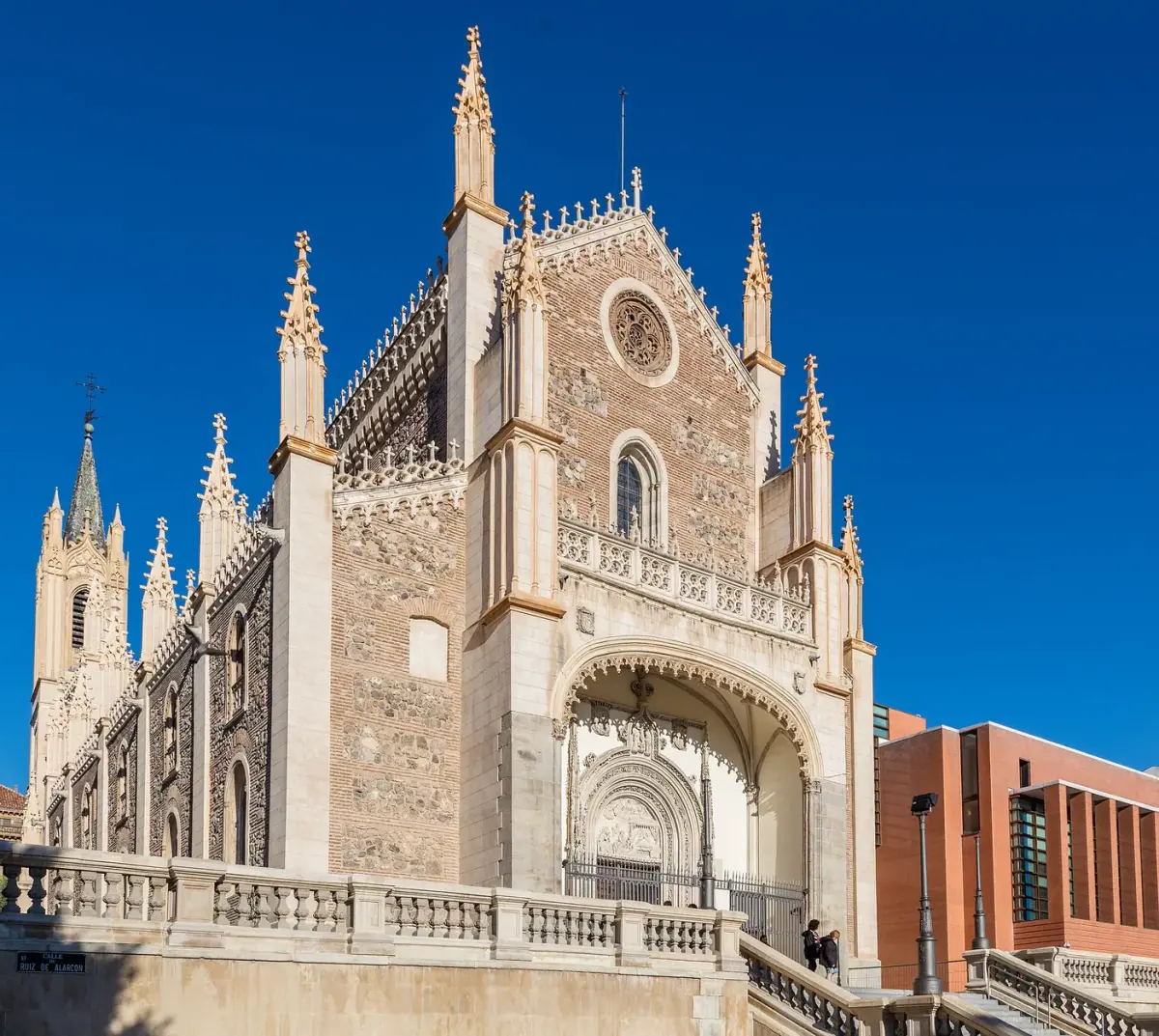

San Jerónimo adds religious architecture to the Prado cultural route. Looking at its setting and rising form while exploring the museum surroundings reveals that the area belongs to more than one period. If open, add a short focused interior visit.
On a long Prado day, limit it to exterior observation rather than a second major programme. Prioritise children’s need for outdoor time after the museum. Information source.
Why go? The Gothic church immediately behind Prado hosted royal ceremonies and weddings for centuries. A short, quiet addition to the museum visit.
Visit summary
- Area: Prado, Cibeles and Retiro
- Highlight: Historic place of worship near Prado
- Suggested visit length: About 20–40 minutes
- Type of visit: Indoors / exterior view
- Admission: Free
- Nearby map stops: Prado Museum, Paseo del Prado
- Open map: Search for this place on Google Maps
Neptune Fountain
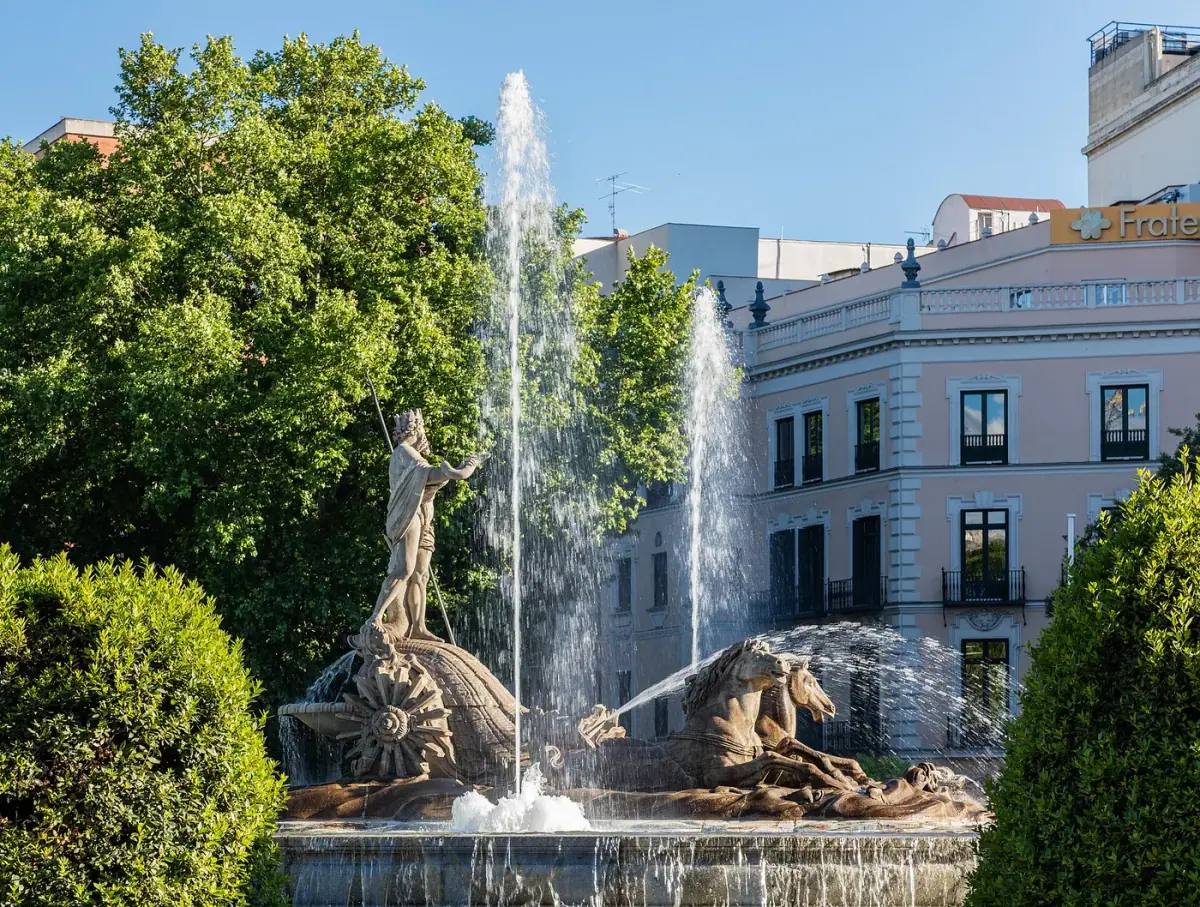

The Neptune Fountain is one of the sculpted water features shaping the museum area’s outdoor identity. Taking in the figure and pool together from a distance suits its traffic-heavy setting. Do not assume water or lighting conditions remain the same every day.
Consider it a short exterior stop between Prado and Thyssen. With children, watch from a safe pavement without entering traffic areas to approach the fountain. Information source.
Why go? This grand Neoclassical fountain on the Prado boulevard hosts Atlético Madrid supporters’ victory celebrations. One of the boulevard’s three major fountains and a lovely pause between museums.
Visit summary
- Area: Prado, Cibeles and Retiro
- Highlight: Mythological monument on the Prado boulevard
- Suggested visit length: About 10–15 minutes
- Type of visit: Exterior view
- Admission: Free (outdoors)
- Nearby map stops: Paseo del Prado, Thyssen-Bornemisza Museum
- Open map: Search for this place on Google Maps
Plaza de Cibeles
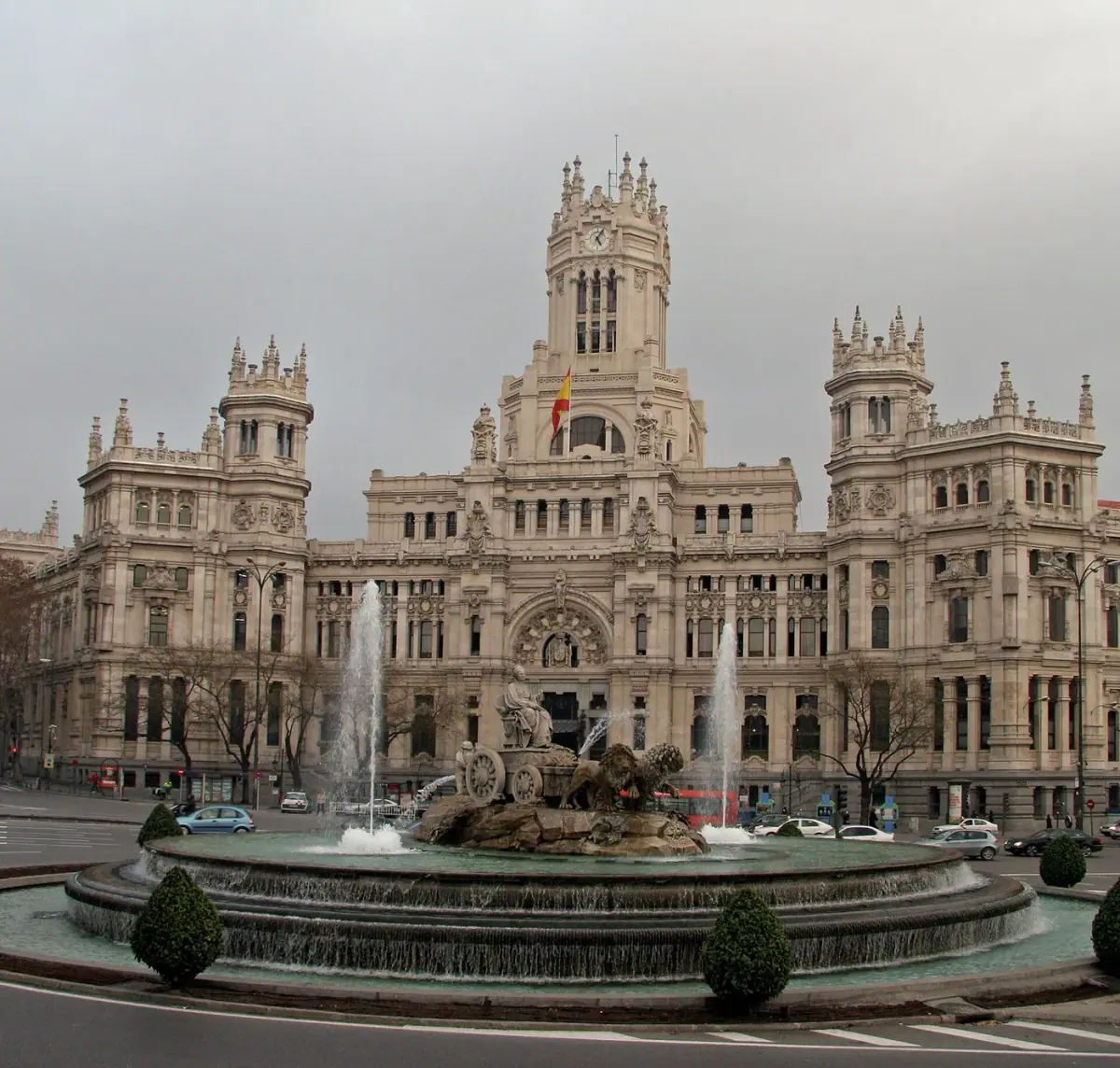

Cibeles is an urban space formed together by the fountain and surrounding grand buildings. Seeing the whole from different sides explains more than photographing one façade. The traffic layout makes visiting the central island unnecessary.
Use it to connect the Prado boulevard and Alcalá directions. A brief family exterior look and walk suffice; interiors of surrounding buildings require separate planning. Information source.
Why go? Madrid’s grandest square, with the goddess Cybele in a lion-drawn chariot and the palace-like city hall behind. Views towards Gran Vía and Alcalá from city hall’s terrace are impressive.
Visit summary
- Area: Prado, Cibeles and Retiro
- Highlight: Fountain and monumental urban façades
- Suggested visit length: About 20–30 minutes
- Type of visit: Outdoors / exterior view
- Admission: Square free; the viewing terrace in Cibeles Palace charges admission.
- Nearby map stops: Naval Museum (Museo Naval), Alcalá Gate (Puerta de Alcalá)
- Open map: Search for this place on Google Maps
Paseo del Prado
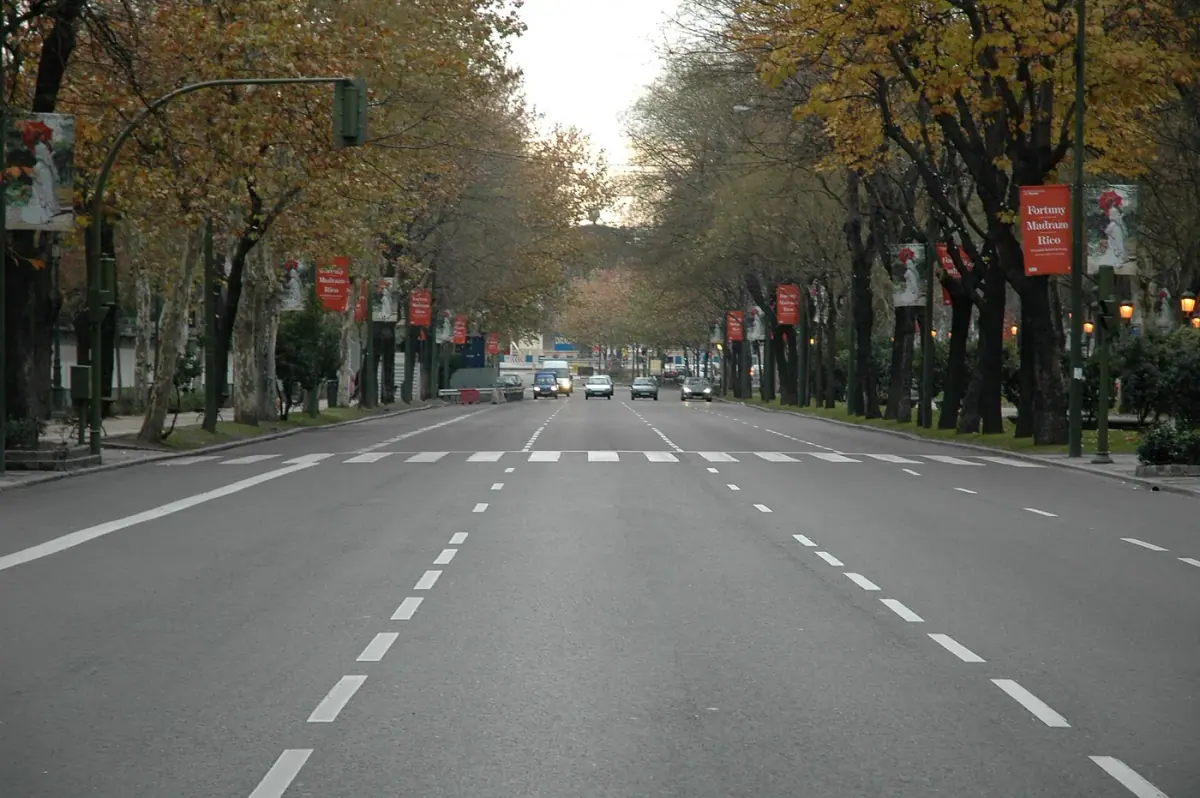

Paseo del Prado links major museums while offering a tree-lined boulevard experience in its own right. See the buildings’ positions and open spaces without entering every museum. This section does not include individual museum visiting times.
Choosing one main collection and using the boulevard as outdoor time balances a family day. Neptune, Cibeles and surrounding cultural buildings fit according to your selected stretch. Information source.
Why go? The tree-lined boulevard connecting Prado, Thyssen and Reina Sofía forms part of the UNESCO-listed Landscape of Arts and Sciences. Even walking between museums reveals one of the city’s loveliest faces.
Visit summary
- Area: Prado, Cibeles and Retiro
- Highlight: Urban landscape linking art institutions
- Suggested visit length: About 30–60 minutes for a selected section
- Type of visit: Boulevard walk
- Admission: Free (outdoors)
- Nearby map stops: Neptune Fountain, Prado Museum
- Open map: Search for this place on Google Maps
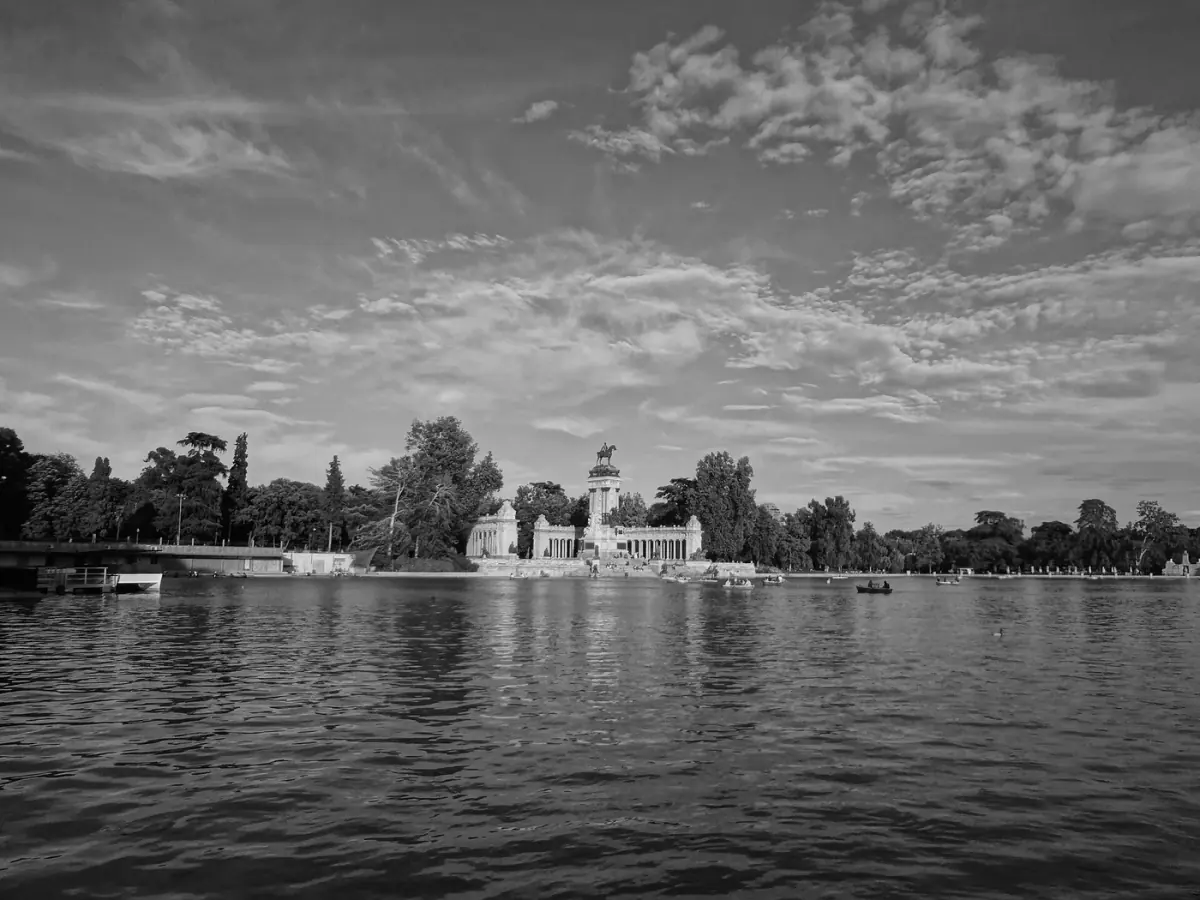
Retiro Park
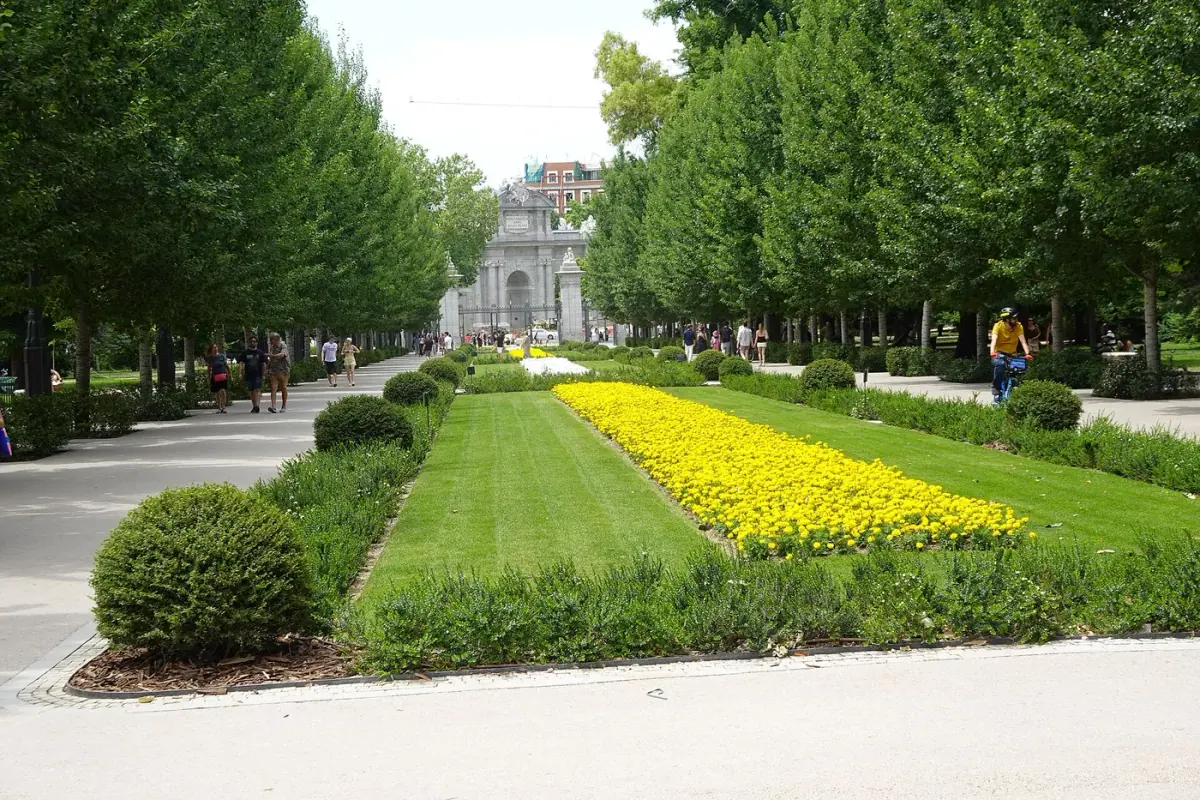

Retiro is an extensive destination in its own right, not simply a brief bench break after museums. Do not read its map marker as an obligation to walk the whole park. Choose an entrance, exit and section to avoid unnecessary exertion.
Pair one main museum with Retiro as a family. Casita del Pescador is a separate marker inside; add it according to your walk. Weather and maintenance notices can affect access, so check municipal information. Information source.
Why go? Madrid’s favourite park, with a large boating lake, Crystal Palace, puppet shows and play areas. An oasis in the city centre where families can spend a whole day.
Visit summary
- Area: Prado, Cibeles and Retiro
- Highlight: Flexible break in a large city park
- Suggested visit length: About 60–120 minutes for a selected section
- Type of visit: Outdoor walk
- Admission: Park free; hiring a rowboat on the lake costs extra.
- Nearby map stops: Fisherman’s Cottage (Casita del Pescador), San Jerónimo el Real Church
- Open map: Search for this place on Google Maps
Prado Museum
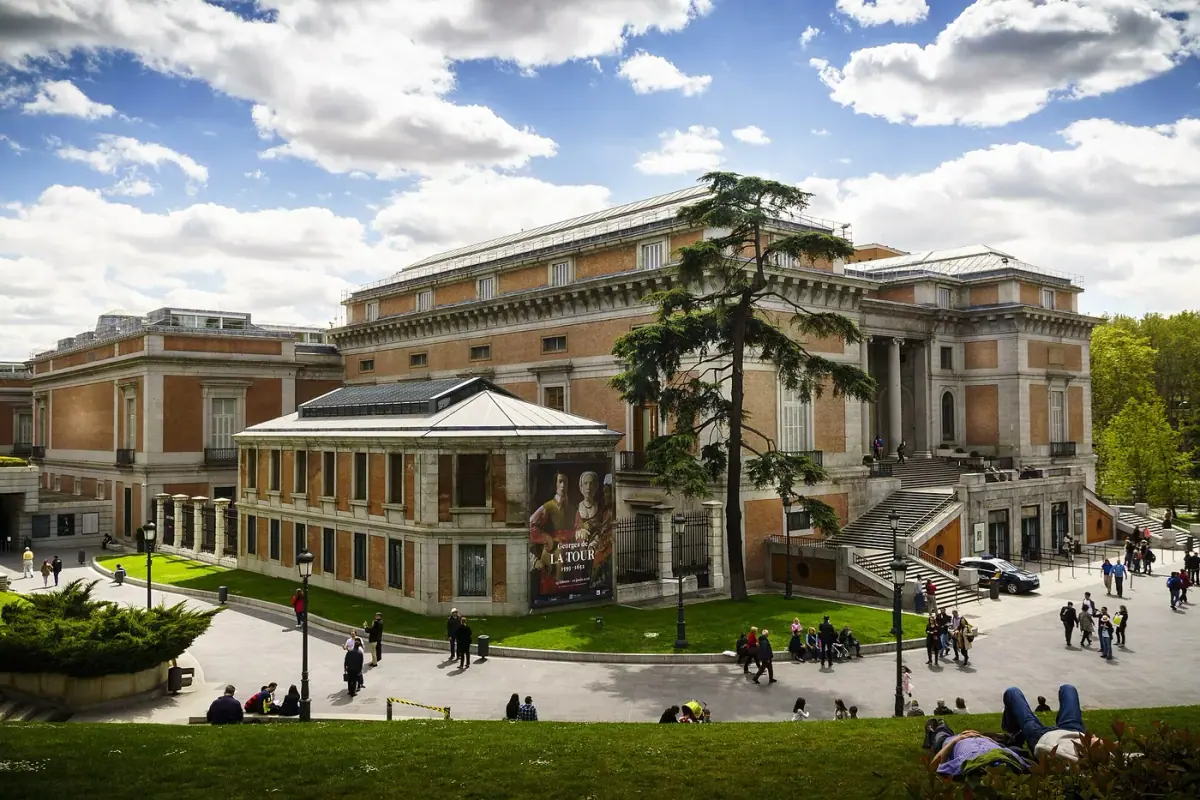

Prado is a major Madrid art museum needing dedicated time. Choose a theme through artists such as Velázquez or Goya and focus on a few paintings instead of aiming to see everything. Concrete questions about gaze, light and people’s positions in a room make visits clearer for children.
Check official tickets and accessible sections. After a long visit, an outdoor break in Retiro or on the Prado boulevard is more flexible than another major collection. Listed durations exclude queues and travel. Information source.
Why go? Velázquez’s Las Meninas, Goya’s Black Paintings and Bosch’s Garden of Earthly Delights under one roof. There is also an opportunity to see one of the world’s leading painting collections free in the evening.
Visit summary
- Area: Prado, Cibeles and Retiro
- Highlight: European painting and Spanish masters
- Suggested visit length: About 2–3 hours
- Type of visit: Indoors
- Admission: Paid admission · about €15 per adult. Under-18s free; free for everyone weekdays 18:00–20:00 and Sundays 17:00–19:00.
- Nearby map stops: San Jerónimo el Real Church, Paseo del Prado
- Open map: Search for this place on Google Maps
National Archaeological Museum
The Archaeological Museum offers different material for families wanting more than painting galleries. Looking at objects’ materials and purposes can be a more tangible starting point than a long chronology. Completing every period in one visit is not compulsory.
Choose a culture or object group and leave the remaining time outdoors. A separate branch north from Retiro and Alcalá; do not add it as a third collection on a major museum day. Information source.
Why go? The mysterious Lady of Elche bust and Iberian, Roman and Andalusi objects tell thousands of years of Spanish history. The section with a full-scale reproduction of Altamira cave paintings in the garden interests children.
Visit summary
- Area: Prado, Cibeles and Retiro
- Highlight: Iberia’s ancient cultures
- Suggested visit length: About 90–150 minutes
- Type of visit: Indoors
- Admission: Paid admission · about €3; free Saturday afternoons and Sundays.
- Nearby map stops: Alcalá Gate (Puerta de Alcalá), Plaza de Cibeles
- Open map: Search for this place on Google Maps
Thyssen-Bornemisza Museum
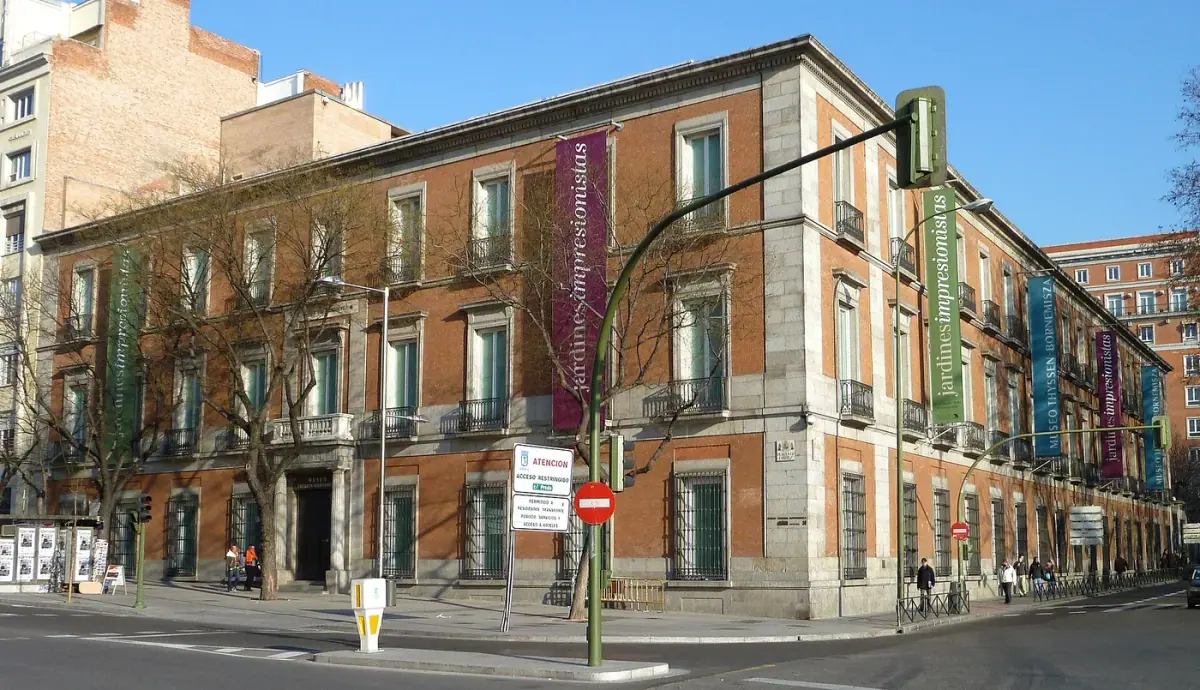

Thyssen is a major painting collection for comparing periods and styles. Rather than repeating Prado or Reina Sofía, it is a third main focus chosen by interest. With children, follow changes in colour and figure use across a few paintings.
The one-main-museum family rule works here too. Add a short walk around Neptune and the Prado boulevard; distinguish current exhibitions from permanent collection ticket coverage. Information source.
Why go? A collection picking up where Prado leaves off and spanning Renaissance to pop art, especially strong in Impressionists. One of the rare museums where you can walk through art history from beginning to end.
Visit summary
- Area: Prado, Cibeles and Retiro
- Highlight: Painting across a broad range of periods
- Suggested visit length: About 90–150 minutes
- Type of visit: Indoors
- Admission: Paid admission · about €14 per adult; permanent collection free around midday on Mondays.
- Nearby map stops: Neptune Fountain, Paseo del Prado
- Open map: Search for this place on Google Maps
Naval Museum (Museo Naval)
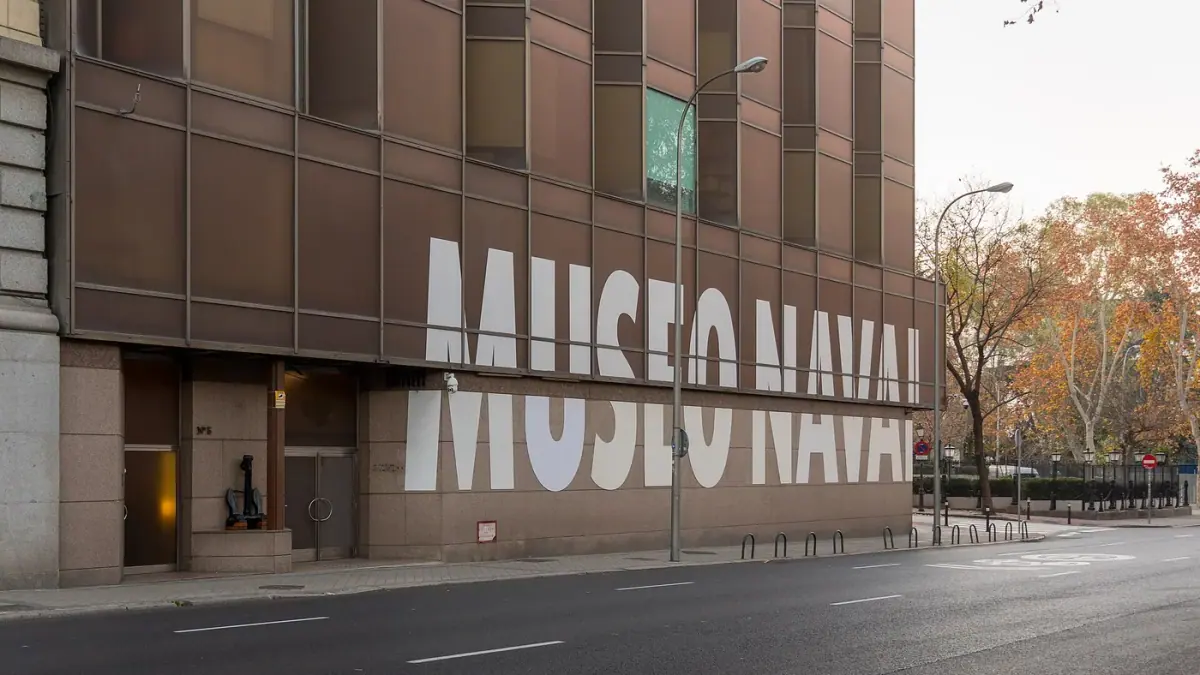

Despite Madrid’s inland location, the Naval Museum explores Spain’s maritime history. Maps and ship models are tangible objects for family conversations about scale and journeys. Choose a few models instead of finishing every historical period.
It can be an alternative main museum on the Cibeles and Prado branch. Check current official institutional and security conditions rather than assuming unrestricted gallery-style entry. Information source.
Why go? Ship models, old maps and one of the earliest maps showing the Americas tell Spain’s seafaring past. A free museum where children love the model ships.
Visit summary
- Area: Prado, Cibeles and Retiro
- Highlight: Maritime history, maps and ship models
- Suggested visit length: About 60–90 minutes
- Type of visit: Indoors
- Admission: Free (small donation suggested).
- Nearby map stops: Plaza de Cibeles, Thyssen-Bornemisza Museum
- Open map: Search for this place on Google Maps
Barrio de las Letras and Atocha
Lope de Vega House Museum
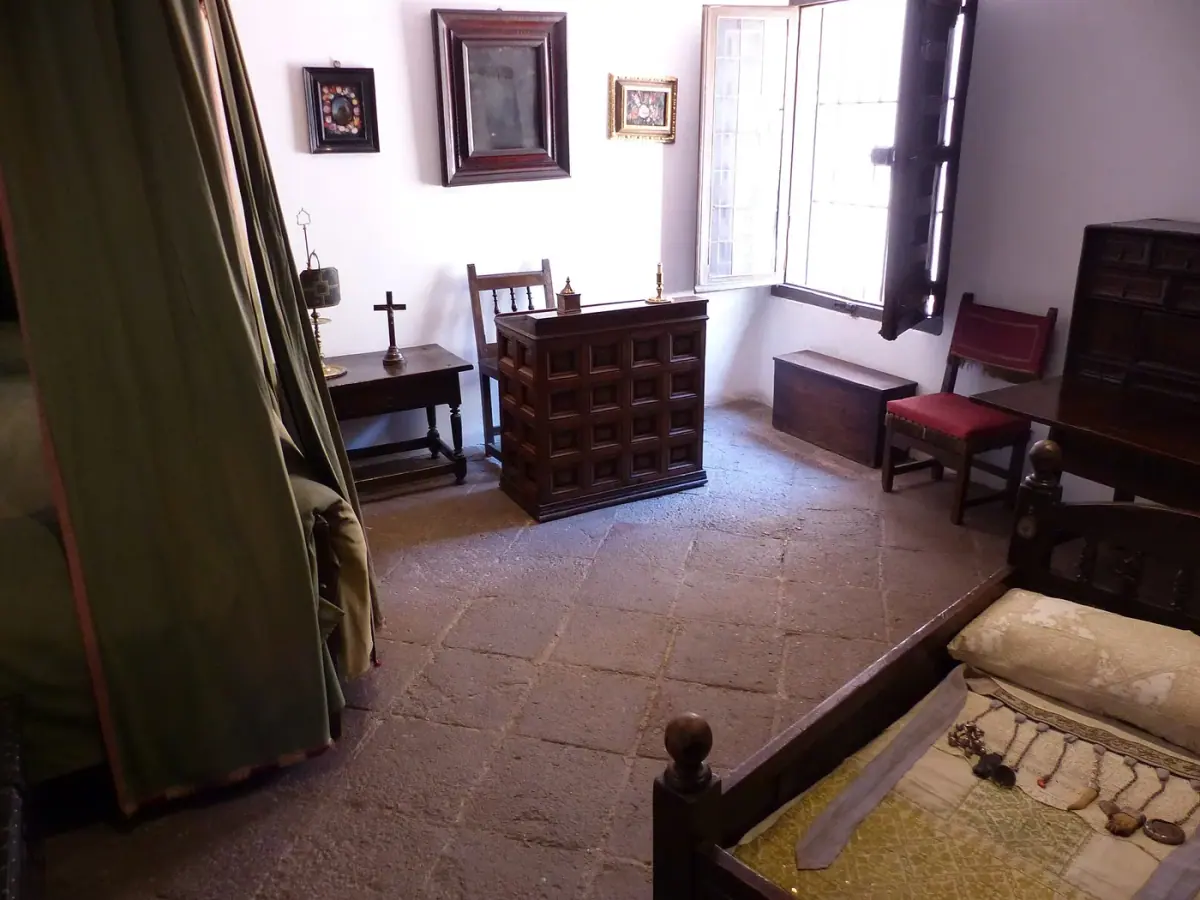

Lope de Vega’s house museum is a small-scale stop for exploring Madrid through literature and domestic life. Unlike major painting collections, the focus is room functions and the author’s surroundings. Check visit arrangements and reservation requirements beforehand.
Meaningful for literature-minded families but potentially abstract for small children. Build a short neighbourhood route with Huertas and Santa Ana. Information source.
Why go? The home of the great Spanish playwright Lope de Vega, with furniture and a garden opening a window onto seventeenth-century Madrid. A free guided visit brings literary history into the house.
Visit summary
- Area: Barrio de las Letras and Atocha
- Highlight: The author’s living environment
- Suggested visit length: About 45–60 minutes
- Type of visit: Scheduled indoor visit
- Admission: Free · guided visits by reservation only.
- Nearby map stops: Calle de las Huertas, Jesús de Medinaceli Basilica
- Open map: Search for this place on Google Maps
Jesús de Medinaceli Basilica
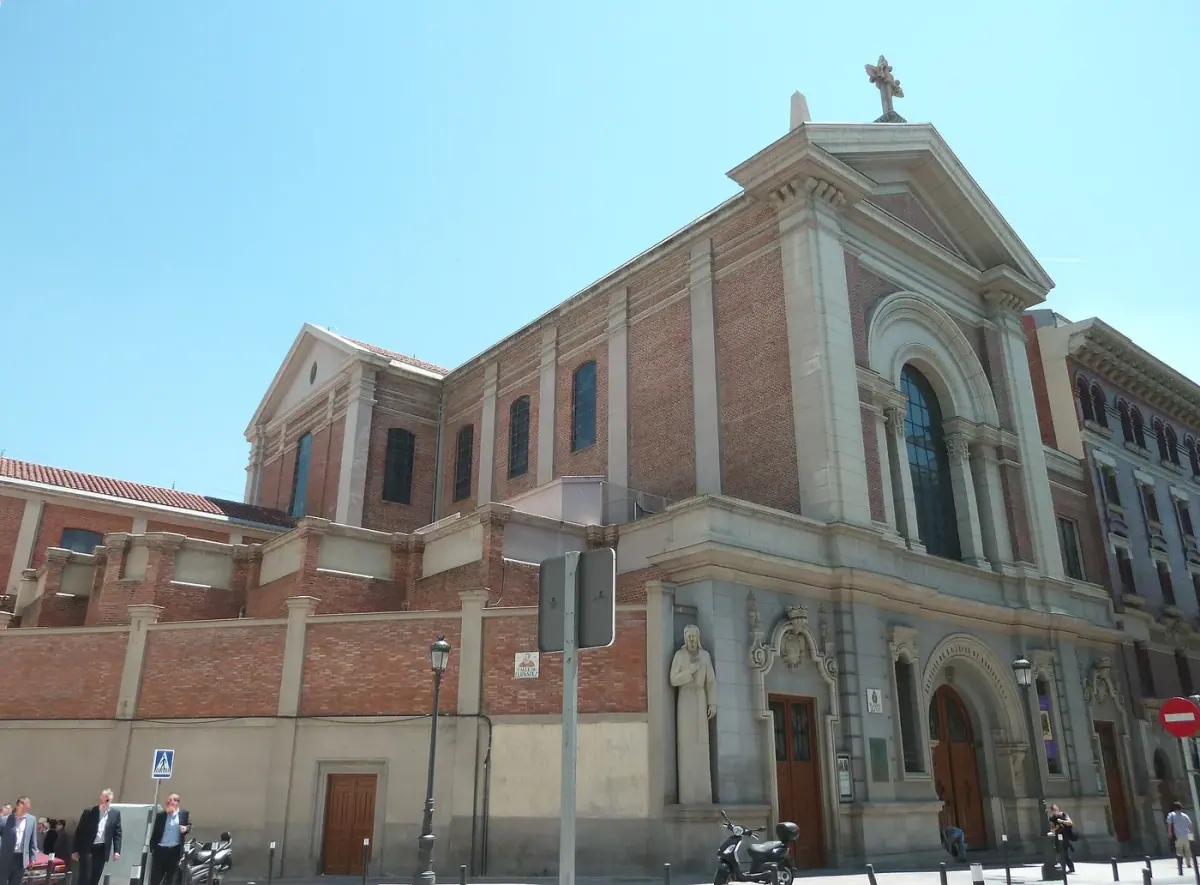

Medinaceli offers a glimpse of Madrid’s living worship culture beyond museums and palaces. Account for tourism and worship taking place simultaneously inside. Keep the visit short, respecting silence and boundaries of accessible areas.
Add it to the walk around Huertas and Cortes. Choosing one or two churches rather than stacking many visits makes a clearer family route. Information source.
Why go? The church holds Madrid’s most revered statue of Jesus; queues, especially in March, reveal the city’s religious tradition. A quiet literary-quarter stop.
Visit summary
- Area: Barrio de las Letras and Atocha
- Highlight: Living tradition of religious visits
- Suggested visit length: About 20–40 minutes
- Type of visit: Indoors / exterior view
- Admission: Free
- Nearby map stops: Lope de Vega House Museum, Plaza de las Cortes
- Open map: Search for this place on Google Maps
Calle de las Huertas
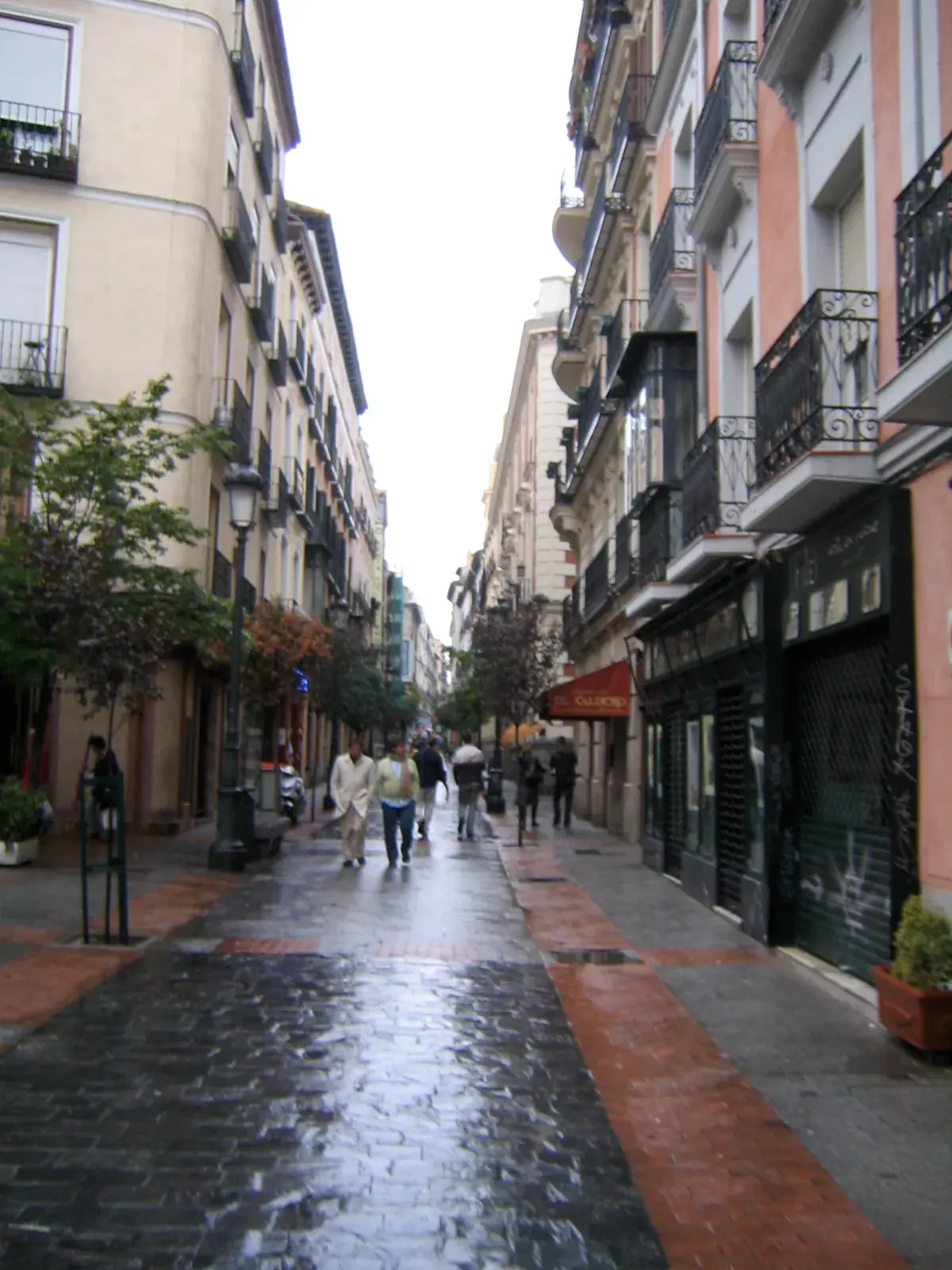

Huertas links literature and everyday neighbourhood life in Barrio de las Letras. Unlike a museum doorway, it does not end at one point; explore its street fabric and connections. Move slowly, looking at pavement inscriptions and façade details.
Make a selected loop with Santa Ana, Lope de Vega and Cortes markers. One author and a few concrete details may work better with children than long biographies. Information source.
Why go? The literary street has famous writers’ words set in brass letters in the pavement. Looking down and reading quotations while walking can feel like a treasure hunt for children.
Visit summary
- Area: Barrio de las Letras and Atocha
- Highlight: The literary neighbourhood’s main street
- Suggested visit length: About 20–40 minutes
- Type of visit: Street walk
- Admission: Free (outdoors)
- Nearby map stops: Lope de Vega House Museum, Jesús de Medinaceli Basilica
- Open map: Search for this place on Google Maps
Plaza de las Cortes
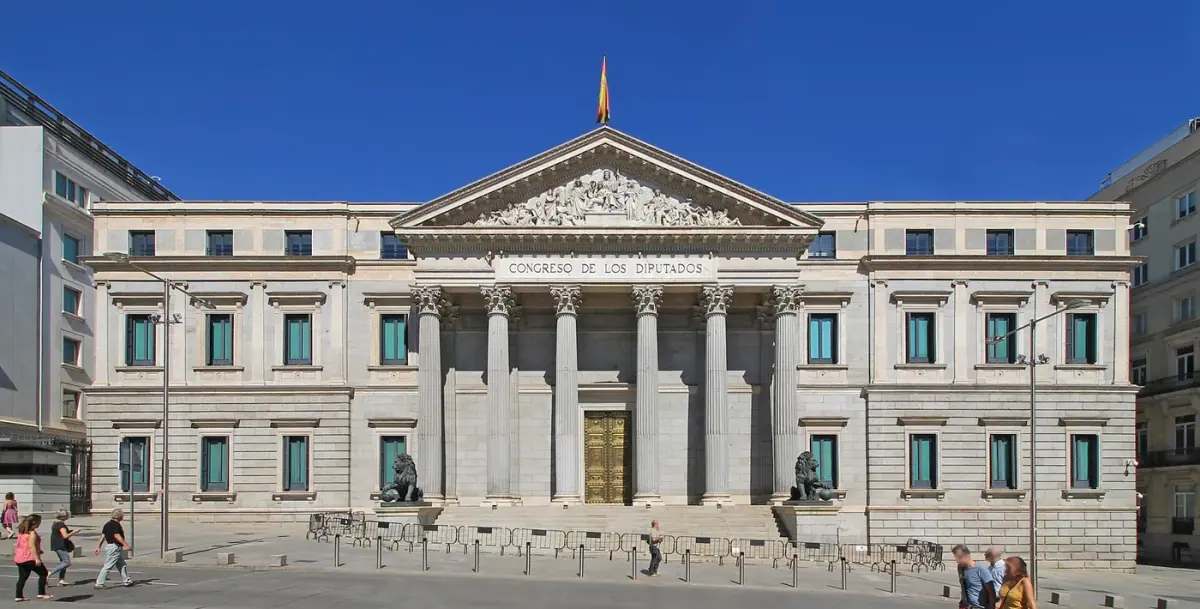

Cortes is a short square stop for seeing relationships between Madrid’s institutions and public space. Looking at façade use and streets opening onto the square takes the trip beyond a monument list. Do not assume institutional interiors are permanently open museums.
Add it between Huertas and Prado. A brief family observation and outdoor transition suffice rather than a long wait. Information source.
Why go? The square before Spain’s parliament, guarded by lion statues. A brief history and politics stop between Prado and Barrio de las Letras.
Visit summary
- Area: Barrio de las Letras and Atocha
- Highlight: Meeting of politics and urban life
- Suggested visit length: About 15–25 minutes
- Type of visit: Outdoors / exterior view
- Admission: Free (outdoors)
- Nearby map stops: Jesús de Medinaceli Basilica, Lope de Vega House Museum
- Open map: Search for this place on Google Maps
Plaza de Santa Ana
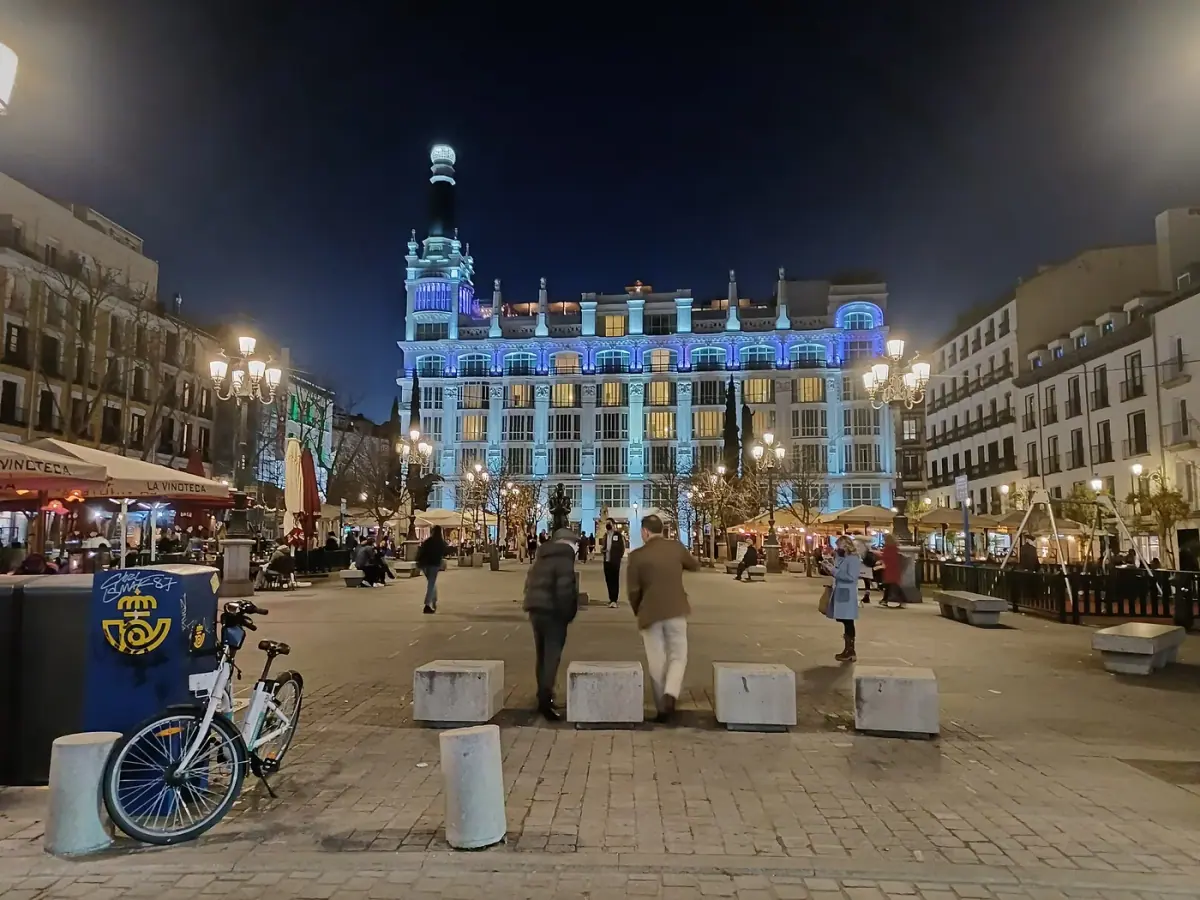

Santa Ana offers a wider pause among the Letras streets. Together with cultural and performance buildings, it shows Madrid beyond the palace city. We treat the square as outdoor neighbourhood space rather than rating its dining businesses.
Allow time for a short family break. Huertas and Lope de Vega are in the same wider neighbourhood; form a small loop without returning to the centre. Information source.
Why go? The literary quarter’s heart, with cafés, a theatre and broad space where children run. Ideal for sitting on a terrace in late afternoon and watching Madrid’s social life.
Visit summary
- Area: Barrio de las Letras and Atocha
- Highlight: Neighbourhood outdoor focal point
- Suggested visit length: About 20–30 minutes
- Type of visit: Outdoor walk
- Admission: Free (outdoors)
- Nearby map stops: Calle de las Huertas, Lope de Vega House Museum
- Open map: Search for this place on Google Maps
Reina Sofía National Art Museum
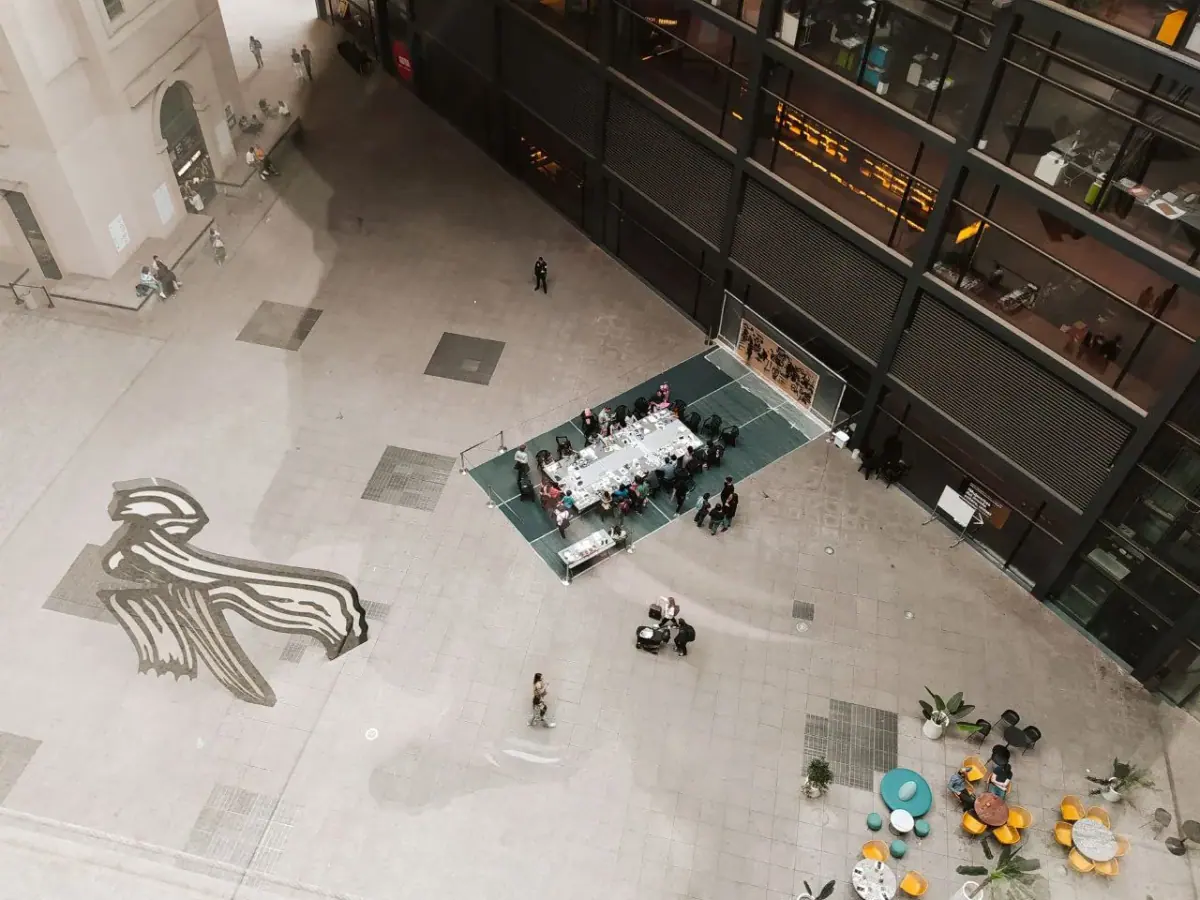

Reina Sofía’s collection differs from Prado’s, with a focus on modern art and twentieth-century history. Picasso’s Guernica is a powerful main stop, but its subject can be heavy for small children. A short age-appropriate explanation and selected works are more meaningful.
If this is your main family indoor visit, do not add Prado and Thyssen that day. Spending time on one work can leave more than a quick survey of the collection. Check open rooms and ticket conditions through official channels. Information source.
Why go? Picasso’s enormous Guernica, depicting war’s brutality, is here; standing before it is unforgettable. Glass lifts in the former hospital building also catch children’s attention.
Visit summary
- Area: Barrio de las Letras and Atocha
- Highlight: Modern art and Guernica
- Suggested visit length: About 2–3 hours
- Type of visit: Indoors
- Admission: Paid admission · about €12 per adult. Under-18s free; free for everyone in evening periods and around midday Sunday; closed Tuesday.
- Nearby map stops: CaixaForum Madrid, Calle de las Huertas
- Open map: Search for this place on Google Maps
CaixaForum Madrid
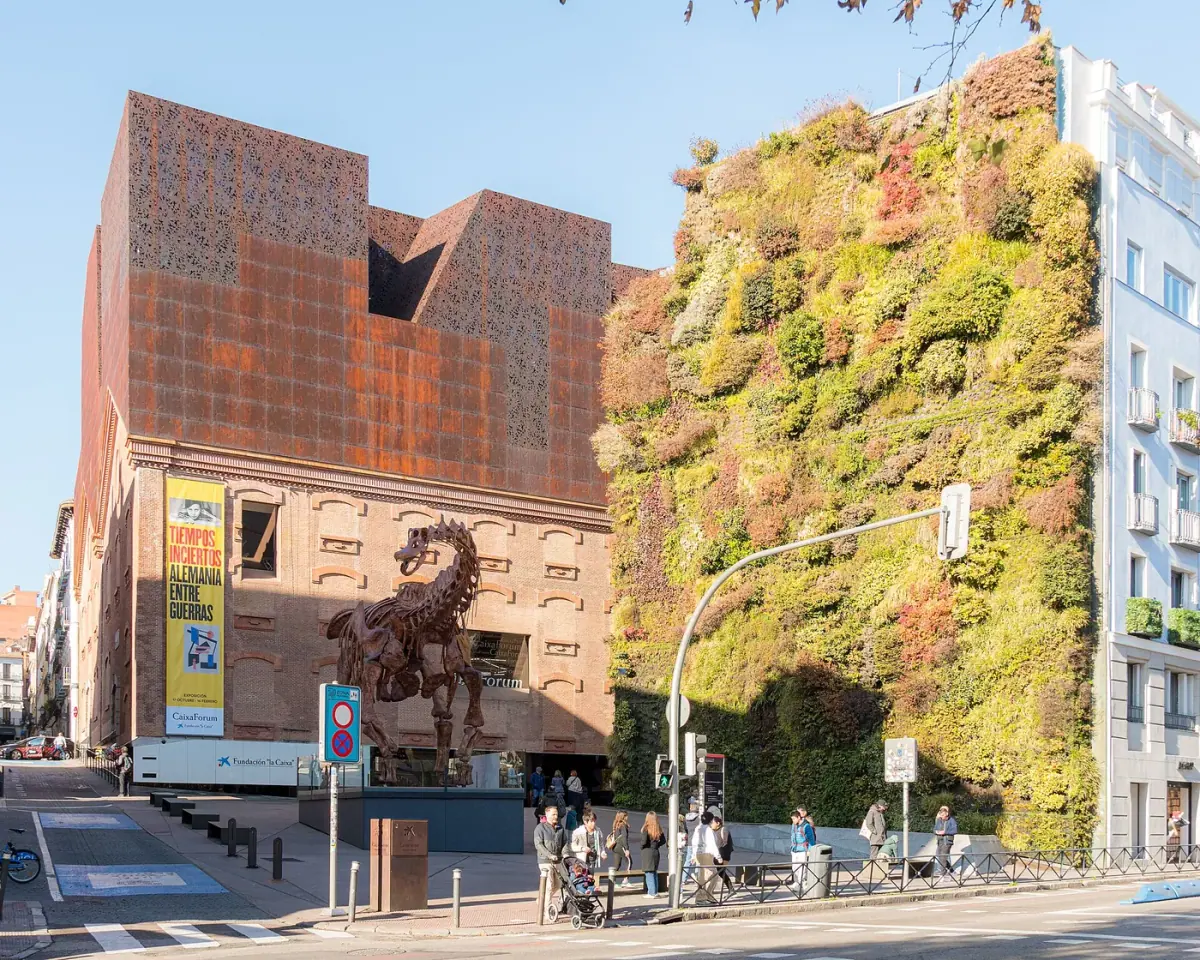

CaixaForum combines architecture and a current exhibition programme. Seeing the exterior volume and entrance relationship differs from touring exhibitions inside. As content depends on dates, do not treat an old exhibition description as a permanent collection.
Decide by programme with children; science, art or history themes may change the appeal. Choose it as an alternative to Reina Sofía rather than two long indoor visits in one day. Information source.
Why go? A former power station seemingly suspended in the air, beside a huge vertical garden, makes a surprising architectural example. Photographing the plant-covered wall is free and enjoyable.
Visit summary
- Area: Barrio de las Letras and Atocha
- Highlight: Contemporary culture and a repurposed building
- Suggested visit length: About 60–90 minutes
- Type of visit: Indoors / exhibition
- Admission: Paid admission · reasonably priced exhibitions; outdoor vertical garden free.
- Nearby map stops: Reina Sofía National Art Museum, Jesús de Medinaceli Basilica
- Open map: Search for this place on Google Maps
Food and drink stops
Below are seven food and drink stops we tried and marked in Madrid. Separate short central breaks from museum days and choose options in your current area. San Miguel market is described as a historic building above; check its current access separately.
The list below keeps the map’s food and drink choices separate. Menus, prices, opening times and booking conditions can change; check the linked business listing and its own page before visiting. The order here is not a quality ranking.
| Place | Known for | Average price (per person) | Location |
|---|---|---|---|
| Chocolatería San Ginés Nearby stop: Plaza Mayor | Hot chocolate and churros since 1894 | Up to ~€10 | Open map |
| Casa Lucas Nearby stop: Calle de la Cava Baja | Creative tapas on Cava Baja | ~€10–25 | Open map |
| Malacatín Nearby stop: Calle de la Cava Baja | Cocido madrileño, Madrid’s chickpea and meat stew | ~€10–25 | Open map |
| Bar La Campana Kalamar Nearby stop: Plaza Mayor | Calamari sandwich (bocadillo de calamares) | Up to ~€10 | Open map |
| Casa Labra Nearby stop: Real Casa de Correos | Fried cod (tajada de bacalao) and croquettes | Up to ~€10 | Open map |
| 100 Montaditos Nearby stop: Plaza de Santa Ana | Dozens of mini-sandwich varieties | Up to ~€10 | Open map |
| FELIZ COFFEE TO STAY Nearby stop: Plaza de Santa Ana | Speciality coffee, croissants and carrot cake | Up to ~€10 | Open map |
Open the food plan separately: filter by area and search places →
Other markers on the map
I have kept these points as part of the list too; distinguishing their functions from sightseeing stops makes the plan clearer.
- Square – El Corte Inglés Preciados Market: El Corte Inglés Preciados is a shopping business; retained among other map markers rather than counted as a historic sightseeing stop. Open map.
Sources and visitor information
Interior access at the Temple of Debod has limited capacity; check the official reservation system. Visit arrangements and reservations matter at Lope de Vega’s house museum. San Miguel market’s restoration closure was reported in 2026; do not make it the only meal option without confirming current reopening status on the operator’s site. Events or maintenance can change access to palace and museum sections.
The selection of stops comes from a personal My Maps map. Information sources appear in the relevant paragraphs. Individual location links are Google Maps searches using place names. Nearby pairings are based on map locations; check actual walking routes on the map.
- Personal Madrid map
- Madrid official tourism guide
- Royal Palace official visitor information
- Prado Museum
- Reina Sofía
Where we stayed
We spent three nights in Madrid at B&B Hotel Madrid Centro Plaza Mayor on Calle Atocha, a few minutes from Plaza Mayor.
Browse Madrid hotels and apartments on Booking.com. With children, we recommend checking walking distance to the centre, a lift and family room options.
Our travel map
The personal map behind this guide’s stops. Toggle layers to explore sights and any food and drink markers separately.