Things to Do in Brussels: A Detailed Guide to the Stops on Our Map
Family sights in Brussels, area-by-area walking routes, museums and food stops we tried. Plan with photographs and our personal map.
A family trip to Brussels can reveal different worlds within one city: guild houses around Grand-Place, Mont des Arts museums, Art Nouveau façades in Saint-Gilles and Ixelles, European institutions’ visitor spaces and Laeken’s broad parks. Places on our own travel map form this guide’s backbone. We grouped stops by actual location so you can consider neighbours together rather than rush from a square to a museum across town.
Each section explains why a building or area deserves time, whether interior or exterior viewing matters most and which markers are nearby. Treat outlying Art Nouveau houses, major museums and northern parks as optional extensions. Pairing one main museum with outdoor walking makes a more flexible family day than spending it entirely indoors. Food has its own section; we recorded these places on our map after trying each one.
Open the map alongside the text and switch layers as you go. Visit lengths are approximate suggestions, not a fixed programme; adapt them to interests, your child’s pace and time wanted inside.
Before you go: key notes
How many days should you spend in Brussels?
Two to three days suffice for the centre and museums; we stayed three nights and took a day trip to Antwerp by train.
Is Brussels suitable for children?
Atomium, Mini-Europe, the Natural Sciences Museum’s dinosaurs, Train World and the Comics Centre are great for children. In Belgium, under-12s travel free by train with an adult.
Where can you go on a day trip from Brussels?
Bruges, Ghent and Antwerp can be reached by train in under an hour. We took a day trip from Brussels to Antwerp.
Where should you stay in Brussels?
Grand-Place is the most central area for walking. We stayed at ibis Brussels off Grand Place, a few steps from the square.
Plan at a family pace: The days below are suggested itineraries based on the locations on the map. Shorten the route to suit your time inside museums and monuments; approximate visit lengths exclude queues and transport.
Suggested itinerary
| Plan | Stops to visit together | Family pace |
|---|---|---|
| Day 1: historic centre | Grand-Place → Town Hall → City Museum or Choco-Story → Saint-Hubert → Jeanneke-Pis → Bourse | Do not make both museums compulsory; leave time for squares and streets. |
| Day 2: palace and Sablon | Cathedral → Parc de Bruxelles → Royal Palace exterior → Coudenberg or MIM → Mont des Arts → Petit Sablon | Palace interiors open seasonally; choose the main museum according to reservations. |
| Day 3: choose one family focus | Option A: Atomium, Mini-Europe and Laeken; Option B: Cinquantenaire and one museum; Option C: Saint-Gilles Art Nouveau houses | Do not combine all three areas in one day. Other sections below are extra-day options. |
Tickets and tours: Timed tickets for popular places such as Atomium and Mini-Europe can sell out ahead. Browse Brussels tickets and tours on Tiqets to compare skip-the-line admission and guided tours.

Where to stay in Brussels with kids
We stayed 3 nights at the ibis Brussels off Grand Place; being within walking distance of the Grand-Place was a big help. With kids, where your hotel is decides how often you’ll say “shall we head back?”; being able to return for a midday break is a big relief.
| Area | Good for | Watch out | Stay |
|---|---|---|---|
| Grand-Place and the historic centre | First-timers; the main sights within walking distance | Crowded in the evenings; some streets are noisy | See on Booking |
| Sablon and Mont des Arts | Near the museums, a smarter and quieter area | High prices; hilly streets | See on Booking |
| Sainte-Catherine and Dansaert | Near the canal, with cafés and a local feel | Lively on weekend nights | See on Booking |
| European Quarter and Cinquantenaire | Big parks and museums on the doorstep; quiet at weekends | Office traffic on weekdays; metro to the historic centre | See on Booking |
What we look at when choosing: A lift (does the stroller fit without folding?), being close to the train or metro, a family room for three or an apartment with a kitchen, and air conditioning in summer.
Accommodation: Compare hotels and apartments in Brussels on Booking.com; choosing free cancellation keeps your plans flexible.
Contents
- Before you go: key notes
- Where to stay in Brussels with kids
- Grand-Place and historic centre
- Royal district and Mont des Arts
- Royal Palace of Brussels
- Coudenberg Palace Archaeological Site
- Brussels Park (Parc de Bruxelles)
- Cathedral of St Michael and St Gudula
- Mont des Arts
- Magritte Museum (Place Royale)
- Musical Instruments Museum (MIM)
- Old English Pharmacy (La Pharmacie Anglaise)
- Royal Museums of Fine Arts of Belgium
- BOZAR (Centre for Fine Arts)
- Tondo Footbridge
- Sablon and Marolles
- Sainte-Catherine and Dansaert
- Botanique and Schaerbeek
- Saint-Gilles and Art Nouveau houses
- Ixelles and La Cambre
- Forest: a separate architectural stop
- European quarter and Cinquantenaire
- Laeken and Heysel
- Koekelberg and Jette
- Canal district and Tour & Taxis
- Food and drink stops
- Sources and visitor information
Grand-Place and historic centre
Grand-Place (Historic Square)
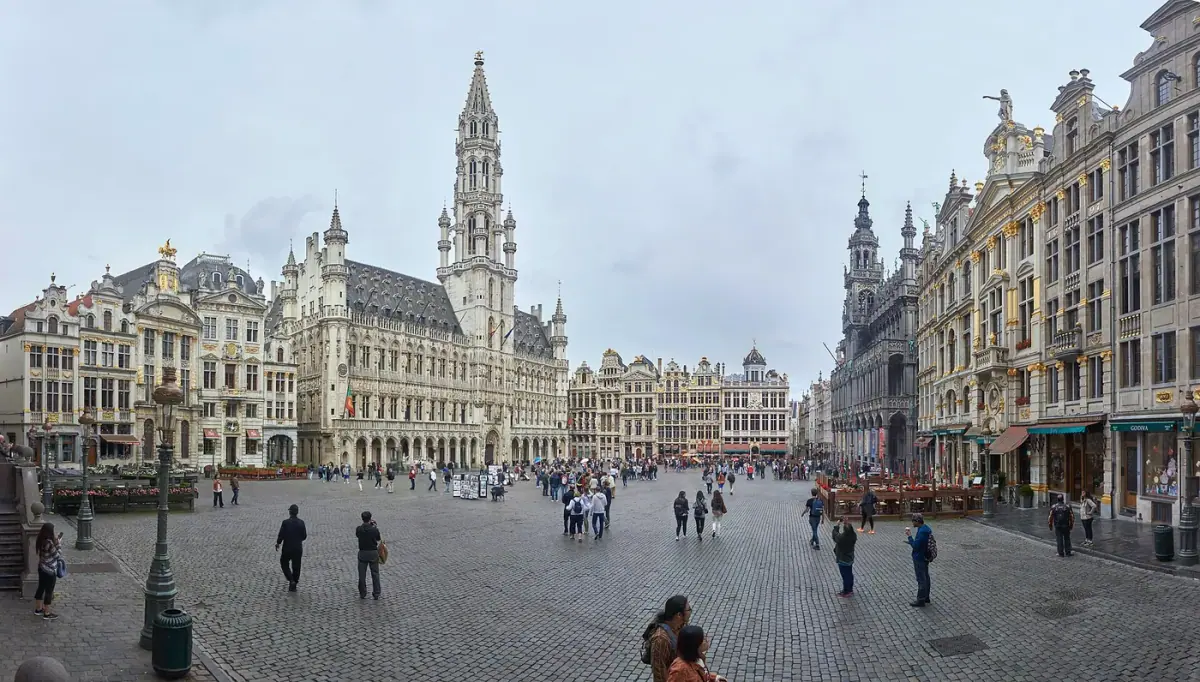

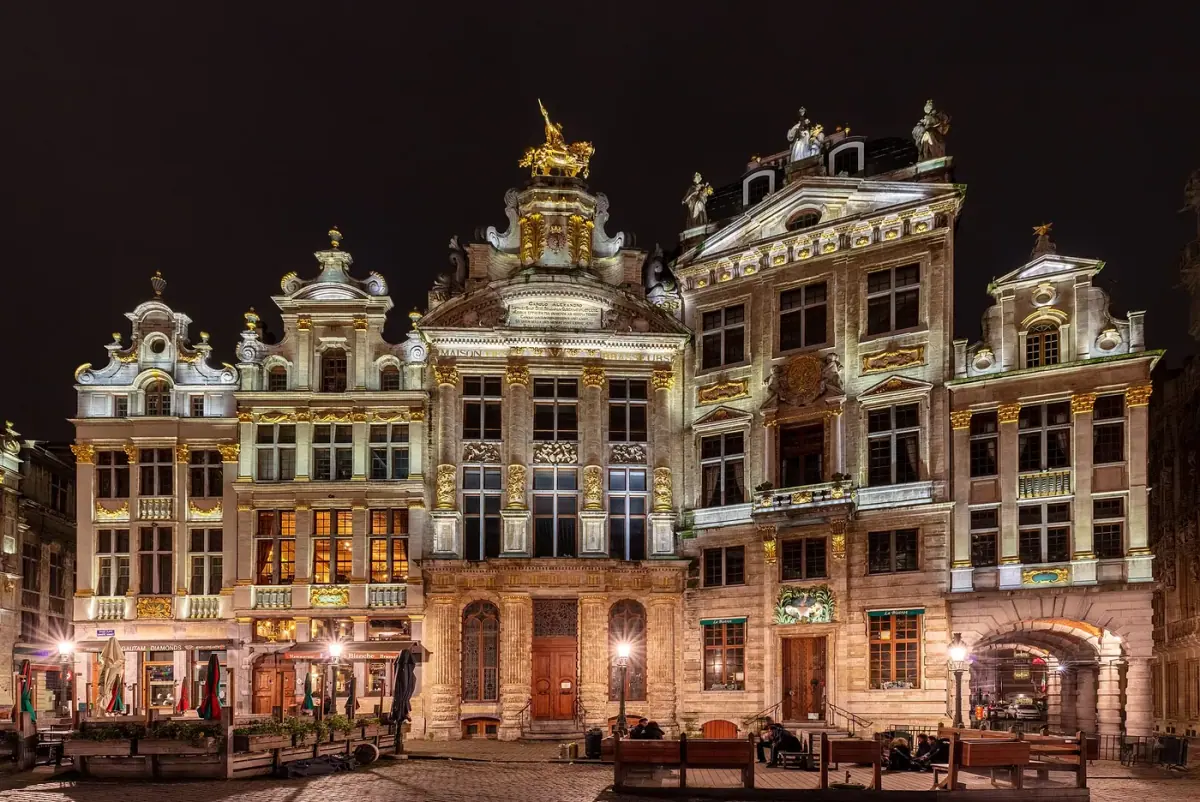
Grand-Place is a good start for understanding historic Brussels. Guild houses, Town Hall and Maison du Roi show city life from different periods in one frame. Most surrounding houses were rebuilt after the 1695 bombardment, so do not assume all façades have the same age. Listed by UNESCO in 1998, the square rewards studying rooflines, trade symbols and different decoration rather than only taking an overall photograph.
Play a brief family observation game without pressure to reach a particular door: search for birds, statues and golden details. Then view Town Hall’s exterior or relate the façades’ past to the City Museum. The square is an outdoor stop in its own right; entering every surrounding building is unnecessary. Information source.
Why go? Gilded guild houses and Gothic Town Hall make it one of the world’s most beautiful squares. Evening lights or the enormous biennial flower carpet make an unforgettable visit.
Visit summary
- Area: Grand-Place and historic centre
- Highlight: Guild houses and the heart of city history
- Suggested visit length: About 30–45 minutes
- Type of visit: Outdoor walk
- Admission: Free (outdoors)
- Nearby map stops: Brussels City Museum (Maison du Roi), Brussels Town Hall (Hôtel de Ville)
- Open map: Search for this place on Google Maps
Brussels Town Hall (Hôtel de Ville)
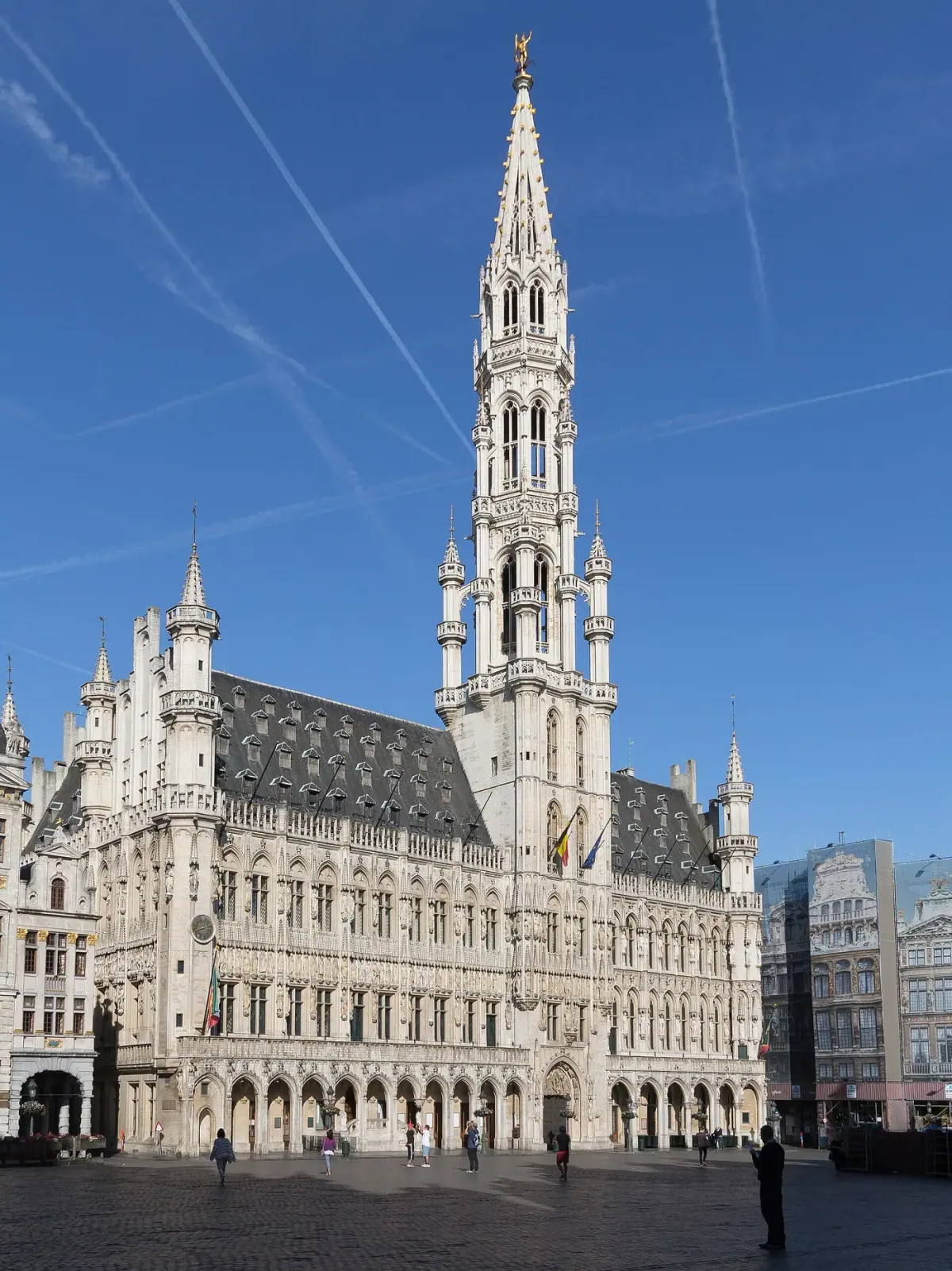

Grand-Place’s towered Town Hall recalls that the square is more than an ornate photo backdrop: it relates to civic government history. Stacked façade statues, vertical lines and wings framing the tower catch the eye. Step back for the whole, then examine stonework close up.
Check current tours for an interior visit; the visible exterior and tour-only sections do not share access. A façade stop may suffice on a short family square walk. The City Museum opposite helps relate the building to other city periods. Information source.
Why go? Its lace-like 96-metre Gothic tower dominates the square, topped by St Michael slaying the dragon. Magnificent rooms seen on guided tours reveal an interior as impressive as its exterior.
Visit summary
- Area: Grand-Place and historic centre
- Highlight: Gothic façade and city government
- Suggested visit length: About 20–30 minutes for the exterior; interior visit extra
- Type of visit: Exterior view / scheduled interior visit
- Admission: Exterior free; interiors only on paid guided tours.
- Nearby map stops: Grand-Place (Historic Square), Brussels City Museum (Maison du Roi)
- Open map: Search for this place on Google Maps
Brussels City Museum (Maison du Roi)
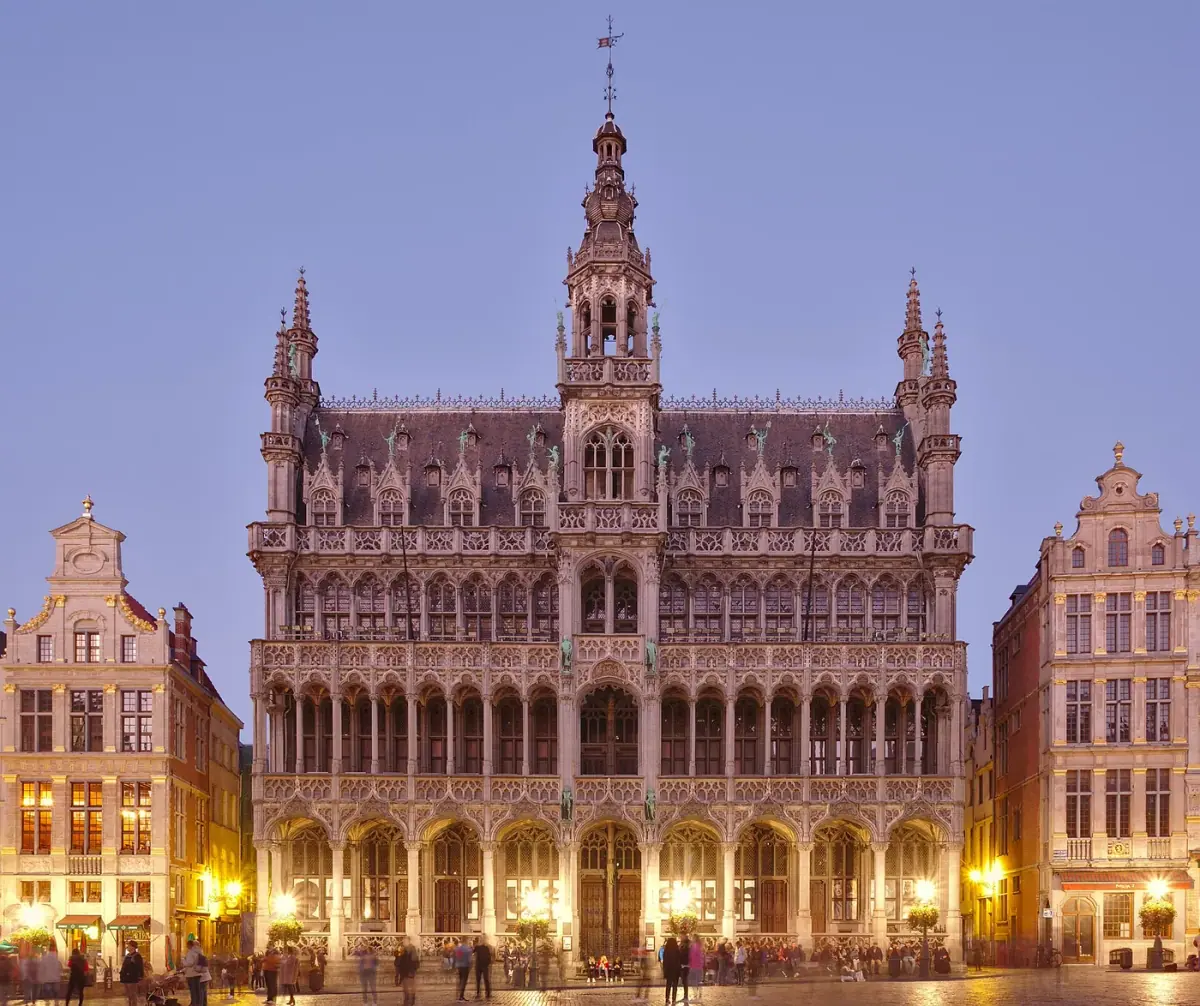

Maison du Roi opposite houses a museum explaining Brussels through artworks, city images and local production. Its present neo-Gothic appearance dates to the nineteenth century; do not read the whole square as one medieval scene. The original Manneken-Pis makes the link between street statue and museum tangible.
An interior visit after the square suits city-history interests. With children, select a few objects of different types, such as a model, statue and painting, rather than everything in order. The museum states there is no lift and floors are reached by stairs. An official notice announces complete closure from 4 January to 1 March 2027, with display changes afterwards too. Information source.
Why go? The original Manneken-Pis is preserved here; hundreds of costumes are in the nearby GardeRobe MannekenPis museum. Ideal for learning city history and the famous little boy’s story in Grand-Place.
Visit summary
- Area: Grand-Place and historic centre
- Highlight: The city’s past and original Manneken-Pis
- Suggested visit length: About 60–90 minutes
- Type of visit: Indoors
- Admission: Paid admission · about €10 per adult.
- Nearby map stops: Grand-Place (Historic Square), Brussels Town Hall (Hôtel de Ville)
- Open map: Search for this place on Google Maps
Royal Saint-Hubert Galleries
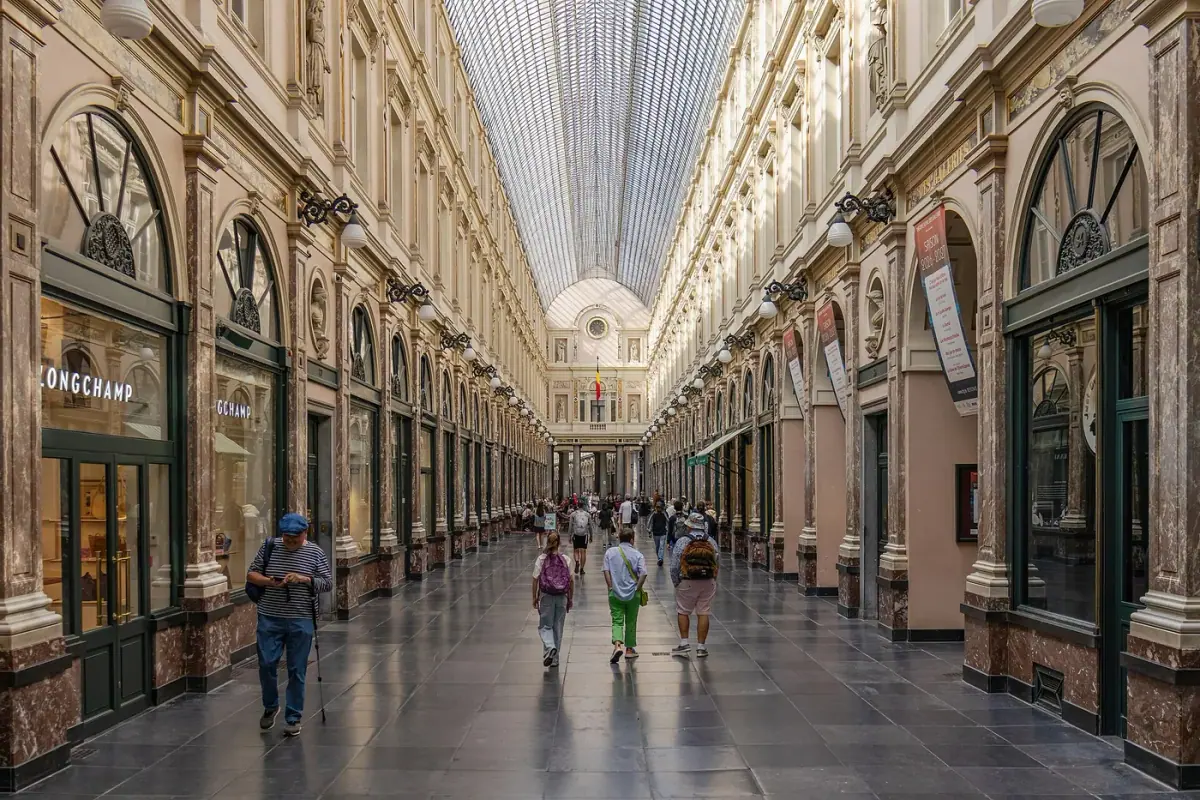

Saint-Hubert’s galleries are an architectural destination beyond shops, with glass roofing, long perspectives and orderly façades. Entering from narrow streets changes light and spatial scale. Looking above windows at upper floors, roof supports and the gallery axis reveals its character.
Explore without shopping. A brief family passage creates a freer section after a museum. Grand-Place, Rue des Bouchers and Jeanneke-Pis share the central cluster; use the gallery as a connecting loop. Information source.
Why go? Among Europe’s first covered shopping arcades, its glass roof and elegant displays preserve nineteenth-century Brussels. Ideal for wandering among chocolatiers on rainy days.
Visit summary
- Area: Grand-Place and historic centre
- Highlight: Historic glass-roofed urban passage
- Suggested visit length: About 20–30 minutes
- Type of visit: Covered arcade walk
- Admission: Free (outdoors)
- Nearby map stops: Rue des Bouchers, Jeanneke-Pis
- Open map: Search for this place on Google Maps
Manneken-Pis
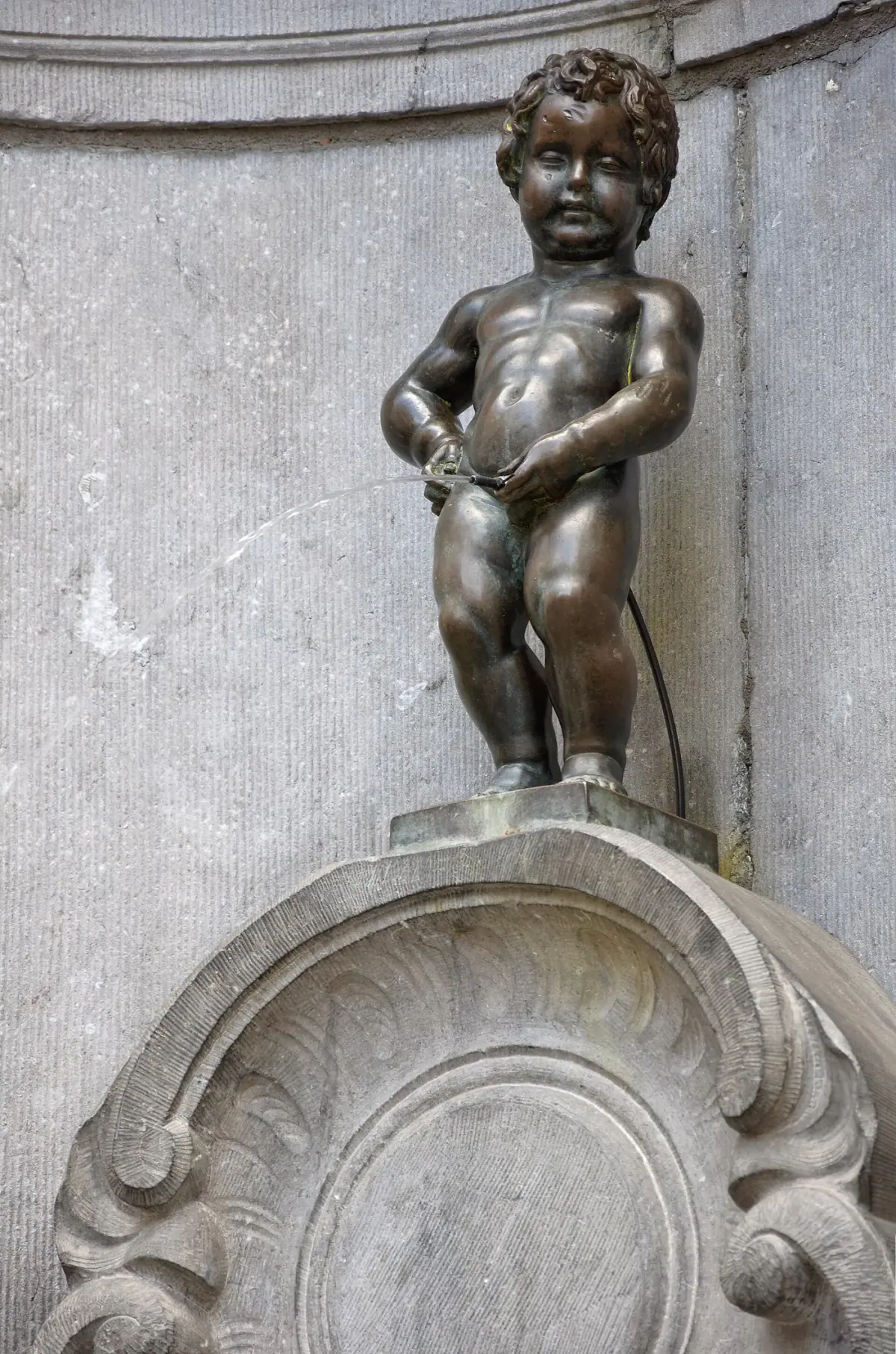

Manneken-Pis can surprise in scale if you expect a grand monument. The street-corner figure matters more for everyday Brussels humour and identity than size. It is a short street stop rather than a lengthy monument tour. In crowds, find somewhere your child can see, then continue.
The street statue differs from the original preserved in the City Museum. Knowing this helps decide whether to add the museum. Choco-Story is a nearby indoor alternative; return to central squares via Rue des Éperonniers. Information source.
Why go? Brussels’s most famous symbol despite its tiny size, dressed in different costumes hundreds of times a year. With modest expectations and its story, it becomes a favourite for children.
Visit summary
- Area: Grand-Place and historic centre
- Highlight: Small-scale symbol of city folklore
- Suggested visit length: About 10–15 minutes
- Type of visit: Exterior view
- Admission: Free (outdoors)
- Nearby map stops: Choco-Story Brussels, Brussels Town Hall (Hôtel de Ville)
- Open map: Search for this place on Google Maps
Jeanneke-Pis
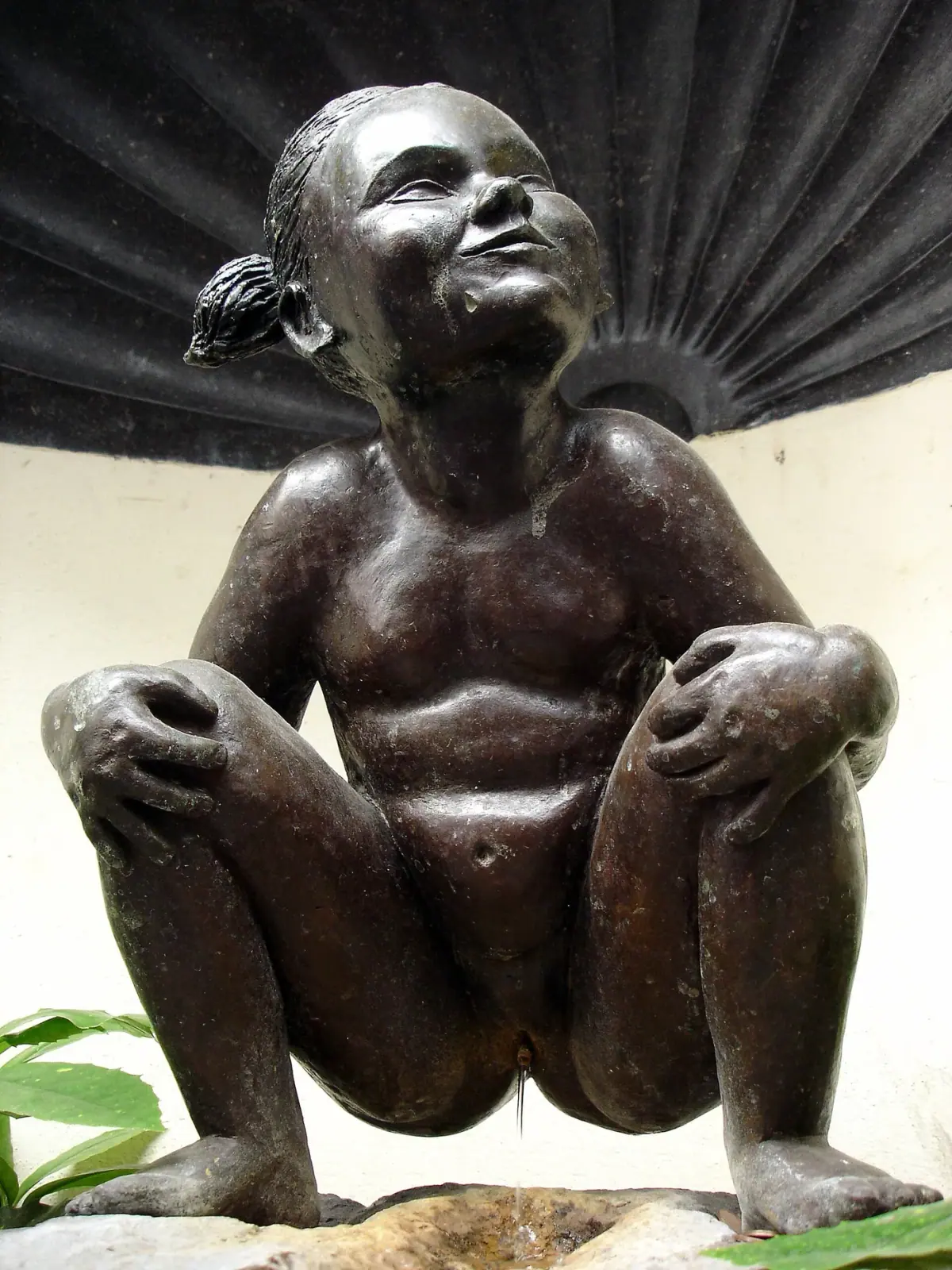

Jeanneke-Pis is a small sculpture in a narrow historic-centre passage. Though part of Manneken-Pis’s humorous family, it should not be judged on a major historical monument’s scale. Its dead-end location makes adding it to a surrounding walk most sensible.
If near Saint-Hubert and Rue des Bouchers, check the map and stop by. The experience is a brief look at public-space humour; no interior needs substantial time. Information source.
Why go? Made in 1987 as a playful sister to Manneken-Pis, the statue hides in a narrow cul-de-sac. A small surprise showing Brussels’s sense of humour.
Visit summary
- Area: Grand-Place and historic centre
- Highlight: Small sculpture of Brussels humour
- Suggested visit length: About 10 minutes
- Type of visit: Exterior view
- Admission: Free (outdoors)
- Nearby map stops: Rue des Bouchers, Royal Saint-Hubert Galleries
- Open map: Search for this place on Google Maps
Rue des Bouchers
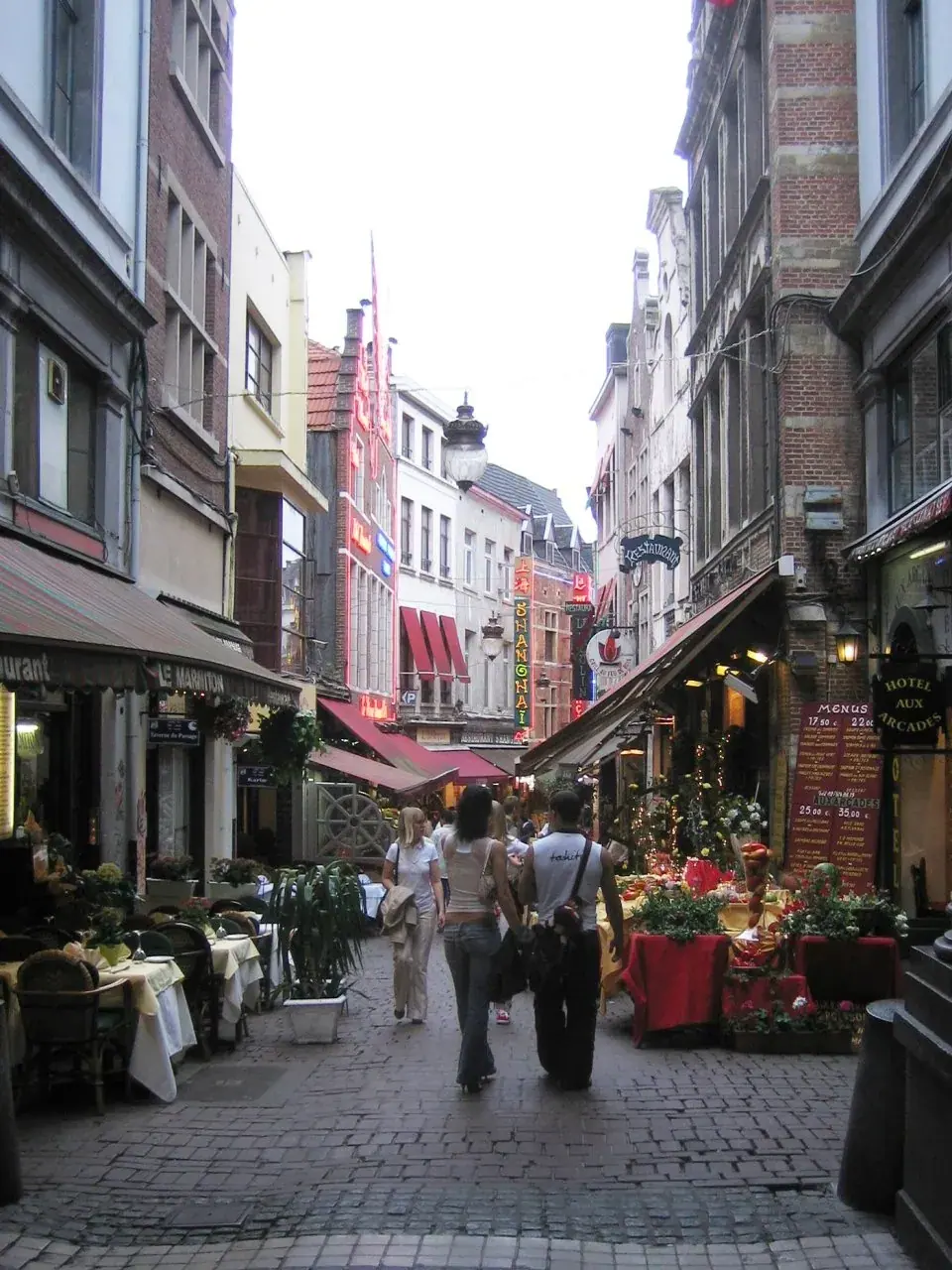

Rue des Bouchers offers the narrow street scale of historic Brussels. Here we discuss façades and urban fabric rather than restaurant rankings. Commercial signs and crowds can hide the building lines above; look at upper floors too.
Combine Saint-Hubert and Jeanneke-Pis nearby. A slow family passage suffices; think of it as a link between main stops rather than a separate long visit. Information source.
Why go? A lively food street beside Grand-Place, with restaurant tables spilling out. Evening lights convey the city’s energy.
Visit summary
- Area: Grand-Place and historic centre
- Highlight: Narrow streets of the old centre
- Suggested visit length: About 15–20 minutes
- Type of visit: Outdoor walk
- Admission: Free (outdoors)
- Nearby map stops: Royal Saint-Hubert Galleries, Jeanneke-Pis
- Open map: Search for this place on Google Maps
Brussels Stock Exchange (Bourse)
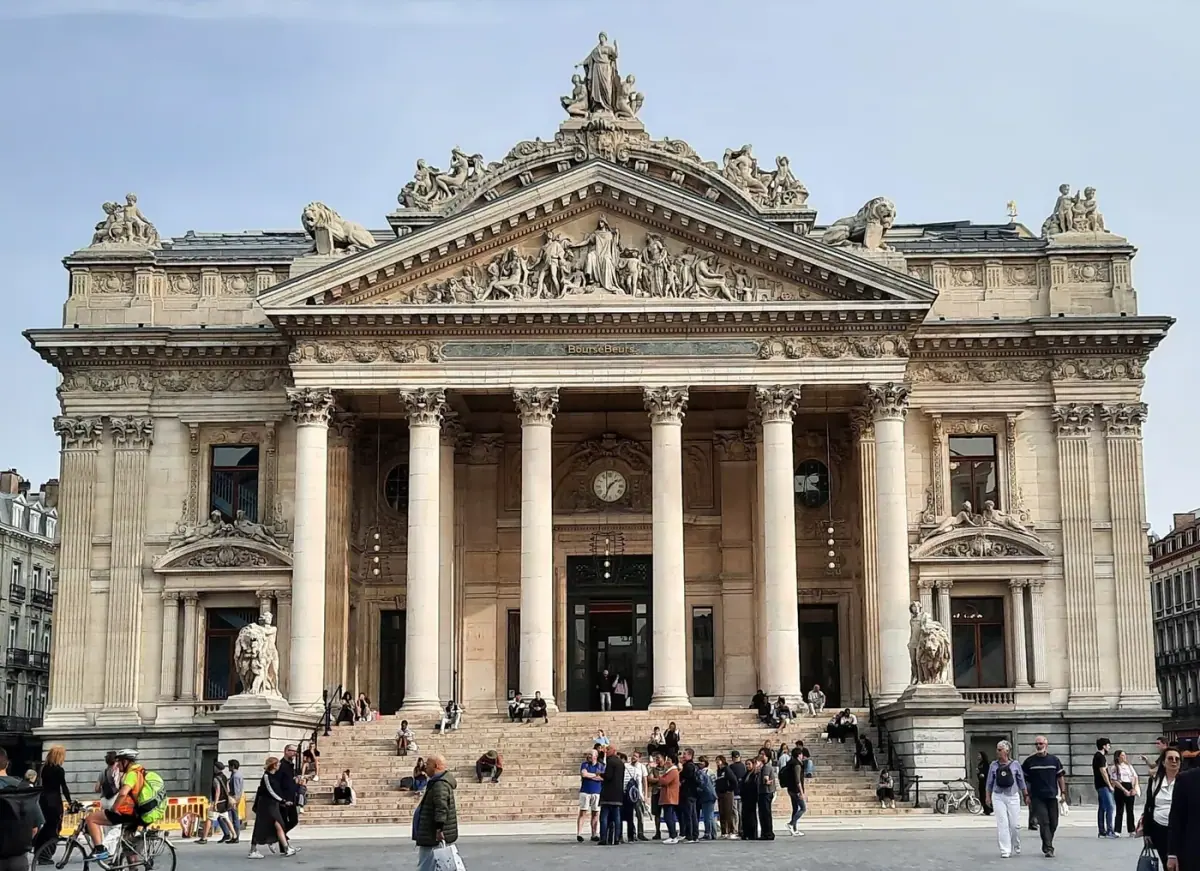

Bourse’s monumental façade marks the shift from narrow central streets into broader urban space. The former stock exchange now has cultural uses, including Belgian Beer World. Seeing architecture and visiting exhibitions are separate choices: exterior steps and façade scale alone can make a worthwhile stop.
Pair it with Boulevard Anspach to understand its urban position. Choose interior exhibitions by family interest; the façade fits easily into the centre’s outdoor walk. Information source.
Why go? The grand neo-Renaissance exchange was renovated into an experience centre about Belgian beer. Its pedestrian boulevard is a city meeting point.
Visit summary
- Area: Grand-Place and historic centre
- Highlight: Reuse of a monumental stock exchange
- Suggested visit length: About 20–30 minutes for the exterior
- Type of visit: Exterior view / optional interior exhibition
- Admission: Exterior free; Belgian Beer World inside charges admission.
- Nearby map stops: Brussels Town Hall (Hôtel de Ville), Grand-Place (Historic Square)
- Open map: Search for this place on Google Maps
Choco-Story Brussels
Choco-Story explores chocolate through cocoa and production culture, not only a product to buy. It is therefore an indoor sightseeing stop separate from the food list. Check the current museum programme to see whether interpretation and demonstrations fit expectations.
A geographically suitable alternative after family outdoor walking near Manneken-Pis. Decide from official ticket details without assuming a particular demonstration runs every visit hour or tasting is included with every ticket. Information source.
Why go? A museum tracing cocoa from the Maya to Belgian pralines, ending with tasting. Watching chocolate made live can be children’s sweetest moment.
Visit summary
- Area: Grand-Place and historic centre
- Highlight: Chocolate’s cultural and production history
- Suggested visit length: About 60–90 minutes
- Type of visit: Indoors
- Admission: Paid admission · about €15–17 per adult (tasting included); child discounts.
- Nearby map stops: Manneken-Pis, Brussels Town Hall (Hôtel de Ville)
- Open map: Search for this place on Google Maps
Rue des Éperonniers
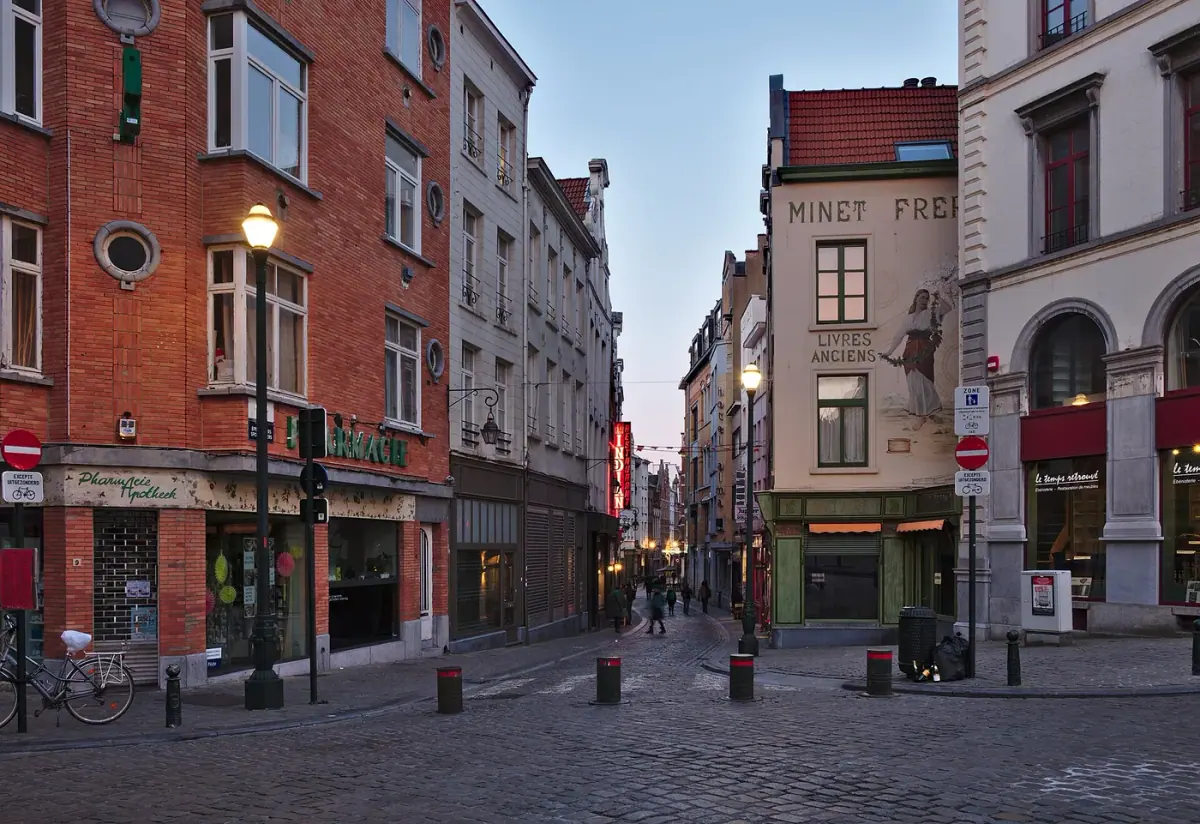

Rue des Éperonniers is a short but meaningful link through old street patterns between squares. Its slight curve and varied frontage widths contrast with planned boulevards. The official heritage inventory links its history with arms and bow makers.
Walking matters more than entering a monument. Observe façades between Grand-Place and Mont des Arts. Do not assume hanging decorations are permanent; seasonal arrangements can differ from photographs. Information source.
Why go? A quiet medieval street of small shops and old façades steps from Grand-Place. A lovely alternative for escaping crowds and seeing local Brussels.
Visit summary
- Area: Grand-Place and historic centre
- Highlight: Historic street line and narrow façades
- Suggested visit length: About 15–20 minutes
- Type of visit: Outdoor walk
- Admission: Free (outdoors)
- Nearby map stops: Grand-Place (Historic Square), Horta Gallery
- Open map: Search for this place on Google Maps
Horta Gallery
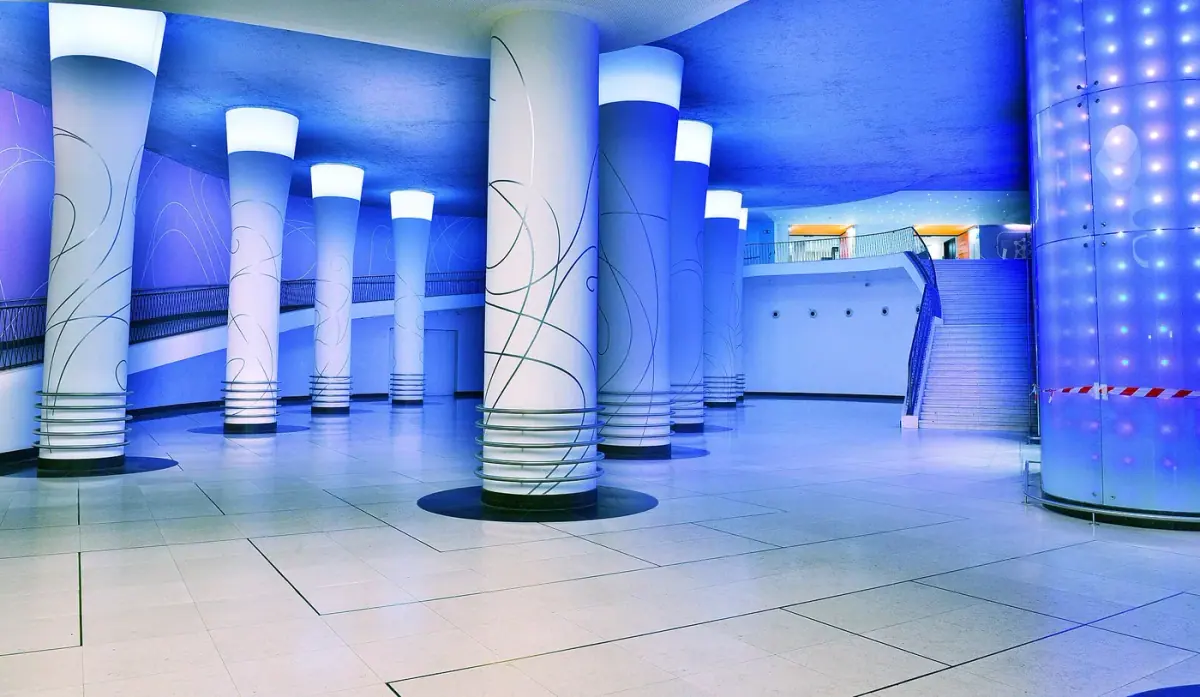

Do not confuse Horta Gallery with the Horta Museum or BOZAR’s Horta Hall. The map location is the gallery area near Central Station. Visiting depends on passages and current events, not a museum with an unchanging exhibition.
Check location for a short stop between Grand-Place and Mont des Arts. For programmed spaces, check business or event conditions. Do not substitute it for a reserved museum in a family route. Information source.
Why go? The Art Nouveau passage beneath Central Station brings Victor Horta’s legacy into everyday life. An elegant welcome for arriving train passengers.
Visit summary
- Area: Grand-Place and historic centre
- Highlight: Gallery space near Central Station
- Suggested visit length: About 15–20 minutes
- Type of visit: Passage / scheduled interior
- Admission: Passage free; exhibitions depend on programme.
- Nearby map stops: Rue des Éperonniers, Rue des Bouchers
- Open map: Search for this place on Google Maps
Royal district and Mont des Arts
Royal Palace of Brussels
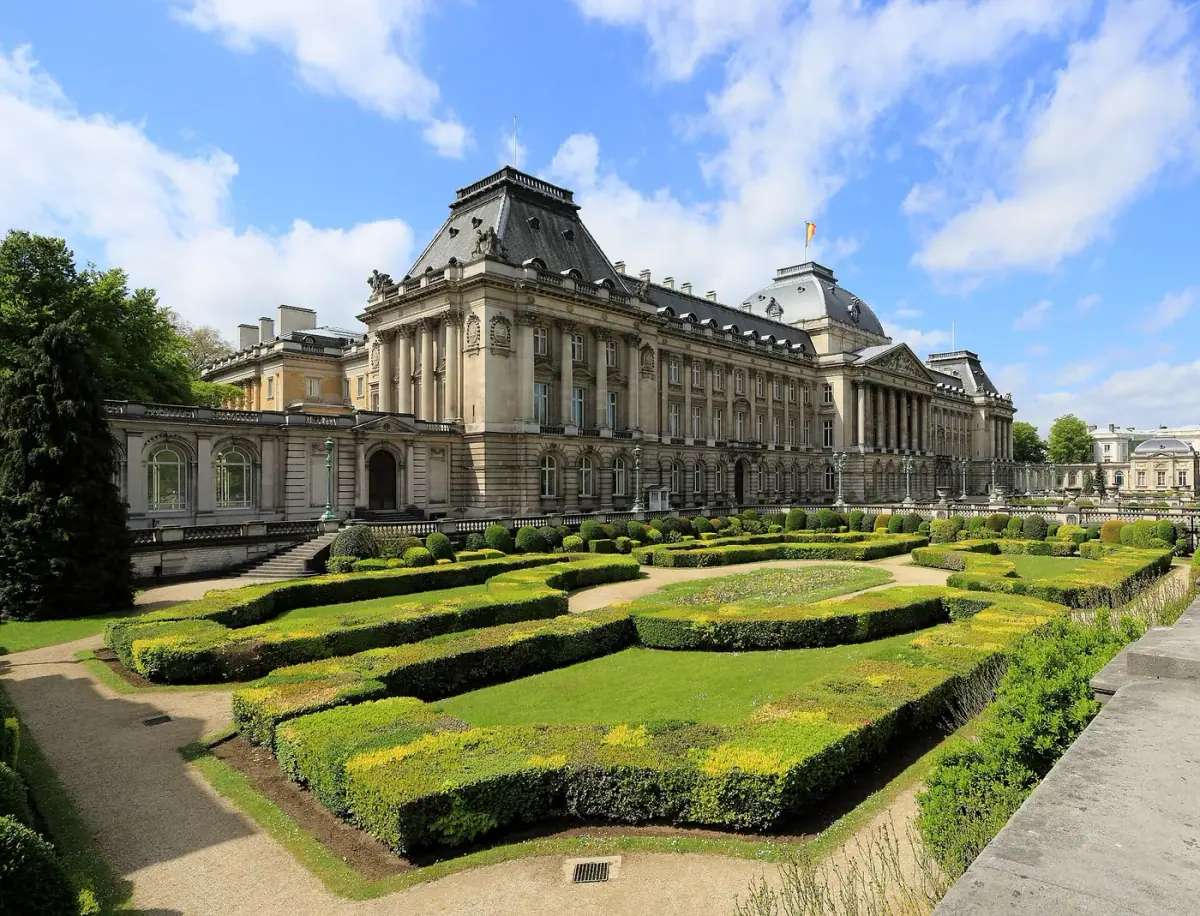

South of Parc de Bruxelles, the Royal Palace is the king’s administrative workplace. Seeing its façade with the park clarifies its ceremonial urban position. Exterior and room visits differ; interiors open only during announced periods.
The announced 2026 public summer period, 3 July–16 August, has ended. Check official programmes for a future trip. A family exterior-and-park walk provides an alternative independent of limited opening. Information source.
Why go? The Belgian king’s official palace opens publicly in summer; its Mirror Room ceiling covered with over a million beetle wings is extraordinary. The broad square and park create a grand stop.
Visit summary
- Area: Royal district and Mont des Arts
- Highlight: The monarchy’s administrative building
- Suggested visit length: About 20–30 minutes for the exterior
- Type of visit: Exterior view / seasonal interior visit
- Admission: Free · interiors open only in summer (late July–September).
- Nearby map stops: Coudenberg Palace Archaeological Site, Musical Instruments Museum (MIM)
- Open map: Search for this place on Google Maps
Coudenberg Palace Archaeological Site
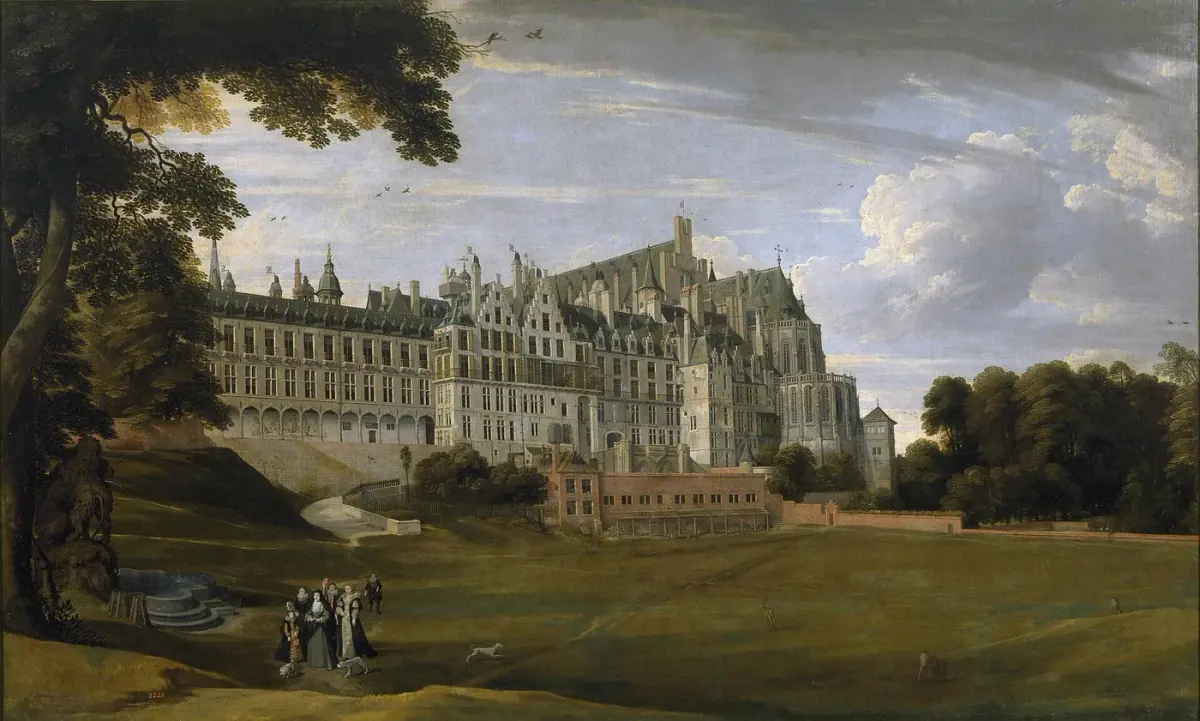

Coudenberg explores underground fragments of an old power centre, not today’s palace rooms. Passages and rooms trace a palace once dominating the city, lost after a fire. Walking the now-underground Rue Isabelle makes urban layering tangible.
More revealing than façades for history and archaeology interests. Explain to children that it differs from bright, expansive palace halls. Choose it within the same area as MIM and the Royal Palace. Information source.
Why go? Walk an underground medieval street through palace remains beneath the royal square. The sense of discovering a lost city excites children too.
Visit summary
- Area: Royal district and Mont des Arts
- Highlight: Underground traces of a lost palace
- Suggested visit length: About 60–90 minutes
- Type of visit: Indoors / underground site
- Admission: Paid admission · about €10 per adult.
- Nearby map stops: Musical Instruments Museum (MIM), Royal Palace of Brussels
- Open map: Search for this place on Google Maps
Brussels Park (Parc de Bruxelles)
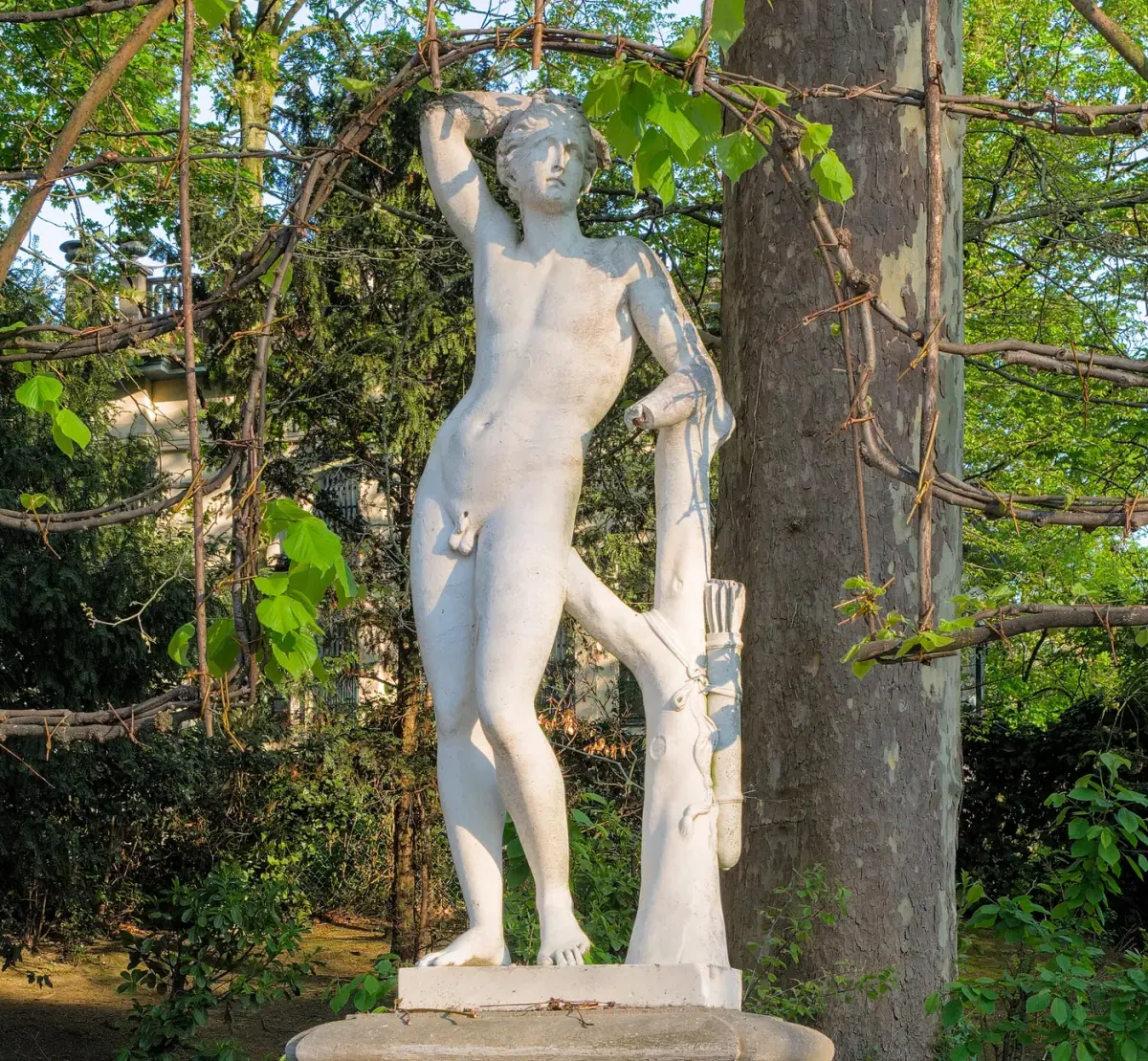

Brussels Park is useful outdoor time between palaces and museums. Ordered paths and trees turn the surrounding monuments’ formal atmosphere into a calmer walk. Use it as a passage or a longer museum-day break.
Making outdoor spaces part of the family plan, not leftover tasks, adds flexibility. The Royal Palace and Tondo walk share the area; completing the park is unnecessary. Information source.
Why go? The French-style park between palace and parliament offers sculptures and broad paths for breathing space in the centre. A safe place for children to run.
Visit summary
- Area: Royal district and Mont des Arts
- Highlight: Green break in the royal district
- Suggested visit length: About 30–60 minutes
- Type of visit: Outdoor walk
- Admission: Free
- Nearby map stops: Tondo Footbridge, BOZAR (Centre for Fine Arts)
- Open map: Search for this place on Google Maps
Cathedral of St Michael and St Gudula
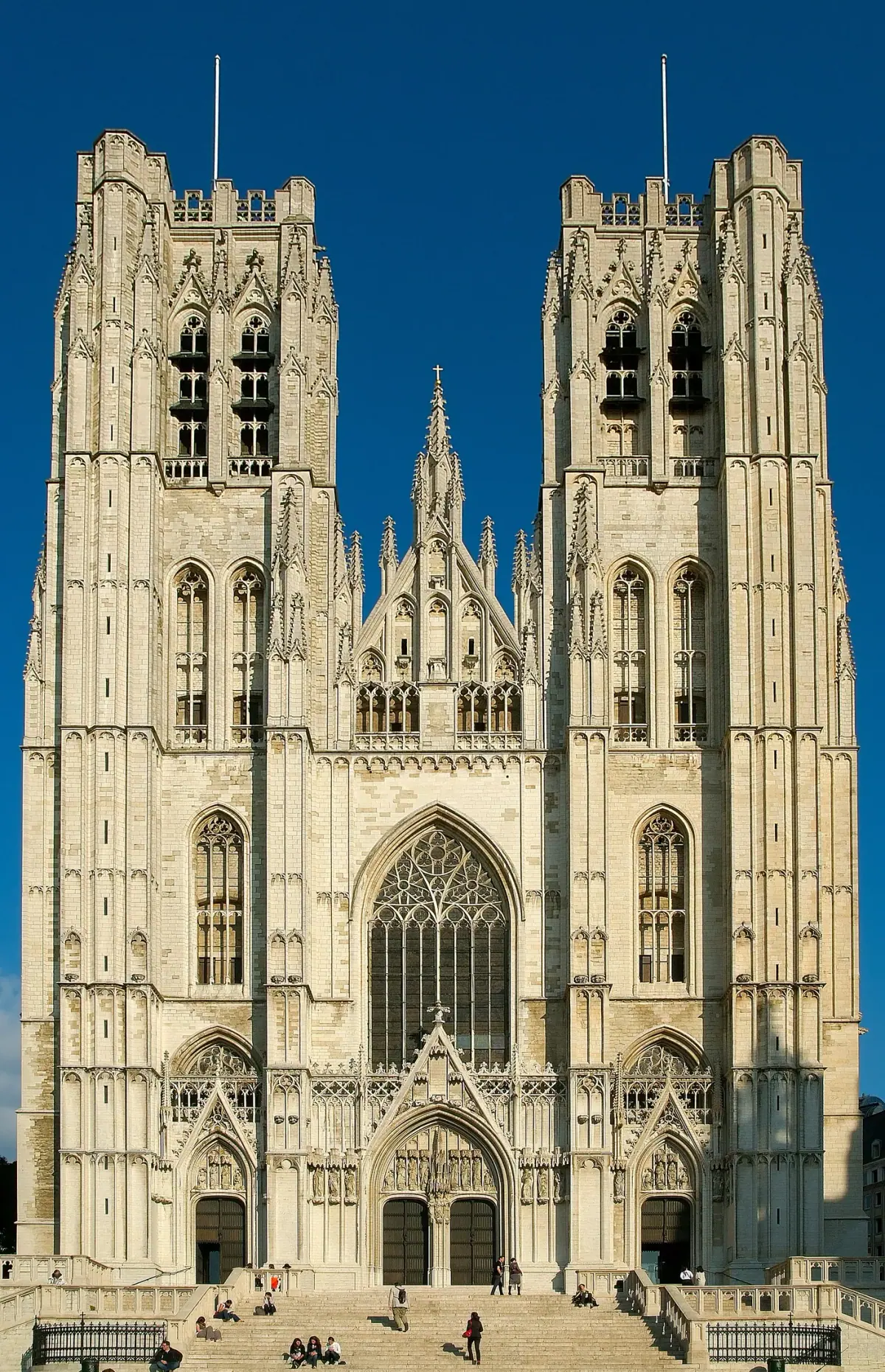

The cathedral is a clear architectural stop from central squares to the royal district above. After the twin towers, look inside at height, stained-glass light and the rhythm of stone supports. It remains an active worship space; access can vary by section.
A short, focused interior may suffice for families interested in art and religious architecture. Tondo, park and Mont des Arts share the broad area; avoid treating it as a rushed filler while waiting for museum tickets. Information source.
Why go? Dazzling stained glass and a Baroque pulpit in a twin-towered Gothic cathedral. The setting of Belgian royal weddings offers a peaceful visit away from crowds.
Visit summary
- Area: Royal district and Mont des Arts
- Highlight: Gothic cathedral and stained glass
- Suggested visit length: About 30–45 minutes
- Type of visit: Indoors / exterior view
- Admission: Cathedral free; treasury and crypt charge admission.
- Nearby map stops: Brussels Park (Parc de Bruxelles), Tondo Footbridge
- Open map: Search for this place on Google Maps
Mont des Arts
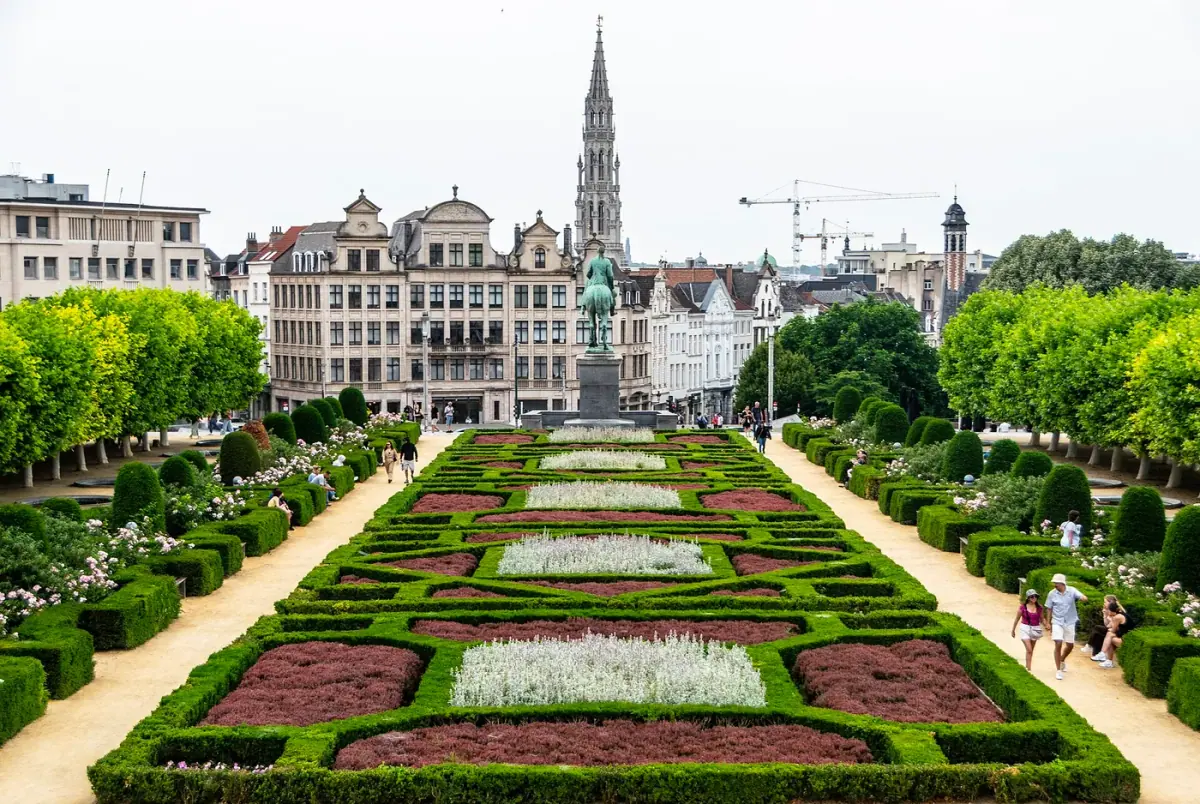

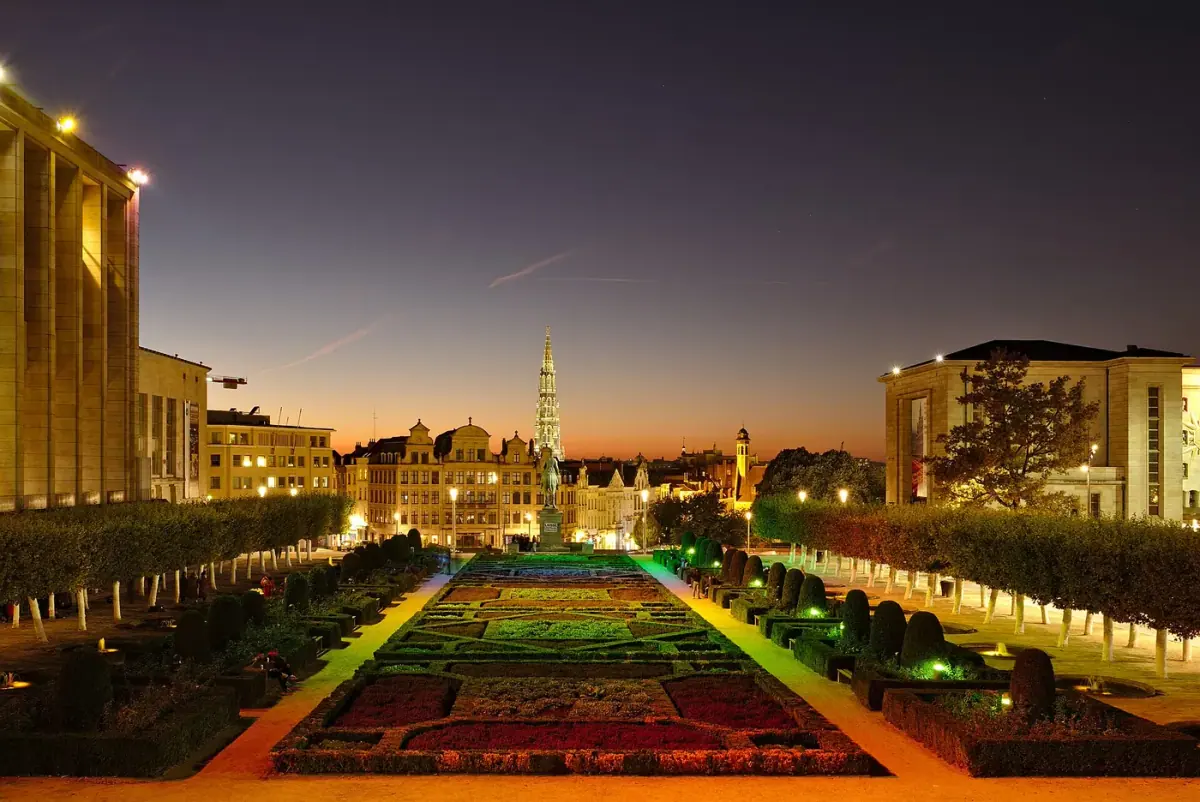
Mont des Arts visually links lower city with museums and palaces. Terraces and gardens give a perspective showing Brussels beyond one square. Take in the panorama, then follow the garden’s axis to see two scales of one space.
Meaningful for photography and family outdoor breaks between museums. Add it before or after MIM, Magritte or BOZAR. With possible stairs, check stroller connections on the map and access signs on site. Information source.
Why go? Views from the garden steps towards Grand-Place’s tower and the skyline are among Brussels’s loveliest. A photogenic point naturally passed on museum trips.
Visit summary
- Area: Royal district and Mont des Arts
- Highlight: Garden geometry and city views
- Suggested visit length: About 30–45 minutes
- Type of visit: Outdoor walk
- Admission: Free (outdoors)
- Nearby map stops: Old English Pharmacy (La Pharmacie Anglaise), BOZAR (Centre for Fine Arts)
- Open map: Search for this place on Google Maps
Magritte Museum (Place Royale)
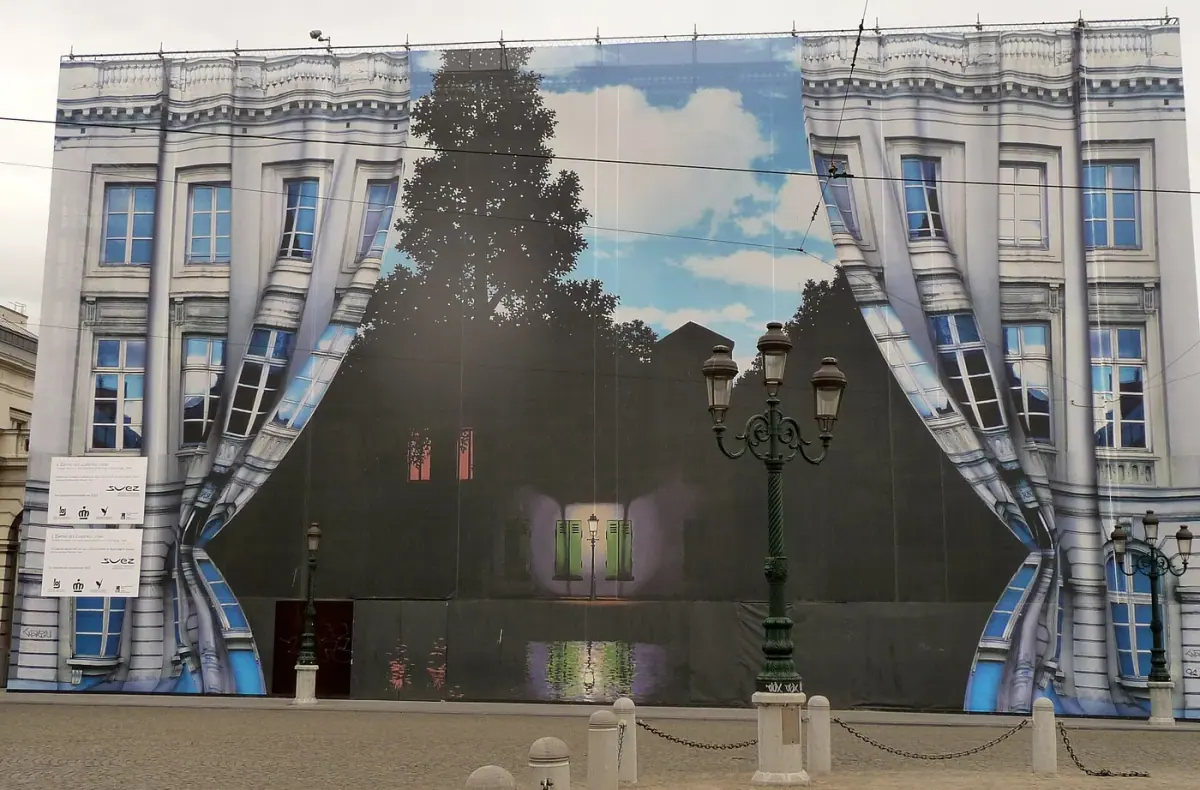

This Magritte Museum is the collection within the Royal Museums of Fine Arts near Place Royale, not the Jette house museum. Familiar objects in unexpected relationships start conversations with children without lengthy explanations: what looks normal, and what becomes strange?
A few paintings may reward more than completing everything in order. Make it the main museum if your child’s art interest is limited; do not make MIM and Coudenberg compulsory that day. Information source.
Why go? The world’s largest René Magritte collection, with mind-opening clouds, umbrellas and bowler-hatted men. Ideal for asking children what is strange in a picture.
Visit summary
- Area: Royal district and Mont des Arts
- Highlight: René Magritte and Surrealism
- Suggested visit length: About 90–120 minutes
- Type of visit: Indoors
- Admission: Paid admission · about €10–13 per adult; combination tickets with Fine Arts Museums available. Under-19s reduced.
- Nearby map stops: Musical Instruments Museum (MIM), Royal Museums of Fine Arts of Belgium
- Open map: Search for this place on Google Maps
Musical Instruments Museum (MIM)
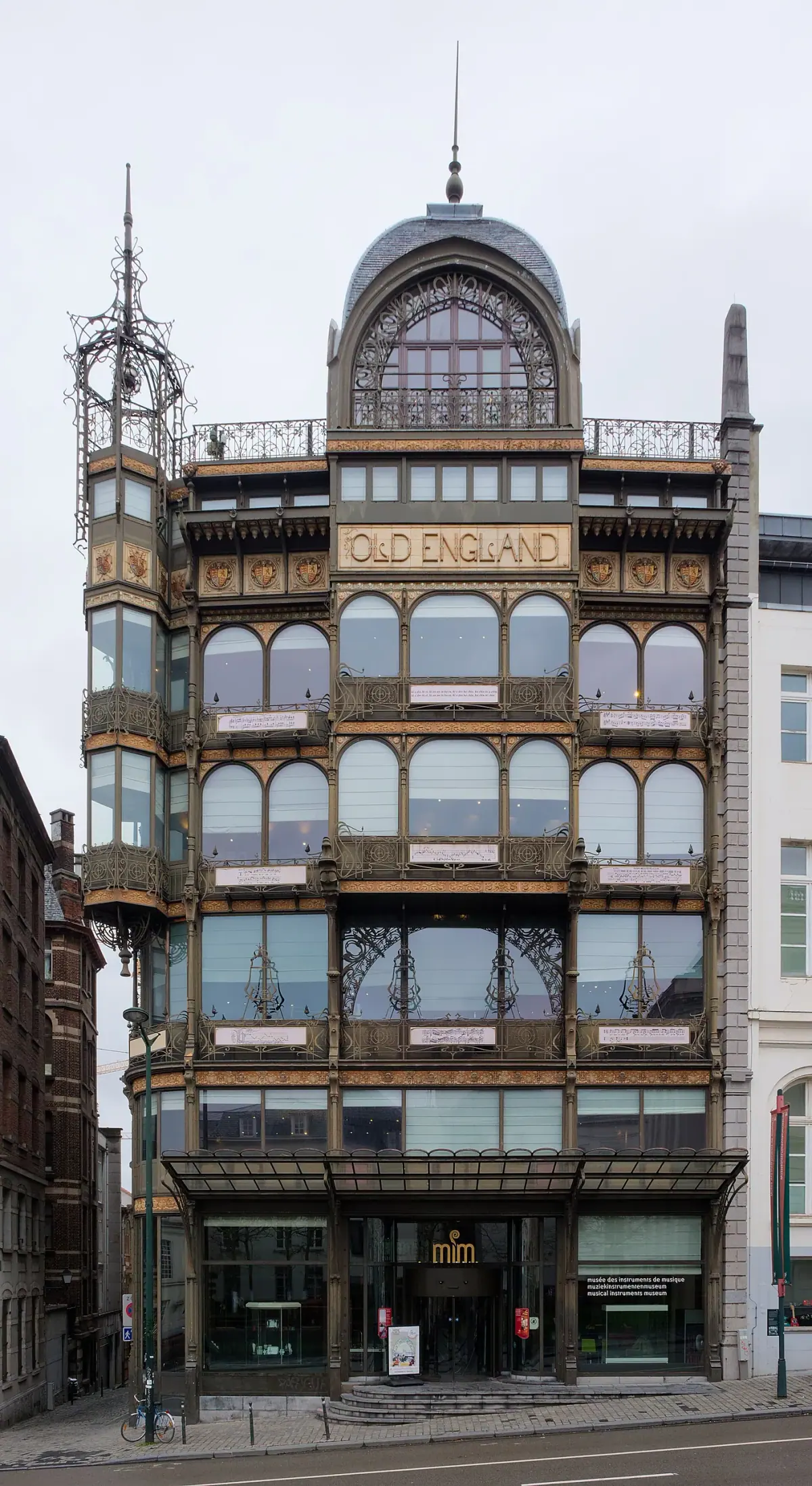

MIM has two layers: Old England’s Art Nouveau appearance and a collection of world instruments inside. Official interpretation connects instruments from different times and places with their sounds. Expect more than simply looking at objects in cases.
A meaningful main stop for music-minded families. Children need not learn every name; shapes, materials and sound differences suffice. Decide about entering after seeing the façade, balancing it with Mont des Arts gardens. Information source.
Why go? Over a thousand instruments in Art Nouveau Old England, with headphones to hear each one. City views from the rooftop café are another attraction.
Visit summary
- Area: Royal district and Mont des Arts
- Highlight: Old England building and world instruments
- Suggested visit length: About 90–120 minutes
- Type of visit: Indoors
- Admission: Paid admission · about €10 per adult; rooftop café free.
- Nearby map stops: Old English Pharmacy (La Pharmacie Anglaise), Magritte Museum (Place Royale)
- Open map: Search for this place on Google Maps
Old English Pharmacy (La Pharmacie Anglaise)
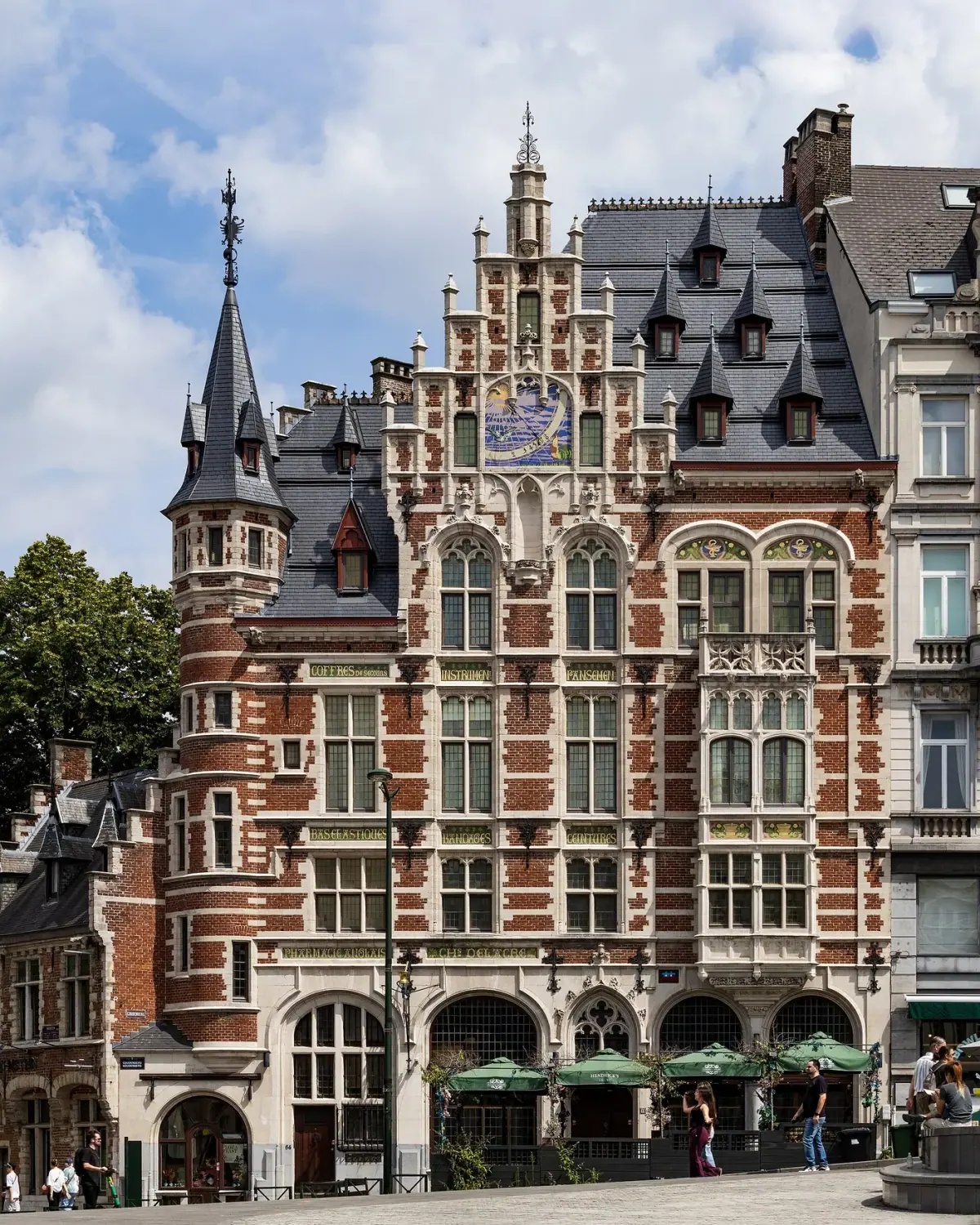

We treat the mapped La Pharmacie Anglaise as an old pharmacy’s architecture, not a business recommendation. The official inventory records Paul Saintenoy’s 1898 design and 1900 completion. Corner tower, stepped roofline and old pharmacy lettering merit a close façade look.
A short exterior observation near MIM suffices. Historic status does not mean a freely toured museum; do not assume the present business entrance grants sightseeing access. Information source.
Why go? Old pharmacy shelves, bottles and odd objects make this place resemble a cabinet of curiosities. An unusual stop near Mont des Arts.
Visit summary
- Area: Royal district and Mont des Arts
- Highlight: Neo-Gothic former commercial building
- Suggested visit length: About 10–15 minutes
- Type of visit: Exterior view
- Admission: Free (exterior view)
- Nearby map stops: Musical Instruments Museum (MIM), Magritte Museum (Place Royale)
- Open map: Search for this place on Google Maps
Royal Museums of Fine Arts of Belgium
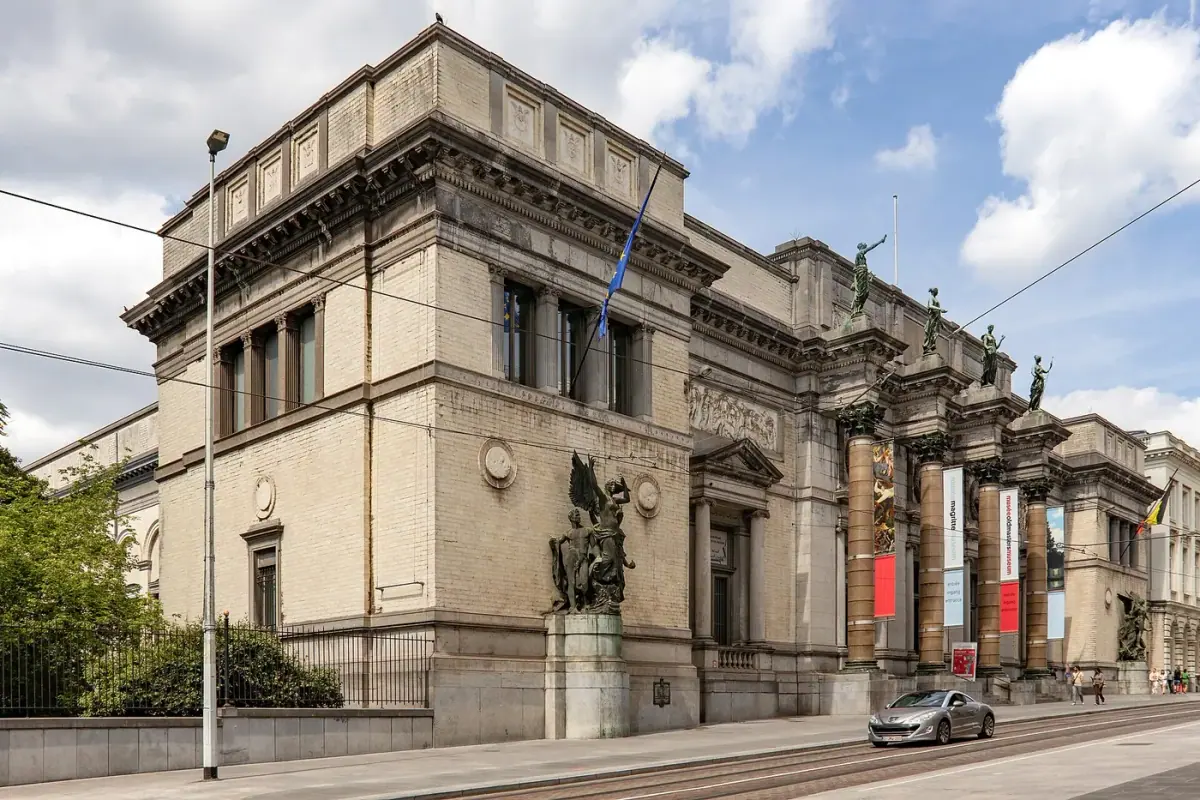

This map marker represents a museum institution and collection options, not one artist’s room. Names appearing with the Magritte focus need not repeat content; choose open sections and ticket coverage officially.
Classical painting and art-history interests may require a long visit. Choose a family theme or period rather than the whole collection. Adding Magritte and MIM that day would mean mostly staying indoors. Information source.
Why go? Important Flemish masterpieces from Bruegel to Rubens. Searching details in Bruegel’s crowded scenes is fun for children too.
Visit summary
- Area: Royal district and Mont des Arts
- Highlight: Art collections from different periods
- Suggested visit length: About 2–3 hours
- Type of visit: Indoors
- Admission: Paid admission · about €10 per adult; about €15 combined with Magritte Museum.
- Nearby map stops: Magritte Museum (Place Royale), Musical Instruments Museum (MIM)
- Open map: Search for this place on Google Maps
BOZAR (Centre for Fine Arts)
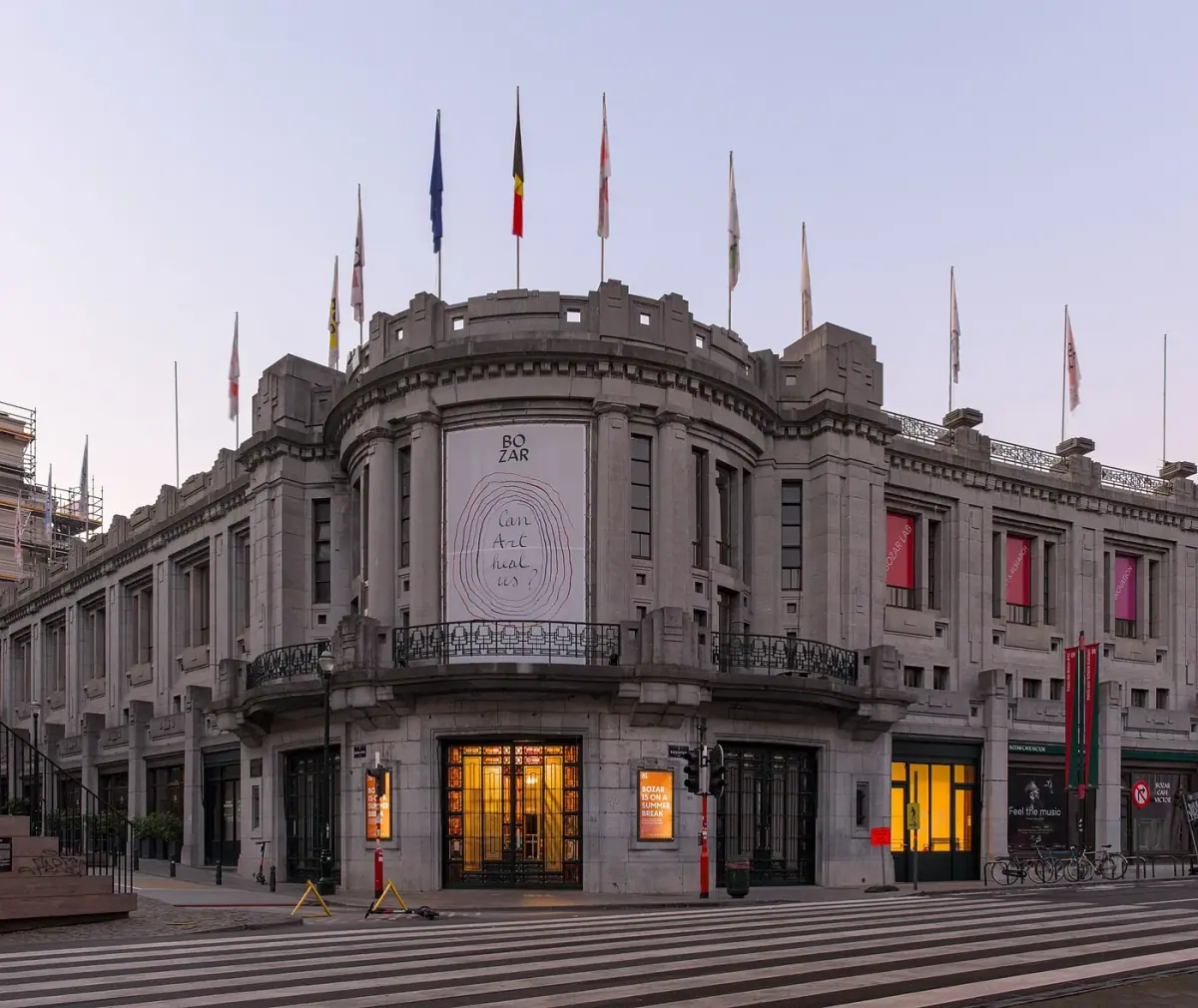

BOZAR is Victor Horta’s Centre for Fine Arts, a living exhibition and events venue rather than a house museum. Content depends on the visit-day programme. Look beyond the curved façades familiar from Art Nouveau houses at how a major cultural programme fits into the city.
Architecture enthusiasts can make a short exterior stop. Treat an exhibition as the main indoor choice and check family suitability in the programme. Information source.
Why go? Horta’s Art Deco building is the city’s cultural heart, with concerts, exhibitions and cinema. A suitable concert or show can crown the day.
Visit summary
- Area: Royal district and Mont des Arts
- Highlight: Victor Horta’s cultural building
- Suggested visit length: About 30 minutes for the exterior; with exhibition 1–2 hours
- Type of visit: Exterior view / scheduled interior
- Admission: Building free; exhibitions and concerts charge admission.
- Nearby map stops: Old English Pharmacy (La Pharmacie Anglaise), Musical Instruments Museum (MIM)
- Open map: Search for this place on Google Maps
Tondo Footbridge
Tondo is not a public footbridge to wander freely across, but an architectural connection between parliament buildings. Its ring shape and reflective surface contrast with historic façades. From the street, observe reflected surroundings and how it links two frontages.
A short exterior look suits contemporary architecture interests. Pair it broadly with park and cathedral; do not plan access inside. Information source.
Why go? The pedestrian bridge linking the city’s upper and lower areas adds unusual architecture and views to a walk. A different photographic angle.
Visit summary
- Area: Royal district and Mont des Arts
- Highlight: Ring-shaped passage between parliament buildings
- Suggested visit length: About 10–15 minutes
- Type of visit: Exterior view
- Admission: Free (outdoors)
- Nearby map stops: Brussels Park (Parc de Bruxelles), Cathedral of St Michael and St Gudula
- Open map: Search for this place on Google Maps
Sablon and Marolles
Petit Sablon Garden
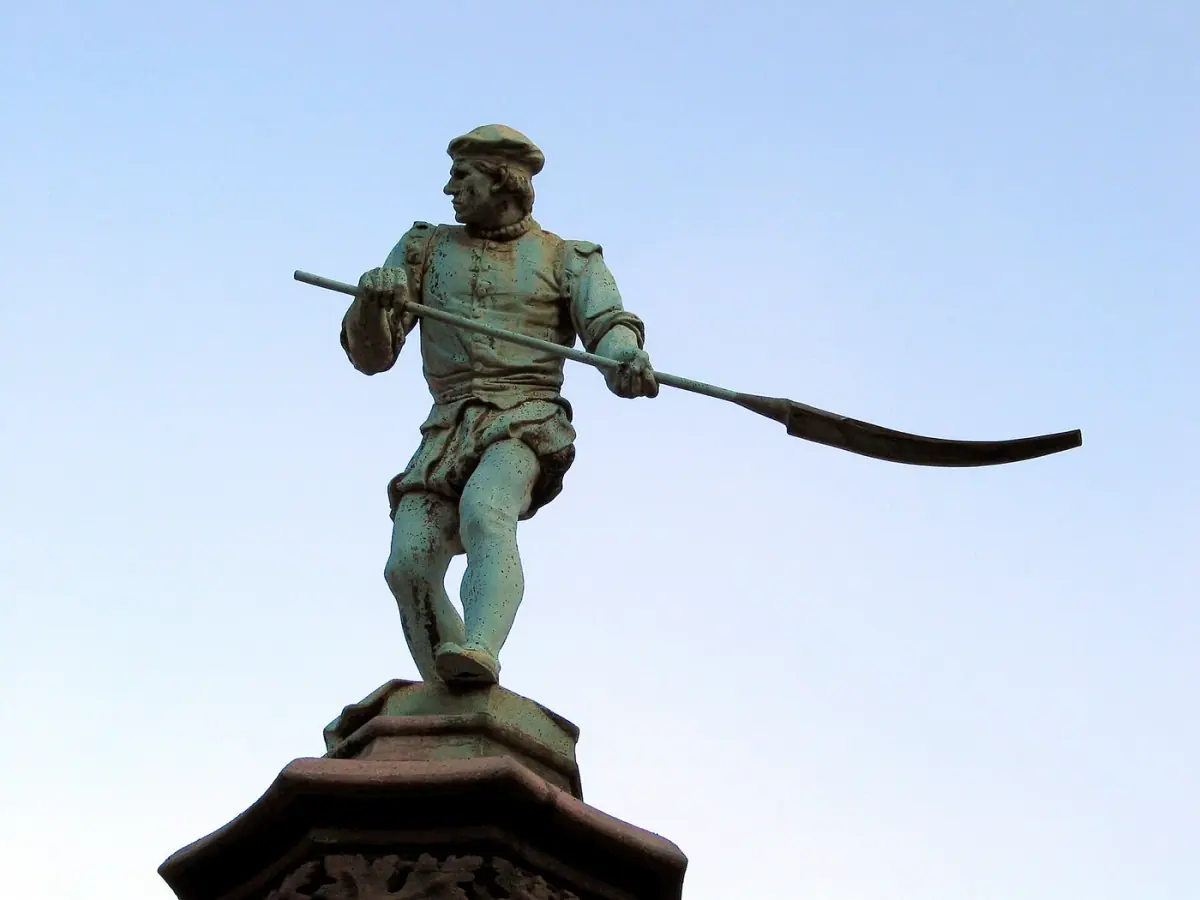

Unlike large parks, Petit Sablon is a clearly bounded garden whose statues can be studied in a short pause. Ordered planting and sculptural edges make it more than a green break. View its visual relationship with Sablon church from different points.
A useful short family outdoor section. Instead of rushing through to the next interior, explore surrounding details. Information source.
Why go? A small elegant garden enclosed by 48 bronze figures representing medieval guilds. A peaceful pause among Sablon’s antiques and chocolate shops.
Visit summary
- Area: Sablon and Marolles
- Highlight: Ornamental garden and small sculptures
- Suggested visit length: About 20–30 minutes
- Type of visit: Outdoor walk
- Admission: Free
- Nearby map stops: Church of Our Lady of Sablon, Brussels Palace of Justice
- Open map: Search for this place on Google Maps
Church of Our Lady of Sablon
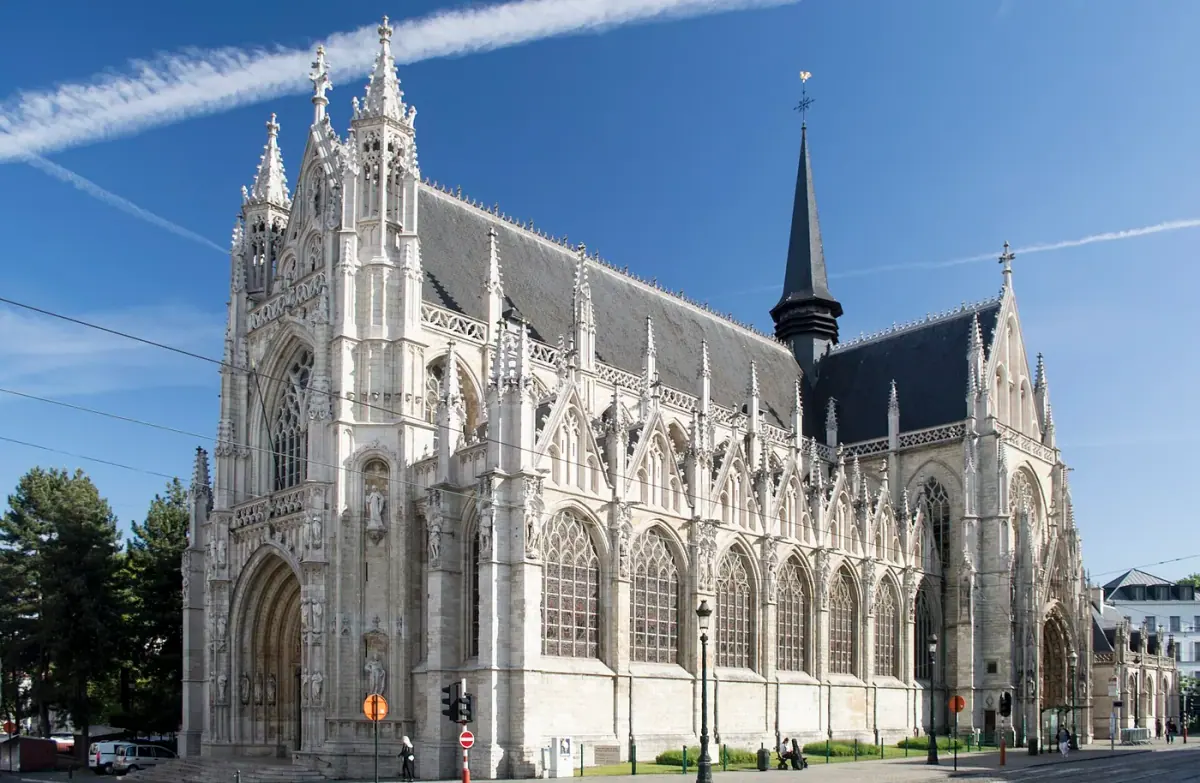

Sablon’s church is a main architectural stop for the area’s historic identity. Look at stone supports and window openings outside, then light’s effect inside. Respect silence and accessible sections in this worship space.
Pair it with Petit Sablon for an interior-and-garden combination. Keep to the façade if less interested in religious architecture, or allow longer for art and stained glass. Information source.
Why go? A fine Brabant Gothic example, with enchanting stained glass lit from within in the evening. A building to visit en route to Sablon’s elegant chocolatiers.
Visit summary
- Area: Sablon and Marolles
- Highlight: Gothic place of worship
- Suggested visit length: About 30–45 minutes
- Type of visit: Indoors / exterior view
- Admission: Free
- Nearby map stops: Petit Sablon Garden, Brussels Palace of Justice
- Open map: Search for this place on Google Maps
Place du Jeu de Balle
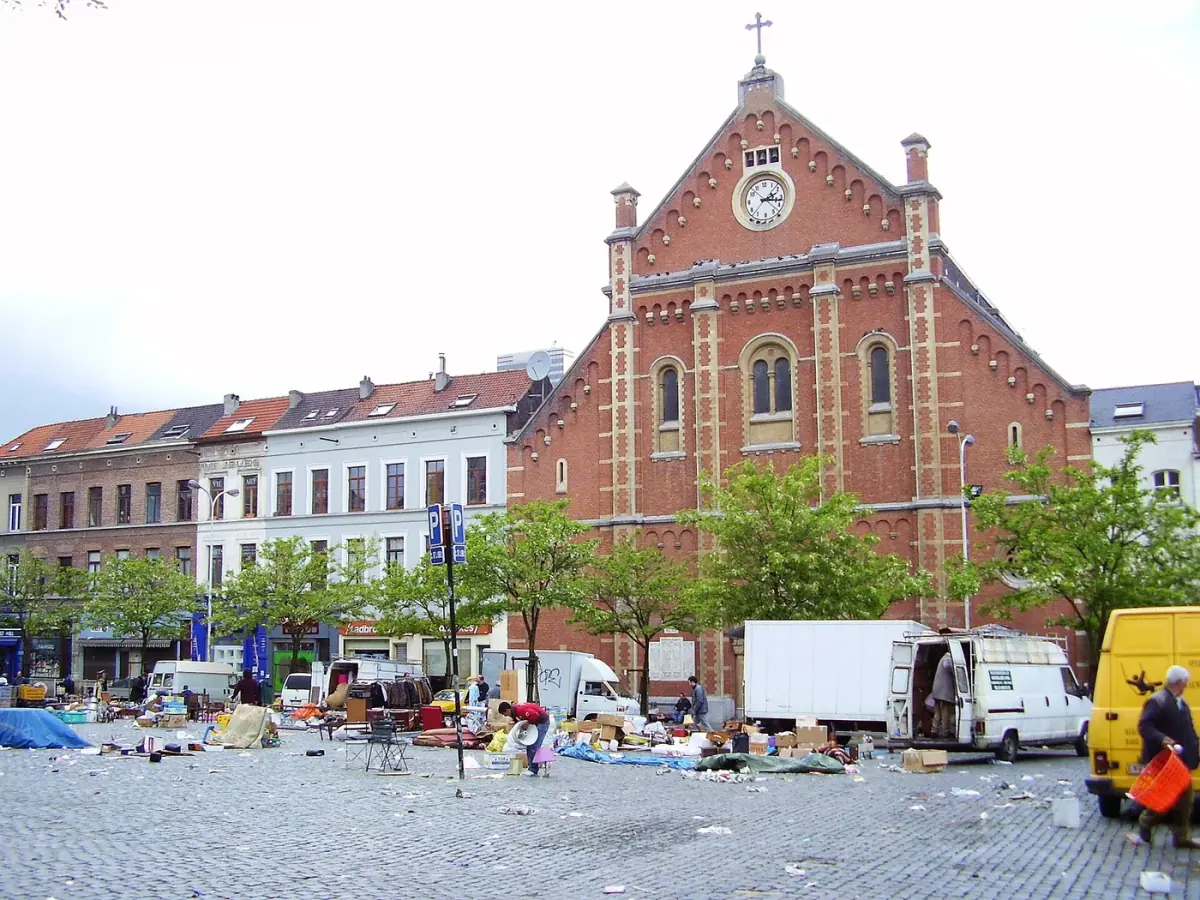

Think of Place du Jeu de Balle as a square for reading Marolles’s neighbourhood fabric, not just a shopping list. Its name relates to an old ball game; today market use sets its rhythm. Watch the surroundings and activity without entering stalls.
The family walk shifts from monumental palaces to everyday city life. The Palace of Justice sits higher in the broad area; allow for level changes and check stroller links locally. Information source.
Why go? A morning flea market sells everything from old toys to antiques. A great place for Marolles’s real, colourful life.
Visit summary
- Area: Sablon and Marolles
- Highlight: Everyday urban life in Marolles
- Suggested visit length: About 20–40 minutes
- Type of visit: Outdoor walk
- Admission: Free; flea market runs every morning.
- Nearby map stops: Brussels Palace of Justice, Church of Our Lady of Sablon
- Open map: Search for this place on Google Maps
Brussels Palace of Justice
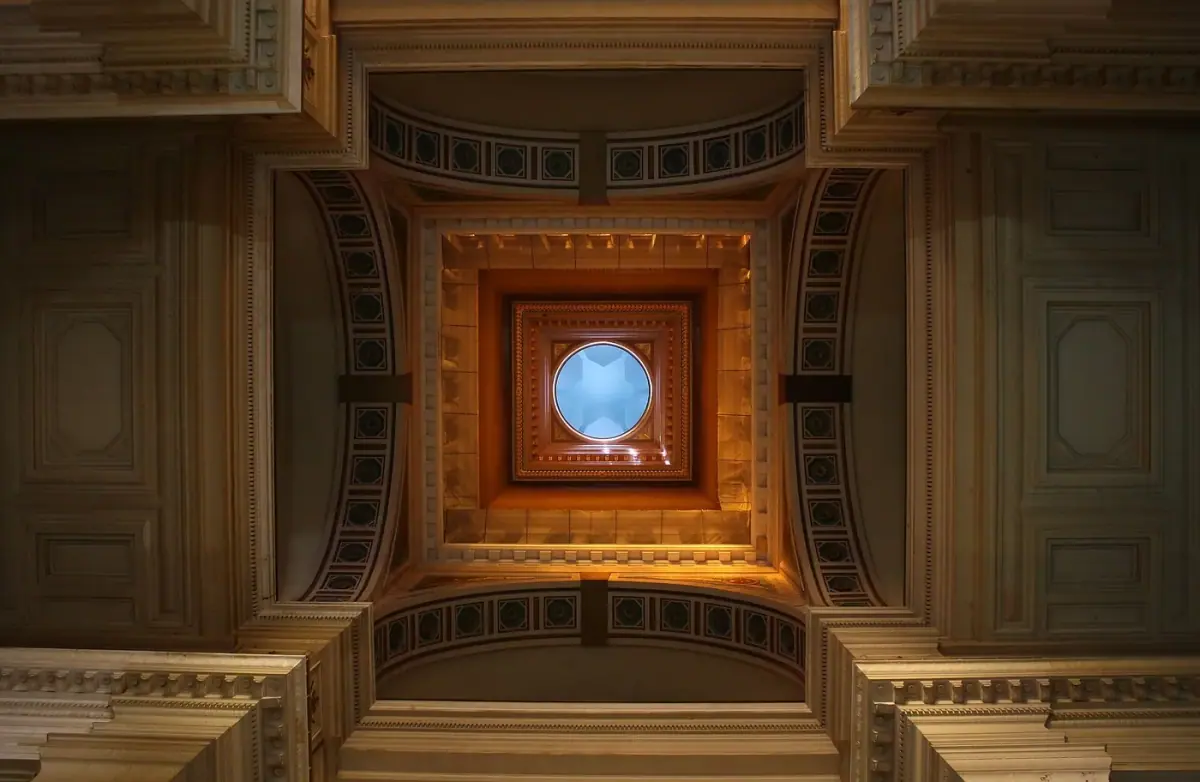

The Palace of Justice is among Brussels’s strongest experiences of building scale. Opened in 1883, its bulk dominates above the neighbourhood. An exterior visit is independent of courthouse interior access. Do not expect façades entirely free of restoration or scaffolding.
Meaningful with its surroundings for architecture- and history-minded families. Check interior visit and security conditions separately; an active court differs from a museum. Information source.
Why go? Among the nineteenth century’s largest buildings, it makes visitors feel tiny. The front terrace offers impressive views over Marolles and the city.
Visit summary
- Area: Sablon and Marolles
- Highlight: Monumental nineteenth-century courthouse
- Suggested visit length: About 30–45 minutes for the exterior
- Type of visit: Exterior view / conditional interior access
- Admission: Exterior free; entrance hall open during working hours.
- Nearby map stops: Place du Jeu de Balle, Petit Sablon Garden
- Open map: Search for this place on Google Maps
Sainte-Catherine and Dansaert
Boulevard Anspach
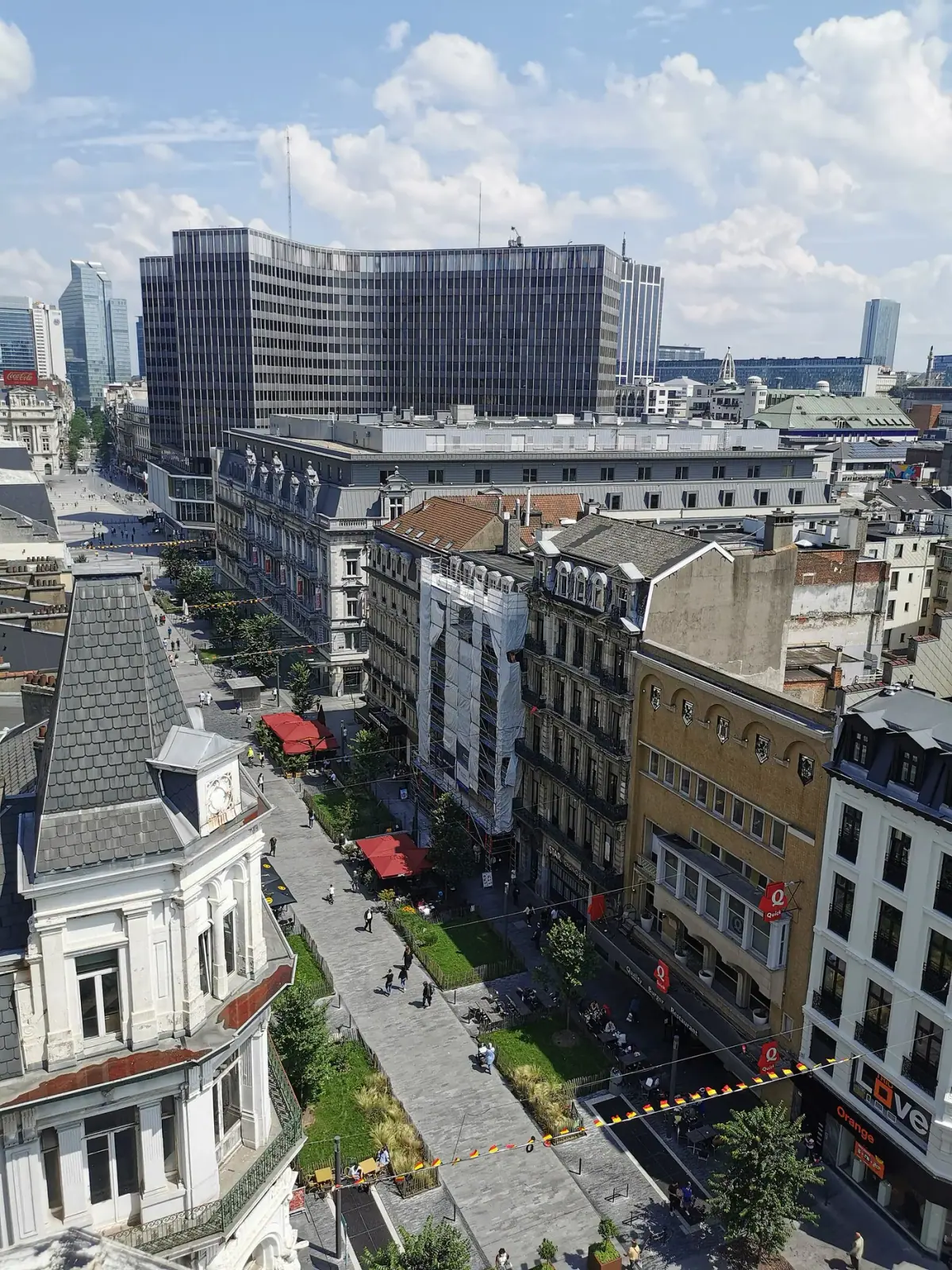

Boulevard Anspach offers a broader perspective than narrow historic streets. Treat it as a walking line through surrounding buildings and public uses, not a monument. It forms a geographical backbone from Bourse towards northwestern neighbourhoods.
Allow a short family outdoor breather rather than only covering distance. Compare stops towards Sainte-Catherine in order; walking the entire boulevard is unnecessary. Information source.
Why go? The broad car-free pedestrian boulevard shows a new face of the centre, with street musicians and cafés. Comfortable for walking with children.
Visit summary
- Area: Sainte-Catherine and Dansaert
- Highlight: Broad central boulevard perspective
- Suggested visit length: About 20–30 minutes
- Type of visit: Outdoor walk
- Admission: Free (outdoors)
- Nearby map stops: Zinneke-Pis, Black Tower (Tour Noire)
- Open map: Search for this place on Google Maps
Sainte-Catherine Church
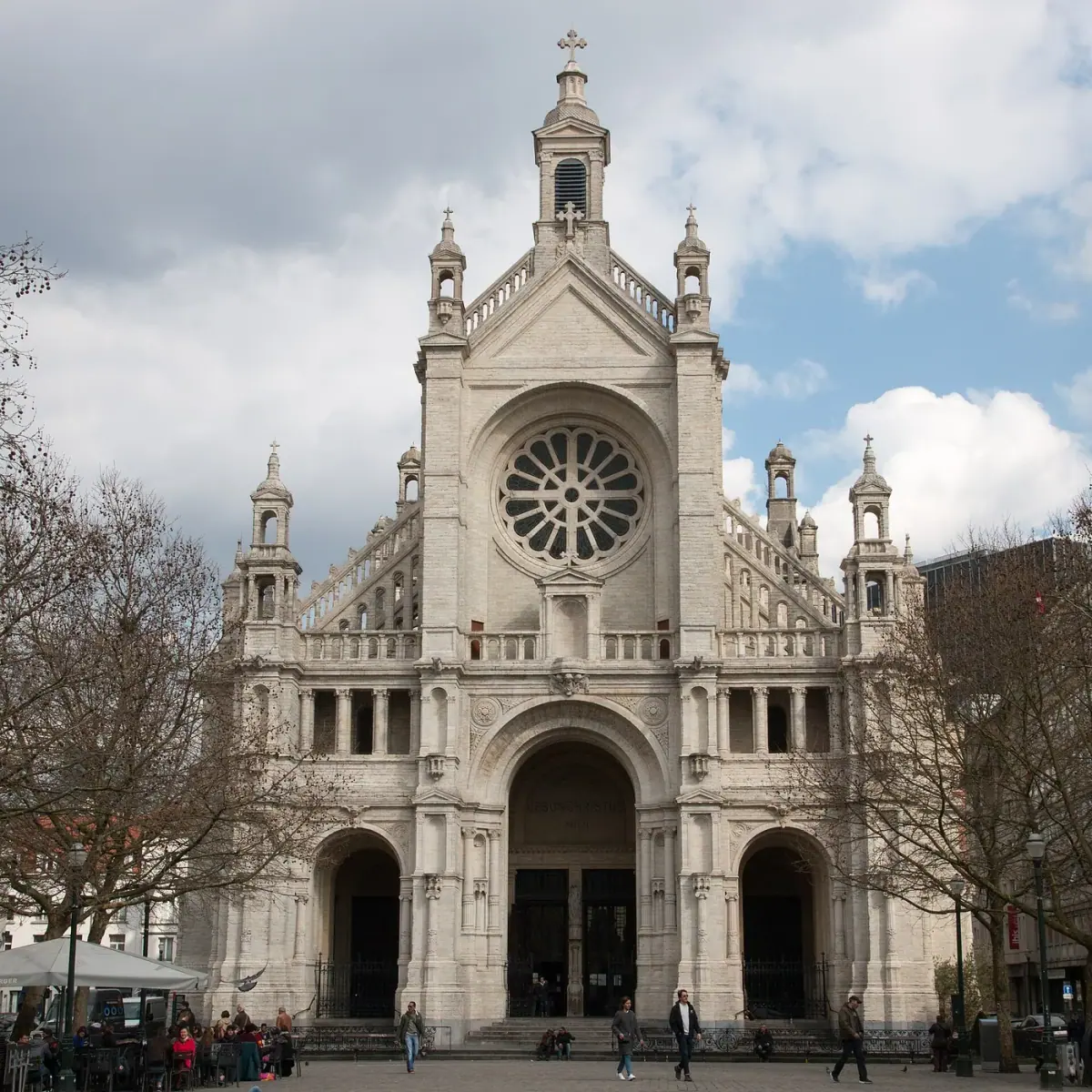

Consider Sainte-Catherine Church within the former port district, not in isolation. Nearby square and quay names recall trade beneath today’s streets. Study mass and square relationship outside, adding a short interior if open under worship conditions.
Black Tower and Marché aux Poissons complement it within one neighbourhood. Together they explain the area’s development beyond isolated building photographs. Information source.
Why go? The neo-Gothic church beside the old fish market defines the neighbourhood with surrounding seafood restaurants. A Christmas market occupies its square in winter.
Visit summary
- Area: Sainte-Catherine and Dansaert
- Highlight: Historic focus of the former port district
- Suggested visit length: About 20–30 minutes
- Type of visit: Exterior view / indoors
- Admission: Free
- Nearby map stops: Black Tower (Tour Noire), Old Fish Market Area (Marché aux Poissons)
- Open map: Search for this place on Google Maps
Old Fish Market Area (Marché aux Poissons)
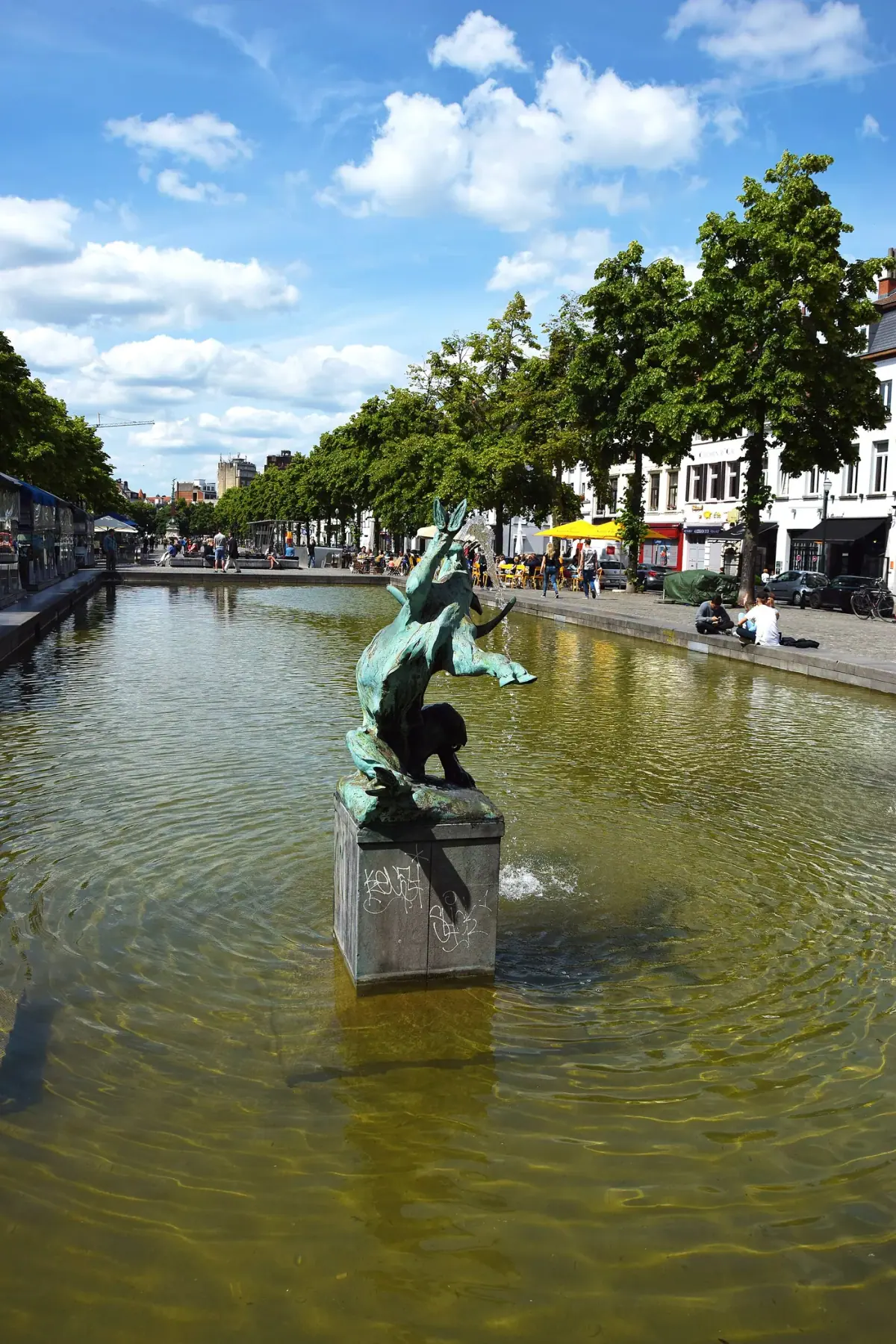

Here Marché aux Poissons marks an urban area of old market and port, not a particular food business. Look at the neighbourhood character created by today’s open space, quay names and church together.
Pair it with Sainte-Catherine and Black Tower on one walk. A free-form family stroll and short break; do not assume a specific market event runs on your date. Information source.
Why go? Seafood restaurants now line the long square where a canal once flowed. The winter Christmas market’s Ferris wheel and ice rink are favourites with children.
Visit summary
- Area: Sainte-Catherine and Dansaert
- Highlight: Traces of port history in public space
- Suggested visit length: About 20–30 minutes
- Type of visit: Outdoor walk
- Admission: Free (outdoors)
- Nearby map stops: Sainte-Catherine Church, Black Tower (Tour Noire)
- Open map: Search for this place on Google Maps
Black Tower (Tour Noire)
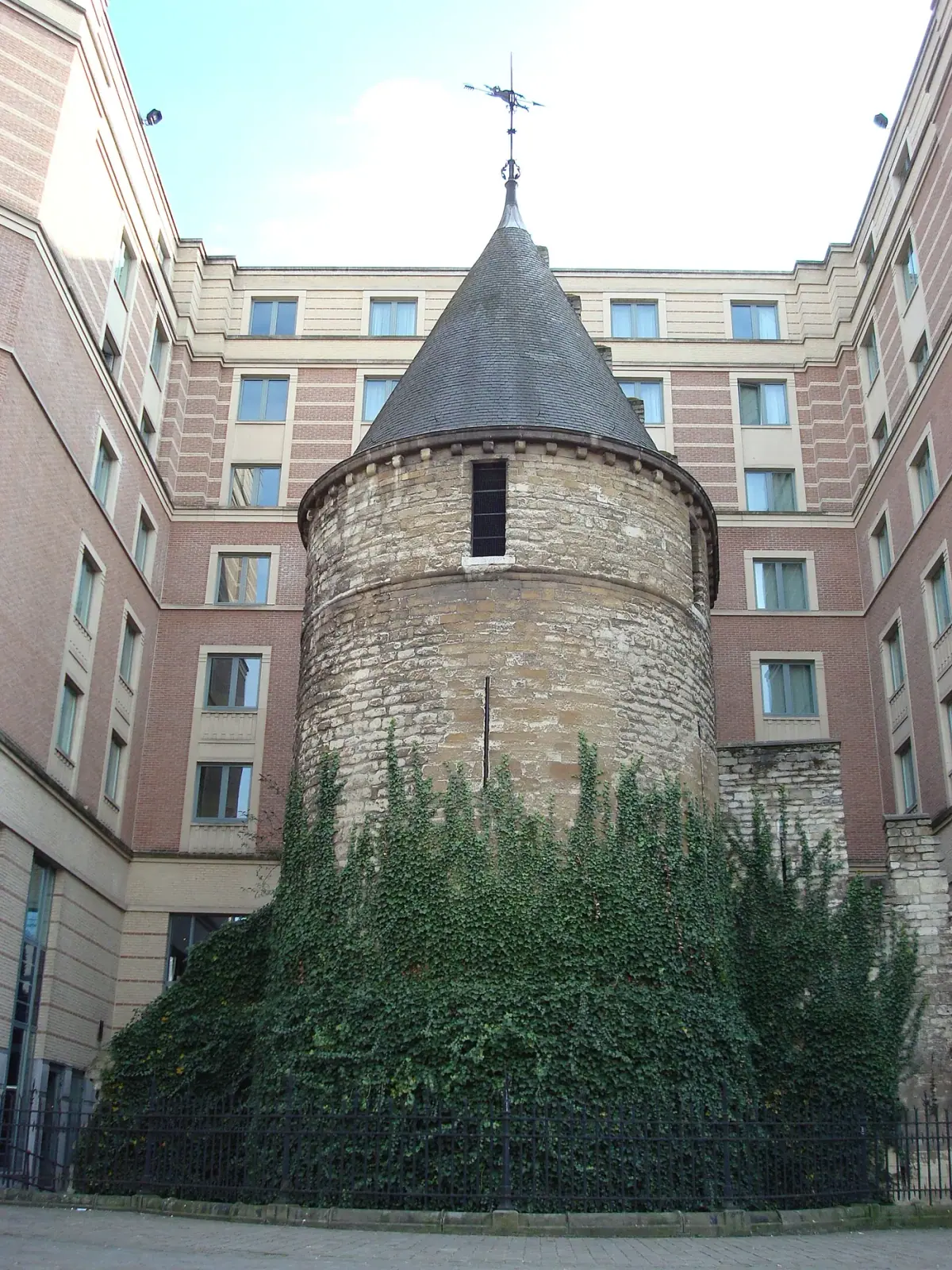

Black Tower survives from Brussels’s first walls. Its position among modern buildings shows urban growth surrounding old defences. Expect one tower fragment contrasting with its surroundings, not a large castle complex.
Add a short exterior visit near Sainte-Catherine. A concrete example for discussing the old city boundary with children, requiring no lengthy interior programme. Information source.
Why go? The surviving first-wall tower appears wedged into a modern hotel. A strange but interesting meeting of old and new.
Visit summary
- Area: Sainte-Catherine and Dansaert
- Highlight: Surviving piece of the first city walls
- Suggested visit length: About 10–15 minutes
- Type of visit: Exterior view
- Admission: Free (exterior view)
- Nearby map stops: Sainte-Catherine Church, Old Fish Market Area (Marché aux Poissons)
- Open map: Search for this place on Google Maps
Zinneke-Pis
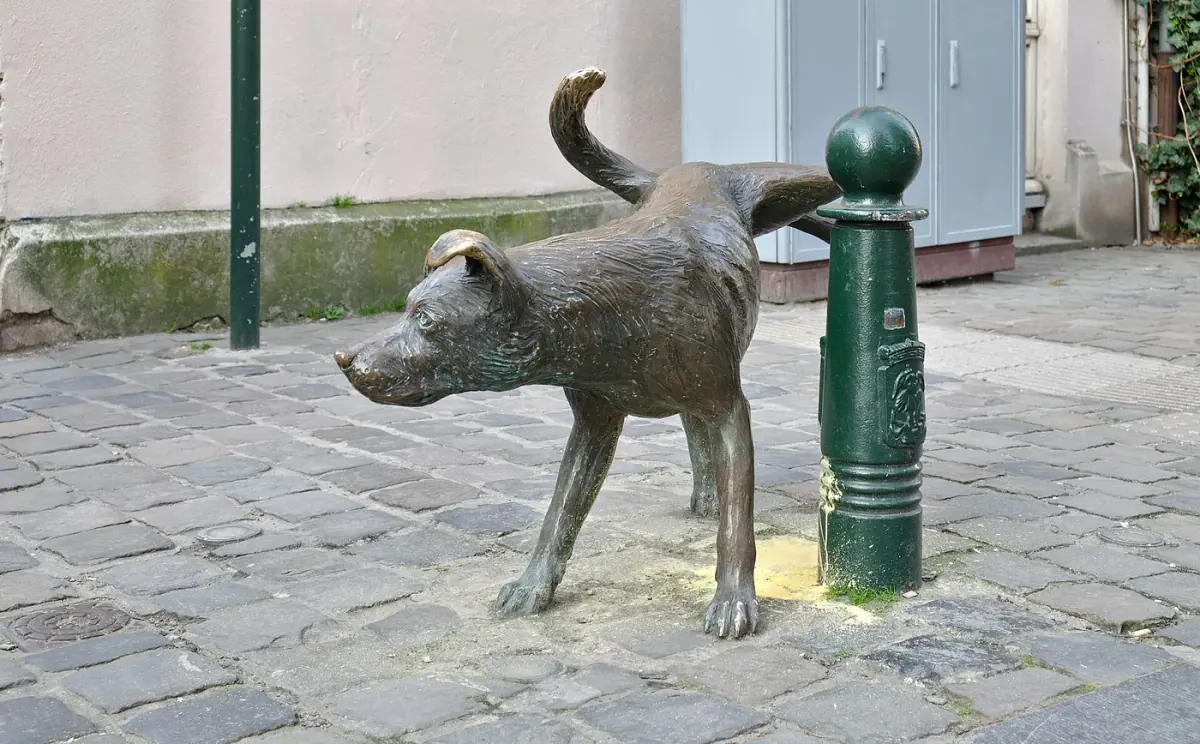

Tom Frantzen’s street-scale dog shows Brussels’s self-mocking public art. It differs from a heroic monument on a plinth in a grand square. Notice its blend into an everyday street.
A brief Dansaert stop suffices. Link it thematically with Manneken-Pis and Jeanneke-Pis without disrupting the day’s geography to collect all three. Information source.
Why go? The Manneken-Pis family’s third member, a bronze dog lifting its leg. Fun for children celebrating finding all three.
Visit summary
- Area: Sainte-Catherine and Dansaert
- Highlight: Tom Frantzen’s public-space humour
- Suggested visit length: About 10 minutes
- Type of visit: Exterior view
- Admission: Free (outdoors)
- Nearby map stops: Boulevard Anspach, Sainte-Catherine Church
- Open map: Search for this place on Google Maps
Botanique and Schaerbeek
Belgian Comics Art Centre
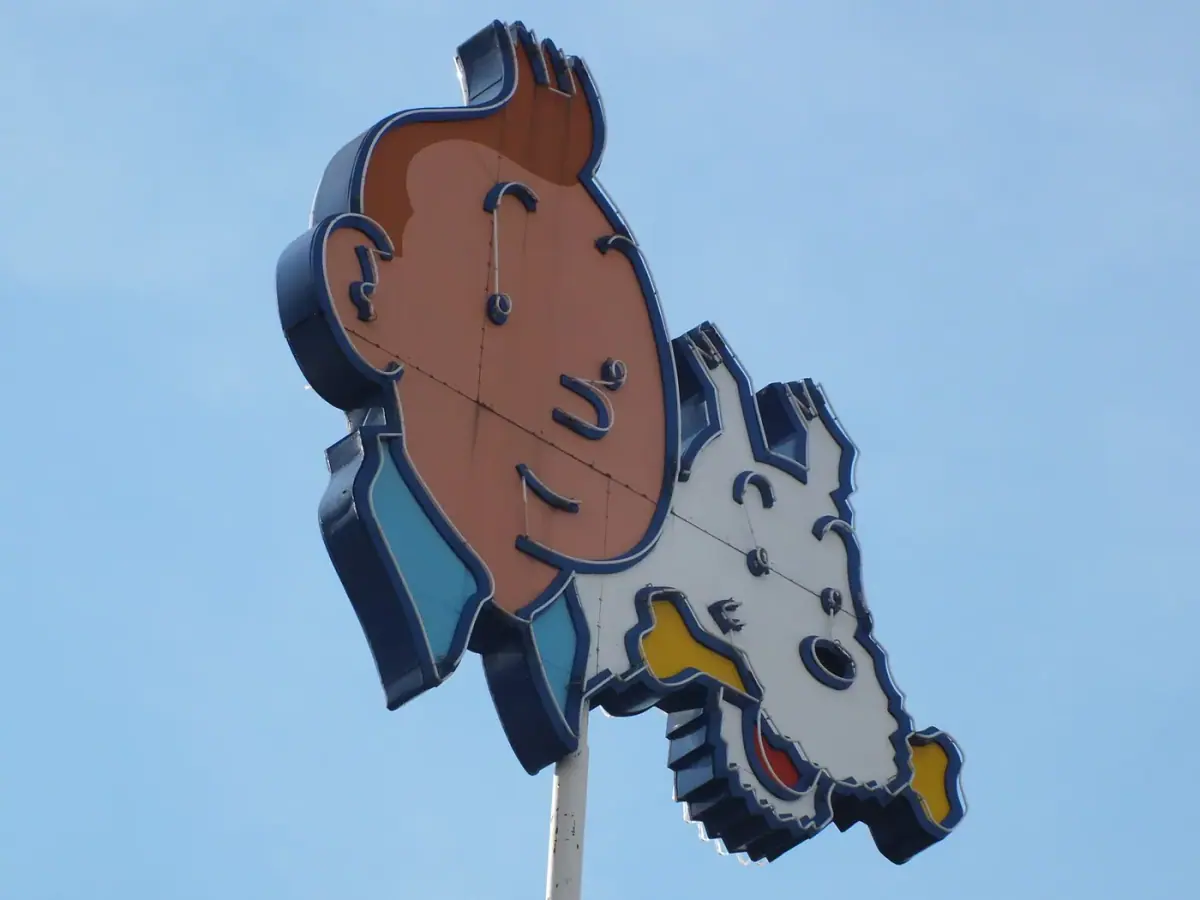

The Comics Centre treats comics beyond children’s books. Drawing, storytelling, publishing and the building’s architecture form the experience. Children need not know every character; seeing a story divided into frames can suffice.
An alternative to a long family art museum, but check exhibition content and language. The Botanical Garden offers an outdoor break on the broad northeastern-central branch. Information source.
Why go? Comics history in Horta’s Art Nouveau building, in the country of Tintin, the Smurfs and Lucky Luke. Children especially want a photograph with Tintin’s rocket.
Visit summary
- Area: Botanique and Schaerbeek
- Highlight: Comics art and a Horta building
- Suggested visit length: About 90–120 minutes
- Type of visit: Indoors
- Admission: Paid admission · about €13 per adult; child discounts.
- Nearby map stops: Botanical Garden (Botanique), Autrique House
- Open map: Search for this place on Google Maps
Botanical Garden (Botanique)
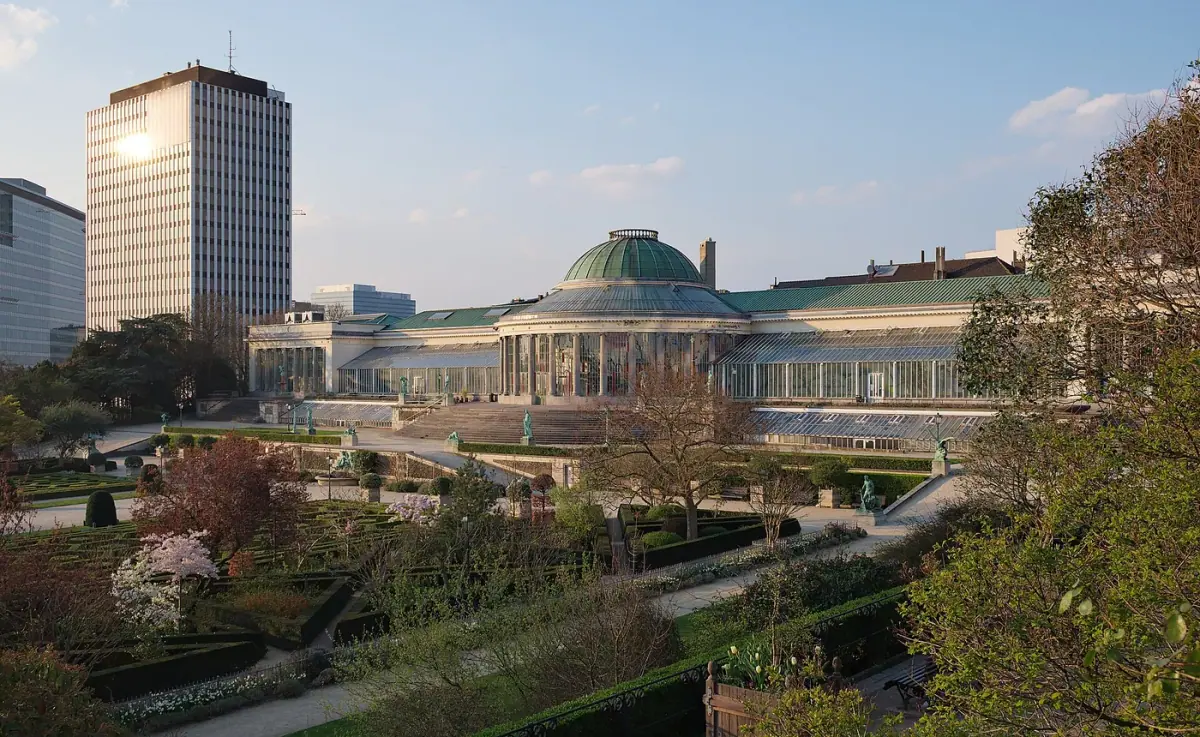

The garden near Botanique offers a short northeastern-central outdoor stop. Plants and buildings give a different perspective on dense city fabric. Distinguish the historic botanical garden name from current cultural programming.
A possible break after the Comics Centre. Do not assume concerts or exhibitions are included in a garden walk; plan scheduled events separately. Information source.
Why go? The Neoclassical glasshouse is now a cultural centre; terraced gardens provide calm greenery in the city. Suitable for a short family park break.
Visit summary
- Area: Botanique and Schaerbeek
- Highlight: Garden and cultural building together
- Suggested visit length: About 30–45 minutes
- Type of visit: Outdoor walk
- Admission: Garden free; cultural-centre events charge admission.
- Nearby map stops: Belgian Comics Art Centre, Autrique House
- Open map: Search for this place on Google Maps
Autrique House
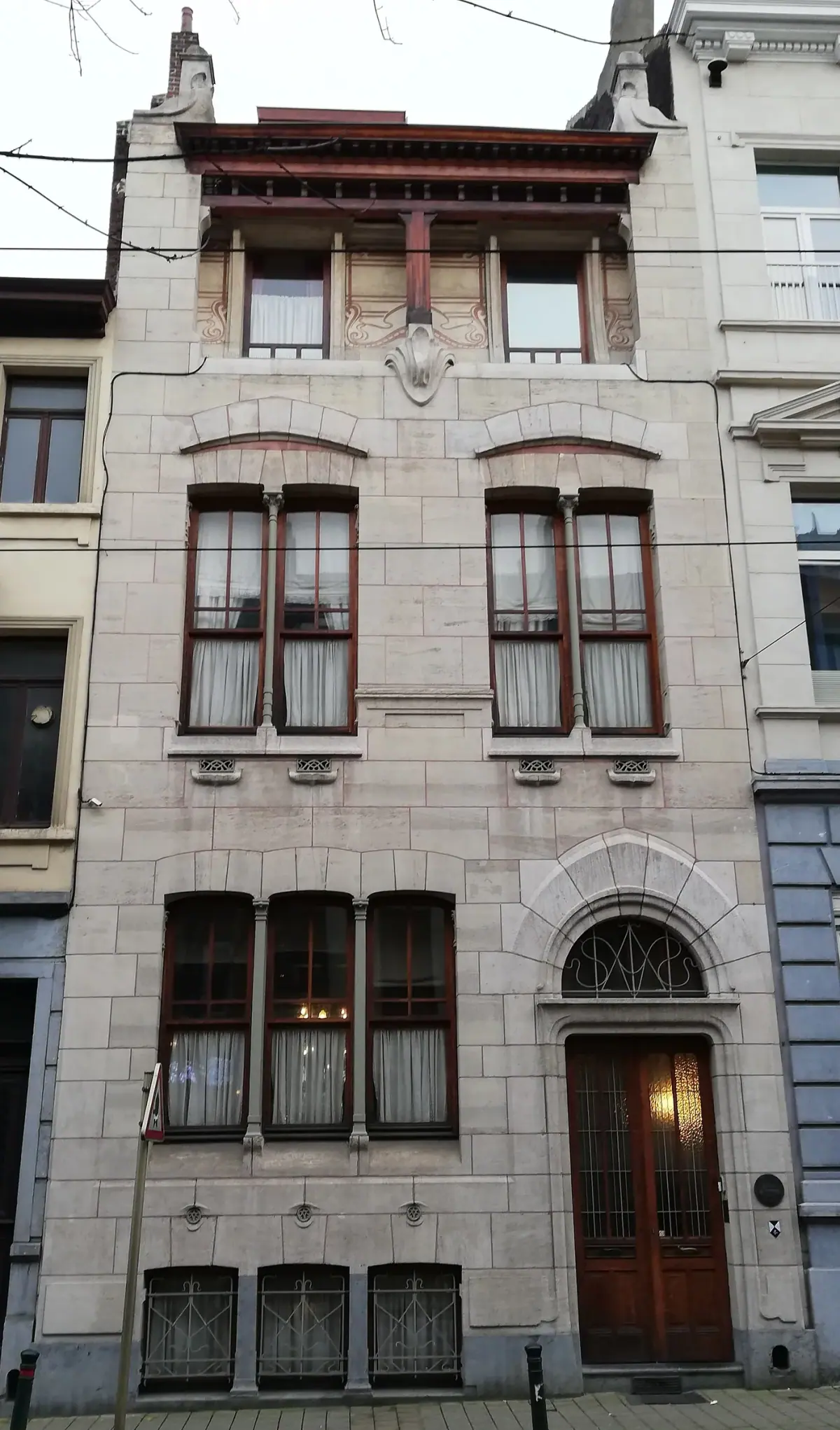

Autrique House explores Horta’s early residences and the architectural organisation of domestic Brussels life. Inside, rooms, floors and light offer more than a façade photograph. Official interpretation considers historic and aesthetic value together.
Worthwhile on a dedicated Schaerbeek route. Focus on a few rooms and details with children. It is not the same building or neighbourhood as Horta Museum; do not plan both interiors as one short walk. Information source.
Why go? One of Horta’s first houses, a small museum revealing Art Nouveau’s emergence and period daily life through its rooms.
Visit summary
- Area: Botanique and Schaerbeek
- Highlight: One of Horta’s early homes
- Suggested visit length: About 60–90 minutes
- Type of visit: Indoors
- Admission: Paid admission.
- Nearby map stops: Schaerbeek Beer Museum, Botanical Garden (Botanique)
- Open map: Search for this place on Google Maps
Schaerbeek Beer Museum
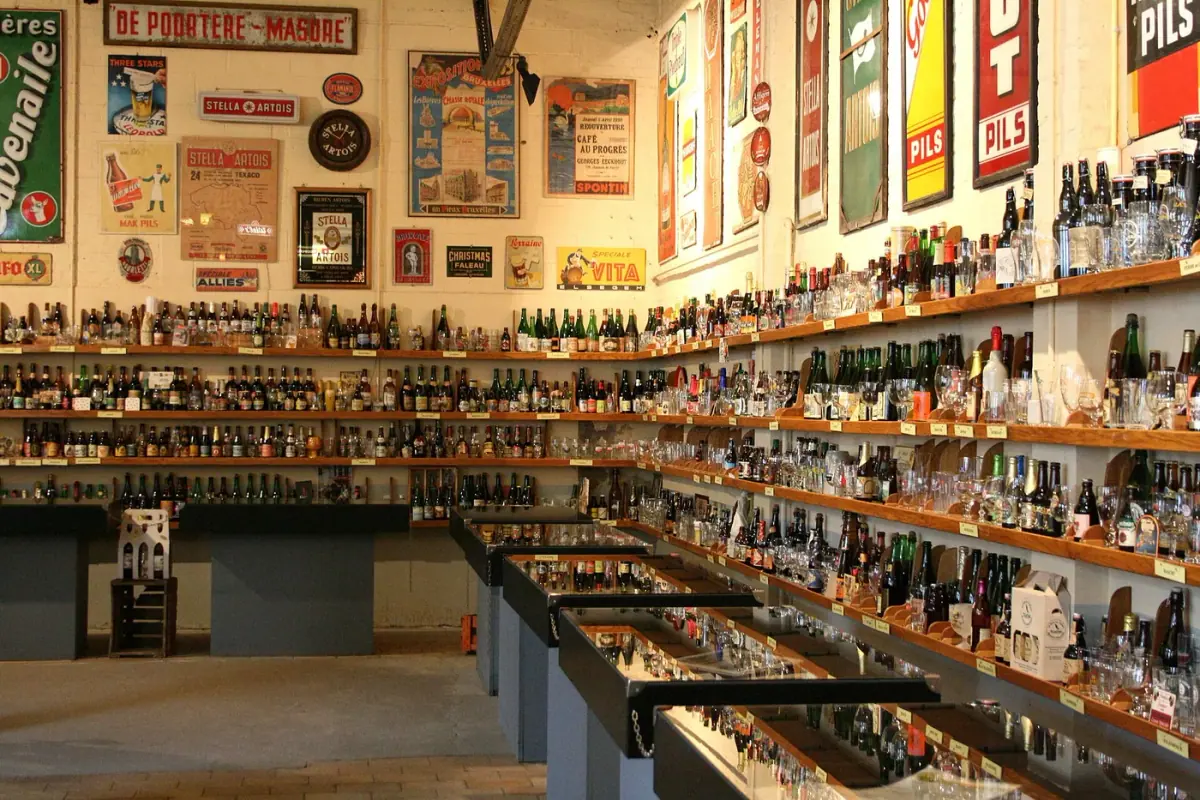

This is a beer-production and culture museum, not a bar recommendation. Bottles, glasses and production objects explore Belgium’s everyday industrial history. A sightseeing stop distinct from an adult tasting plan.
Allow for limited child interest and keep the family programme short. Confirm current opening directly; do not assume extensive daily hours at small museums. Autrique House is another Schaerbeek option. Information source.
Why go? A small volunteer-run museum explaining UNESCO-listed Belgian beer culture through hundreds of bottles and glasses. Tasting for adults and colourful bottles for children.
Visit summary
- Area: Botanique and Schaerbeek
- Highlight: Objects of production culture
- Suggested visit length: About 45–60 minutes
- Type of visit: Indoors
- Admission: Paid admission (open only on certain days).
- Nearby map stops: Autrique House, Botanical Garden (Botanique)
- Open map: Search for this place on Google Maps
Train World
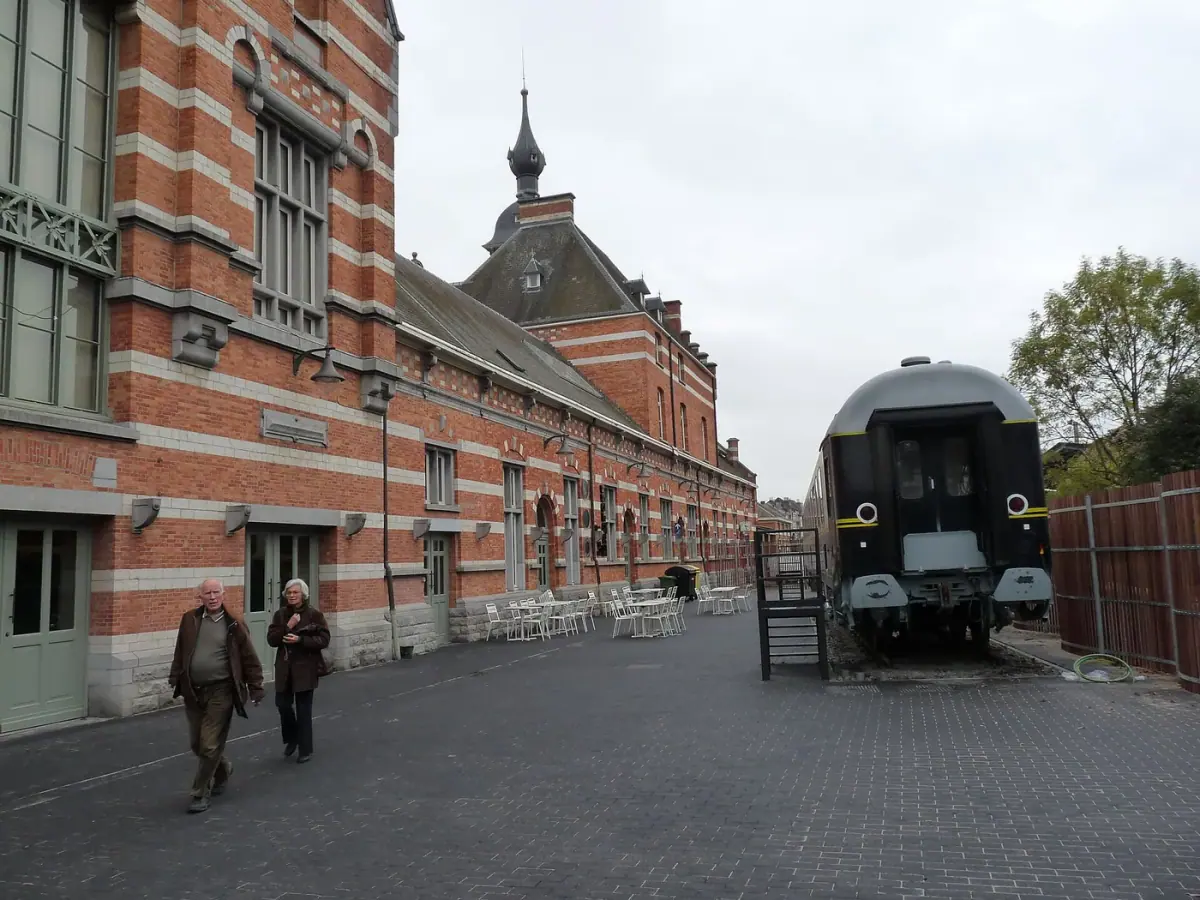

Train World is a dedicated museum combining railway history with full-sized vehicles and interpretation. Train-loving children experience locomotives beyond photographs. Observe scale, interiors and changes over time without needing technical names.
It needs its own time in Schaerbeek, not a brief addition between central museums. Check current exhibitions, tickets and family activities officially; consider it the main indoor visit. Information source.
Why go? Real steam locomotives, royal carriages and a train simulator in an old station make one of Europe’s best railway museums. A top stop for train-loving children.
Visit summary
- Area: Botanique and Schaerbeek
- Highlight: Railway history and full-sized vehicles
- Suggested visit length: About 2–3 hours
- Type of visit: Indoors
- Admission: Paid admission · about €15 per adult, about €8 per child.
- Nearby map stops: Schaerbeek Beer Museum, Autrique House
- Open map: Search for this place on Google Maps
Saint-Gilles and Art Nouveau houses
Halle Gate (Porte de Hal)
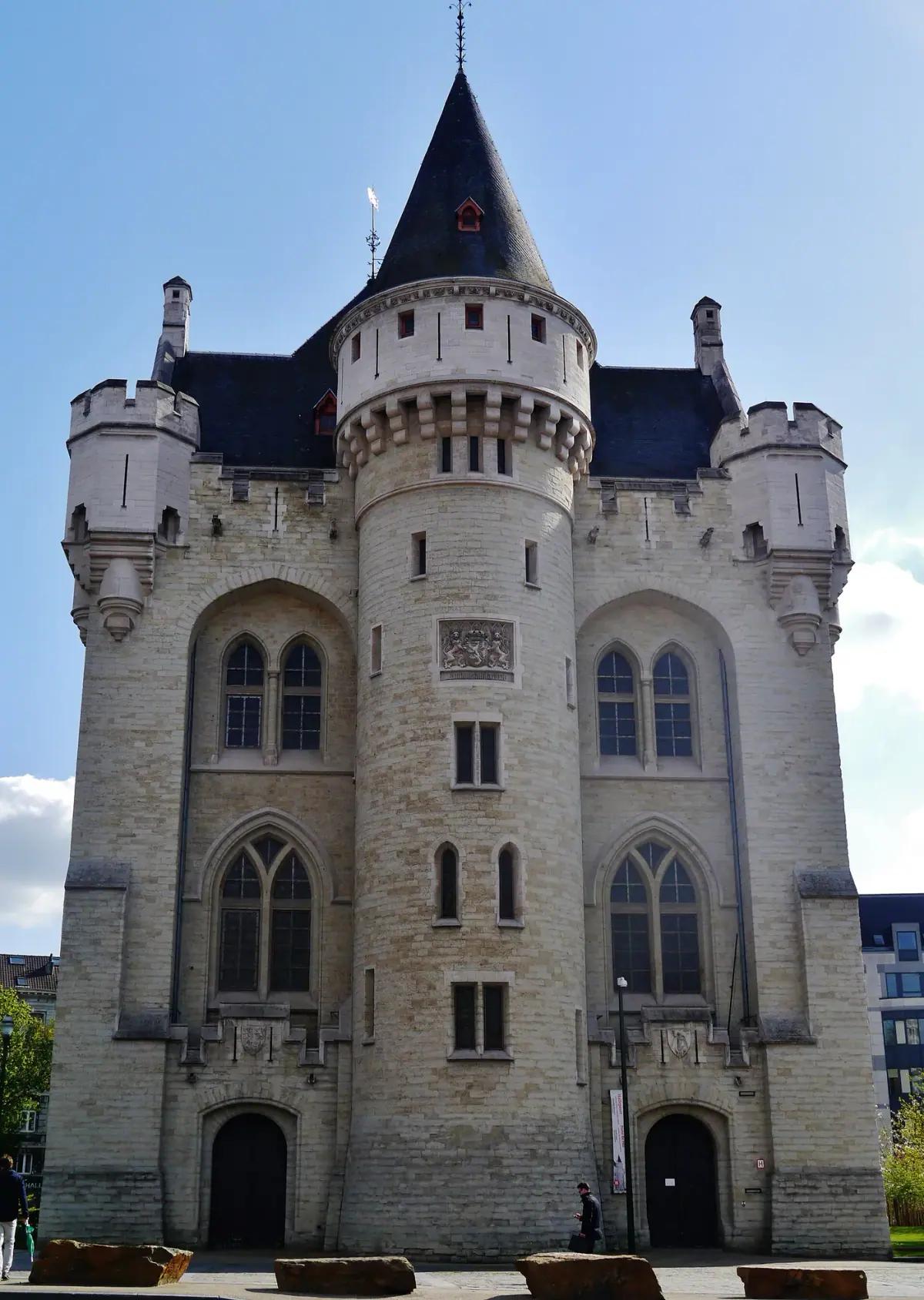

Porte de Hal belongs to defences older than today’s street network. Seeing it with the surrounding park clarifies its former role controlling entry and city limits. Even an exterior family circuit is a stop in itself.
Check current museum and floor access if entering. Link it with Saint-Gilles square; extending to Horta houses makes a longer neighbourhood tour. Information source.
Why go? The last surviving medieval gate resembles a fairy-tale castle and holds a small museum. City views are also available from its upper wall walk.
Visit summary
- Area: Saint-Gilles and Art Nouveau houses
- Highlight: City-wall gateway
- Suggested visit length: About 30 minutes for the exterior; including the interior 60–90 minutes
- Type of visit: Exterior view / indoors
- Admission: Paid admission · small museum affiliated with the Art and History Museums.
- Nearby map stops: Parvis de Saint-Gilles, Horta Museum (House and Studio)
- Open map: Search for this place on Google Maps
Parvis de Saint-Gilles
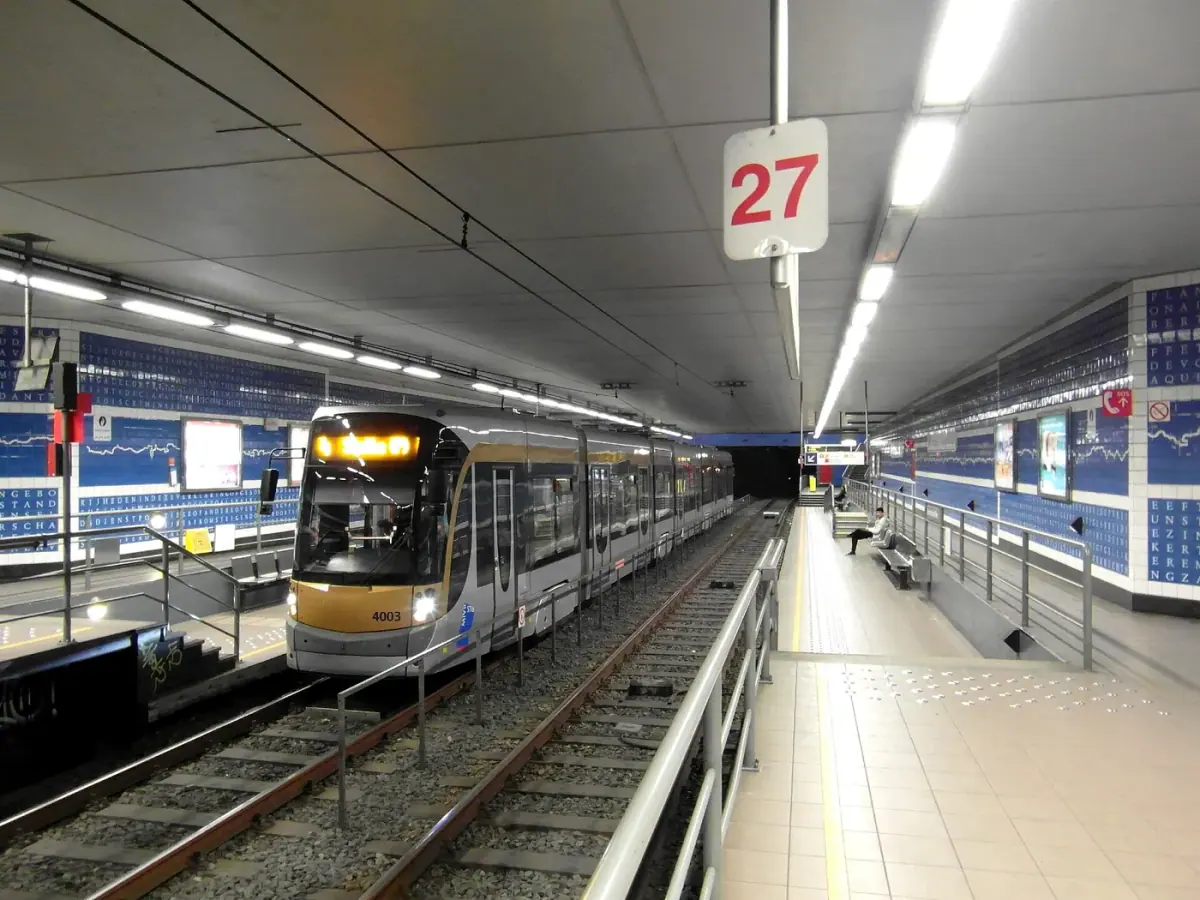

Parvis de Saint-Gilles developed around the old settlement core. Its more local rhythm contrasts with grand central squares; church, street links and everyday uses define it. The aim is reading the neighbourhood on foot, not specific shopping.
Add it from Porte de Hal. A break here or splitting the plan before collecting every Art Nouveau house is easier with children. Information source.
Why go? Saint-Gilles’s heart of cafés, market and local life. Ideal for leaving tourist central Brussels and spending a weekend morning like local residents.
Visit summary
- Area: Saint-Gilles and Art Nouveau houses
- Highlight: The neighbourhood’s historic core
- Suggested visit length: About 20–40 minutes
- Type of visit: Outdoor walk
- Admission: Free (outdoors)
- Nearby map stops: Halle Gate (Porte de Hal), Horta Museum (House and Studio)
- Open map: Search for this place on Google Maps
Horta Museum (House and Studio)
Horta Museum lets you consider the architect’s home and studio together. Unlike a façade photograph, it reveals living spaces designed through light, stairs and details. Art Nouveau emerges as a whole-space approach, not just curved iron decoration.
A main interior choice for architecture-minded families. Check official capacity and reservations. Maison Hannon and Les Hiboux share the broad neighbourhood branch; entering all in one day is unnecessary. Information source.
Why go? The father of Art Nouveau’s own UNESCO-listed home, with curved iron rails and a light-filled stairwell. A must for seeing a house become art.
Visit summary
- Area: Saint-Gilles and Art Nouveau houses
- Highlight: Art Nouveau through the architect’s own home
- Suggested visit length: About 60–90 minutes
- Type of visit: Indoors
- Admission: Paid admission · about €12–14 per adult; booking recommended.
- Nearby map stops: Owl House (Les Hiboux), Maison Hannon
- Open map: Search for this place on Google Maps
Maison Hannon
Jules Brunfaut designed Maison Hannon in 1902 for Marie and Édouard Hannon. It shares Horta’s period, not his authorship. Corner placement and an integrated interior arts approach reward reading façade and rooms together.
A strong choice for Symbolist art and domestic design. Follow reservation advice for limited capacity. Looking at neighbouring Les Hiboux outside compares two façade approaches. Information source.
Why go? An Art Nouveau photographer’s home with elegant stained glass and frescoes. A quiet, special stop on Saint-Gilles’s architectural route.
Visit summary
- Area: Saint-Gilles and Art Nouveau houses
- Highlight: Symbolist residential design
- Suggested visit length: About 60–90 minutes
- Type of visit: Indoors / exterior view
- Admission: Paid admission.
- Nearby map stops: Owl House (Les Hiboux), Horta Museum (House and Studio)
- Open map: Search for this place on Google Maps
Owl House (Les Hiboux)
Les Hiboux is a small but detailed Avenue Brugmann façade stop. Study the owls giving Édouard Pelseneer’s 1899 building its name, horseshoe openings and decoration. It is not Maison Hannon, but a separate nearby house.
We assume no unrestricted house-museum entry. Careful exterior viewing suffices for architectural interest; finding owls helps children notice details. Information source.
Why go? Owl figures distinguish this Art Nouveau house. Counting them is a playful way for children to discover architecture.
Visit summary
- Area: Saint-Gilles and Art Nouveau houses
- Highlight: Owl sculptures and geometric Art Nouveau
- Suggested visit length: About 10–15 minutes
- Type of visit: Exterior view
- Admission: Free (exterior view)
- Nearby map stops: Maison Hannon, Horta Museum (House and Studio)
- Open map: Search for this place on Google Maps
Ixelles and La Cambre
Avenue Louise
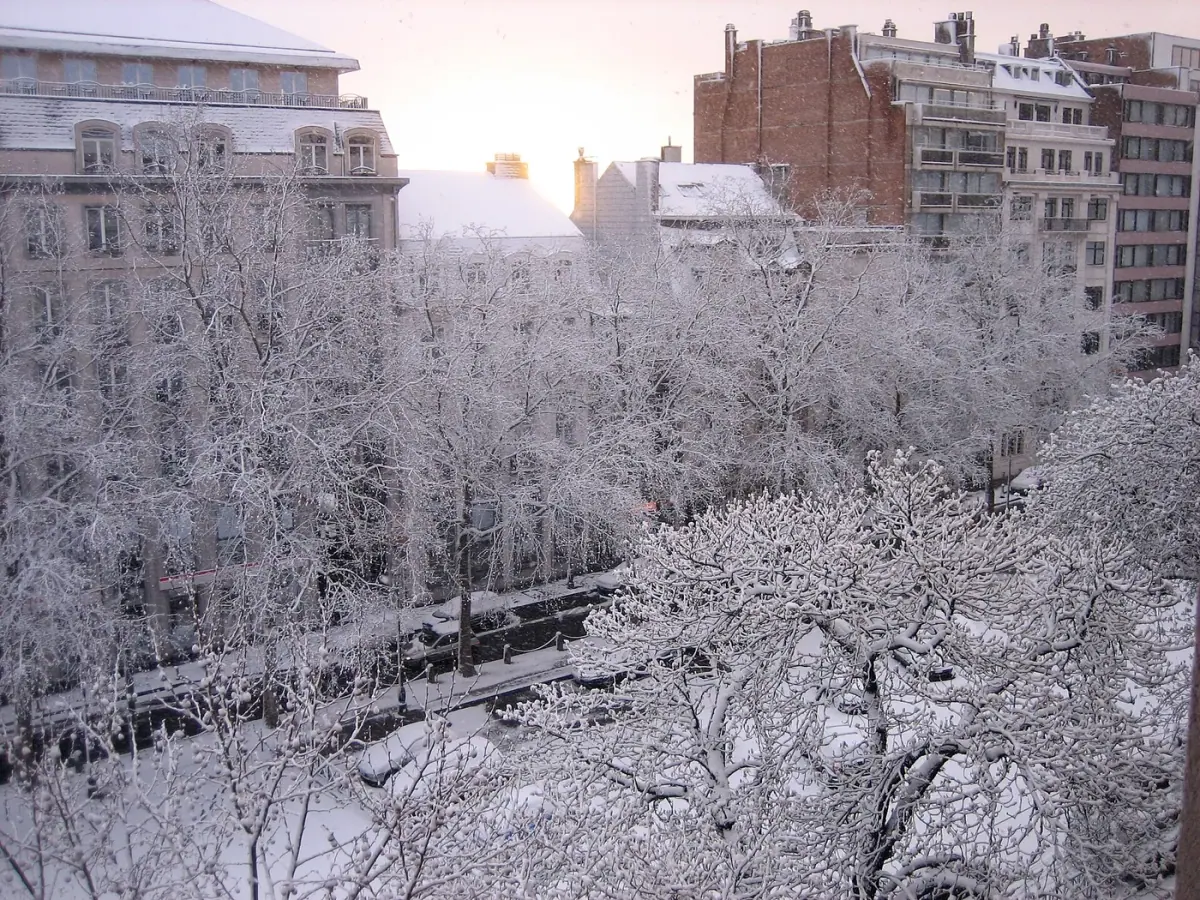

Avenue Louise is long; one marker does not require walking it all. Here it provides a geographical link between Art Nouveau homes, not shopping. Compare avenue-scale buildings with narrower residential side streets.
A selected stretch around Solvay and Max Hallet may suffice. Limiting family avenue walking and choosing one main interior prevents an overlong day. Information source.
Why go? Brussels’s most elegant avenue of luxury shops and tree-lined roads extends to La Cambre woods. Also a starting point for Art Nouveau houses.
Visit summary
- Area: Ixelles and La Cambre
- Highlight: Grand urban avenue and residential architecture
- Suggested visit length: About 30–45 minutes for a selected section
- Type of visit: Outdoor walk
- Admission: Free (outdoors)
- Nearby map stops: Hôtel Solvay, Hôtel Tassel
- Open map: Search for this place on Google Maps
Hôtel Tassel
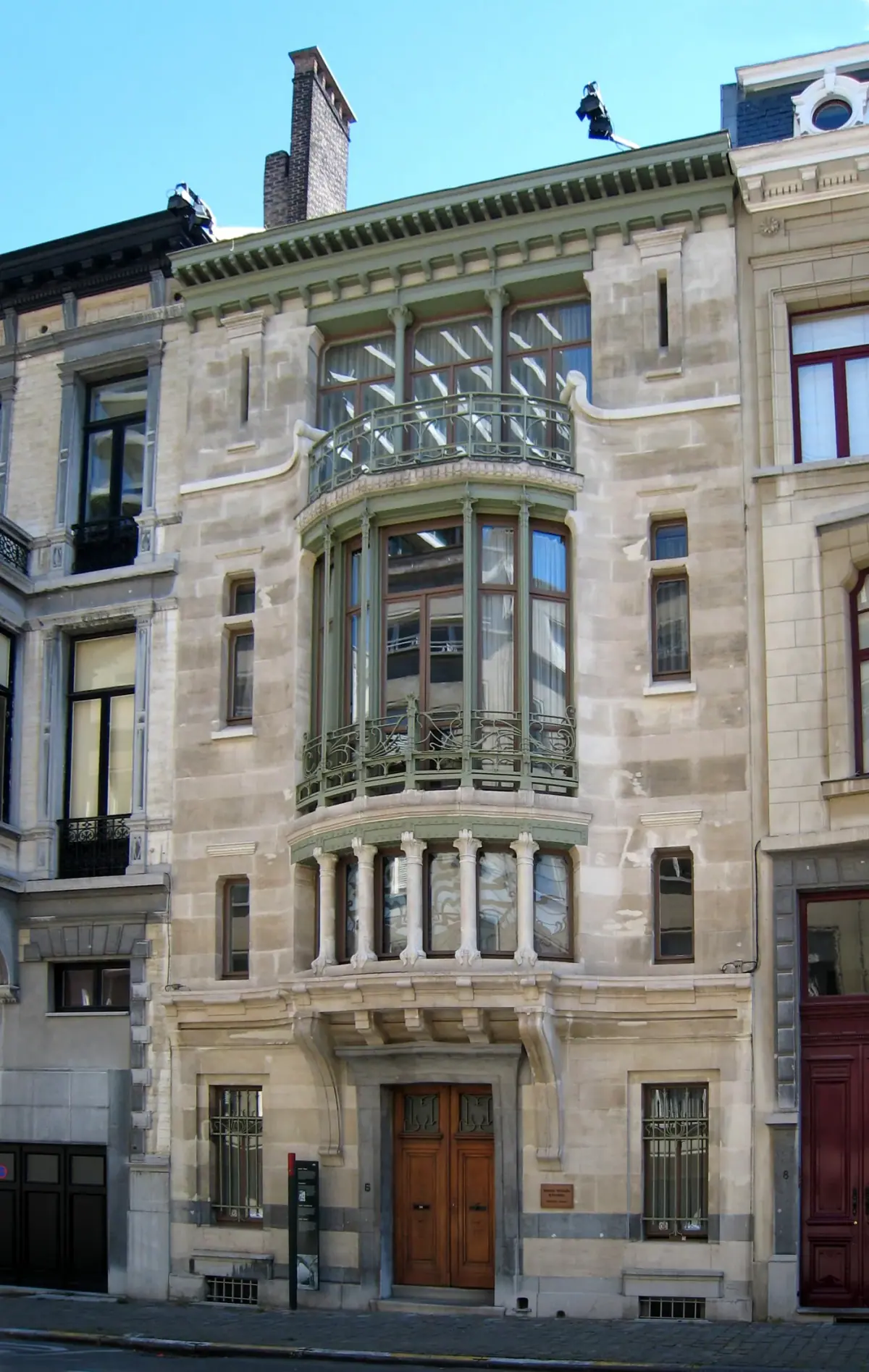

The hôtel in Hôtel Tassel means a grand urban residence, not accommodation. Horta’s 1893 design is important to Art Nouveau’s development. Observe openings and materials from the street; do not assume the famous staircase is visible outside.
Do not plan it as a museum freely open daily. Check official architecture programmes or special tours. Build a comparative exterior route with Solvay along the broad avenue branch. Information source.
Why go? Horta’s UNESCO-listed 1893 house is considered Art Nouveau’s first building. Even its façade shows where an architectural revolution began.
Visit summary
- Area: Ixelles and La Cambre
- Highlight: Early Art Nouveau residence
- Suggested visit length: About 15–20 minutes for the exterior
- Type of visit: Exterior view / special programme
- Admission: Exterior free; interiors only on special guided tours.
- Nearby map stops: Hôtel Solvay, Avenue Louise
- Open map: Search for this place on Google Maps
Hôtel Solvay
Hôtel Solvay is one of Horta’s UNESCO-listed major residences. Its façade only partly explains integrated interior space and materials; choose dates by official ticket programme if interested. Its name is not an accommodation option.
Art and decoration interests can guide families choosing Horta houses. Seeing every interior is unnecessary; choose Solvay inside and Tassel and Max Hallet as complementary exteriors. Information source.
Why go? One of Horta’s grandest Art Nouveau mansions, every detail down to furniture designed by him. Seeing inside this UNESCO house is a rare opportunity.
Visit summary
- Area: Ixelles and La Cambre
- Highlight: Horta’s integrated residential design
- Suggested visit length: About 60–90 minutes inside; exterior 15 minutes
- Type of visit: Indoors / exterior view
- Admission: Paid admission · visits by reservation only.
- Nearby map stops: Avenue Louise, Hôtel Tassel
- Open map: Search for this place on Google Maps
Hôtel Max Hallet
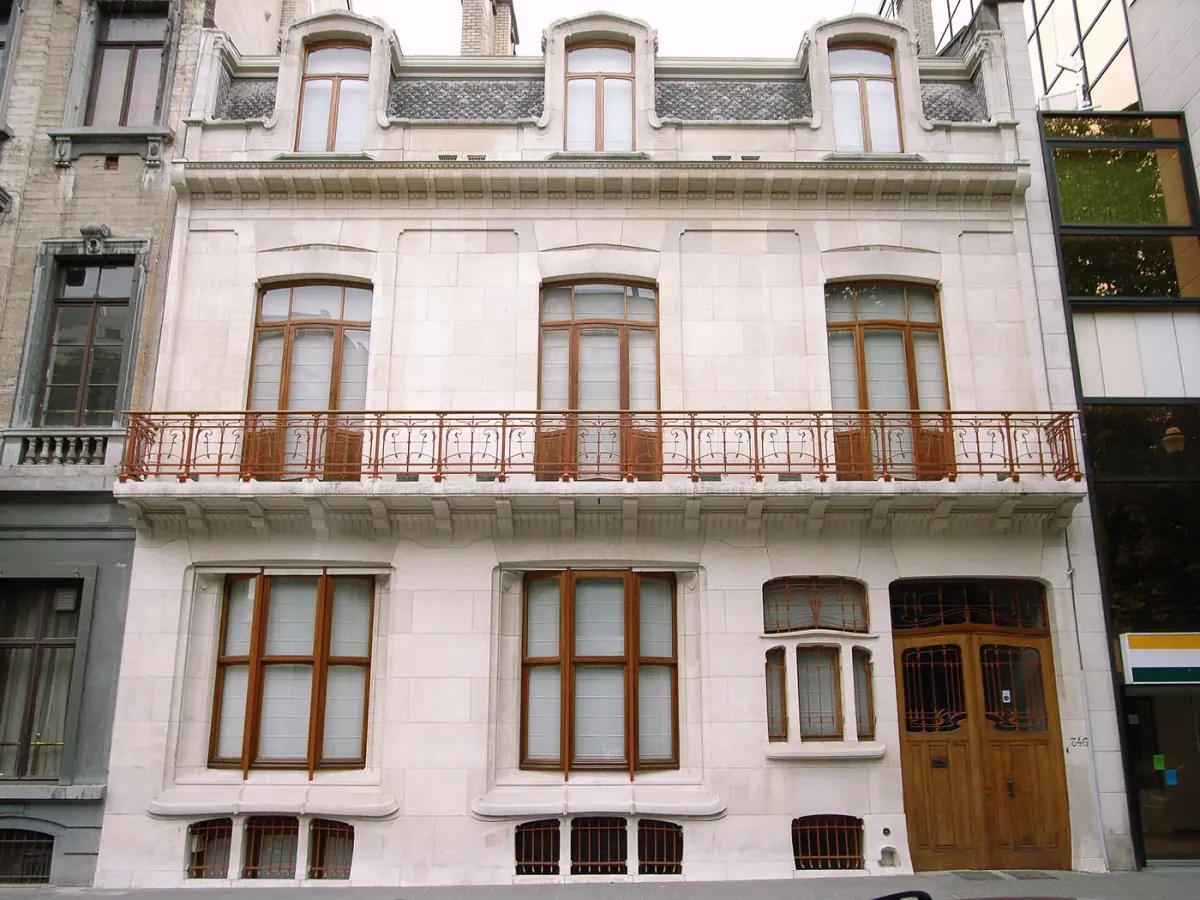

Max Hallet is another Horta residence on Avenue Louise, separate from Solvay and Tassel. Observe windows and the grand avenue house’s relationship to the street.
Do not assume a museum open at any time; check scheduled visits currently. Short exterior observations and one selected interior may balance a family day better than multiple house tours. Information source.
Why go? Horta’s elegant Avenue Louise façade shows mature Art Nouveau. It adds architectural depth to an avenue walk.
Visit summary
- Area: Ixelles and La Cambre
- Highlight: Horta residence on Avenue Louise
- Suggested visit length: About 15–20 minutes for the exterior
- Type of visit: Exterior view / scheduled interior visit
- Admission: Exterior free; interiors only on scheduled tours.
- Nearby map stops: Avenue Louise, Hôtel Solvay
- Open map: Search for this place on Google Maps
La Cambre Abbey (Abbaye de la Cambre)
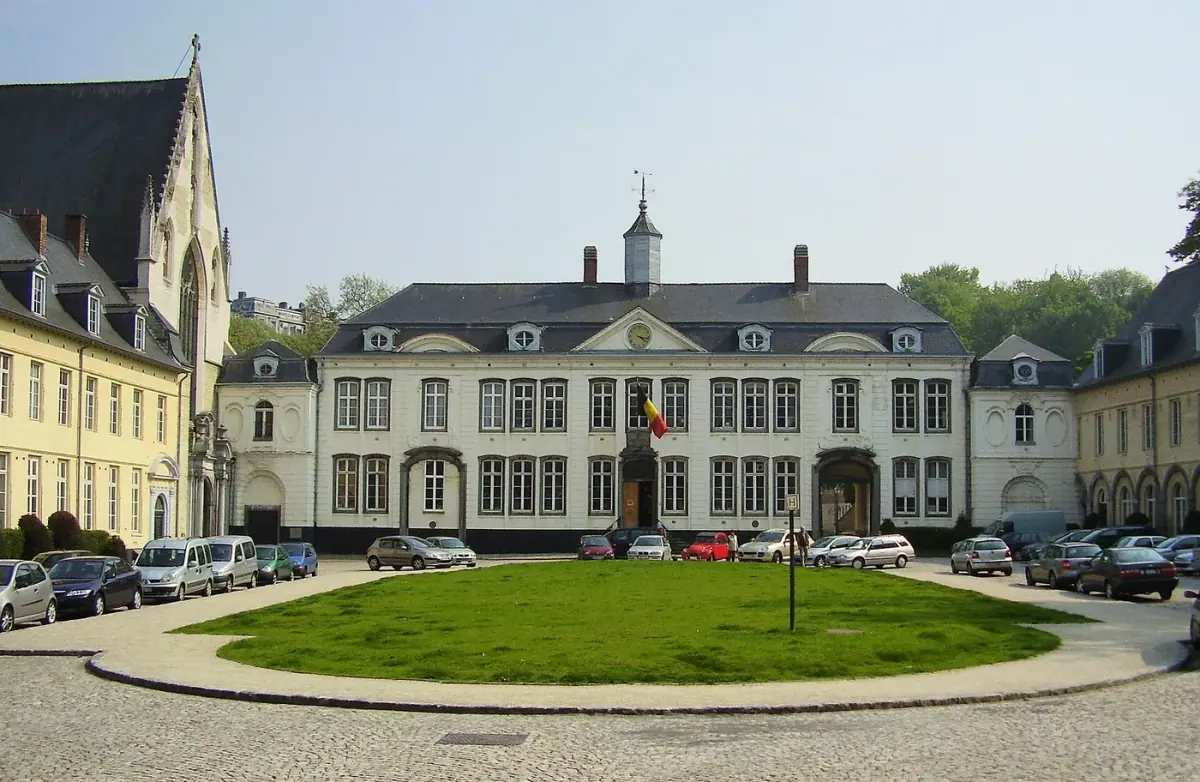

La Cambre emphasises a complex of buildings and gardens rather than one façade. Leaving city avenues changes scale and rhythm. Courtyards, terraces and relationships between buildings explain more than peeking through one church door.
Do not assume all interiors open to tourists; separate open spaces from institutional sections. Link geographically with Avenue Louise and Bois de la Cambre, but completing all three can mean a long walk. Information source.
Why go? A peaceful urban abbey with terraced French gardens and ponds. Suitable for children’s exploration and a calm adult walk.
Visit summary
- Area: Ixelles and La Cambre
- Highlight: Abbey complex and garden arrangement
- Suggested visit length: About 30–60 minutes
- Type of visit: Outdoors / accessible sections
- Admission: Free (gardens and courtyard).
- Nearby map stops: Hôtel Max Hallet, Avenue Louise
- Open map: Search for this place on Google Maps
Villa Empain
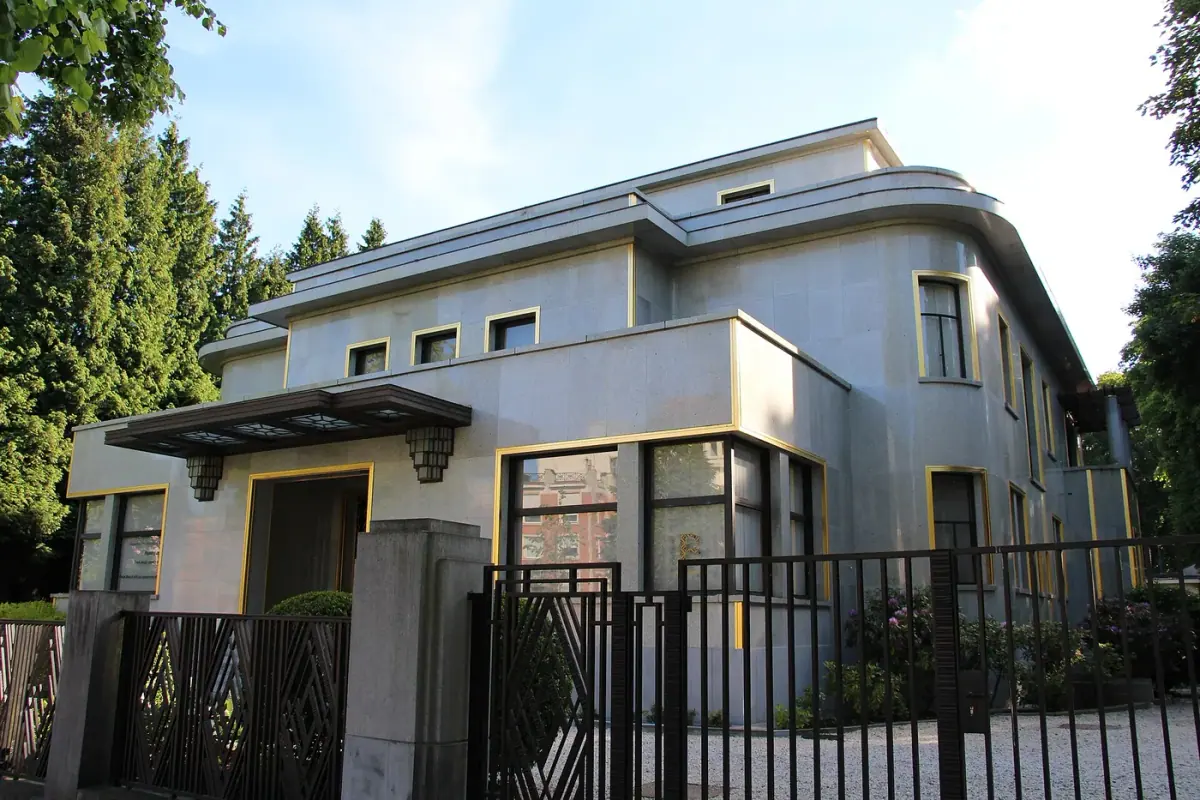

Villa Empain focuses on Art Deco rather than Art Nouveau houses. Used by the Boghossian Foundation, it combines architecture with current exhibitions. If entering, studying that date’s show as well as the building enriches the visit.
A separate southern-city focus for architecture- and design-minded families. Plan with La Cambre rather than squeezing it into a central outing. Exhibition changeovers can affect access. Information source.
Why go? The Art Deco villa is now an exhibition foundation. Pool gardens and elegant architecture reflect 1930s luxury.
Visit summary
- Area: Ixelles and La Cambre
- Highlight: Art Deco villa and art programme
- Suggested visit length: About 60–90 minutes
- Type of visit: Indoors / exhibition
- Admission: Paid admission · exhibition entry.
- Nearby map stops: Bois de la Cambre, La Cambre Abbey (Abbaye de la Cambre)
- Open map: Search for this place on Google Maps
Bois de la Cambre
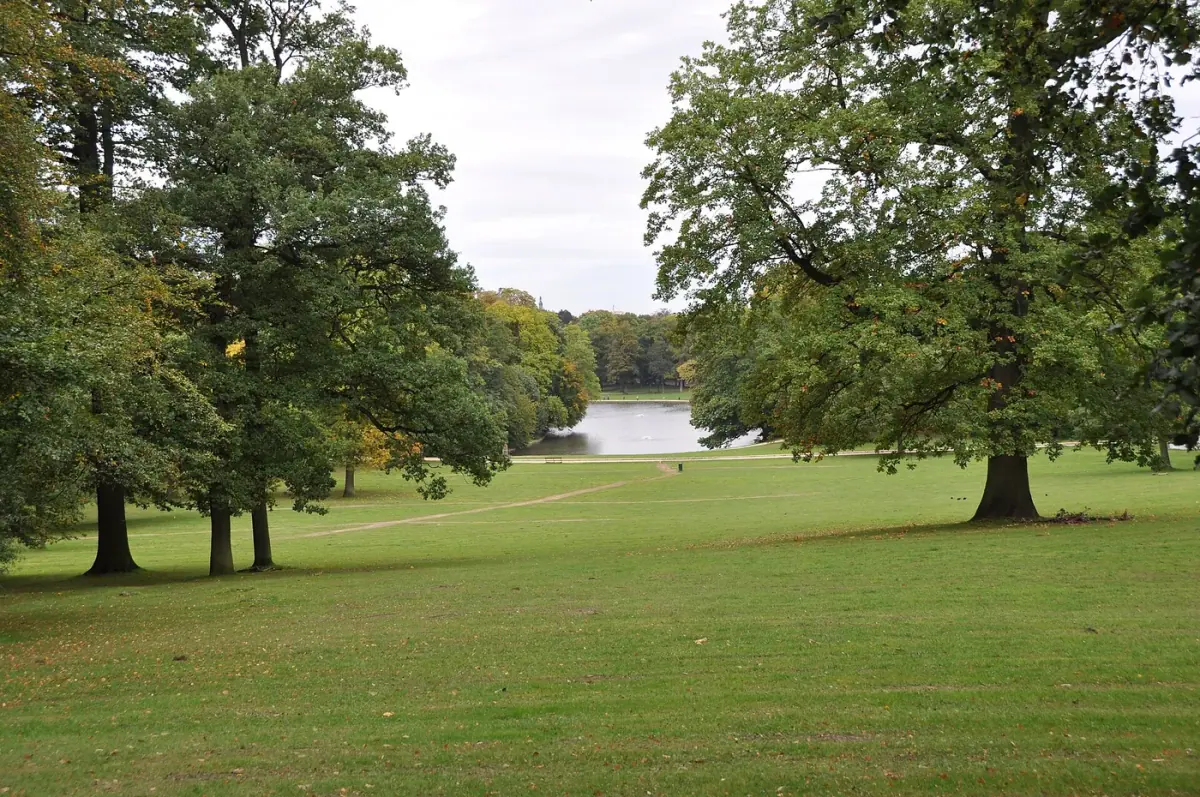

Bois de la Cambre offers broader outdoor space after squares and museums. Trees, clearings and paths form more than a small garden’s quick circuit. Choosing entrance and walking section ahead helps families.
We also used our stroller to carry bags; while useful on park days, assess paths and surfaces locally. Extend from Villa Empain and the abbey without aiming to cover the entire park. Information source.
Why go? A weekend park for Brussels families with lake, island and lawns; some roads close to vehicles at weekends. Extensive greenery for cycling and running.
Visit summary
- Area: Ixelles and La Cambre
- Highlight: Large wooded city park
- Suggested visit length: About 60–120 minutes
- Type of visit: Outdoor walk
- Admission: Free (outdoors)
- Nearby map stops: Villa Empain, La Cambre Abbey (Abbaye de la Cambre)
- Open map: Search for this place on Google Maps
Forest: a separate architectural stop
Saint-Antoine Church Reuse (Maniak Padoue)
Maniak Padoue is more than a sports marker: its official page explains the conversion of part of the 1907 Saint-Antoine de Padoue church into climbing space. Here it is architectural, linking nave, stained glass and reuse rather than a sports programme.
Do not assume free, unrestricted sightseeing entry; ask the operator about access. Forest is not the same short street circuit as other Art Nouveau homes. Plan a separate branch for particular reuse-architecture interest. Information source.
Why go? An interesting old church gaining a new function, showing urban transformation. A short, different stop for architecture enthusiasts.
Visit summary
- Area: Forest: a separate architectural stop
- Highlight: Adaptive reuse of a historic church
- Suggested visit length: About 15–20 minutes for the exterior
- Type of visit: Exterior view / interior access subject to operator
- Admission: Free (exterior view)
- Nearby map stops: There are no other stops in this area on this map; plan a separate visit.
- Open map: Search for this place on Google Maps
European quarter and Cinquantenaire
Cinquantenaire Park
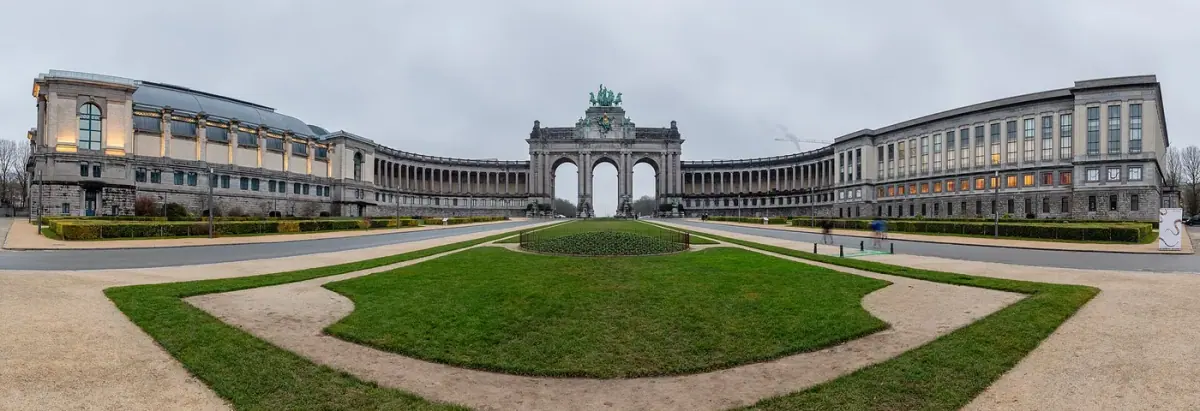

Cinquantenaire combines outdoor walking and major museums. Monumental arches and orderly gardens relate to surrounding exhibition buildings. Planning a park visit in its own right, not merely crossing to a museum, eases family pace.
Autoworld, Art and History Museum and the military museum share the area but different interests. Choose one main stop rather than all three and spend remaining time outdoors. Information source.
Why go? A large park of museums and a huge triumphal arch built for Belgium’s fiftieth anniversary. Climbing for city views is an adventure for children.
Visit summary
- Area: European quarter and Cinquantenaire
- Highlight: Monumental park and museum surroundings
- Suggested visit length: About 45–60 minutes
- Type of visit: Outdoor walk
- Admission: Park free.
- Nearby map stops: Royal Museum of the Armed Forces and Military History, Art and History Museum
- Open map: Search for this place on Google Maps
Art and History Museum
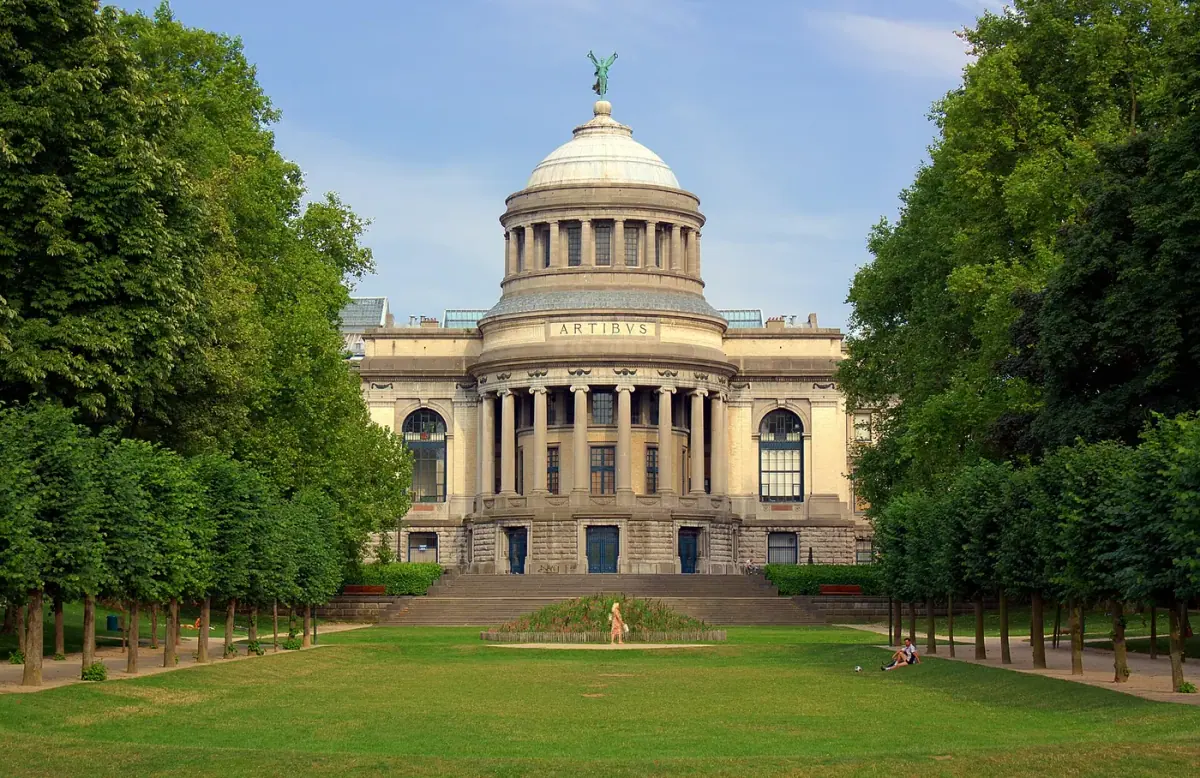

Art and History Museum compares objects across civilisations rather than one artist or period. Follow differences in purpose, material and workmanship rather than merely looking for old things in cases.
Select a culture or object group with children rather than every room. Pair it with a Cinquantenaire outdoor break. Open galleries and temporary exhibitions vary by date; check officially. Information source.
Why go? A vast worldwide collection from Ancient Egypt to an Easter Island statue. A hunt for mummies and giant sculptures for children.
Visit summary
- Area: European quarter and Cinquantenaire
- Highlight: Archaeology and objects from different cultures
- Suggested visit length: About 90–150 minutes
- Type of visit: Indoors
- Admission: Paid admission · about €10 per adult; under-18s free.
- Nearby map stops: Autoworld, Royal Museum of the Armed Forces and Military History
- Open map: Search for this place on Google Maps
Autoworld
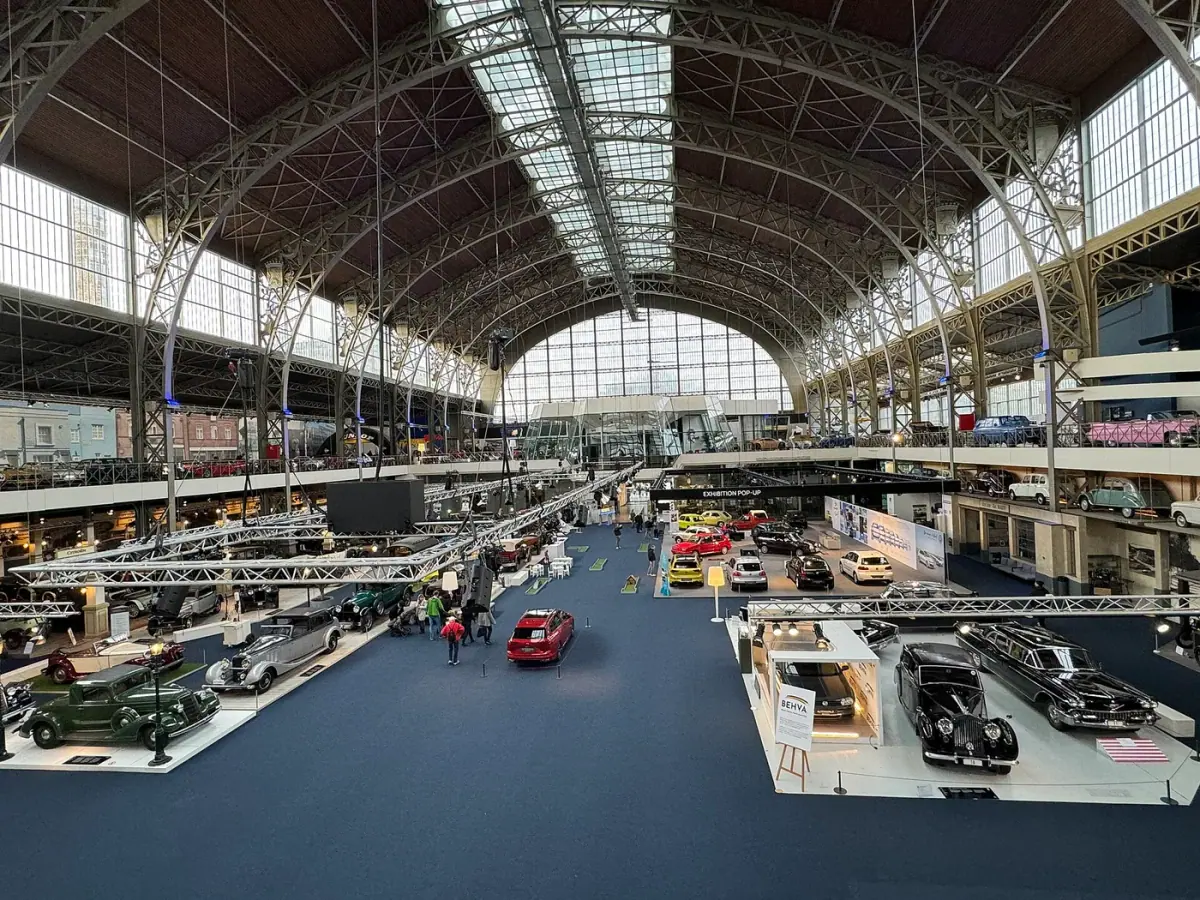

Autoworld traces design and transport culture through cars. Enthusiasts may value model names; children can focus on shapes, wheels and period appearances. Distinguish collection and temporary exhibitions when setting expectations.
Choosing it as one of Cinquantenaire’s three main museums makes an easier day. Check current exhibitions rather than assuming every vehicle and event is permanent, then add park time. Information source.
Why go? Hundreds of classics, from royal vehicles to racing cars, in a former exhibition hall. Hours of enjoyment for car-loving children.
Visit summary
- Area: European quarter and Cinquantenaire
- Highlight: Automotive history and design
- Suggested visit length: About 90–120 minutes
- Type of visit: Indoors
- Admission: Paid admission · about €15 per adult; child discounts.
- Nearby map stops: Art and History Museum, Royal Museum of the Armed Forces and Military History
- Open map: Search for this place on Google Maps
Royal Museum of the Armed Forces and Military History
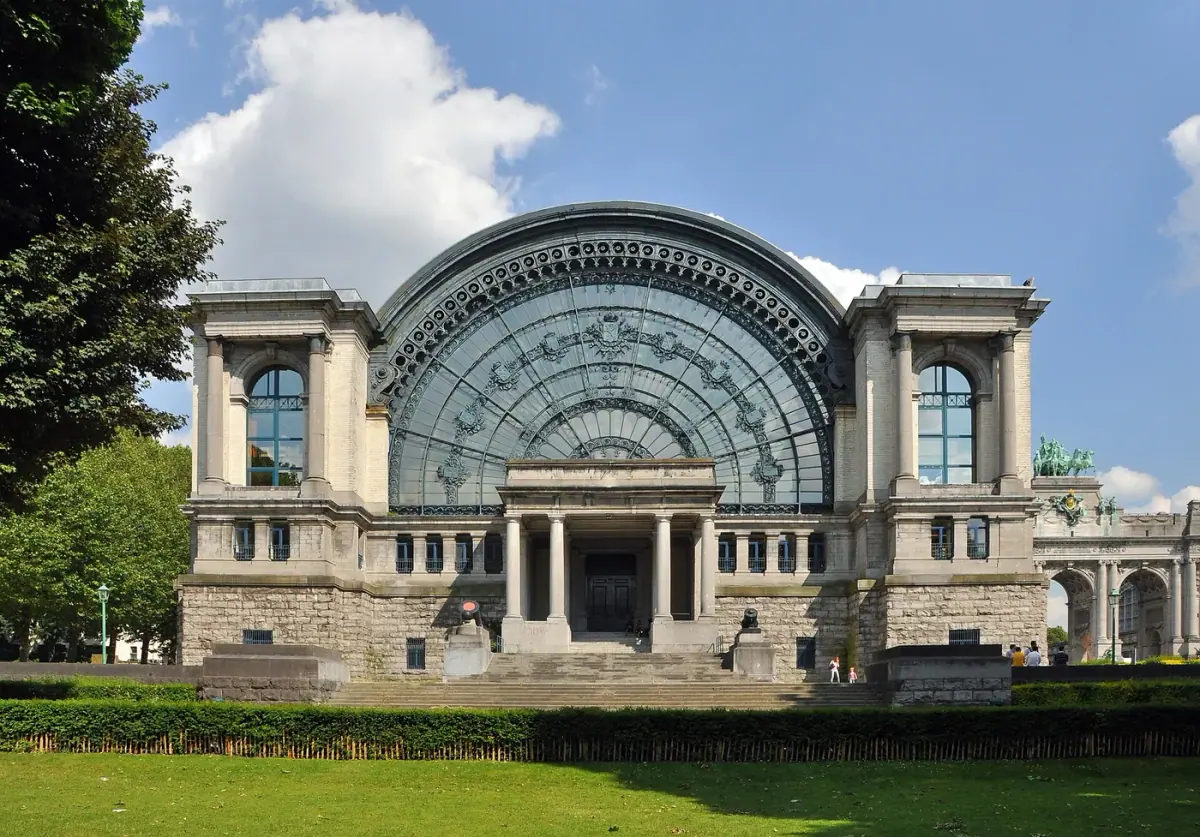

This museum’s military history and technology distinguish it from neighbouring park museums. Choose age- and interest-appropriate sections rather than covering every war-history display. Large objects attract attention but events’ context matters.
Plan with Cinquantenaire. Check current access to arches and particular rooms rather than assuming every ticket and day match. Information source.
Why go? Huge halls of aircraft, tanks and armour; end by climbing the triumphal arch for city views. Exciting for children interested in history and vehicles.
Visit summary
- Area: European quarter and Cinquantenaire
- Highlight: Military history, vehicles and large exhibition halls
- Suggested visit length: About 90–150 minutes
- Type of visit: Indoors
- Admission: Paid admission · about €10 per adult; access to rear terrace included.
- Nearby map stops: Autoworld, Art and History Museum
- Open map: Search for this place on Google Maps
Parlamentarium
Parlamentarium is the European Parliament’s visitor centre, not its debating chamber. Exhibitions explain European institutions’ work. It offers politics- and recent-history-minded families different content from monument visits.
Choose visual and interactive sections instead of every information point with small children. Check languages, registration and security officially. Parliament and the House of European History are other area options. Information source.
Why go? Free interactive screens explain Europe’s coming together. A modern museum where children learn through touch.
Visit summary
- Area: European quarter and Cinquantenaire
- Highlight: European Parliament visitor centre
- Suggested visit length: About 60–90 minutes
- Type of visit: Indoors
- Admission: Free
- Nearby map stops: European Parliament, House of European History
- Open map: Search for this place on Google Maps
European Parliament
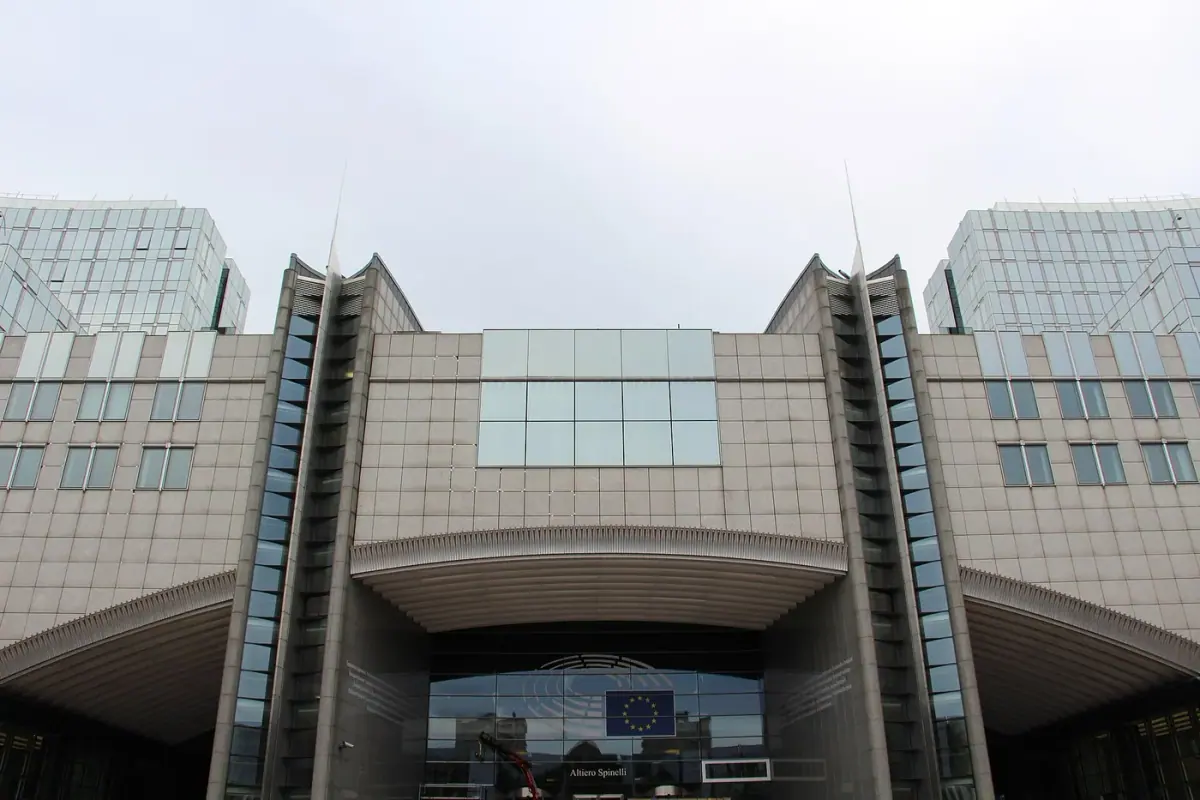

The Parliament marker represents a working institution. Exterior buildings, visitor centre and debating-chamber visits differ. Choosing a visit type ahead reduces unexpected registration or security requirements.
After briefly explaining the institution’s role to children, choose Parlamentarium or the House of European History. Work schedules can affect interior access; the exterior does not mean an unrestricted museum. Information source.
Why go? See the heart of European democracy and visit its debating chamber free. A meaningful way to understand Brussels as Europe’s capital.
Visit summary
- Area: European quarter and Cinquantenaire
- Highlight: Workplace of contemporary European politics
- Suggested visit length: About 20–30 minutes for the exterior; indoor programme extra
- Type of visit: Exterior view / registered visit
- Admission: Free (registered visit).
- Nearby map stops: Parlamentarium, Natural Sciences Museum
- Open map: Search for this place on Google Maps
House of European History
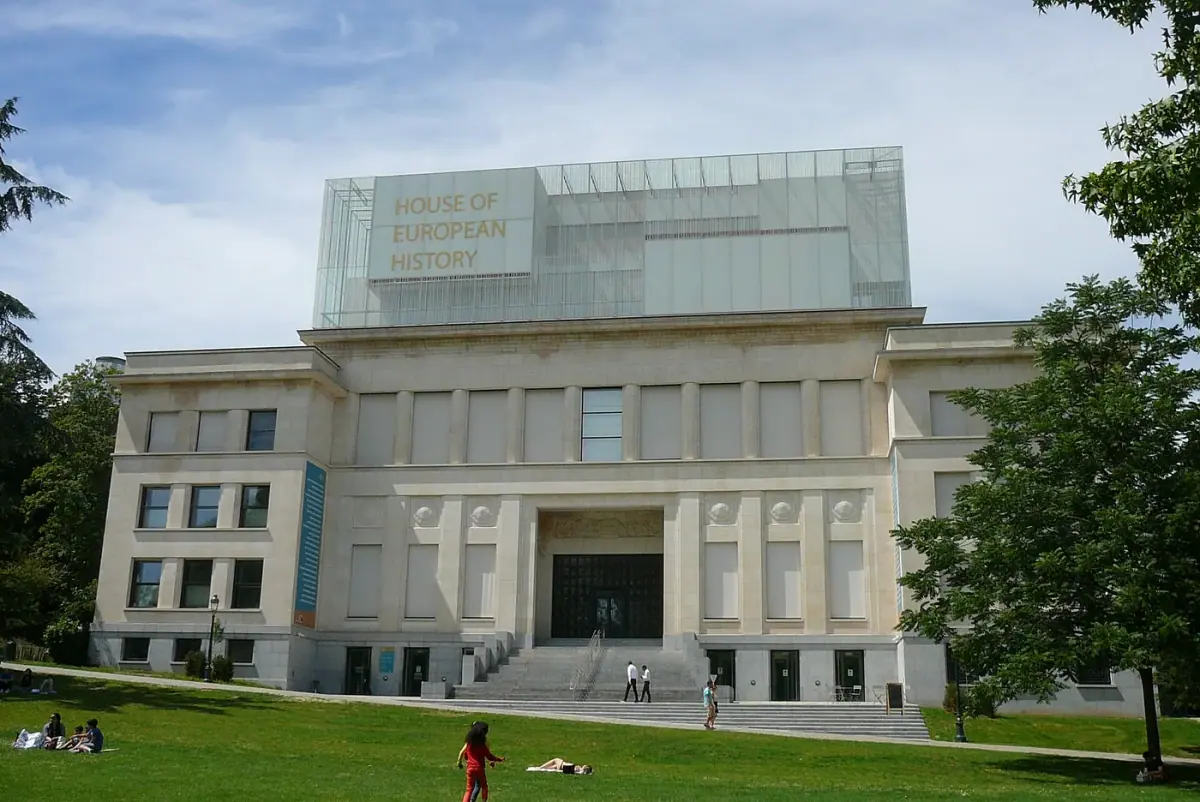

The House of European History offers historical perspective rather than explaining Parliament’s operations. Comparing societies through objects and narratives takes the visit beyond one country’s history.
Recent events can be difficult or abstract for small children; choose age-appropriate sections. Follow one theme instead of completing the building. If also choosing Parlamentarium that day, add outdoor breaks between longer interiors. Information source.
Why go? A free museum exploring Europe’s last two centuries in an engaging multilingual design. In Leopold Park, it pairs with a family park break.
Visit summary
- Area: European quarter and Cinquantenaire
- Highlight: Europe’s shared and contested past
- Suggested visit length: About 90–120 minutes
- Type of visit: Indoors
- Admission: Free
- Nearby map stops: European Parliament, Parlamentarium
- Open map: Search for this place on Google Maps
Natural Sciences Museum
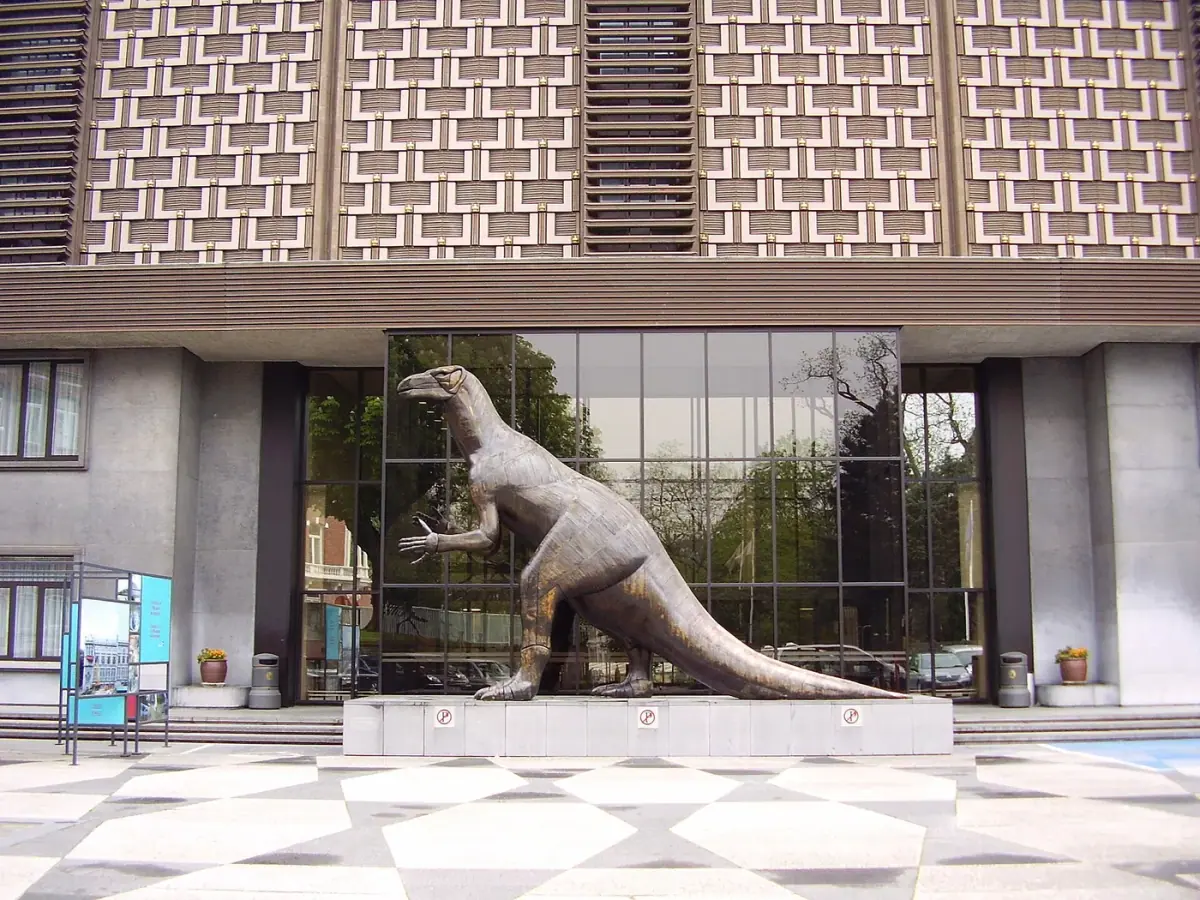

The Natural Sciences Museum adds a different family focus from art museums. Dinosaurs and natural history invite tangible observations of size, evolution and biodiversity. Simply seeing large skeletons may suit your child better than completing everything.
Make it the main indoor visit with a shorter surrounding walk. Check official open galleries, family activities and tickets; do not assume every programmed activity is permanent. Information source.
Why go? Dozens of Iguanodon skeletons stand together in one of Europe’s largest dinosaur halls. Among Brussels’s most exciting museums for children.
Visit summary
- Area: European quarter and Cinquantenaire
- Highlight: Dinosaurs and natural history
- Suggested visit length: About 2–3 hours
- Type of visit: Indoors
- Admission: Paid admission · about €13 per adult, about €5–8 per child; under-6s free. Dinosaur hall is great for children.
- Nearby map stops: European Parliament, House of European History
- Open map: Search for this place on Google Maps
Cauchie House
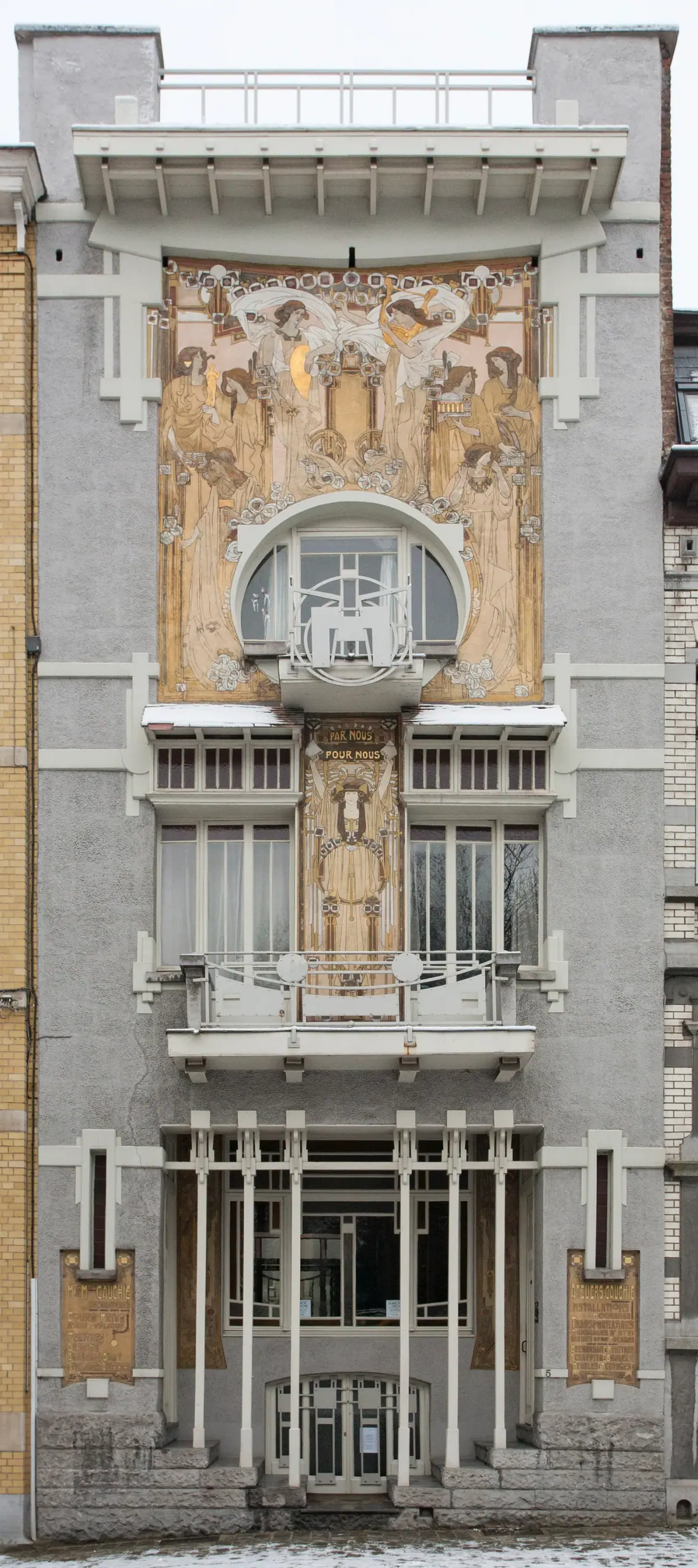

Cauchie House makes Paul Cauchie and Caroline Voet’s art and decoration visible on its façade. The large sgraffito of the 1905 building advertises its owners’ skills as well as decorating it. View the whole, then figures and surfaces.
Interior visits relate to guided programmes; confirm reservations. Pair an exterior stop with a Cinquantenaire museum day. Do not attribute this house to Horta; different artists created it. Information source.
Why go? Elegant female figures in sgraffito cover a spectacular Art Nouveau façade. Even an exterior look enriches the trip.
Visit summary
- Area: European quarter and Cinquantenaire
- Highlight: Sgraffito façade and artists’ home
- Suggested visit length: About 15 minutes for the exterior; with tour 60 minutes
- Type of visit: Exterior view / guided interior visit
- Admission: Paid admission · guided visits on certain days only.
- Nearby map stops: Autoworld, Art and History Museum
- Open map: Search for this place on Google Maps
Hôtel van Eetvelde
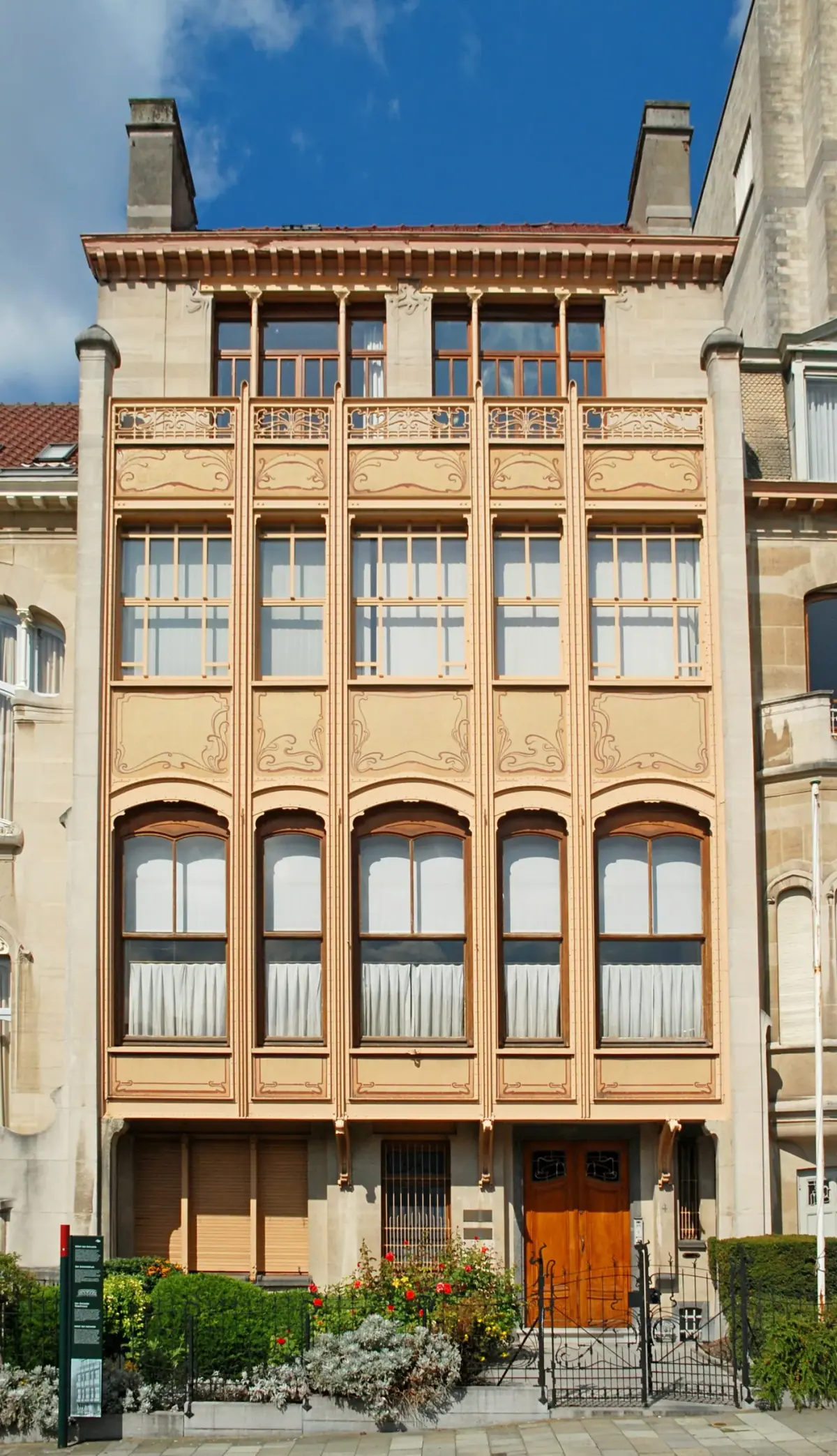

Hôtel van Eetvelde is another major Horta residence, not accommodation. After the façade, decide whether seeing interior light and spatial design matters to you. What is visible from the street differs from inside.
Pair it with Maison Saint-Cyr on an architectural branch in the squares district. Check official interior dates and reservations; a separate focus is better than rushing it into a central museum chain. Information source.
Why go? One of Horta’s UNESCO homes, with a glass-domed central hall among Art Nouveau’s most impressive interiors. An architectural surprise in the European quarter.
Visit summary
- Area: European quarter and Cinquantenaire
- Highlight: One of Horta’s UNESCO residences
- Suggested visit length: About 15 minutes for the exterior; including the interior 60 minutes
- Type of visit: Exterior view / scheduled interior visit
- Admission: Exterior free; interiors only on scheduled tours.
- Nearby map stops: Maison Saint-Cyr, House of European History
- Open map: Search for this place on Google Maps
Maison Saint-Cyr
Maison Saint-Cyr shows dense architectural expression on a narrow frontage. Ironwork, moving lines and stacked openings stand out. Take in the whole before individual balcony and window details.
Visiting a residential façade does not mean interiors open. Add a short stop to a Van Eetvelde architectural walk; do not allocate family time as though entering every house. Information source.
Why go? One of Brussels’s narrowest and most ornate Art Nouveau façades, with lace-like ironwork. The highlight of a short walk around Ambiorix Square.
Visit summary
- Area: European quarter and Cinquantenaire
- Highlight: Dense Art Nouveau craftsmanship on a narrow façade
- Suggested visit length: About 10–15 minutes
- Type of visit: Exterior view
- Admission: Free (exterior view)
- Nearby map stops: Hôtel van Eetvelde, Cinquantenaire Park
- Open map: Search for this place on Google Maps
Laeken and Heysel
Laeken Park
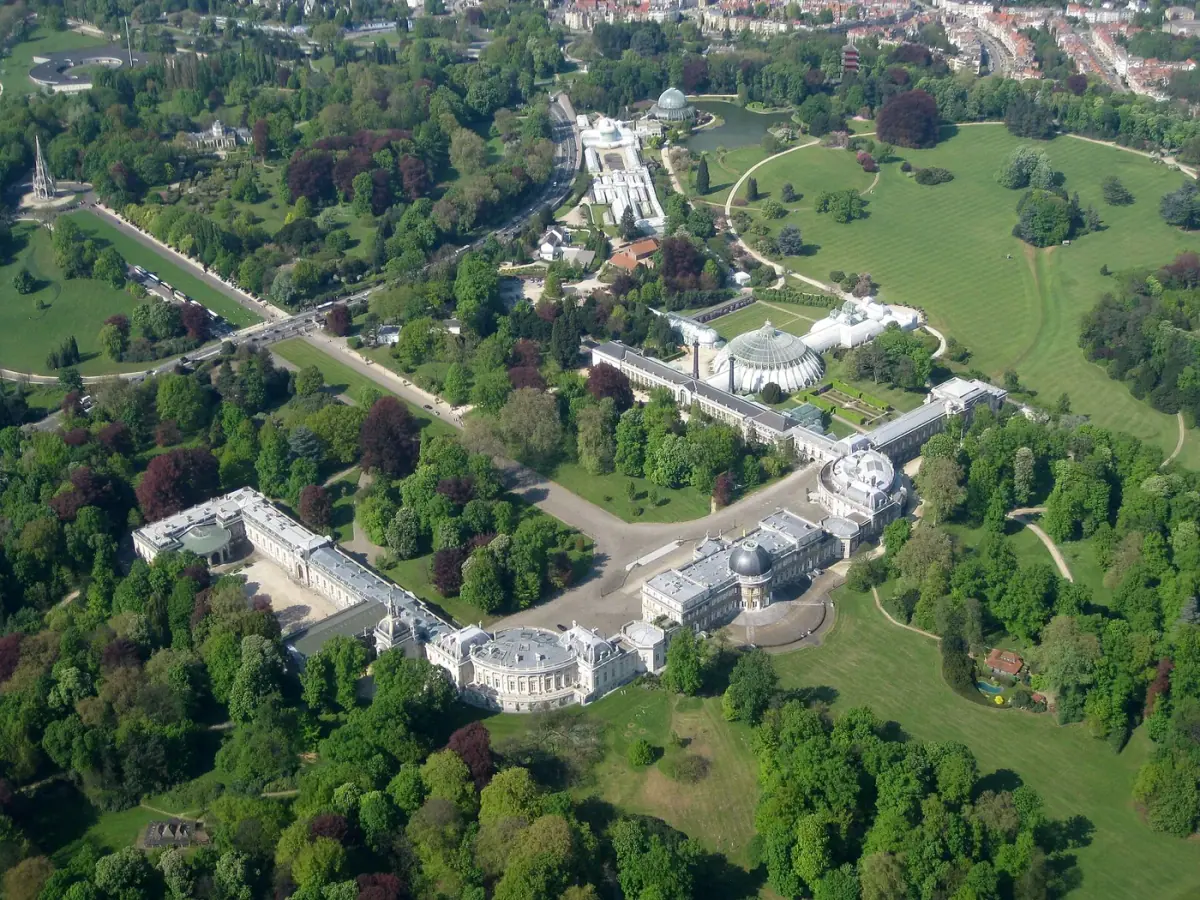

Laeken Park is a northern outdoor stop. Nearby palace, glasshouse and public park names on a map do not mean shared entrances or conditions. Build a walk from selected entrances and open paths.
A freer section after Atomium and nearby visits. Choose one main building and a short family park stretch rather than every northern marker on foot. The Dynasty Monument complements the park. Information source.
Why go? A broad park beside the royal palace, with Atomium views and paths. Ideal for a family picnic away from central crowds.
Visit summary
- Area: Laeken and Heysel
- Highlight: Broad northern parkland
- Suggested visit length: About 45–90 minutes
- Type of visit: Outdoor walk
- Admission: Free (outdoors)
- Nearby map stops: Dynasty Monument (Monument à la Dynastie), Royal Greenhouses of Laeken
- Open map: Search for this place on Google Maps
Atomium
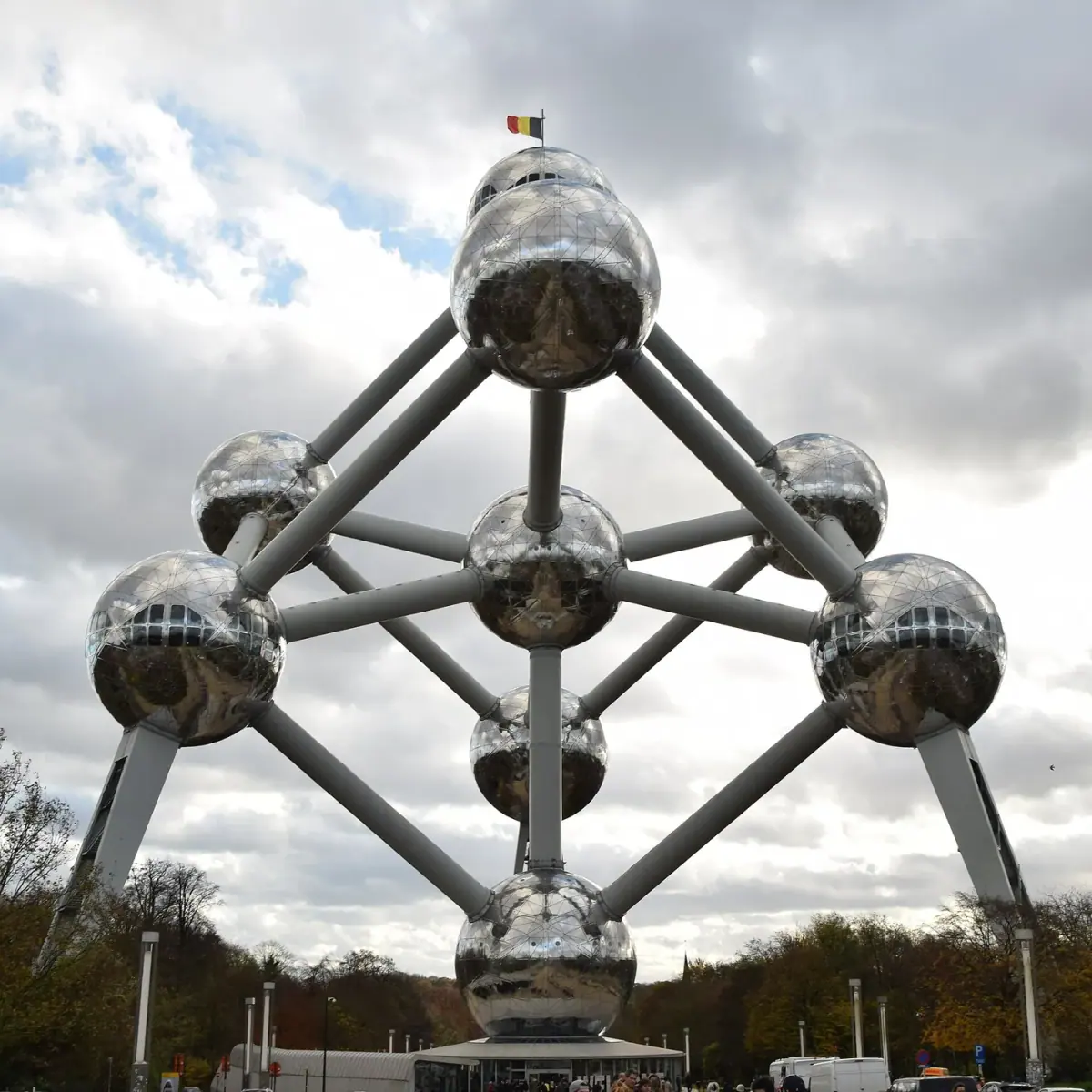

Atomium differs from the historic centre’s stone façades as a city symbol. Viewing spheres and connections outside begins understanding its form; interior exhibitions and circulation are a separate programme. Do not assign equal time to a photo stop and ticketed visit.
Check official capacity and circulation before entering with children. Mini-Europe and the planetarium share the north, but making all compulsory can become a long day. Atomium alone can be the main focus. Information source.
Why go? An iron crystal enlarged 165 billion times has symbolised Brussels since the 1958 World’s Fair. Walking tubes between spheres and seeing the city above is unforgettable for children.
Visit summary
- Area: Laeken and Heysel
- Highlight: Symbolic building of the 1958 exhibition
- Suggested visit length: About 90–120 minutes
- Type of visit: Indoors / exterior view
- Admission: Paid admission · about €16–19 per adult; child discounts. Combination tickets with Mini-Europe offer better value.
- Nearby map stops: Mini-Europe (Mini Europe), Planetarium of the Royal Observatory of Belgium
- Open map: Search for this place on Google Maps
Mini-Europe (Mini Europe)
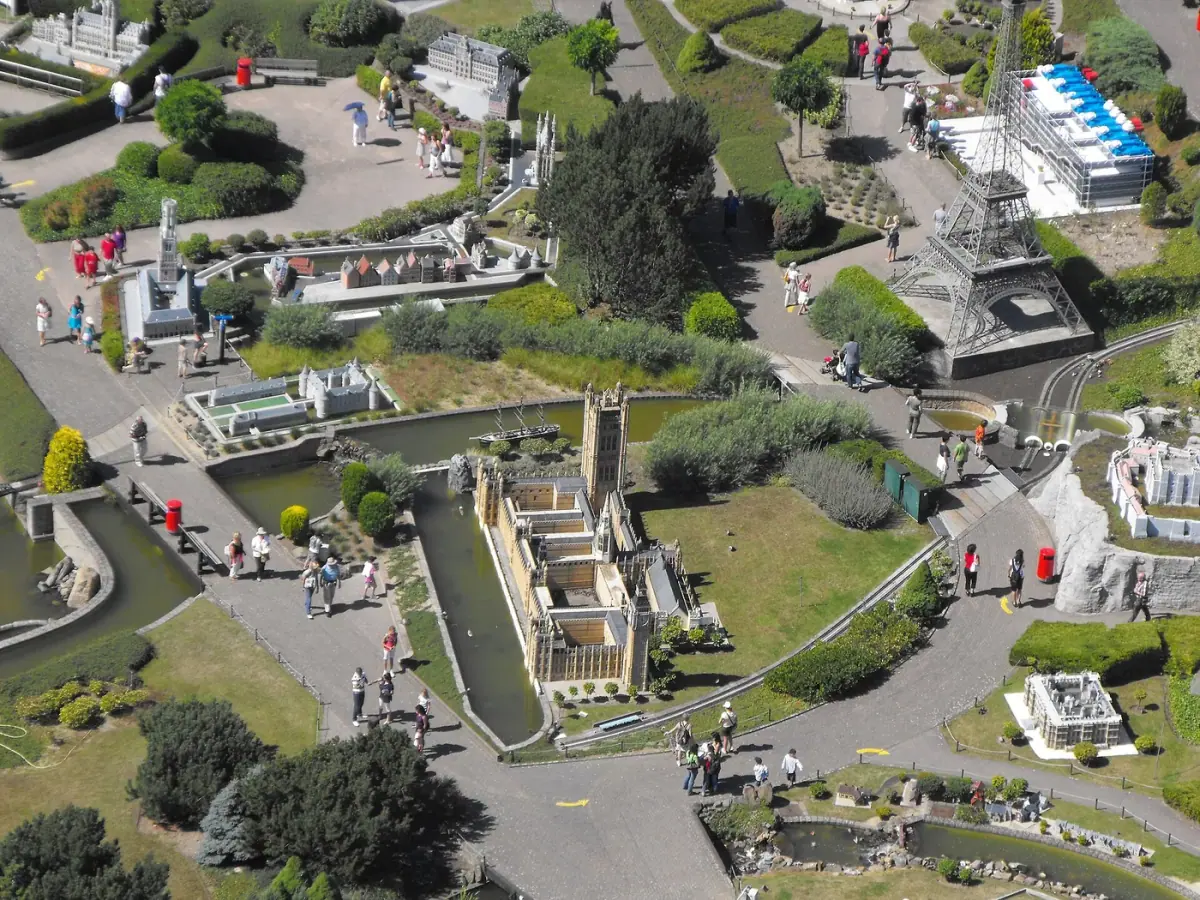

Mini-Europe brings scale models of European buildings together outdoors. Think of comparison and scale rather than a museum fully explaining actual cities’ histories. Finding familiar buildings and details keeps children engaged.
Allow for rain and outdoor conditions affecting duration. Pair geographically with Atomium but reduce combined visiting to your child’s pace. Information source.
Why go? Europe’s famous buildings in 1:25 models, from Big Ben to Eiffel Tower. A playful geography lesson where children excitedly recognise places.
Visit summary
- Area: Laeken and Heysel
- Highlight: Miniature European buildings
- Suggested visit length: About 90–150 minutes
- Type of visit: Outdoor visit
- Admission: Paid admission · combined with Atomium about €33–36 per adult; child discounts.
- Nearby map stops: Planetarium of the Royal Observatory of Belgium, Atomium
- Open map: Search for this place on Google Maps
Planetarium of the Royal Observatory of Belgium
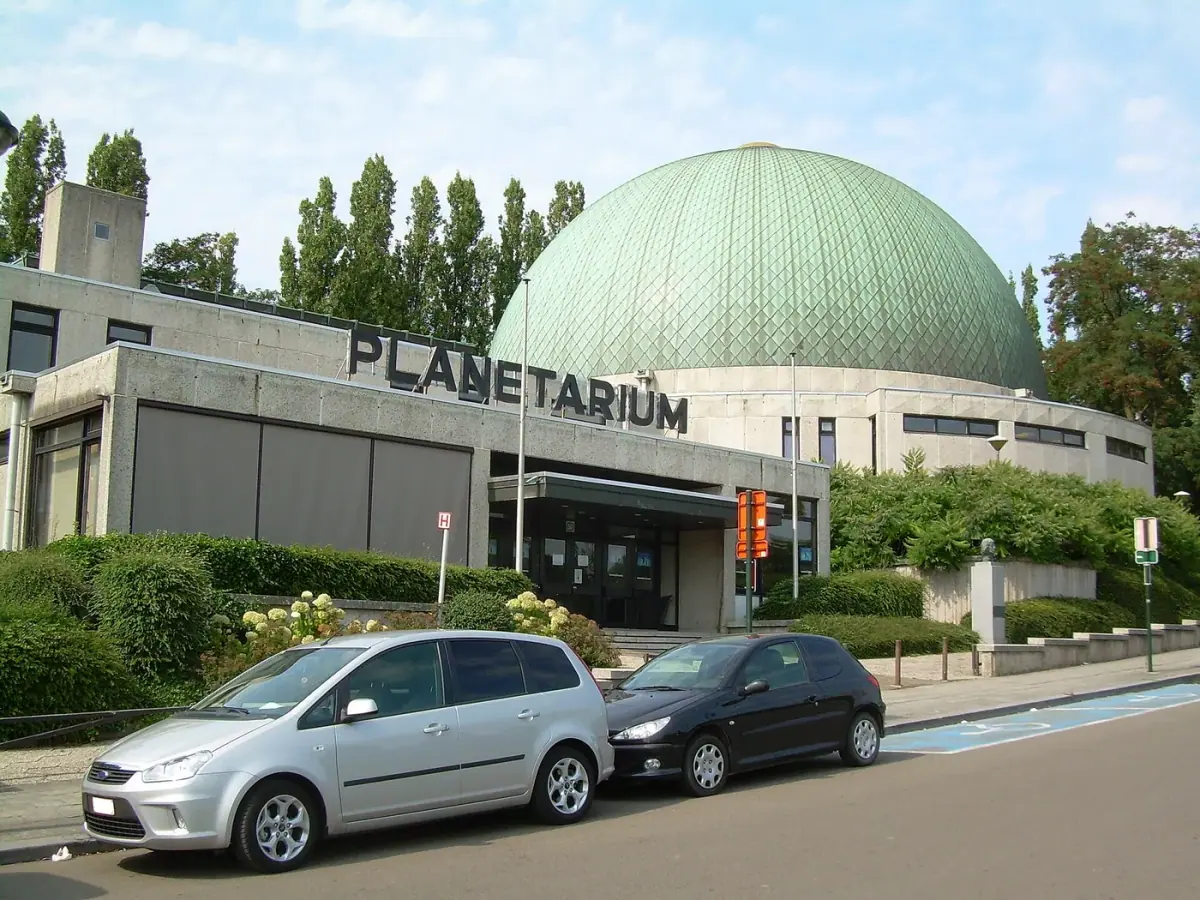

The planetarium operates timed shows, unlike a park stop freely entered and left. It adds a northern indoor option for families interested in sky, space and visual storytelling. Show language and suggested age may matter more than the building.
Check current schedules before buying; do not assume the same show runs anytime. Pair with Mini-Europe or Atomium rather than fully visiting all three. Information source.
Why go? Sky shows projected onto a dome explain stars and planets enchantingly to children. They complete a day with Heysel parks.
Visit summary
- Area: Laeken and Heysel
- Highlight: Sky and dome shows
- Suggested visit length: About 60–90 minutes
- Type of visit: Indoors / timed session
- Admission: Paid admission · about €8 per adult; show times vary.
- Nearby map stops: Mini-Europe (Mini Europe), Atomium
- Open map: Search for this place on Google Maps
Royal Greenhouses of Laeken
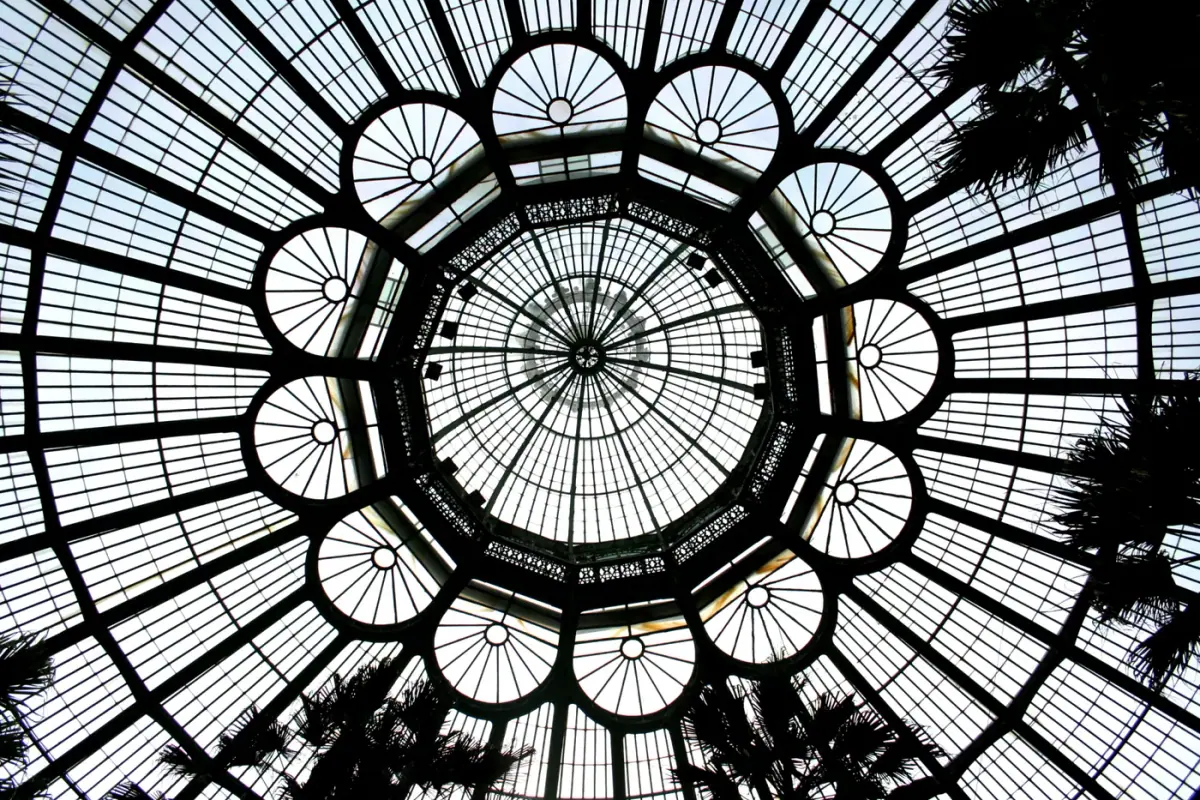

The Royal Greenhouses combine glass-and-metal architecture with plants seasonally. Alphonse Balat’s complex is not a year-round botanical garden. This determines the northern route: a map marker does not guarantee entry on arrival.
According to the official site, the 2026 season has ended and 2027 dates will be announced later. Plan only by announced dates and tickets. When closed, choose public parks, Atomium or other northern stops. Information source.
Why go? The royal family’s huge iron-and-glass greenhouses open only a few weeks yearly. Entering this glass palace of exotic plants is a rare opportunity.
Visit summary
- Area: Laeken and Heysel
- Highlight: Balat’s glass-and-iron greenhouses
- Suggested visit length: About 90–150 minutes, during the open season
- Type of visit: Seasonal indoors and outdoors
- Admission: Paid admission · open only a few spring weeks; book early.
- Nearby map stops: Dynasty Monument (Monument à la Dynastie), Laeken Park
- Open map: Search for this place on Google Maps
Dynasty Monument (Monument à la Dynastie)
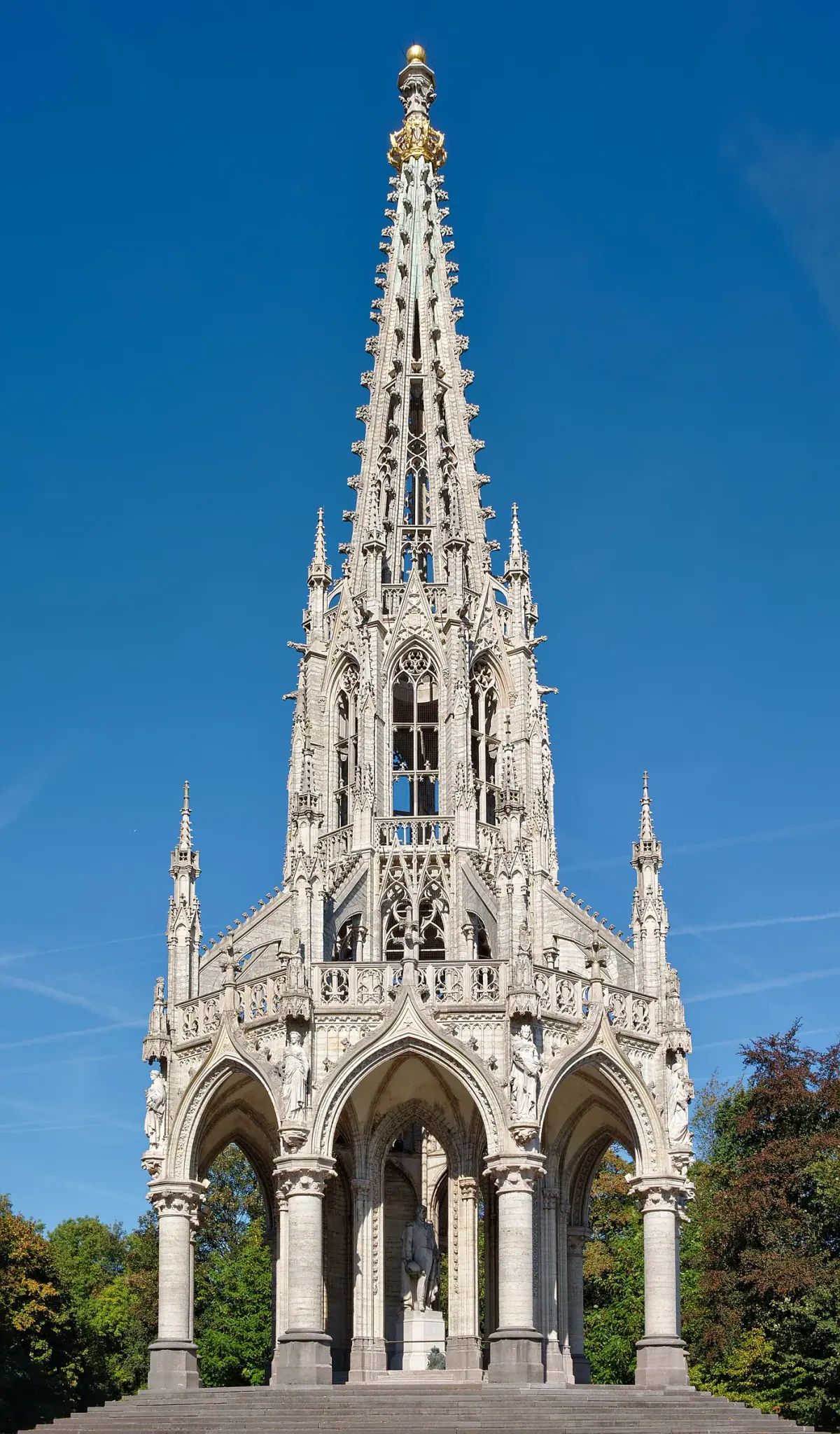

The Dynasty Monument is an outdoor addition to a Laeken park walk. Observe its relationship with the clearing and how its monumental canopy frames figures rather than merely ticking it off afar. The park setting gives a rhythm different from indoor museum hours.
A short stop for architecture and monument interests. Do not confuse it with seasonal greenhouse access; proximity does not mean identical visiting arrangements. Information source.
Why go? The neo-Gothic Laeken monument honours Belgium’s first king and overlooks the royal park from its top. A historic part of a Laeken outing.
Visit summary
- Area: Laeken and Heysel
- Highlight: Monument architecture in a park
- Suggested visit length: About 15–20 minutes
- Type of visit: Exterior view
- Admission: Free (outdoors)
- Nearby map stops: Laeken Park, Royal Greenhouses of Laeken
- Open map: Search for this place on Google Maps
Koekelberg and Jette
Koekelberg Basilica of the Sacred Heart
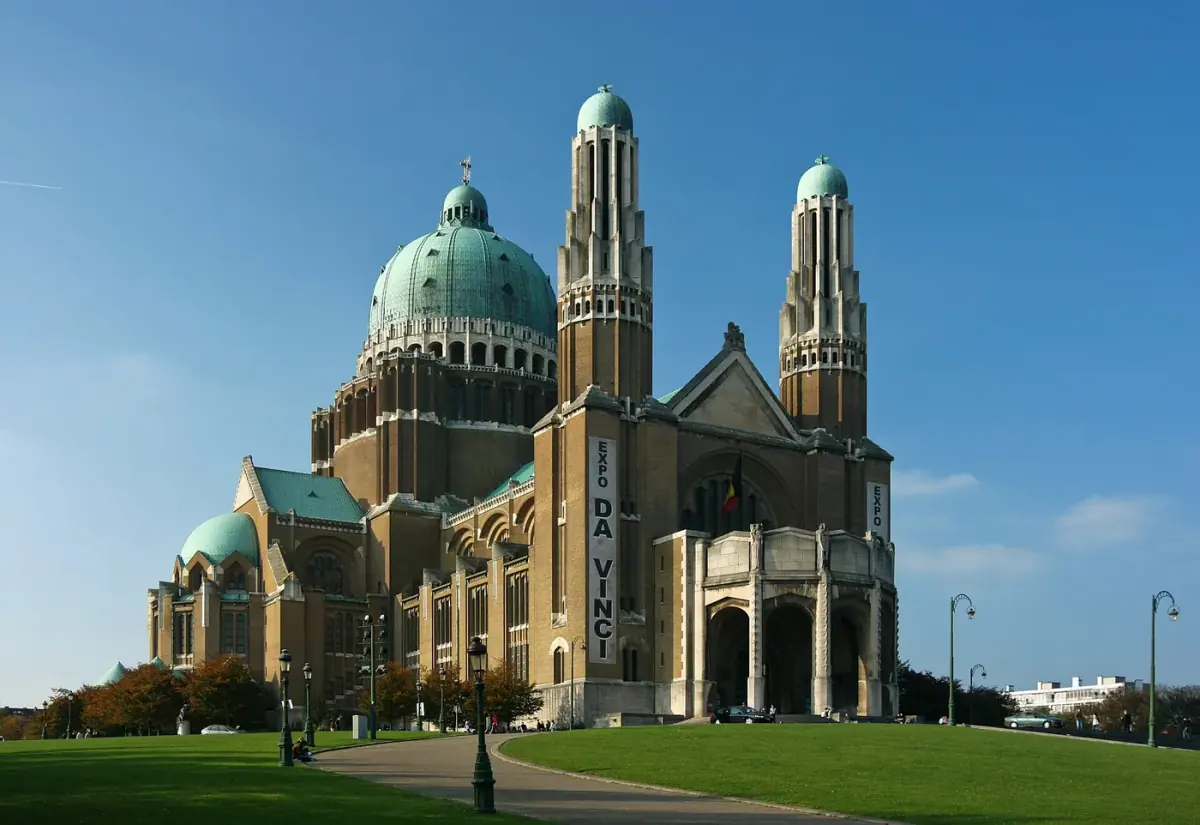

Koekelberg Basilica’s monumental Art Deco differs from Brussels’s familiar Gothic churches. Dome and mass reward exterior study; interior volume and materials add more. Its long construction offers religious architecture from another period.
Plan more independently than short central church stops. Check panorama and additional-area access currently. Jette’s Magritte house is another northwestern option; compare transport without claiming precise proximity in minutes. Information source.
Why go? Among the world’s largest Art Deco buildings, with views over all Brussels from the dome terrace. One of the broadest city panoramas.
Visit summary
- Area: Koekelberg and Jette
- Highlight: Art Deco religious architecture
- Suggested visit length: About 45–75 minutes
- Type of visit: Indoors / exterior view
- Admission: Basilica free; dome terrace charges admission.
- Nearby map stops: René Magritte House Museum (Jette)
- Open map: Search for this place on Google Maps
René Magritte House Museum (Jette)
Jette’s René Magritte Museum is not the Place Royale collection. Here domestic scale and living surroundings matter, while the centre focuses on artworks. Separate entries prevent wrong addresses and counting one museum twice.
This house can complement the central gallery for particular Magritte interest. Choosing only one on a short trip is also reasonable. Check current visits and reservations directly. Information source.
Why go? In the house where Magritte lived 24 years and made many famous works, painted windows and fireplaces appear in real life. The closest look into his world.
Visit summary
- Area: Koekelberg and Jette
- Highlight: The artist’s living environment
- Suggested visit length: About 60–90 minutes
- Type of visit: Indoors
- Admission: Paid admission.
- Nearby map stops: Koekelberg Basilica of the Sacred Heart
- Open map: Search for this place on Google Maps
Canal district and Tour & Taxis
Tour & Taxis
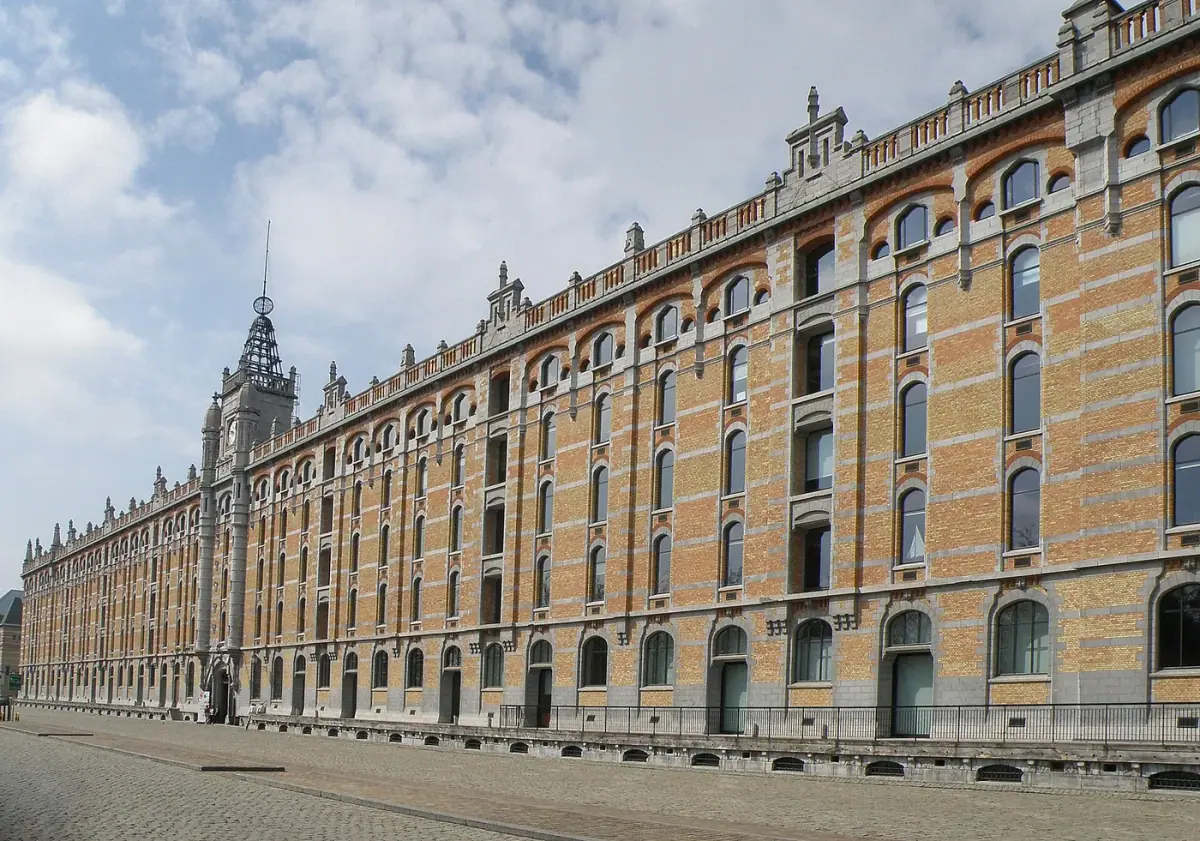

Tour & Taxis is a large reused logistics area, not one hall. Warehouses and public spaces show Brussels beyond historic squares and palaces. Observe boundaries between old buildings and new uses.
Explore accessible spaces briefly as a family without a particular event. Gare Maritime is a more specific architectural stop within the complex; we focus on site in one entry and hall in the other to avoid duplication. Information source.
Why go? Restored customs warehouses and railway depot now hold events, food and parks. Weekend markets and broad parkland make an enjoyable family day.
Visit summary
- Area: Canal district and Tour & Taxis
- Highlight: Reuse of industrial heritage
- Suggested visit length: About 45–60 minutes
- Type of visit: Outdoors / accessible interiors
- Admission: Free (outdoors)
- Nearby map stops: Gare Maritime
- Open map: Search for this place on Google Maps
Gare Maritime
Though labelled Food Market on the map, Gare Maritime has architectural value separate from dining. New timber structures and circulation beneath the old freight station’s vast roof reveal industrial heritage’s present use. It is therefore retained beyond a shopping business.
Study architecture without buying food; check open spaces and event restrictions locally. Pair it with Tour & Taxis rather than allocating a separate day. Information source.
Why go? Tree-filled gardens, cafés and shops beneath a former freight station’s iron-and-glass roof. One of Europe’s largest timber developments, this conversion suits rainy days.
Visit summary
- Area: Canal district and Tour & Taxis
- Highlight: Timber transformation of a former freight station
- Suggested visit length: About 30–45 minutes
- Type of visit: Indoor walk
- Admission: Free
- Nearby map stops: Tour & Taxis
- Open map: Search for this place on Google Maps
Food and drink stops
We selected five food and drink stops expressing Brussels: mussels and chips, waffles, fries, shrimp croquettes and a food hall where everyone chooses.
Menus, prices, hours and reservations may change; check the business’s own page before visiting.
| Place | Known for | Average price (per person) | Location |
|---|---|---|---|
| Chez Léon Nearby stop: Jeanneke-Pis | Mussels and chips (moules-frites) since 1893 | ~€10–25 | Open map |
| Maison Dandoy Nearby stop: Royal Saint-Hubert Galleries | Speculoos biscuits and Belgian waffles since 1829 | Up to ~€10 | Open map |
| Wolf Sharing Food Market Nearby stop: Royal Saint-Hubert Galleries | Food hall with 19 stalls in a former bank; everyone chooses | ~€10–25 | Open map |
| Fernand Obb Delicatessen Saint-Gilles Nearby stop: Parvis de Saint-Gilles | Among Brussels’s most praised shrimp croquettes | ~€10–25 | Open map |
| Maison Antoine Nearby stop: Natural Sciences Museum | One of Brussels’s best-known fries shops since 1948 | Up to ~€10 | Open map |
Other markers on the map
I have kept these points as part of the list too; distinguishing their functions from sightseeing stops makes the plan clearer.
- Handicraft market of Brussels (fri-sat-sun): A crafts and shopping market marker, not counted as a historic sightseeing stop. The days in its map name were not verified as a current schedule. Open map.
Sources and visitor information
Current status note: Laeken Royal Greenhouses’ 2026 season has ended; check the next season officially. The Brussels Royal Palace’s public summer season has ended too. City Museum announces complete closure for 4 January–1 March 2027. Check Art Nouveau houses’ interior days and reservations separately. We have not turned hours and fees into a fixed table.
The selection of stops comes from a personal My Maps map. Information sources appear in the relevant paragraphs. Individual location links are Google Maps searches using place names. Nearby pairings are based on map locations; check actual walking routes on the map.
- Personal Brussels travel map
- Brussels official tourism guide
- Brussels architectural heritage inventory
- Belgian Royal Palace
- Royal Greenhouses of Laeken
- Further reading: Biz Evde Yokuz Brussels guide
Where we stayed
We spent three nights in Brussels at ibis Brussels off Grand Place, a few steps from Grand-Place.
Browse Brussels hotels and apartments on Booking.com. With children, we recommend checking walking distance to the centre, a lift and family room options.
Our travel map
The personal map behind this guide’s stops. Toggle layers to explore sights and any food and drink markers separately.