Florence Travel Guide: Family Routes, Art and Food Stops
Family itineraries for Florence’s Duomo, Uffizi, Ponte Vecchio and Oltrarno. The stops on our map, photographs and places where we ate, all in one guide.
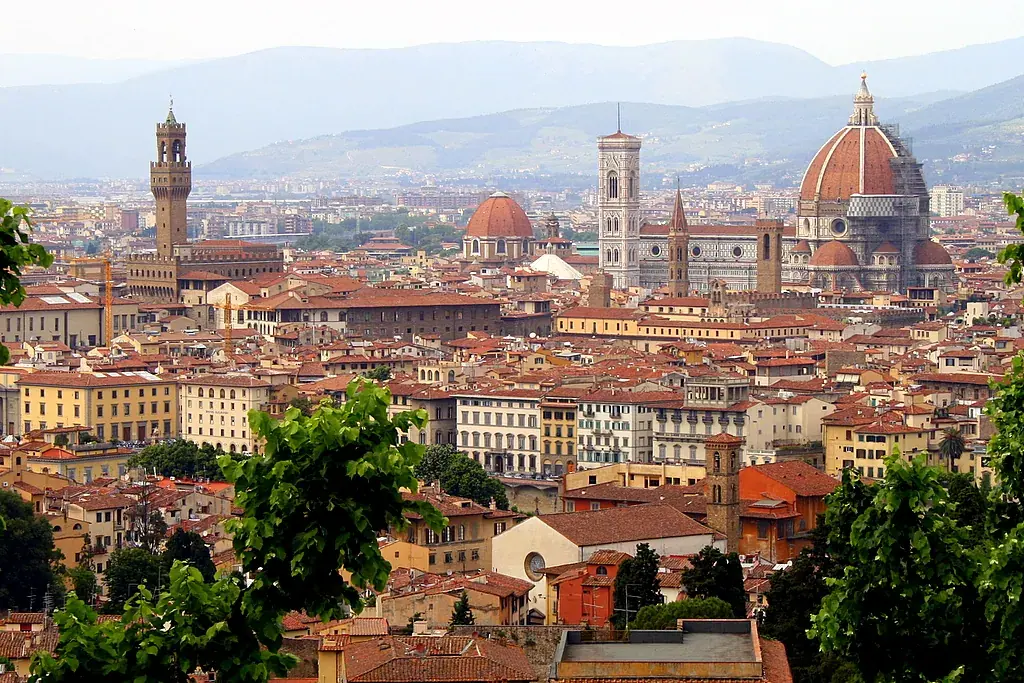
Florence lets you combine squares and museums on the same walk, but can become tiring if you try to go through every door. It was the stop where we spent two nights after Rome on our Italian journey. This guide is based on the map we made from the places we explored as a family; rather than adding personal anecdotes, it explains each stop’s history, artistic significance and place in an itinerary.
Understanding the Duomo area as a whole, linking Signoria’s outdoor sculptures to museum artworks and setting aside time for the other bank of the Arno make the city easier to understand. The two-day suggestion below is not a programme for ticking off every marker: it is a framework focusing on the centre on day one and Oltrarno on day two. Choose which major museum matters most to you and use the remaining sections for an extra day or as alternatives.
With children, a good start is to avoid packing a tower climb, a long gallery visit and uphill viewpoints into the same day. Our food markers appear in a separate plan at the end; they all come from the list of places we tried and recorded individually. The photographs help identify the stops; they are not presented as part of our family album.
Before you go: key notes
How many days should you spend in Florence?
Two days is a good start for the Duomo area, the Uffizi and Oltrarno; we stayed for two nights too. Add a third day if you want more museum time.
Is Florence suitable for children?
Yes. The centre is compact and walkable; the carousel on Piazza della Repubblica, Boboli Gardens and Galileo Museum make good breaks for children. Choose dome and tower climbs carefully with a small child.
Do you need a reservation to climb Brunelleschi’s Dome?
Yes, selecting a time slot for the dome is compulsory and tickets sell out quickly. The Brunelleschi Pass, covering the dome, bell tower, baptistery and museum, is available from the official website.
Where should you stay in Florence?
Areas near Santa Maria Novella station are very practical when arriving and departing by train. We also stayed in this area, at Moro Apartment.
Plan at a family pace: The days below are suggested itineraries based on the locations on the map. Shorten the route to suit your time inside museums and monuments; approximate visit lengths exclude queues and transport.
Suggested itinerary
| Plan | Geographical flow | What to choose |
|---|---|---|
| Day 1: Duomo and historic centre | Piazza del Duomo → cathedral surroundings → Repubblica → Orsanmichele → Signoria → Uffizi → Ponte Vecchio | Choose a dome climb or a long Uffizi visit; you do not have to squeeze both into one day. |
| Day 2: Across the Arno | Santo Spirito → Pitti or Boboli → Bardini/Rose Garden → Piazzale Michelangelo | Gardens and hill climbs can be tiring. Choose one garden and leave the viewpoint until last. |
| Additional art route | San Lorenzo and the Medici Chapels; Santa Maria Novella and Ognissanti on a separate branch | Use places beyond the two-night visit as an extra day or rainy-day alternatives. |
Tickets and tours: Timed tickets for popular places such as the Uffizi and the Duomo dome can sell out ahead. Browse Florence tickets and tours on Tiqets to compare skip-the-line admission and guided tours.


Where to stay in Florence with kids
We stayed 2 nights at Moro Apartment in Florence; having an apartment made things easy with a child. With kids, where your hotel is decides how often you’ll say “shall we head back?”; being able to return for a midday break is a big relief.
| Area | Good for | Watch out | Stay |
|---|---|---|---|
| Duomo and San Giovanni | Walking everywhere | The priciest and busiest area; lively at night too | See on Booking |
| Santa Maria Novella | Arriving and leaving by train (Rome and Venice trains use this station) | Right outside the station can feel rough in the evening; pick a street a few blocks in | See on Booking |
| Oltrarno and Santo Spirito | A quieter, local neighbourhood next to Pitti and Boboli | You cross a bridge on foot to reach the centre | See on Booking |
| Santa Croce | Central, but a little calmer than the Duomo area | Some streets are busy at dinner time | See on Booking |
What we look at when choosing: A lift (does the stroller fit without folding?), being close to the train or metro, a family room for three or an apartment with a kitchen, and air conditioning in summer.
Accommodation: Compare hotels and apartments in Florence on Booking.com; choosing free cancellation keeps your plans flexible.
Contents
- Before you go: key notes
- Where to stay in Florence with kids
- San Lorenzo and the northwestern centre
- Signoria, Uffizi and the Arno riverbank
- Duomo and the Repubblica area
- Santa Croce and the eastern centre
- Viewpoint hill and gardens
- Oltrarno: Santo Spirito and Pitti
- Food and drink stops
- Sources and visitor information
San Lorenzo and the northwestern centre
Mercato Centrale
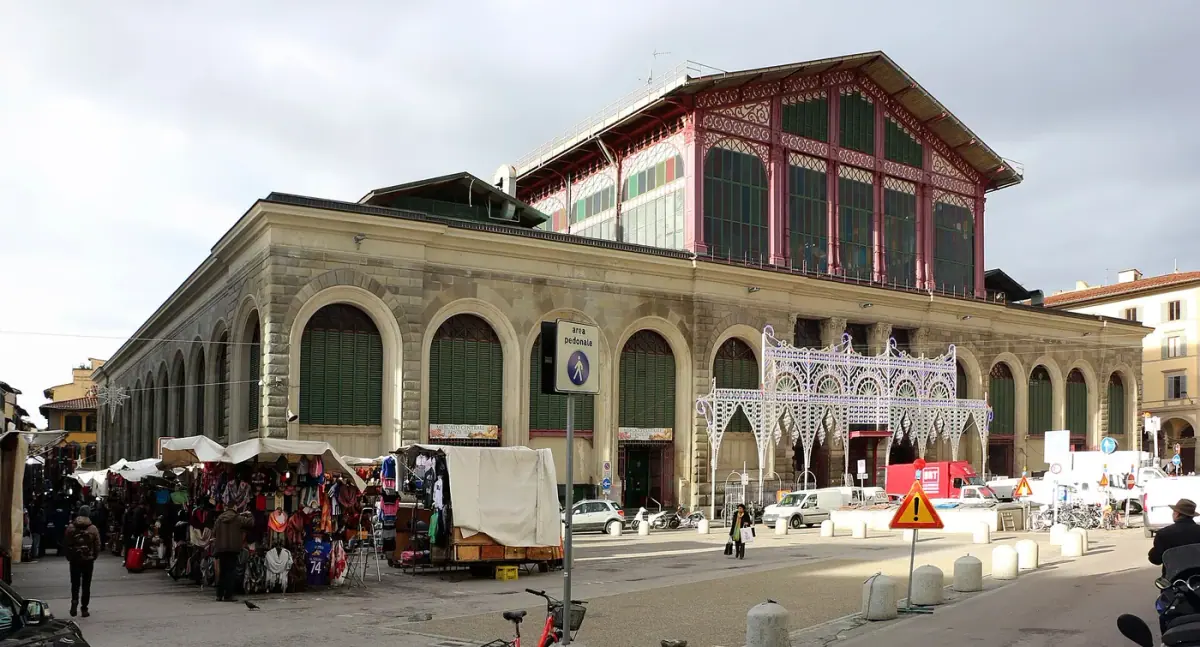

Mercato Centrale is a stop for seeing how the market relates to city life around San Lorenzo. Look separately at the commercial activity inside and the building itself: its large roof, circulation routes and stall layout offer a different urban experience from a conventional museum visit. Do not assume the upper and lower areas share functions or opening hours.
On a family itinerary, it can be a food break on the San Lorenzo and Medici Chapels branch. We are not describing it as a particular business we tried; the building itself also appears on the user’s map. Information source.
Why go? Tuscan cheeses, olive oils and fresh pasta beneath an iron and glass roof, with an upstairs food hall where everyone can choose from different stalls. One of the city’s most practical lunch stops for families faced with everyone wanting something different.
Visit summary
- Area: San Lorenzo and the northwestern centre
- Highlight: Historic market building
- Suggested visit length: About 30–45 minutes
- Type of visit: Indoors / food break
- Admission: Free (food costs extra).
- Nearby map stops: Medici Chapels, San Lorenzo Basilica
- Open map: Search for this place on Google Maps
Ognissanti Church
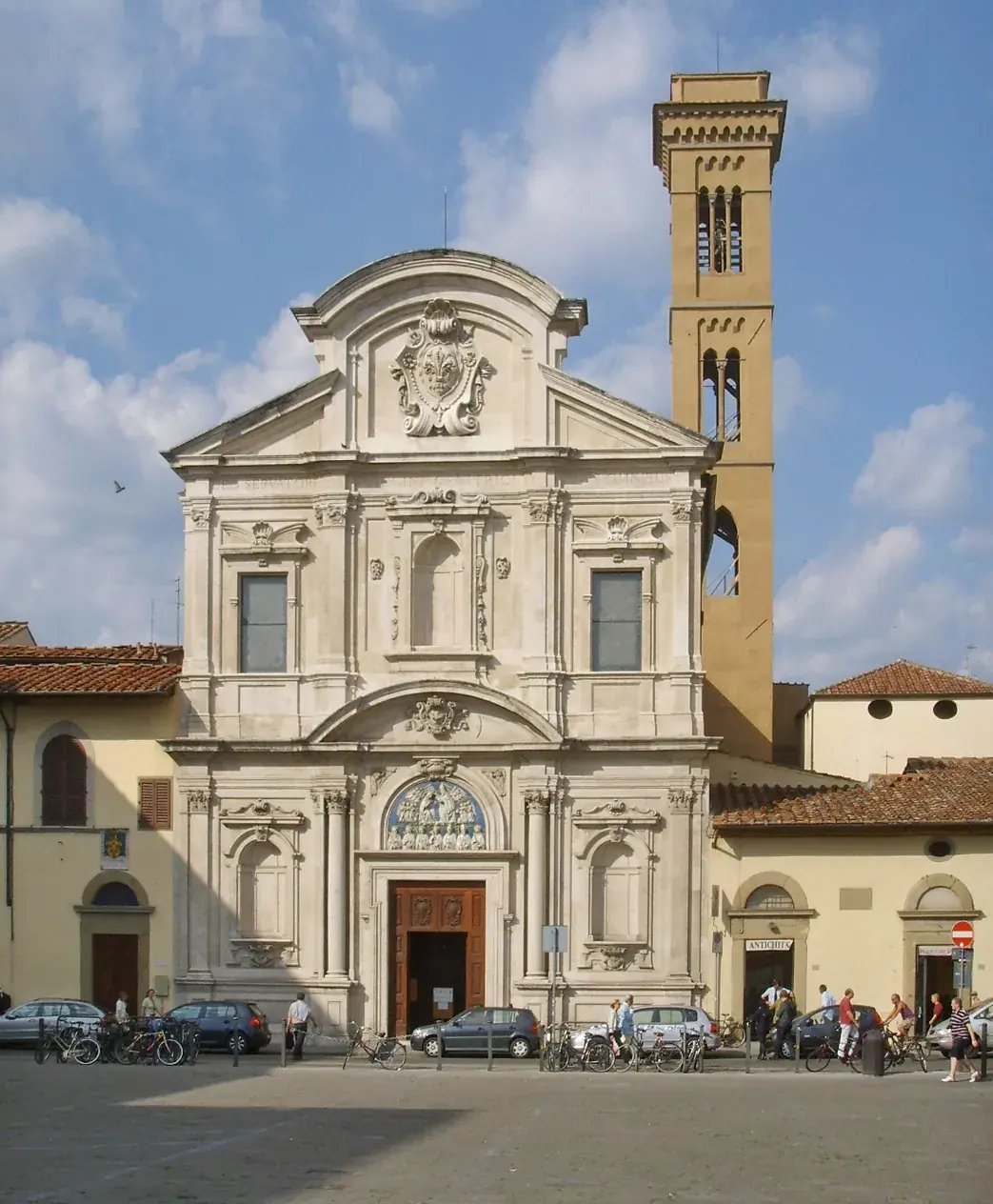

Ognissanti is a church stop branching west from the centre’s chain of major monuments. If open, consider its interior volume and how paintings sit within a place of worship together. Rather than searching for every work in sequence as in a museum, focus on a few details.
It can be paired with Santa Maria Novella on the broader western-central branch. With children, balance a short indoor visit with an outdoor walk afterwards. Check current worship and tourist access conditions. Information source.
Why go? Botticelli is buried in this church, where his wall paintings stand alongside Ghirlandaio’s. A quiet alternative for seeing Renaissance masters without queuing for the big museums.
Visit summary
- Area: San Lorenzo and the northwestern centre
- Highlight: Church art near the Arno
- Suggested visit length: About 30–45 minutes
- Type of visit: Indoors / exterior view
- Admission: Free
- Nearby map stops: Santa Maria Novella Basilica, Medici Chapels
- Open map: Search for this place on Google Maps
Santa Maria Novella Basilica
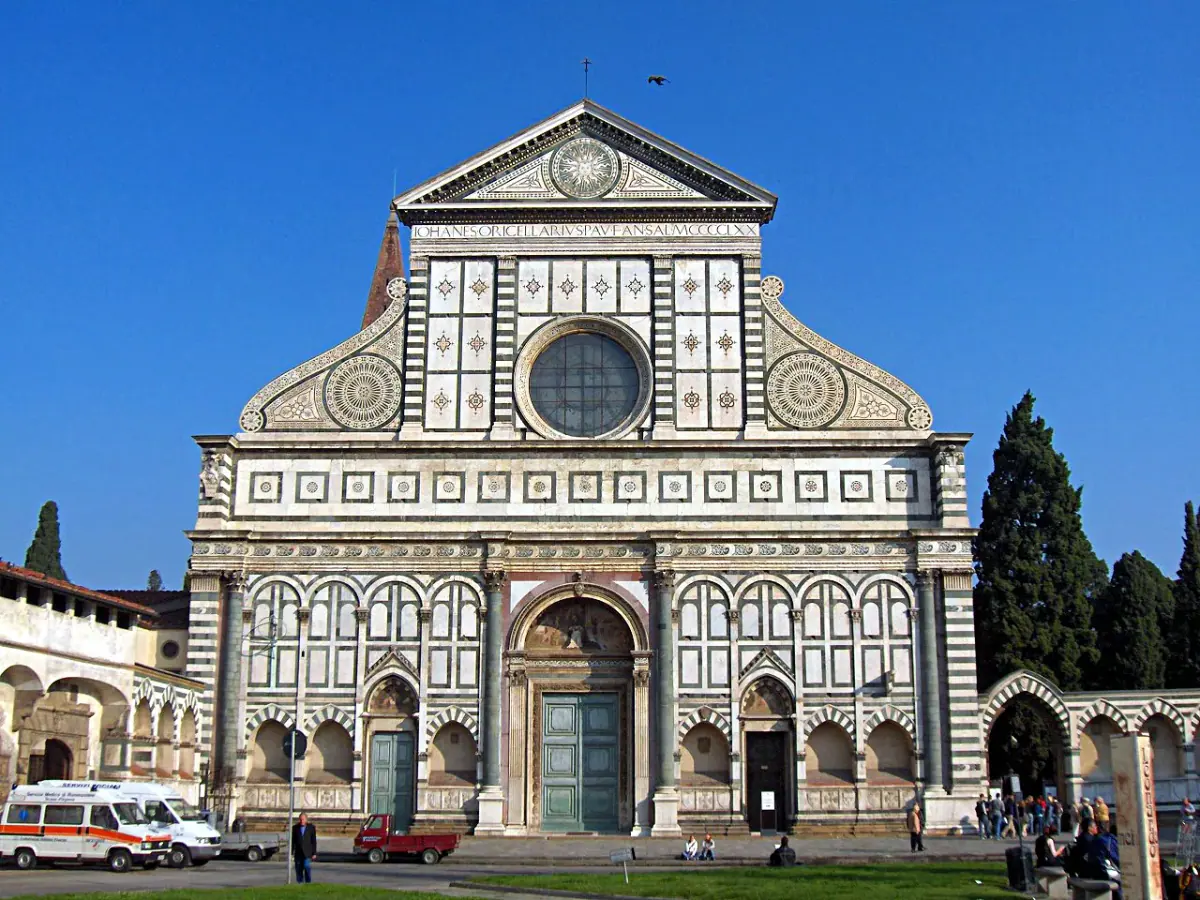

Santa Maria Novella’s façade shows how geometric order can unify a large building. Inside, chapels and paintings add another historical layer to the architecture seen outside. Choosing a few works or chapels and looking slowly may be more rewarding than rushing through everything.
Plan it on the broader western-central branch with San Lorenzo and Ognissanti. Do not confuse the station’s name with the church complex; entrances and accessible sections depend on current museum arrangements. Information source.
Why go? The green-and-white marble façade is one of Florence’s most elegant, while inside is Masaccio’s Holy Trinity fresco, an early masterful use of perspective. Opposite the railway station, it is a masterpiece you can see as soon as you arrive.
Visit summary
- Area: San Lorenzo and the northwestern centre
- Highlight: Façade composition and frescoes
- Suggested visit length: About 60–90 minutes
- Type of visit: Indoors / exterior view
- Admission: Paid admission · about €7.50 per adult (basilica); more including the cloisters.
- Nearby map stops: Medici Chapels, Mercato Centrale
- Open map: Search for this place on Google Maps
Medici Chapels
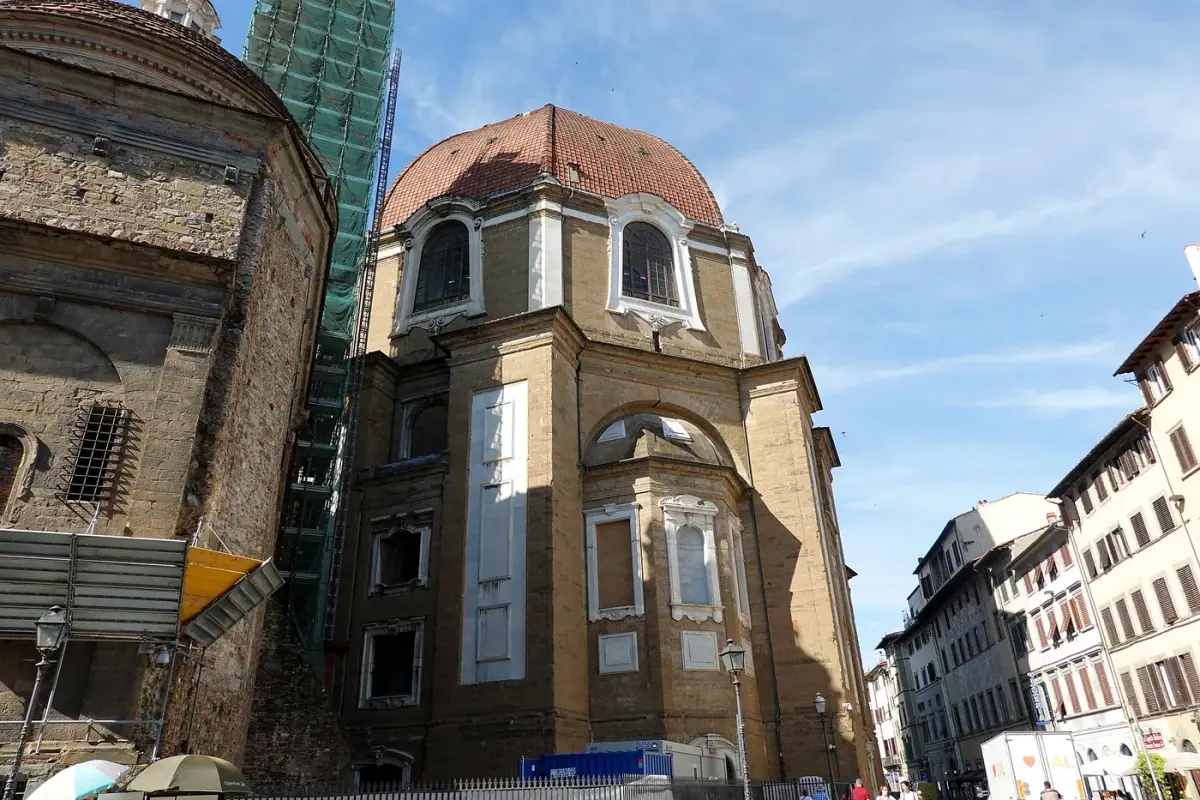

The Medici Chapels explore family power in Florence through monumental tombs and interior art. Do not assume every door in the San Lorenzo complex opens with the same ticket; check the basilica and chapels’ visiting arrangements separately.
If Michelangelo’s tomb sculptures interest you, set aside time here. With children, focus on figures, materials and the room’s scale instead of explaining the dynasty’s whole family tree. The nearby market breaks up the programme with an outdoor or food pause. Information source.
Why go? The Medici family’s tombs express dynastic power through the magnificent, coloured-stone Chapel of the Princes and Michelangelo’s Night and Day sculptures. One of the rare places where Michelangelo designed sculpture and architecture together.
Visit summary
- Area: San Lorenzo and the northwestern centre
- Highlight: Dynastic history and funerary art
- Suggested visit length: About 60–90 minutes
- Type of visit: Indoors
- Admission: Paid admission · about €12 per adult.
- Nearby map stops: San Lorenzo Basilica, Mercato Centrale
- Open map: Search for this place on Google Maps
San Lorenzo Basilica
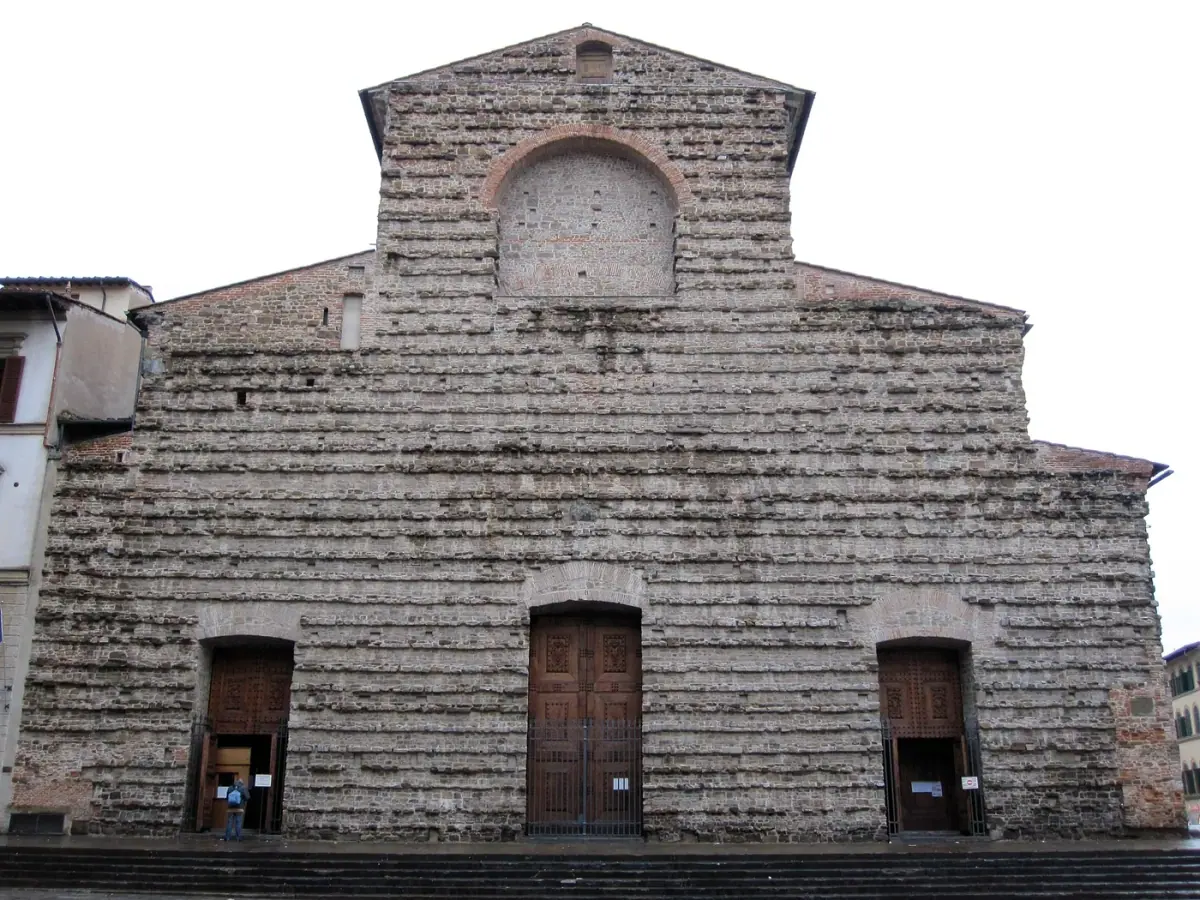

At San Lorenzo, the exterior and the orderly supports and proportions inside create different impressions. Consider the building’s own architectural integrity rather than treating it merely as a passage to the Medici Chapels. Open sections and ticket coverage need separate checking.
When choosing several religious buildings for a family trip, reduce repeated experiences. Nearby market and chapel markers allow a short area tour; completing every interior is not compulsory. Information source.
Why go? The Medici family church displays the pure geometry of Brunelleschi’s Renaissance architecture. Even its unfinished rough stone façade tells a story: Michelangelo’s designed façade was never built.
Visit summary
- Area: San Lorenzo and the northwestern centre
- Highlight: Renaissance spatial design
- Suggested visit length: About 45–60 minutes
- Type of visit: Indoors / exterior view
- Admission: Paid admission · about €9 per adult.
- Nearby map stops: Medici Chapels, Mercato Centrale
- Open map: Search for this place on Google Maps
Signoria, Uffizi and the Arno riverbank
Piazza della Signoria
Signoria is a square where Florence’s political history can be read outdoors. Palazzo Vecchio’s façade and tower, the sculptures and Loggia dei Lanzi form a powerful public stage. Taking in the whole square before approaching individual sculptures helps explain why these works were placed here.
A stop for talking about art with children without entering a museum. We describe the Neptune Fountain and Perseus in the same square as separate markers; you do not need another journey to see them. Information source.
Why go? Palazzo Vecchio’s tower and outdoor sculptures stand together at Florence’s political heart. With a replica of David and the site where Savonarola was burned, the square holds the city’s history in its stones.
Visit summary
- Area: Signoria, Uffizi and the Arno riverbank
- Highlight: Florence’s political centre
- Suggested visit length: About 30–45 minutes
- Type of visit: Outdoor walk
- Admission: Free (outdoors)
- Nearby map stops: Neptune Fountain, Perseus and Medusa Sculpture
- Open map: Search for this place on Google Maps
Neptune Fountain
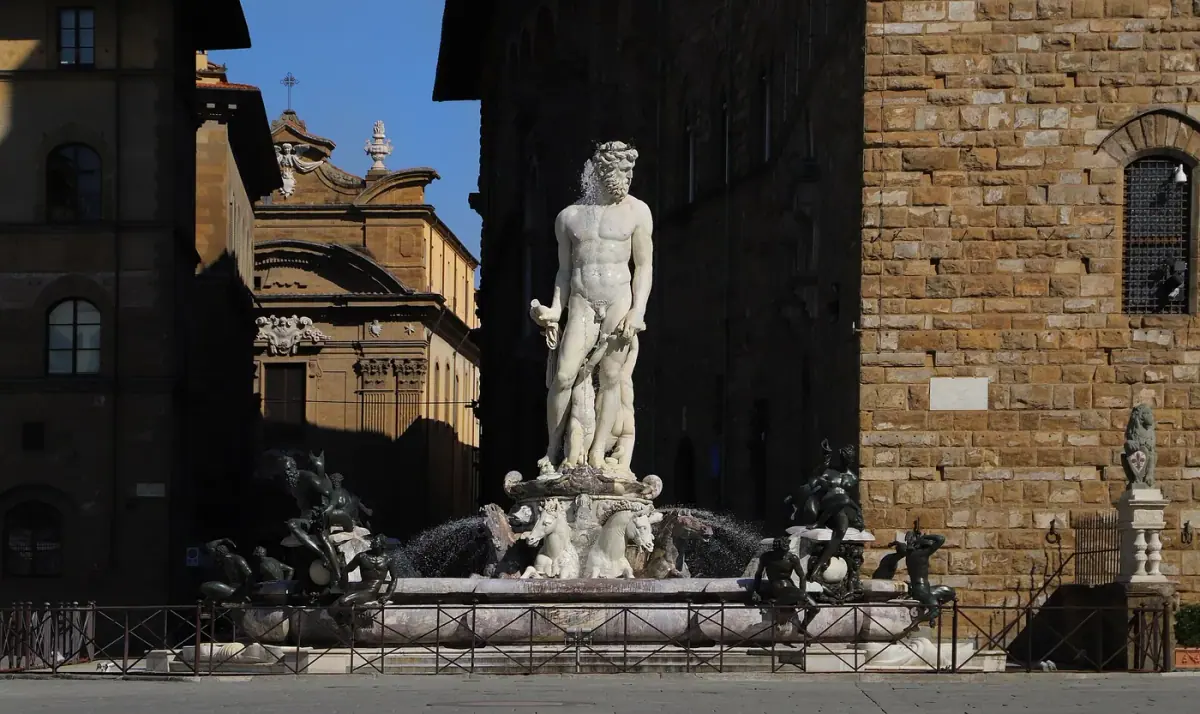

The Neptune Fountain belongs to Signoria’s outdoor sculpture ensemble. Studying the main figure together with the smaller figures and pool is more revealing than photographing it from afar. Its position in the square also suggests how a water feature can serve public representation.
With children, briefly identify the mythological figures. Palazzo Vecchio and the Loggia share the square; treat these three markers as pauses within one space rather than separate transport routes. Information source.
Why go? Once mocked by Florentines as the “white giant”, marble Neptune and the surrounding bronze figures form the square’s most showy corner. A good starting point for telling children mythological stories.
Visit summary
- Area: Signoria, Uffizi and the Arno riverbank
- Highlight: Mythology and sculpture in the square
- Suggested visit length: About 10–15 minutes
- Type of visit: Exterior view
- Admission: Free (outdoors)
- Nearby map stops: Piazza della Signoria, Palazzo Vecchio (Vecchio Palace)
- Open map: Search for this place on Google Maps
Porcellino Fountain
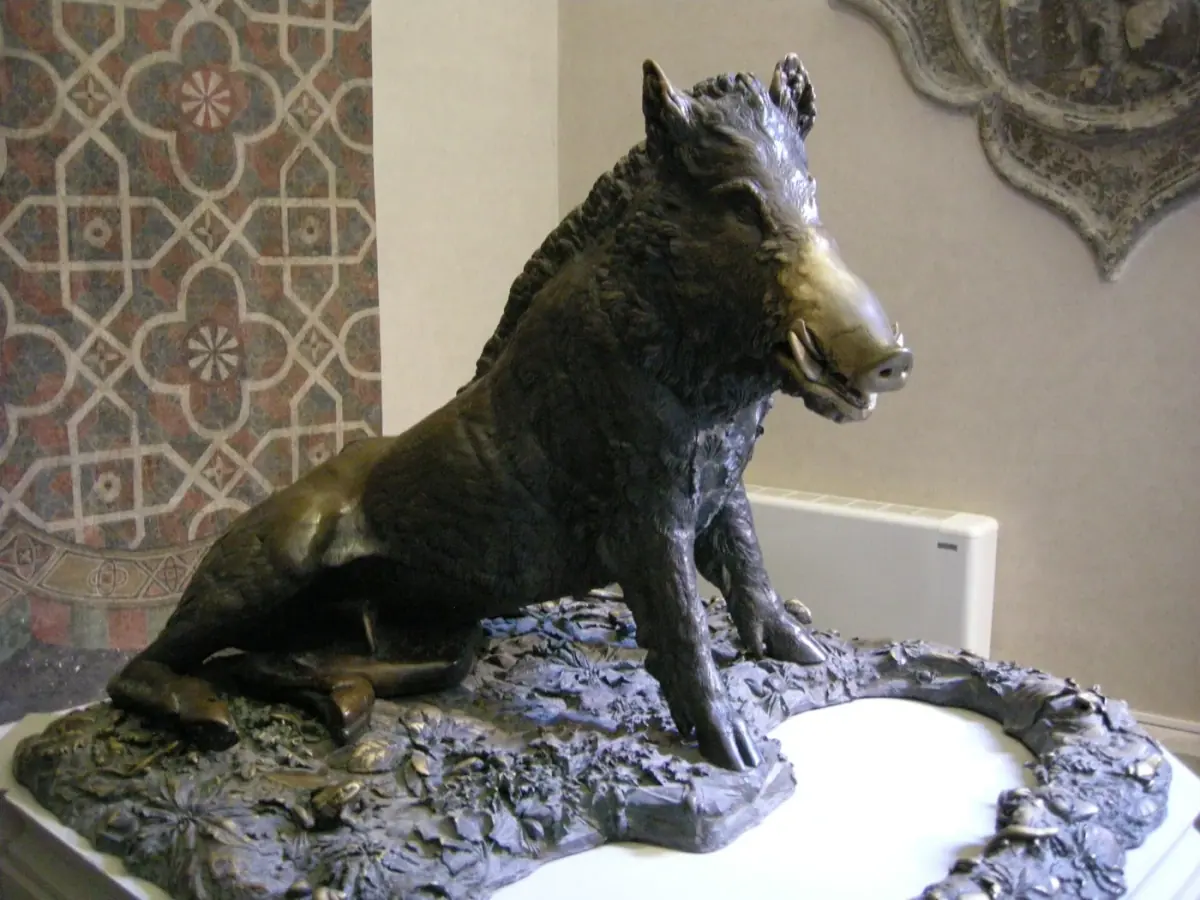

The Little Pig Fountain marked on the map is the street stop with the bronze animal known as Porcellino. Its small scale between major art buildings allows a brief, focused look with children. The visit is about the sculpture and its place in the city; we do not present the wishing tradition as historical fact or a promise of results.
Add it to the Orsanmichele and Signoria branch. If crowded, keep the stop short and look from a distance where your child can see comfortably. Information source.
Why go? Rubbing the bronze wild boar’s shiny nose and leaving a coin in its mouth is considered lucky for returning to Florence. One of the small rituals children enjoy most.
Visit summary
- Area: Signoria, Uffizi and the Arno riverbank
- Highlight: Small bronze animal figure
- Suggested visit length: About 10–15 minutes
- Type of visit: Exterior view
- Admission: Free (outdoors)
- Nearby map stops: Piazza della Signoria, Loggia dei Lanzi
- Open map: Search for this place on Google Maps
Loggia dei Lanzi
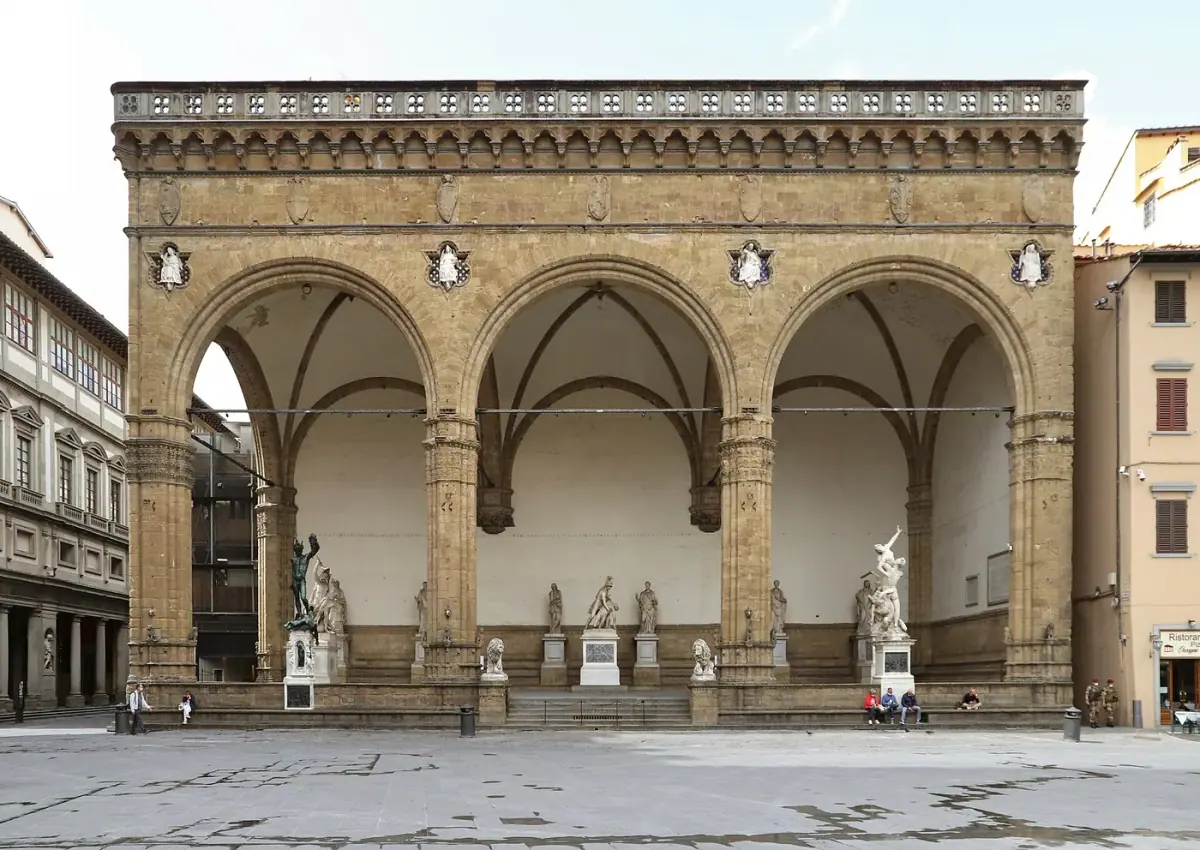

Loggia dei Lanzi lets you see sculptures in relation to the square rather than in an enclosed gallery. Viewing figures beneath the arches from several angles reveals that a sculpture has more than a front. Focus on movement, balance and expression rather than memorising titles.
Suitable for a brief family encounter with art. Watch the steps and visiting rules; an open setting does not mean every surface can be climbed. Perseus is a separate map marker in the same space. Information source.
Why go? A free open-air museum: Cellini’s Perseus and Giambologna’s Rape of the Sabine Women stand beneath its arches. See powerful examples of Renaissance sculpture without entering a museum.
Visit summary
- Area: Signoria, Uffizi and the Arno riverbank
- Highlight: Sculpture space opening onto the square
- Suggested visit length: About 20–30 minutes
- Type of visit: Outdoor sculpture visit
- Admission: Free (outdoors)
- Nearby map stops: Perseus and Medusa Sculpture, Palazzo Vecchio (Vecchio Palace)
- Open map: Search for this place on Google Maps
Perseus and Medusa Sculpture
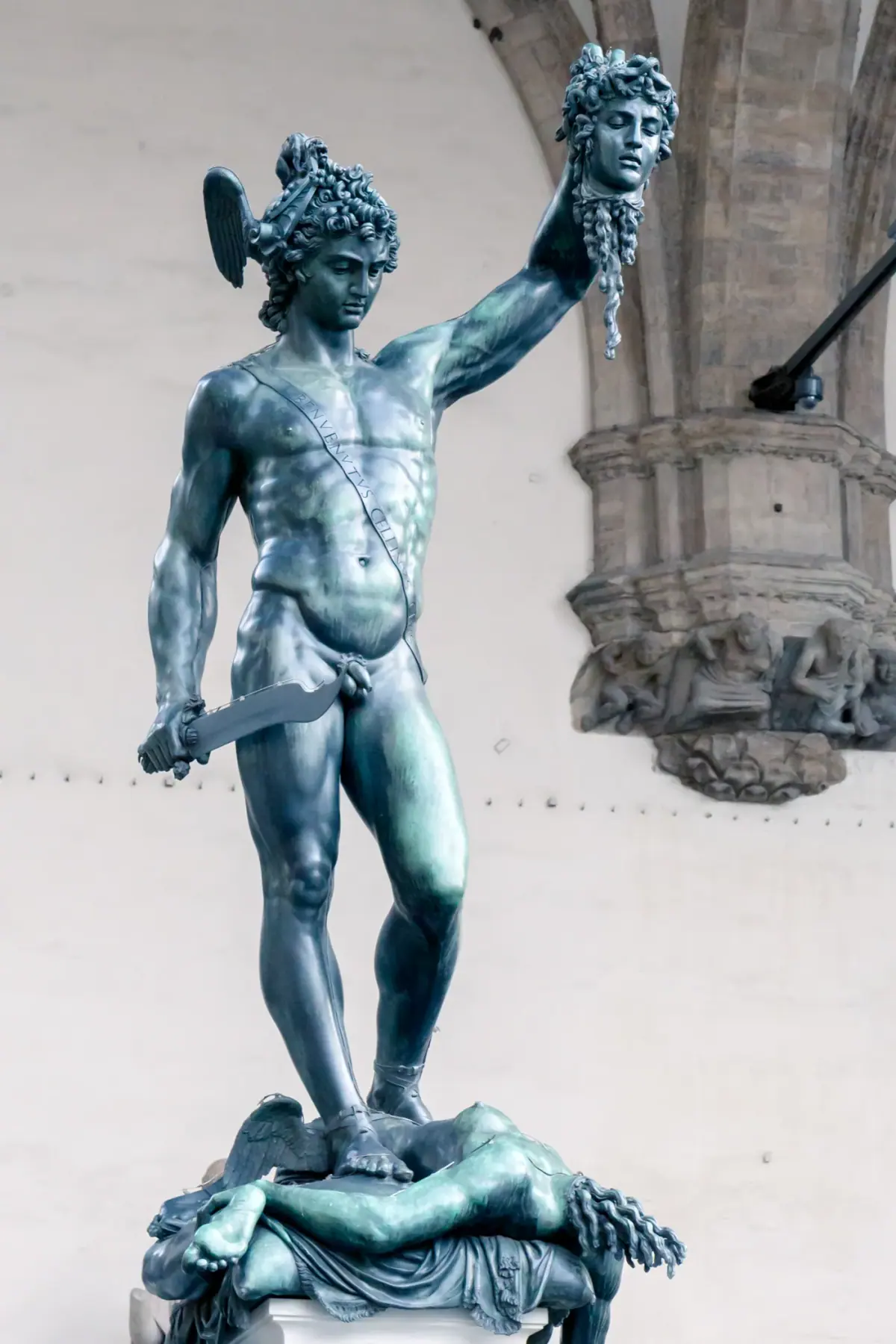

Perseus is one of the prominent mythological figures in Loggia dei Lanzi. Beyond identifying the head he holds, look at posture, weight distribution and the relationship with the base. The scene may frighten small children; simplify the story to suit their age or move on to another work.
This marker shares the Loggia’s visiting space. Its separate contents entry does not mean extra walking; after a brief look, continue to the square’s other stops. Information source.
Why go? Cellini’s Perseus holding Medusa’s severed head is a masterpiece of bronze casting. Details right down to the little figures on its base deserve a close look.
Visit summary
- Area: Signoria, Uffizi and the Arno riverbank
- Highlight: Mythological scene and bronze craftsmanship
- Suggested visit length: About 10–15 minutes
- Type of visit: Outdoor sculpture visit
- Admission: Free (outdoors)
- Nearby map stops: Loggia dei Lanzi, Palazzo Vecchio (Vecchio Palace)
- Open map: Search for this place on Google Maps
Palazzo Vecchio (Vecchio Palace)
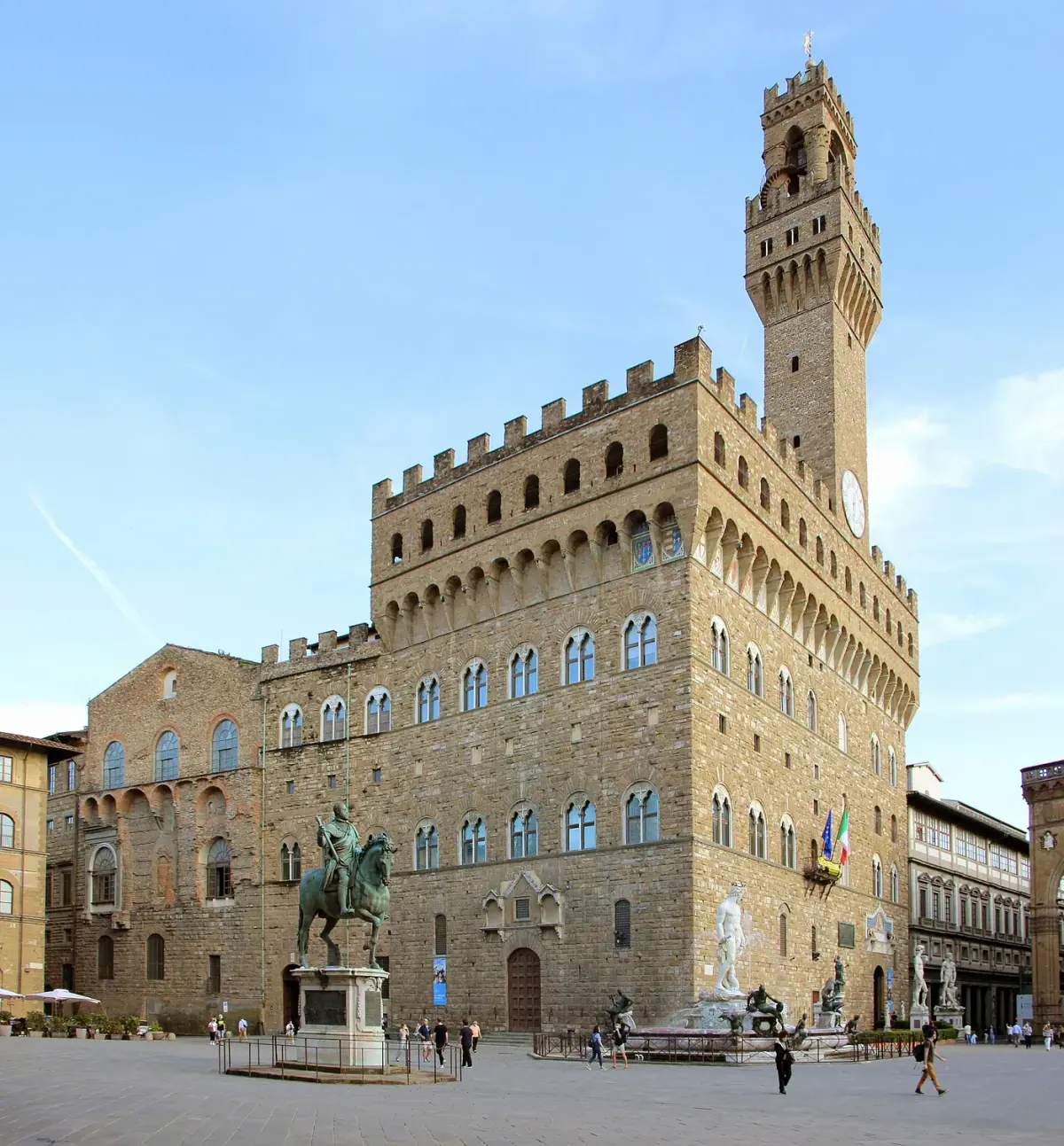

Palazzo Vecchio’s stern, towered exterior and its ceremonial interiors offer different experiences. Entering after exploring Signoria links the square’s political meaning with the rooms and decoration. Check the museum, tower and special visit options separately.
If you choose a long family visit inside, it may be more comfortable not to make the Uffizi a compulsory continuation that day. Keeping it to the façade and square is also a worthwhile alternative. Information source.
Why go? A palace used as the town hall for seven hundred years; the enormous ceiling of the Hall of the Five Hundred and secret passageways feel like a fairy tale. Climbing the tower to see the Duomo at eye level is another experience.
Visit summary
- Area: Signoria, Uffizi and the Arno riverbank
- Highlight: City government and palace halls
- Suggested visit length: About 90–120 minutes
- Type of visit: Indoors / exterior view
- Admission: Paid admission · museum about €12.50 per adult; tower costs extra.
- Nearby map stops: Neptune Fountain, Perseus and Medusa Sculpture
- Open map: Search for this place on Google Maps
Uffizi Gallery
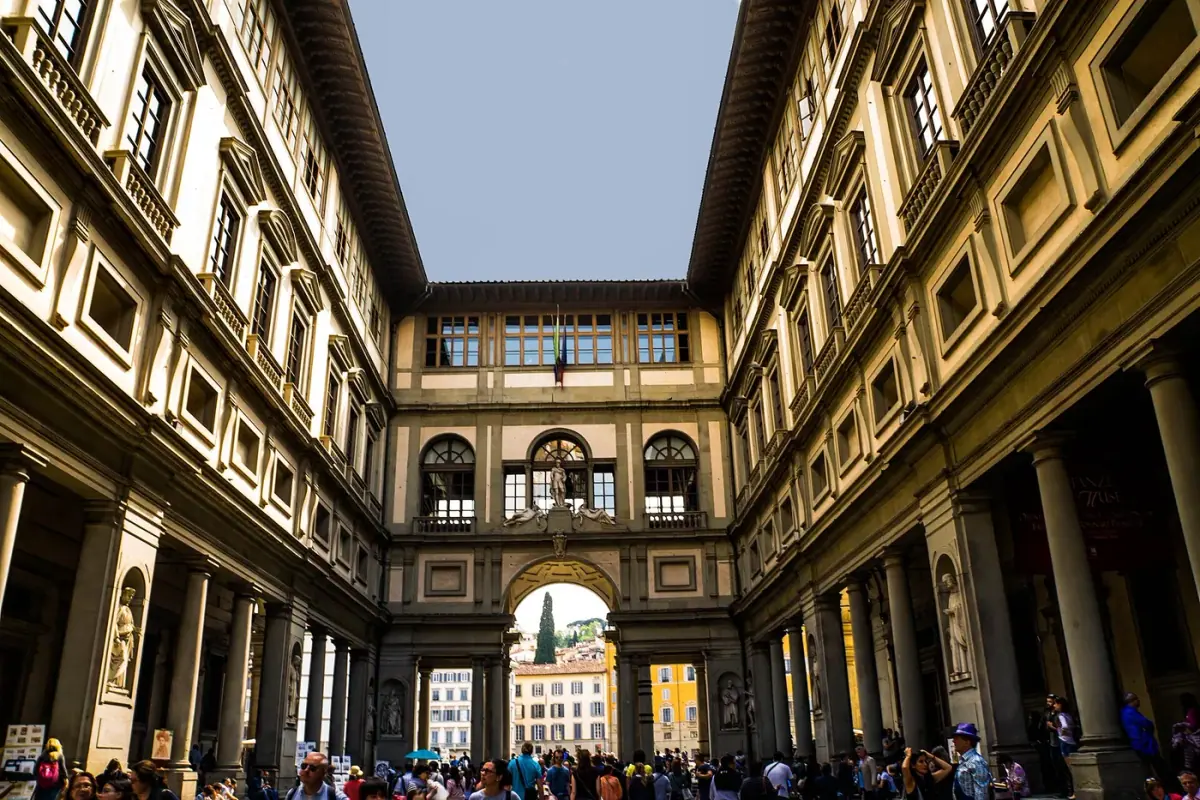

The Uffizi is not a passing stop in Florence but a main museum needing its own time. The collection is so extensive that making every room and work compulsory can be tiring. Choosing a period, artist or a few works is particularly worthwhile with family. Look at the arrangement of figures, colours and depicted scenes rather than just reading names.
Choose tickets and entry conditions through the museum’s official channel. If planning a long Uffizi visit, do not add the dome climb and Pitti to the same day. Afterwards, a freer walk beside the Arno balances a day spent indoors. Leaving before completing the collection when your child loses interest does not mean the plan failed. Information source.
Why go? Botticelli’s Birth of Venus and Primavera, alongside Leonardo and Raphael, form the world’s foremost Renaissance collection. Views of Ponte Vecchio through corridor windows are a small bonus.
Visit summary
- Area: Signoria, Uffizi and the Arno riverbank
- Highlight: Renaissance painting and a major collection
- Suggested visit length: About 2–3 hours
- Type of visit: Indoors
- Admission: Paid admission · about €25 per adult (high season; winter and afternoon entry are cheaper). Under-18s free; booking recommended.
- Nearby map stops: Galileo Museum, Loggia dei Lanzi
- Open map: Search for this place on Google Maps
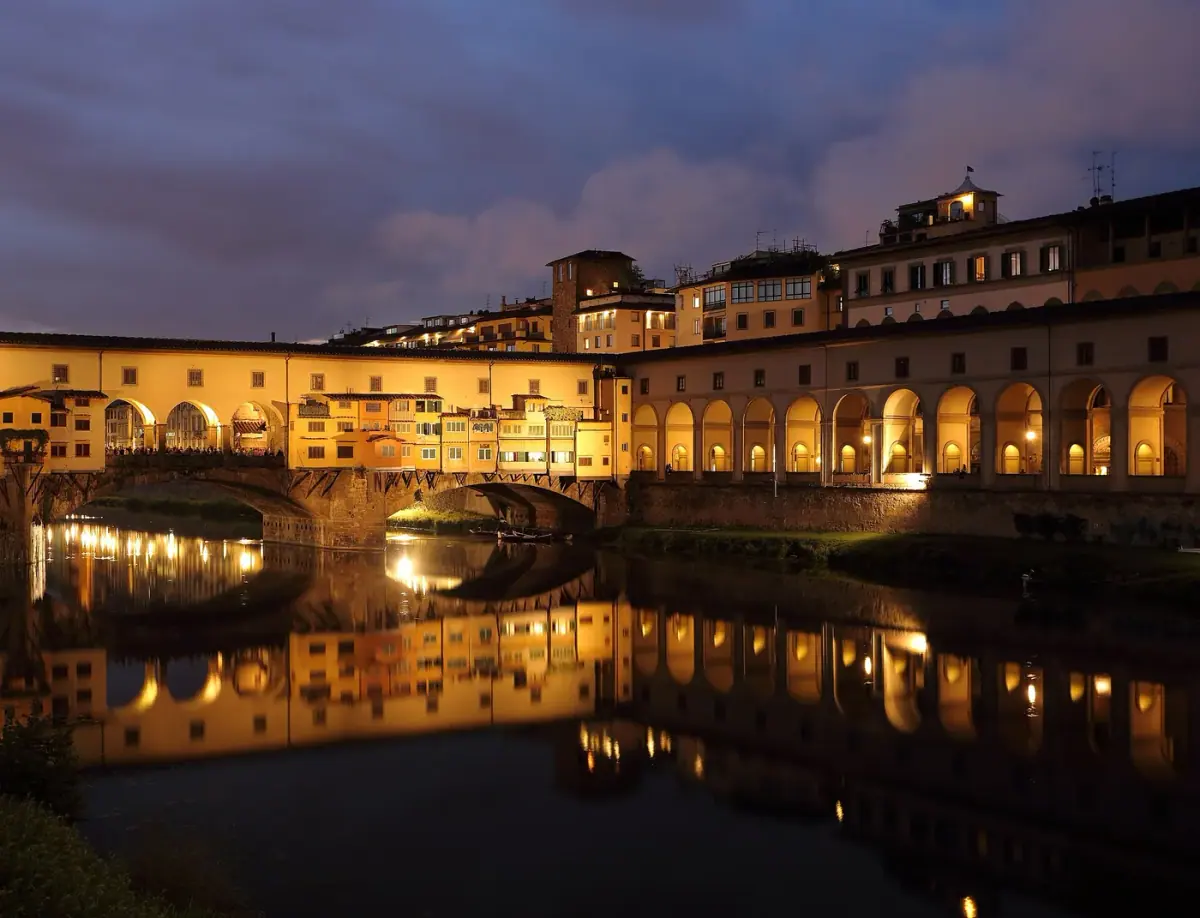
Ponte Vecchio
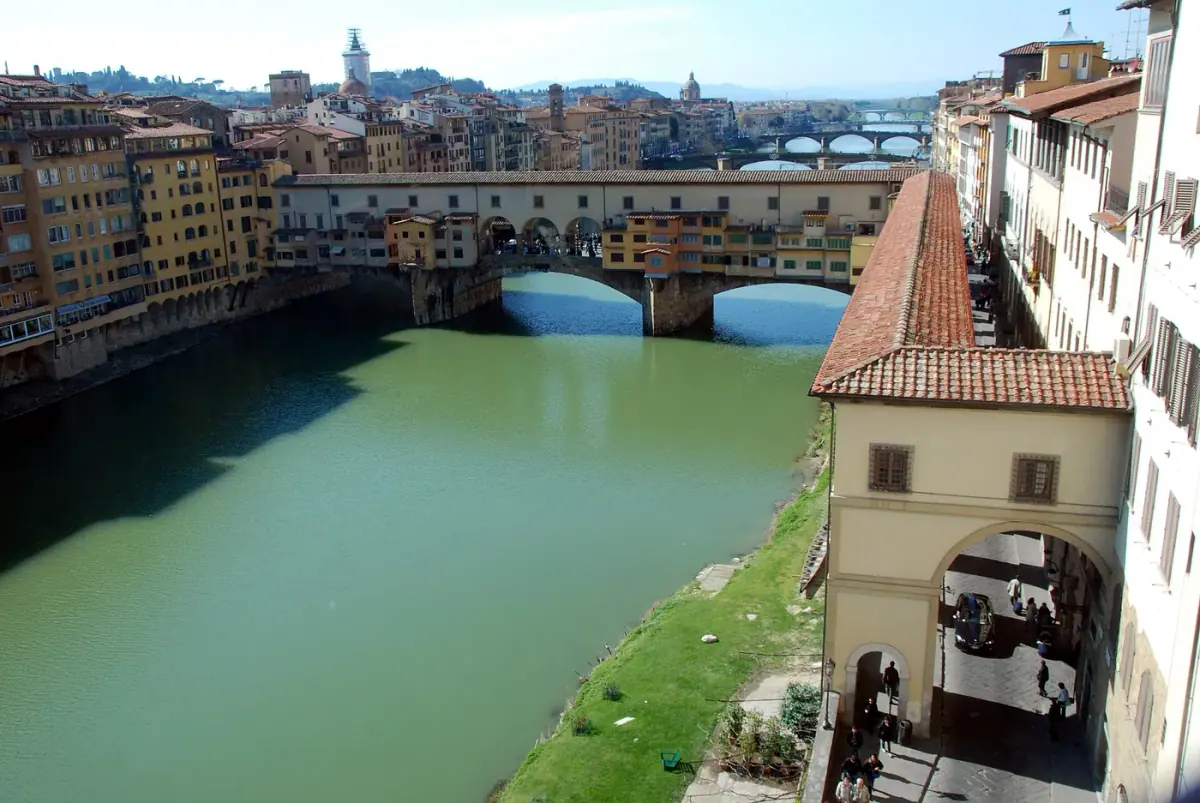

Consider Ponte Vecchio from the riverbank as a whole as well as crossing it. The density of buildings on the bridge and their relationship with the river create a scene unlike an ordinary transport bridge. Shopping is not a requirement for enjoying it.
If busy, look from suitable points beside the bridge rather than stopping for long on it with children. It naturally links the Uffizi area to Oltrarno; crossing once rather than repeatedly changing banks simplifies the route. Information source.
Why go? Florence’s only bridge not destroyed in the Second World War, it is a living medieval bridge lined with jewellers. Looking towards it from the Arno’s banks at sunset is the city’s most romantic view.
Visit summary
- Area: Signoria, Uffizi and the Arno riverbank
- Highlight: Historic bridge lined with buildings
- Suggested visit length: About 20–30 minutes
- Type of visit: Outdoor walk
- Admission: Free (outdoors)
- Nearby map stops: Uffizi Gallery, Galileo Museum
- Open map: Search for this place on Google Maps
Galileo Museum
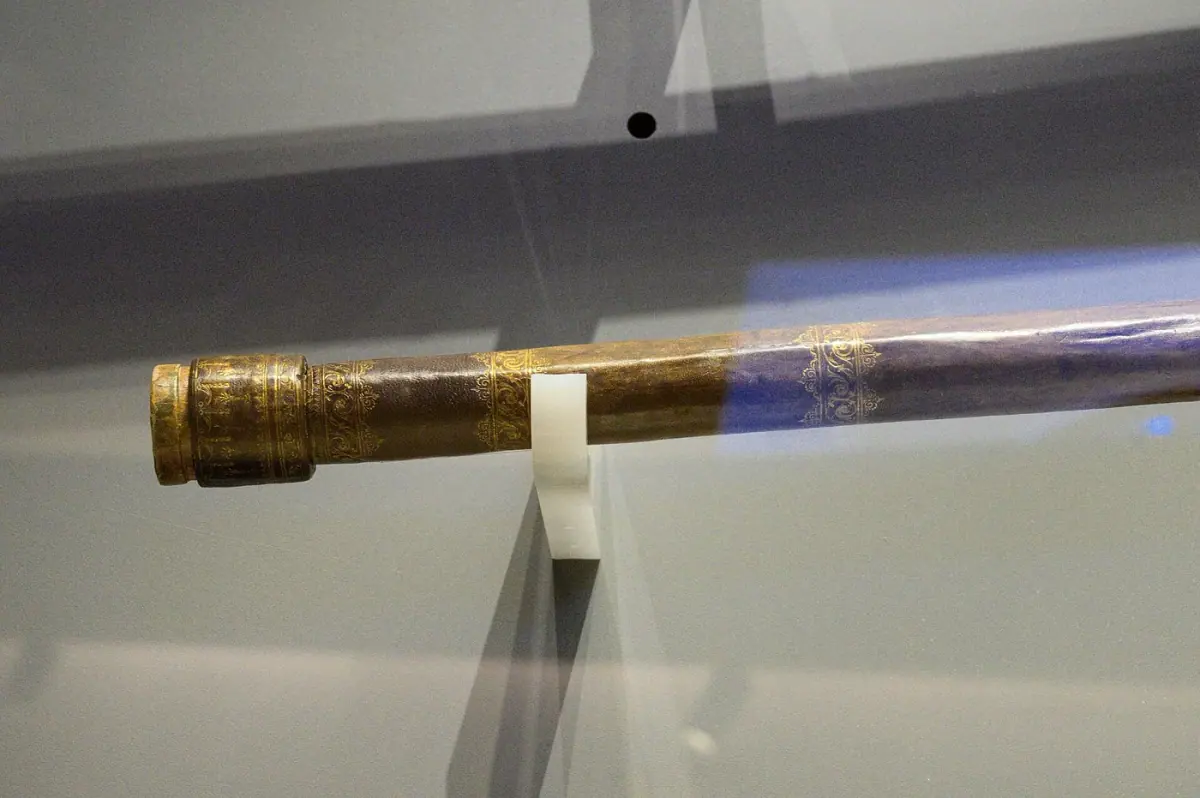

The Galileo Museum adds a history-of-science perspective to an art-focused Florence trip. Looking at measuring and observing instruments makes past attempts to understand the sky and the world tangible. Do not assume every object is an interactive toy available to use.
With science-minded children, focus on one or two instrument types. It shares the Uffizi’s riverside area but has a separate collection; choosing by interest is more practical than touring both museums fully as a family. Information source.
Why go? Galileo’s telescopes and even his preserved finger are displayed here. Globes, clocks and scientific instruments spark children’s curiosity and provide a welcome change from art.
Visit summary
- Area: Signoria, Uffizi and the Arno riverbank
- Highlight: Scientific history and measuring instruments
- Suggested visit length: About 60–90 minutes
- Type of visit: Indoors
- Admission: Paid admission · about €10 per adult.
- Nearby map stops: Uffizi Gallery, Perseus and Medusa Sculpture
- Open map: Search for this place on Google Maps
Duomo and the Repubblica area
Piazza del Duomo
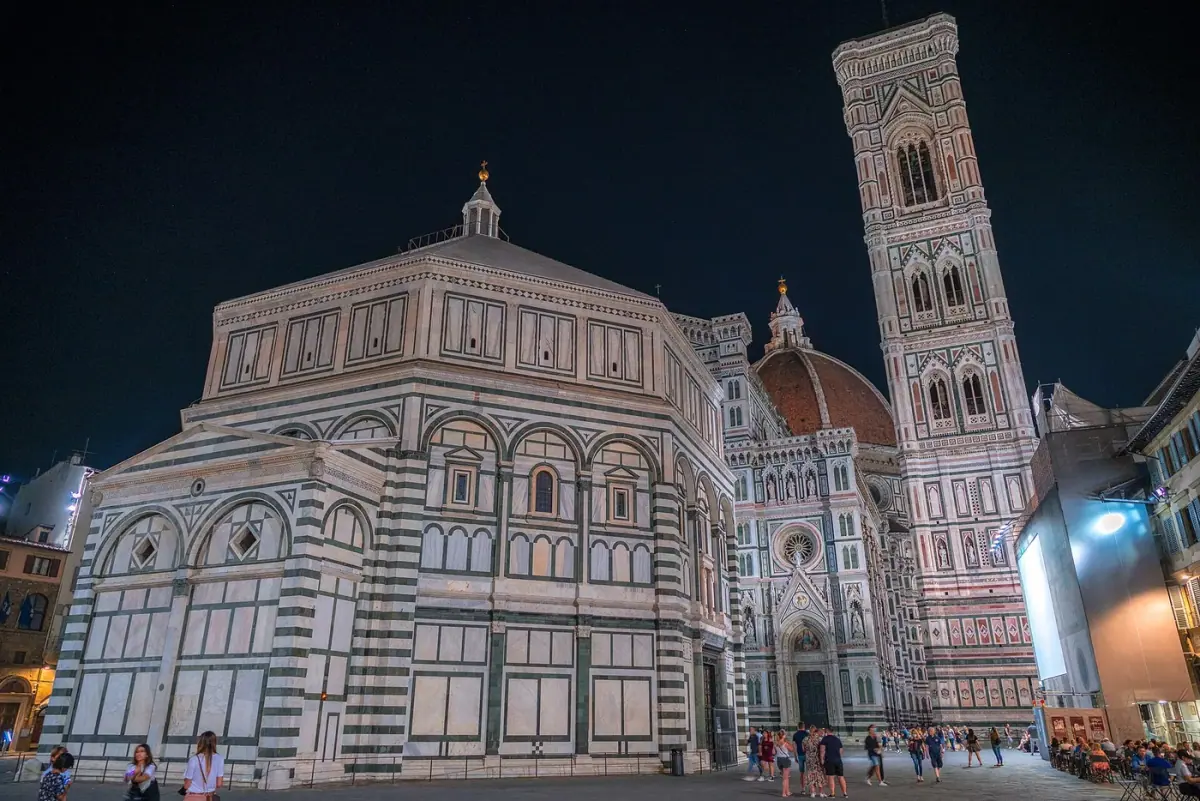

Piazza del Duomo is more than an empty space in front of one building: it shows the cathedral’s body, dome, Giotto’s tower and baptistery in relation to one another. Each has its own entrance and visiting arrangements. Getting your bearings in the square first reduces unnecessary trips between ticketed areas.
You do not have to climb every monument on the same family day. Combining an exterior architecture walk with either the dome or tower is more practical. Time spent inside is not included in this square walk. Information source.
Why go? Cathedral, bell tower and baptistery clad in pink, green and white marble make a breathtaking first impression together. Walking around the square to see them from different angles is free and unforgettable.
Visit summary
- Area: Duomo and the Repubblica area
- Highlight: Understanding the cathedral, tower and baptistery together
- Suggested visit length: About 30–45 minutes
- Type of visit: Outdoor walk
- Admission: Free (outdoors)
- Nearby map stops: San Giovanni Baptistery, Florence Cathedral (Santa Maria del Fiore)
- Open map: Search for this place on Google Maps
Piazza della Repubblica
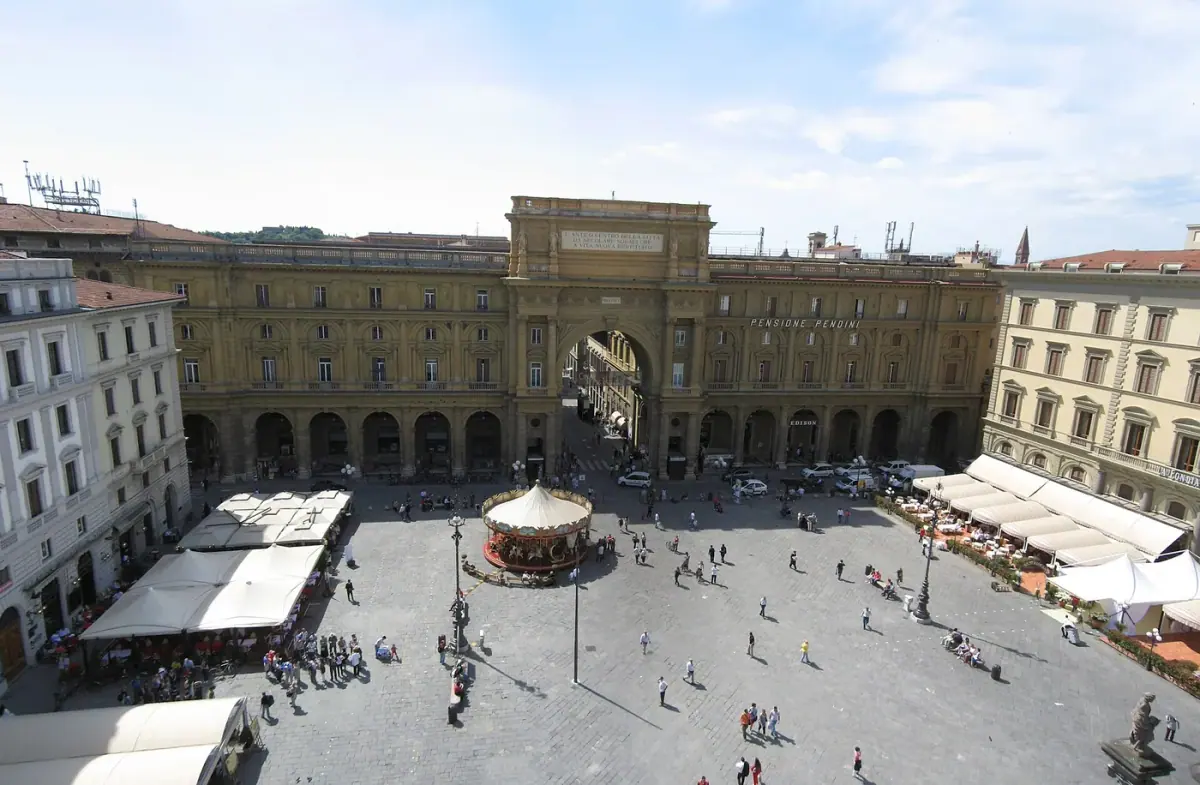

Repubblica offers a wider open space during the busy central walk between Duomo and Signoria. Its different scale from the surrounding streets shows that Florence is more than narrow medieval passages. The focus here is urban fabric rather than a particular exhibition or interior.
Plan a short outdoor break. It helps ensure a family programme is not just museum and church doors; do not assume temporary events or arrangements are permanent. Information source.
Why go? Built on the site of the ancient Roman forum, the square’s carousel is one of children’s favourite Florence stops. Historic cafés and a large arch show the city’s more modern face.
Visit summary
- Area: Duomo and the Repubblica area
- Highlight: Broad urban square in the centre
- Suggested visit length: About 15–25 minutes
- Type of visit: Outdoor walk
- Admission: Free (outdoors)
- Nearby map stops: Orsanmichele, Palazzo Strozzi
- Open map: Search for this place on Google Maps
Florence Cathedral (Santa Maria del Fiore)
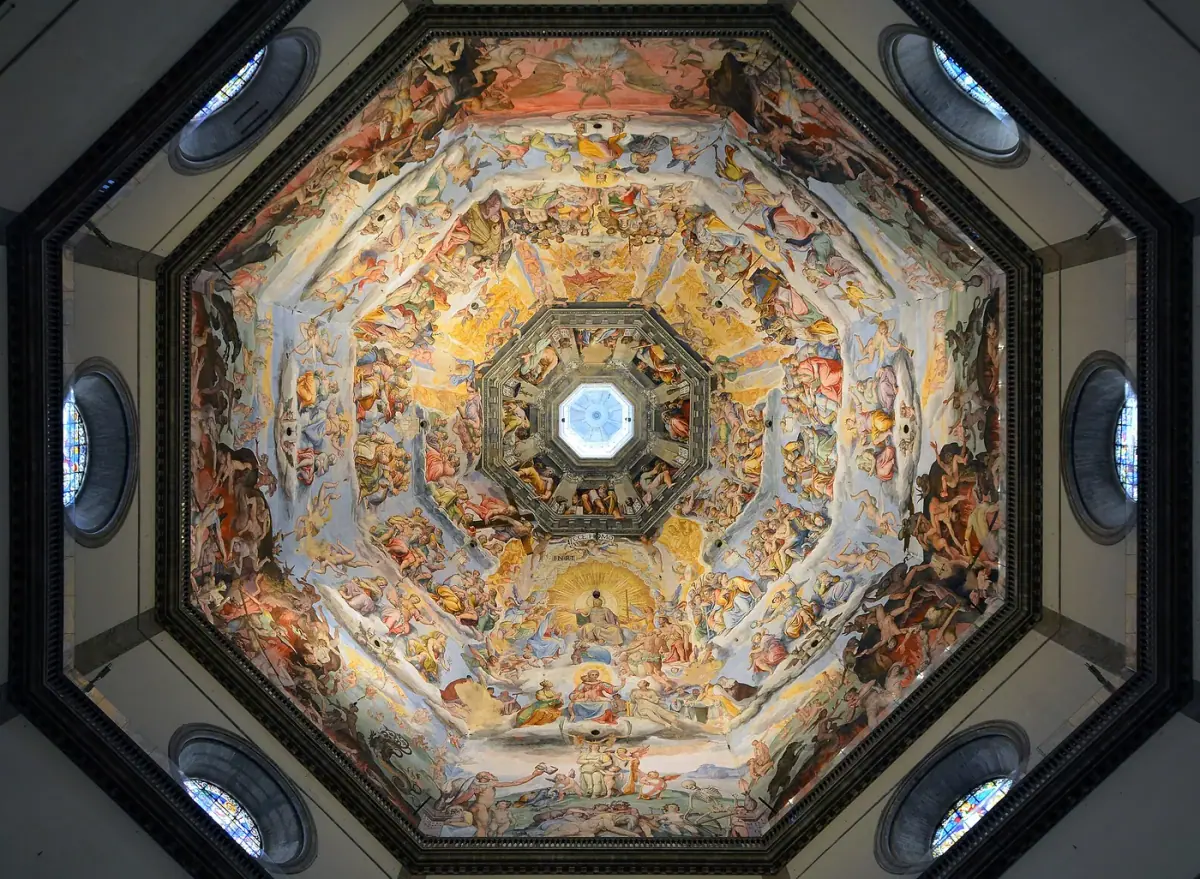

Santa Maria del Fiore can be explored by comparing the colourful marble exterior with the expansive interior. Seeing the building is not the same visit as climbing the dome; the main church, tower and dome have different rules. Make this distinction clear when choosing tickets.
Looking at the marble patterns and the length of the building outside is a good start before entering with children. A few focal points inside may suffice. Do not automatically add the dome’s stair climb to this visit. Information source.
Why go? Behind its lavish exterior, the simpler interior holds the huge Last Judgment fresco covering the inside of Brunelleschi’s dome. Free admission opens Florence’s landmark to everyone.
Visit summary
- Area: Duomo and the Repubblica area
- Highlight: The cathedral’s architectural scale
- Suggested visit length: About 45–60 minutes
- Type of visit: Indoors / exterior view
- Admission: The cathedral interior is free.
- Nearby map stops: Giotto’s Bell Tower, Piazza del Duomo
- Open map: Search for this place on Google Maps
Giotto’s Bell Tower
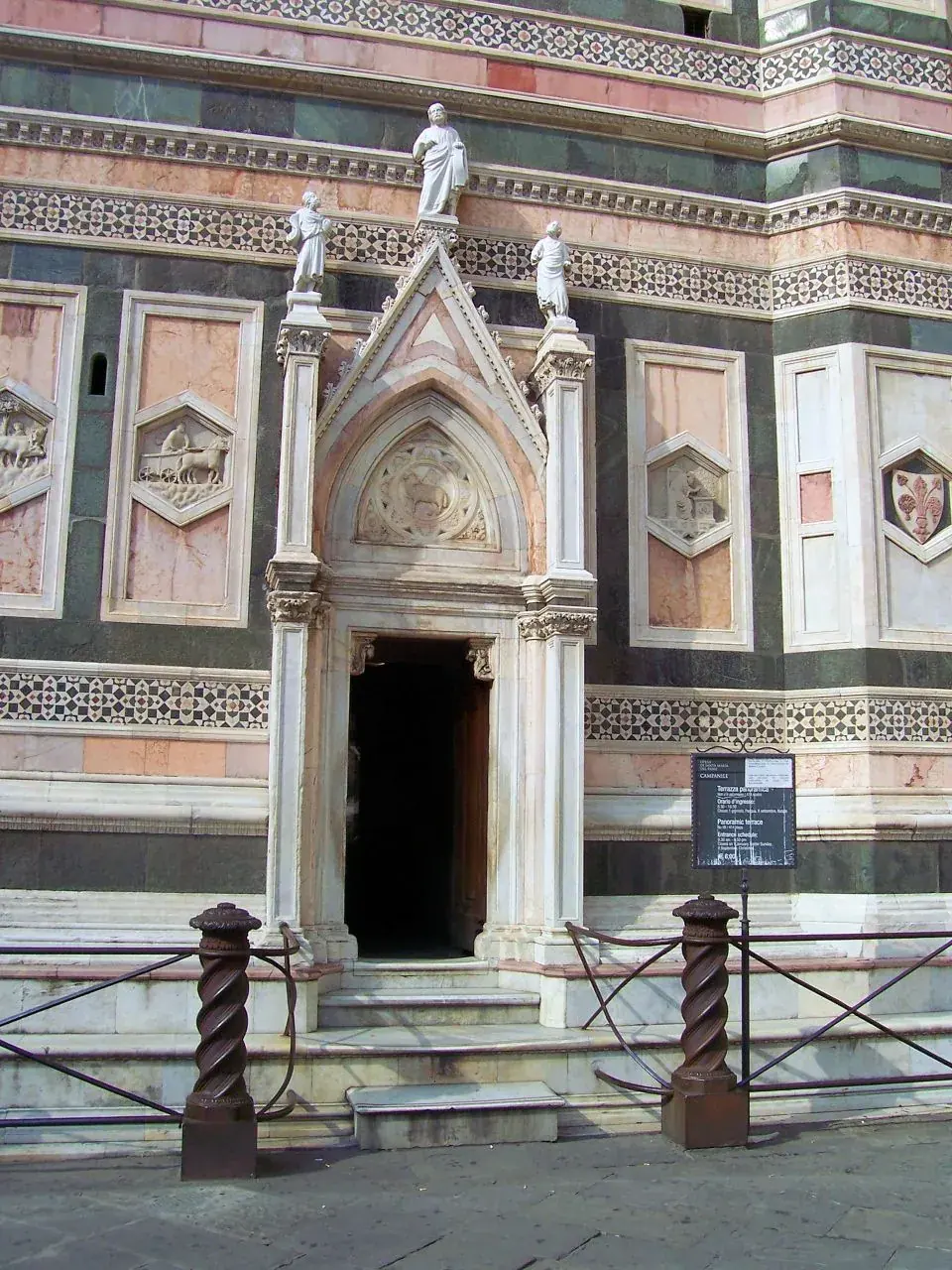

Giotto’s tower stands apart from the cathedral and strengthens the square’s vertical composition. Examining the exterior marble patterns from below and climbing up are two different choices. If planning the climb, check the stair requirements and ticket reservation rules through the official system.
You do not have to tackle the dome and tower consecutively with children. Choosing one viewpoint and spending the rest of the time in the square or a garden makes the trip more flexible. Information source.
Why go? The 414-step climb gives a direct view of the dome that can be even better than climbing the dome itself. Coloured marble cladding and reliefs make the tower an artwork in its own right.
Visit summary
- Area: Duomo and the Repubblica area
- Highlight: Views from above over the cathedral surroundings
- Suggested visit length: About 60–90 minutes
- Type of visit: Tower visit with stairs / exterior view
- Admission: Paid admission · included in Duomo combination tickets (Giotto Pass about €20).
- Nearby map stops: Florence Cathedral (Santa Maria del Fiore), Piazza del Duomo
- Open map: Search for this place on Google Maps
Brunelleschi’s Dome
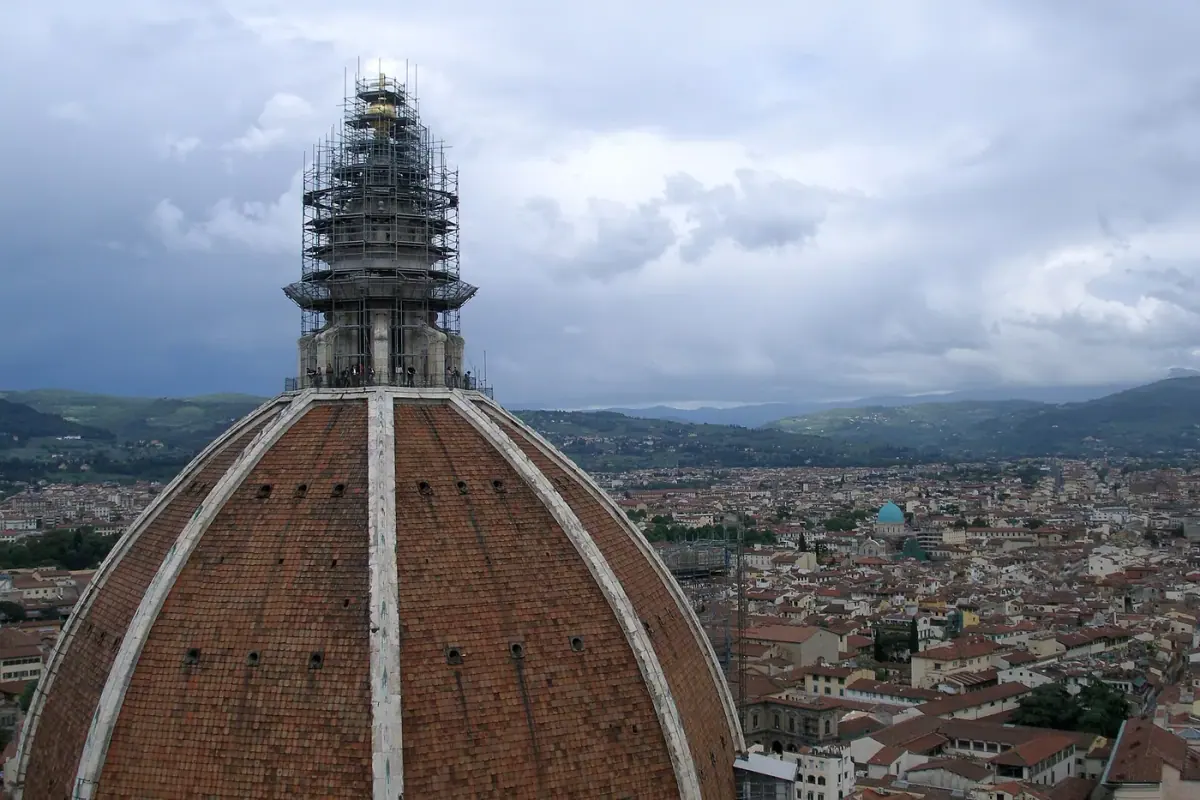

Brunelleschi’s Dome is an engineering visit beyond its role in Florence’s skyline. Climbing brings you close to the structure’s inner layers and upper sections; it differs from exploring the cathedral at ground level. Official information lists 463 steps, no lift and compulsory timed reservations.
When deciding with a small child, consider the physical climb rather than just photographs of the view. It may be the day’s main strenuous activity. If not climbing, seeing the dome from the square and later from Piazzale Michelangelo also offers worthwhile different angles. Information source.
Why go? Built without scaffolding, this huge dome is one of engineering history’s great achievements. Climbing narrow stairs between its two shells to see the city from above is both adventure and reward.
Visit summary
- Area: Duomo and the Repubblica area
- Highlight: Renaissance engineering
- Suggested visit length: About 60–90 minutes
- Type of visit: Indoor visit with stairs, booking required
- Admission: Paid admission · Brunelleschi Pass about €30 (includes dome, bell tower, baptistery and museum; a dome time slot must be selected).
- Nearby map stops: Florence Cathedral (Santa Maria del Fiore), Giotto’s Bell Tower
- Open map: Search for this place on Google Maps
San Giovanni Baptistery
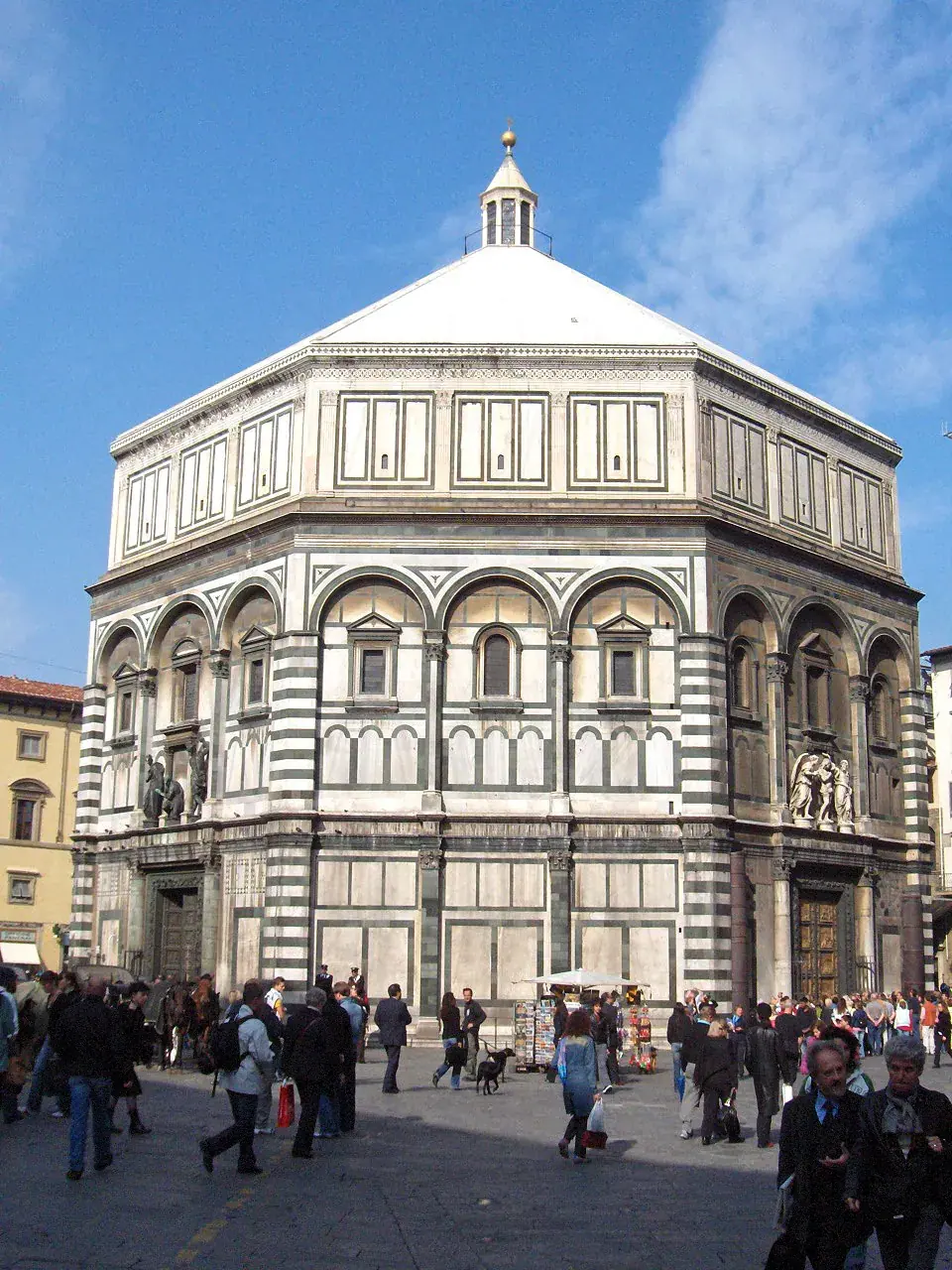

Consider the baptistery as a separate building in the cathedral square. Its exterior geometry, doors and relationship with the cathedral offer enough detail even for a short exterior visit. If entering, check current official notices on open areas and restoration effects.
A useful place to compare building shapes with children: the long cathedral, slender tower and polygonal baptistery share one square. Plan without counting all the components as one building. Information source.
Why go? One of Florence’s oldest buildings, with a dazzling gold mosaic ceiling inside. Ghiberti’s bronze doors, which Michelangelo called the Gates of Paradise, are here too.
Visit summary
- Area: Duomo and the Repubblica area
- Highlight: Separate octagonal monument beside the cathedral
- Suggested visit length: About 30–45 minutes
- Type of visit: Indoors / exterior view
- Admission: Paid admission · included in Duomo combination tickets (the cheapest is Ghiberti Pass, about €15).
- Nearby map stops: Piazza del Duomo, Giotto’s Bell Tower
- Open map: Search for this place on Google Maps
Orsanmichele
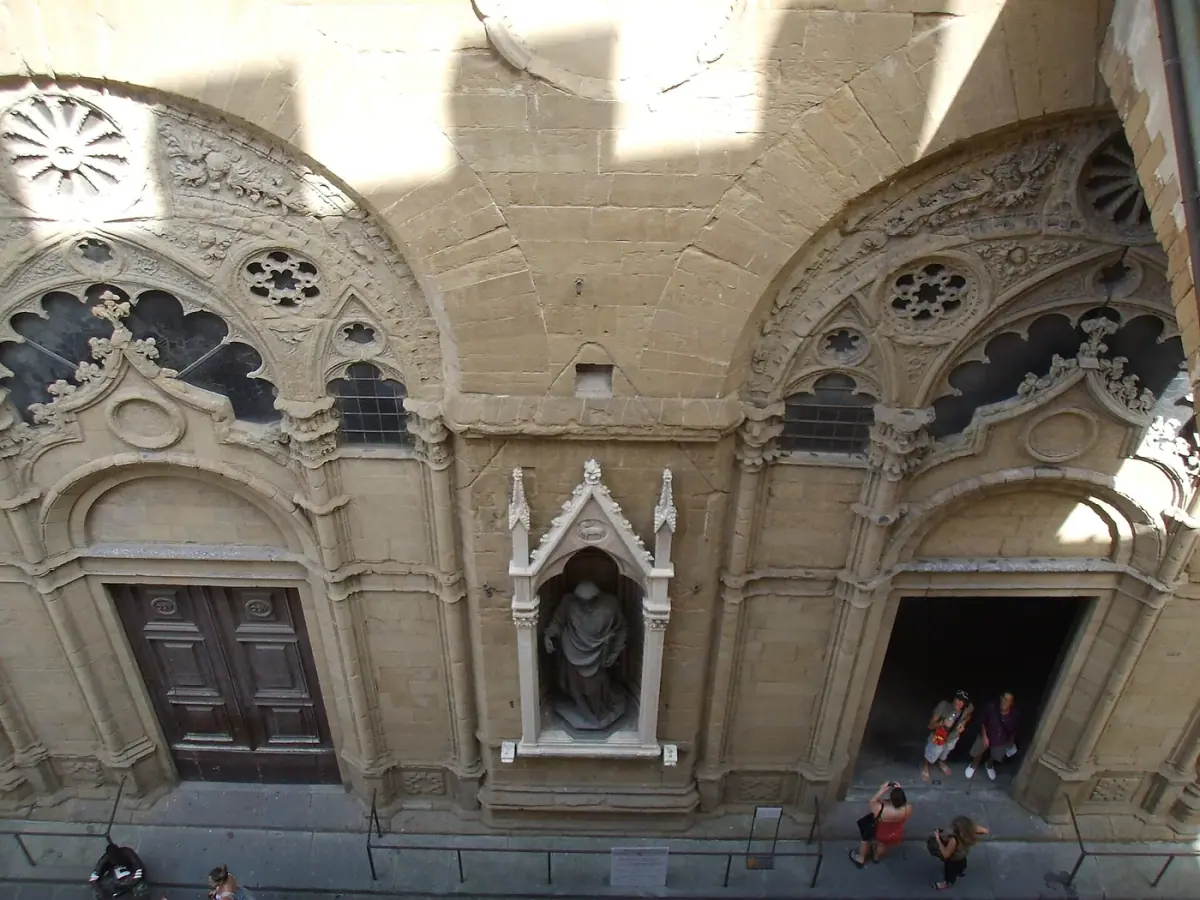

Orsanmichele’s unusual mass and exterior sculpture niches show the connection between trade guilds and art. The original exterior figures, replicas and works kept in the museum may not share the same location; the official account explains the distinction. Seeing all four sides before deciding on an interior visit is useful.
A worthwhile focus on the route from Duomo to Signoria. A short but concentrated visit for sculpture-minded families; comparing a few niches may be enough with children. Information source.
Why go? First a grain store and then a church, this unusual building has guild-commissioned sculptures in its exterior niches. See works by Donatello and Verrocchio while walking along the street.
Visit summary
- Area: Duomo and the Repubblica area
- Highlight: Guilds and sculpture niches
- Suggested visit length: About 30–60 minutes
- Type of visit: Indoors / exterior view
- Admission: Free
- Nearby map stops: Piazza della Repubblica, Giotto’s Bell Tower
- Open map: Search for this place on Google Maps
Palazzo Strozzi
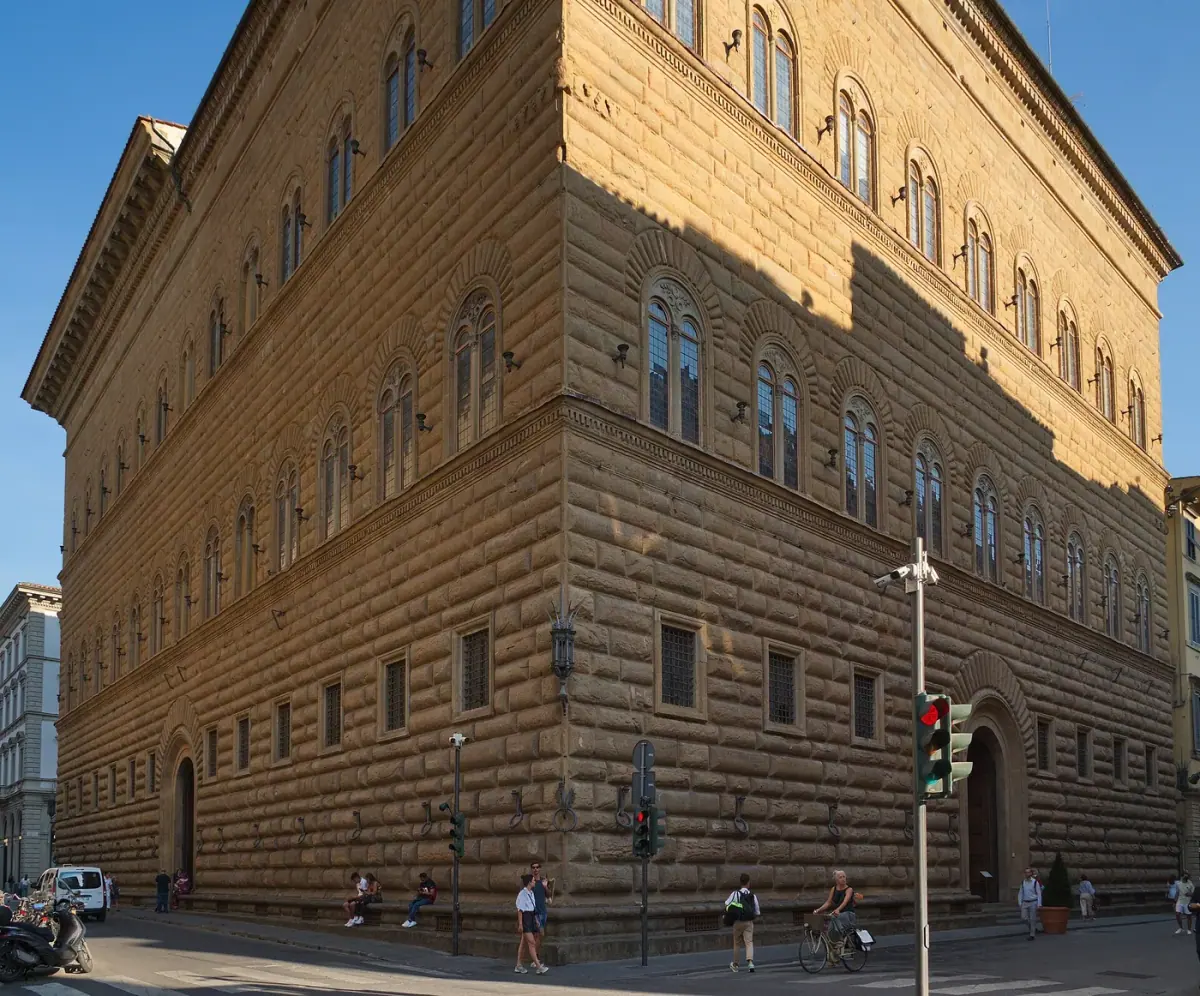

Palazzo Strozzi lets you consider a historic palace shell alongside a current exhibition programme. Seeing its façade and courtyard differs from entering an exhibition; what is inside depends on your visit date. Do not treat a photograph from an old show as a permanent collection.
Choose according to the current exhibition’s subject on a family visit. Selecting it as an alternative art focus may be more comfortable than adding another show to a long Uffizi day. Information source.
Why go? One of the finest Renaissance palace examples; its courtyard is free, and contemporary exhibitions make it one of the city’s liveliest cultural venues. Resting at the courtyard café is another pleasure.
Visit summary
- Area: Duomo and the Repubblica area
- Highlight: Current art in a Renaissance palace
- Suggested visit length: About 20 minutes for the courtyard; 60–120 minutes with an exhibition
- Type of visit: Exterior view / exhibition
- Admission: Courtyard free; exhibitions charge admission.
- Nearby map stops: Piazza della Repubblica, Orsanmichele
- Open map: Search for this place on Google Maps
Santa Croce and the eastern centre
Santa Croce Basilica
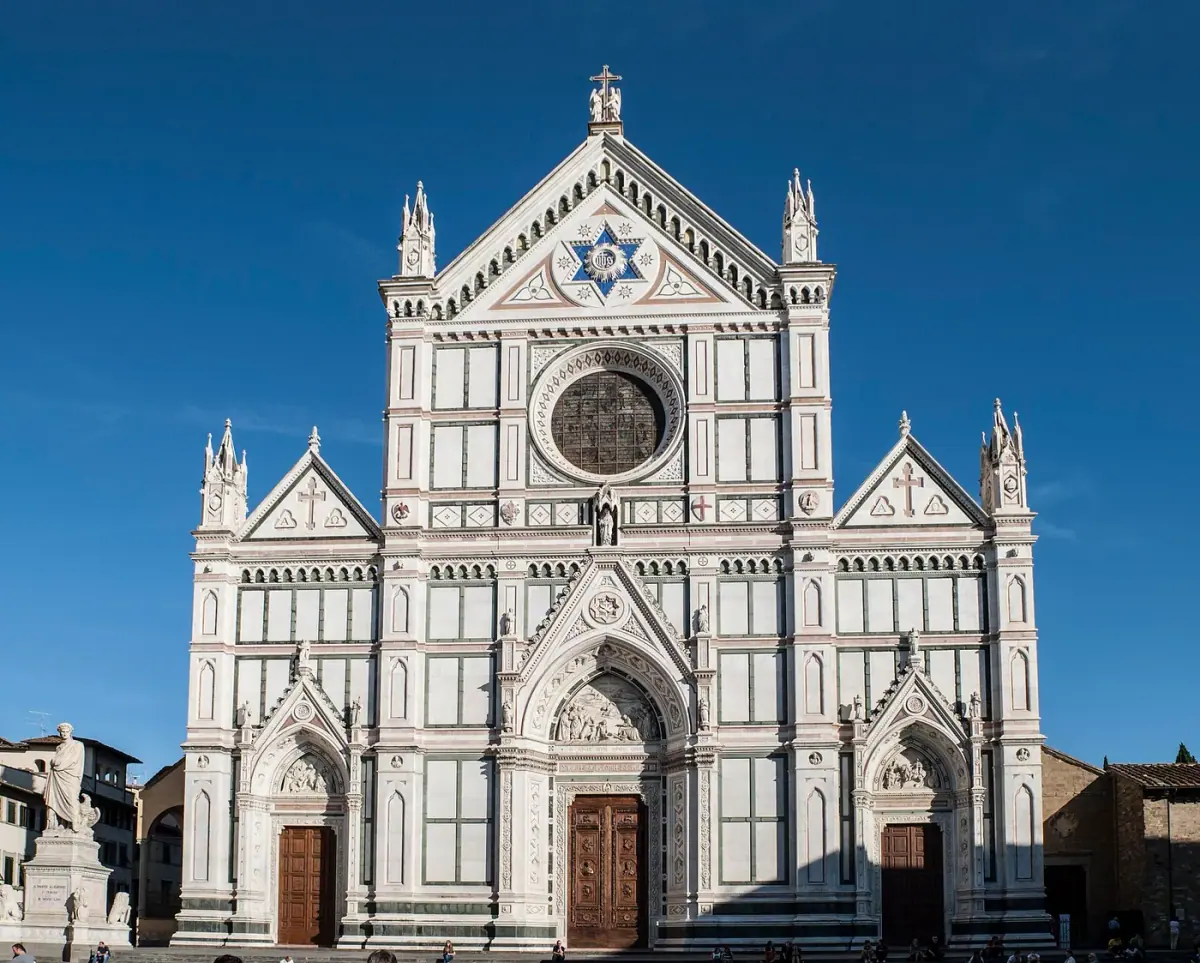

Santa Croce is an important meeting of church architecture and cultural history in Florence. Tombs of figures such as Michelangelo and Galileo show that the visit is more than a façade photograph. Looking at tombs, wall paintings and architecture together is more meaningful.
Choose one or two people and works instead of a long list of names with children. Add it to the eastern-central branch around the synagogue and Bargello; do not squeeze three long interior visits into one programme. Information source.
Why go? The “temple of Italian glories” holds the tombs of Michelangelo, Galileo and Machiavelli. Giotto’s frescoes and Brunelleschi’s Pazzi Chapel bring centuries of art history into one visit.
Visit summary
- Area: Santa Croce and the eastern centre
- Highlight: Monumental tombs and church art
- Suggested visit length: About 60–90 minutes
- Type of visit: Indoors
- Admission: Paid admission · about €10 per adult.
- Nearby map stops: Bargello National Museum, Dante’s House Museum
- Open map: Search for this place on Google Maps
Bargello National Museum
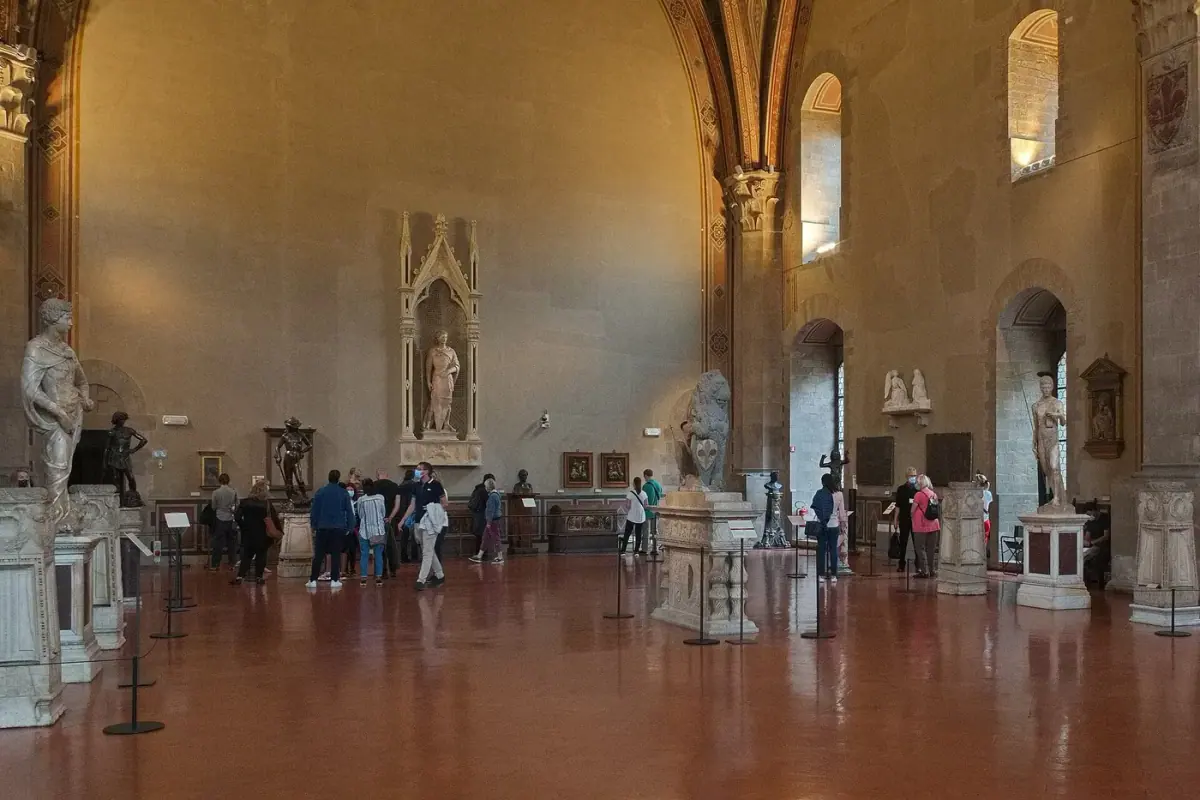

Among painting galleries, the Bargello offers a sculpture-focused alternative. The historic public building’s courtyard and rooms are part of the visit alongside the artworks. Watching figures change from different angles can make sculpture more tangible for children.
Do not expect a collection like the Uffizi’s; the choice depends on your artistic interests. If selecting one major art museum as a family, decide whether you want painting or sculpture. Add an outdoor walk around Santa Croce. Information source.
Why go? Converted from a former prison, the museum holds Donatello’s bronze David and Michelangelo’s early works. Less crowded than the Uffizi, it is Florence’s hidden treasure for sculpture lovers.
Visit summary
- Area: Santa Croce and the eastern centre
- Highlight: Renaissance sculpture
- Suggested visit length: About 90–120 minutes
- Type of visit: Indoors
- Admission: Paid admission · about €13 per adult.
- Nearby map stops: Dante’s House Museum, Santa Croce Basilica
- Open map: Search for this place on Google Maps
Great Synagogue of Florence and Jewish Museum
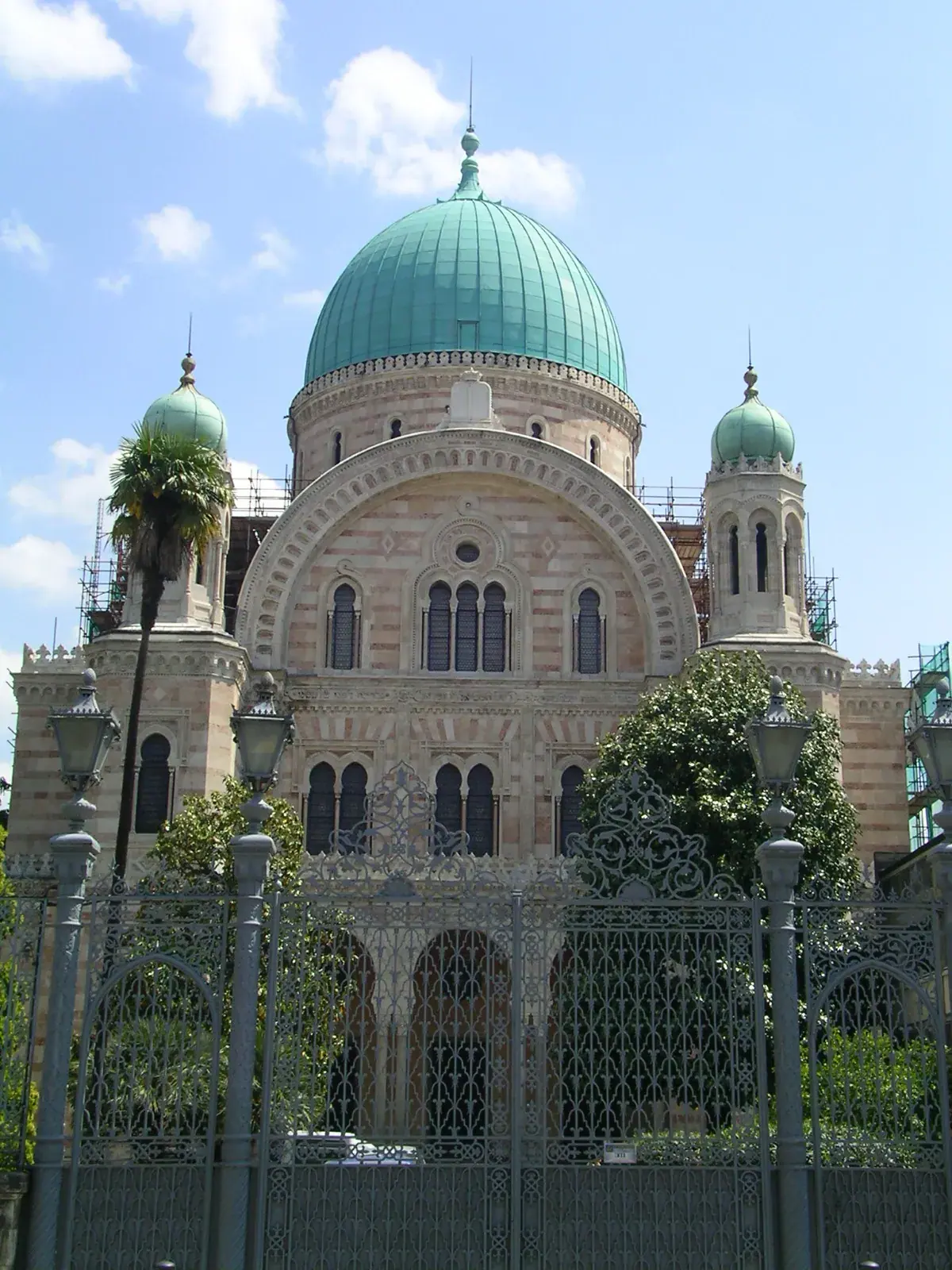

Opened in 1882, the synagogue’s large green dome gives it a distinctive place in Florence’s skyline. It adds another religious and social historical layer to a church-focused itinerary. Considering the interior and museum narrative together explains more than seeing the exterior dome alone.
Check security and the worship calendar when planning a family visit; do not assume church-style entry conditions. It can be a separate cultural focus on the eastern-central route around Santa Croce. Information source.
Why go? A synagogue with Moorish-style decoration and a green copper dome standing out in the skyline. It tells a less familiar chapter of Florence’s multicultural history.
Visit summary
- Area: Santa Croce and the eastern centre
- Highlight: Jewish heritage and copper dome
- Suggested visit length: About 60–90 minutes
- Type of visit: Indoors / exterior view
- Admission: Paid admission.
- Nearby map stops: Santa Croce Basilica, Bargello National Museum
- Open map: Search for this place on Google Maps
Dante’s House Museum
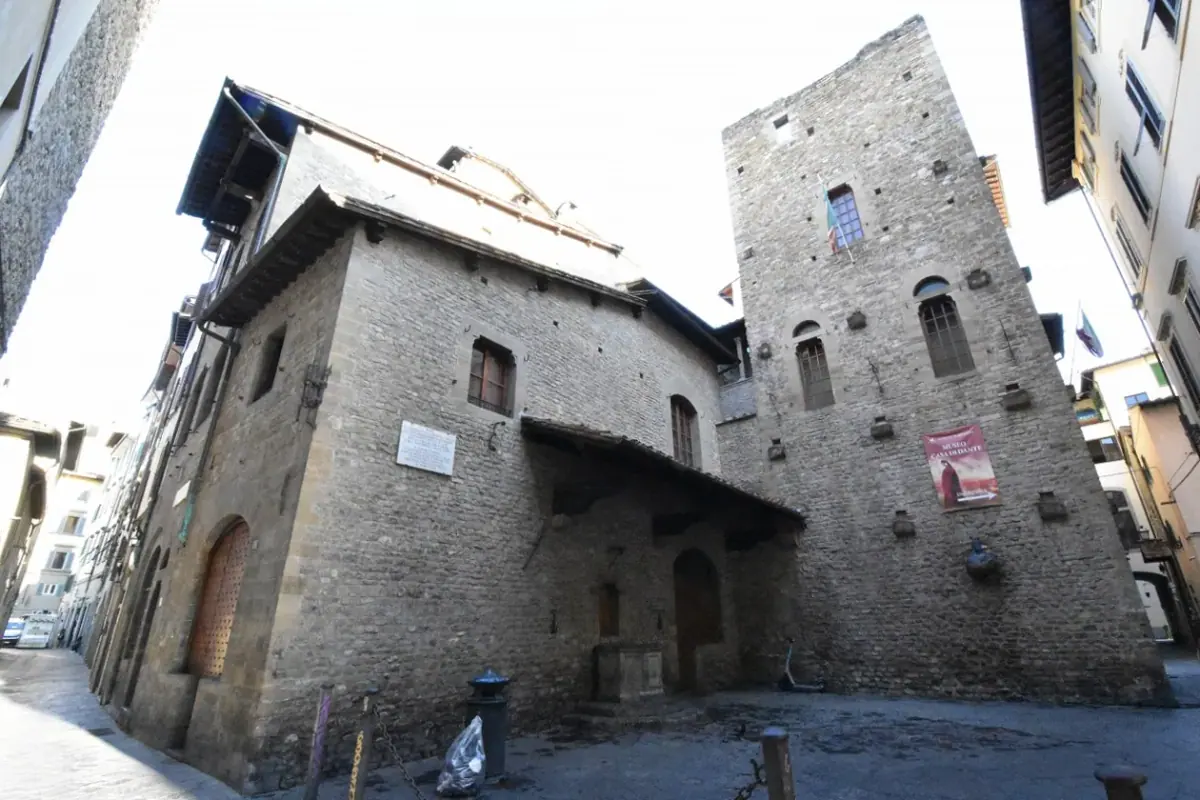

Dante’s House Museum offers a view of Florence through literature and medieval urban life. Do not interpret the name as an unbroken domestic setting preserving all the poet’s belongings; the museum’s narrative and displays are the basis of the visit.
Meaningful for literature-minded families, it may be more abstract for small children. Choose one main idea and keep it short. Add it to a central walk towards Bargello and Signoria. Information source.
Why go? In the neighbourhood where Dante, author of the Divine Comedy, lived, a museum tells his life and medieval Florence’s story. A nearby small church also holds the tomb of Beatrice, whom Dante admired.
Visit summary
- Area: Santa Croce and the eastern centre
- Highlight: Dante and medieval Florence
- Suggested visit length: About 45–60 minutes
- Type of visit: Indoors
- Admission: Paid admission.
- Nearby map stops: Bargello National Museum, Santa Croce Basilica
- Open map: Search for this place on Google Maps
Viewpoint hill and gardens
Piazzale Michelangelo
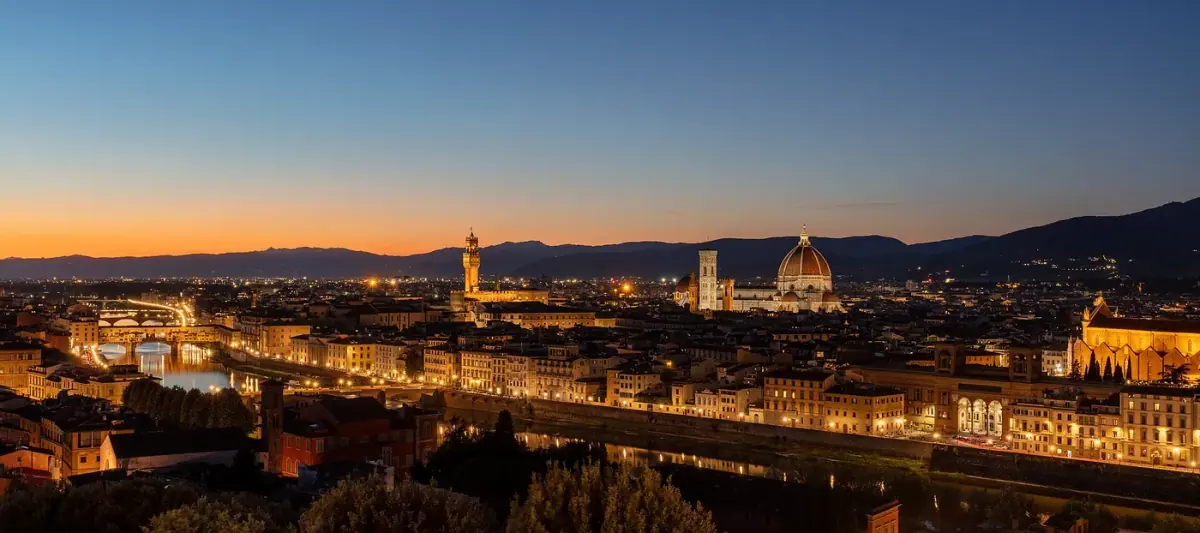

Piazzale Michelangelo offers a chance to relate the buildings explored individually in the centre within one city view. The dome, palace towers and Arno’s course can be understood more fully here. Beyond a photo spot, it can be a pause for reflecting on the areas visited at day’s end.
Because it is on a hill, plan the ascent and return with children beforehand. The Rose Garden and San Miniato share the wider hill branch; doing all three is not compulsory. We do not present crowd levels or sunset expectations as guarantees. Information source.
Why go? The most famous viewpoint for fitting all Florence, from the dome to Ponte Vecchio, into one frame. Watching the city turn orange at sunset can be the trip’s most memorable moment.
Visit summary
- Area: Viewpoint hill and gardens
- Highlight: Seeing Florence’s skyline as a whole
- Suggested visit length: About 30–45 minutes
- Type of visit: Outdoors / viewpoint
- Admission: Free (outdoors)
- Nearby map stops: Rose Garden (Giardino delle Rose), San Miniato al Monte
- Open map: Search for this place on Google Maps
Rose Garden (Giardino delle Rose)
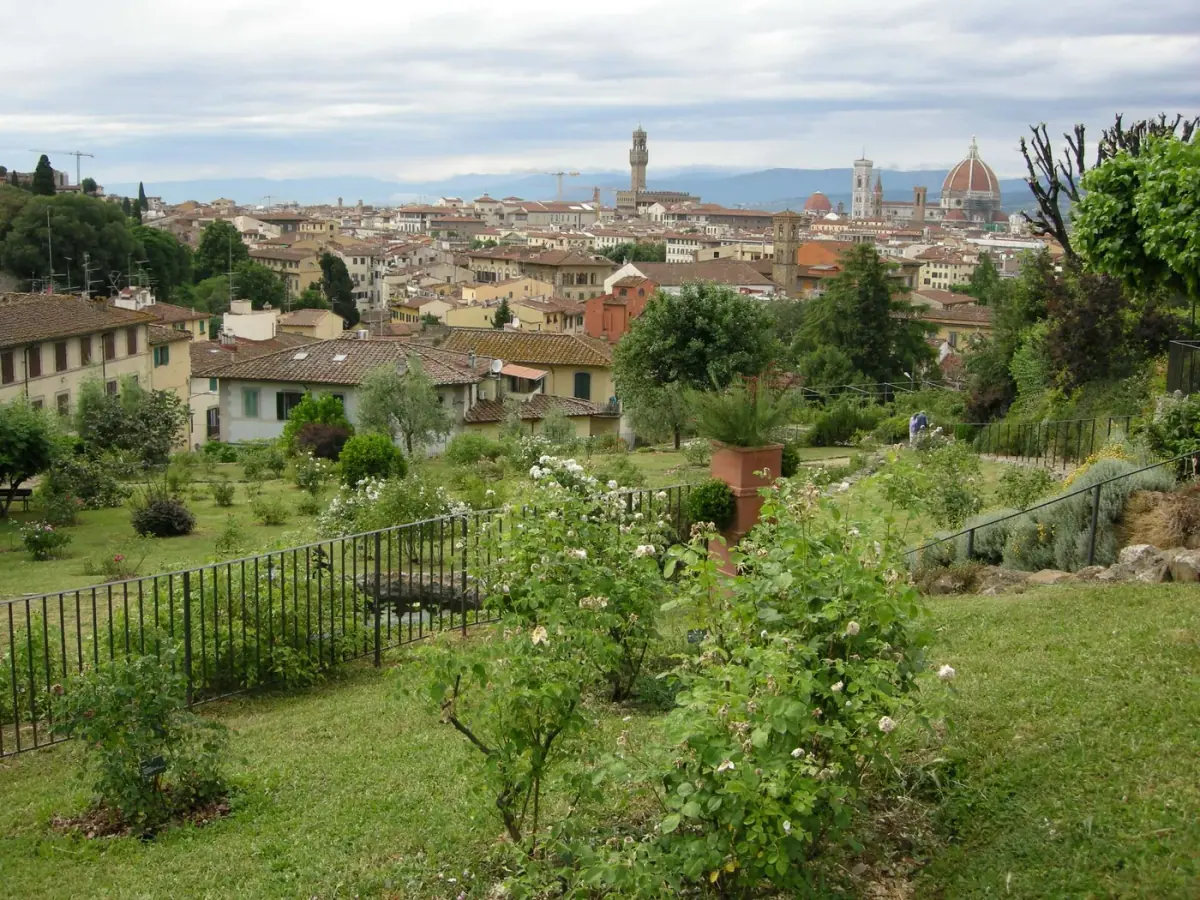

Below Piazzale Michelangelo, the Rose Garden offers views in greener surroundings. Flowering is seasonal; do not expect the same colours and abundance year-round. The hillside layout and outlooks towards the city are as much part of the visit as the flowers.
Plan it as a short break on a family hill route. Check entrances and paths rather than treating it as a flat park walk. If you only want a view, choose either the square or garden. Information source.
Why go? A quiet garden on the way up to Piazzale Michelangelo, with hundreds of rose varieties and city views. Lovely for resting on the grass and letting children wander.
Visit summary
- Area: Viewpoint hill and gardens
- Highlight: Garden and city views
- Suggested visit length: About 30–45 minutes
- Type of visit: Outdoor walk
- Admission: Free
- Nearby map stops: Piazzale Michelangelo, San Miniato al Monte
- Open map: Search for this place on Google Maps
San Miniato al Monte
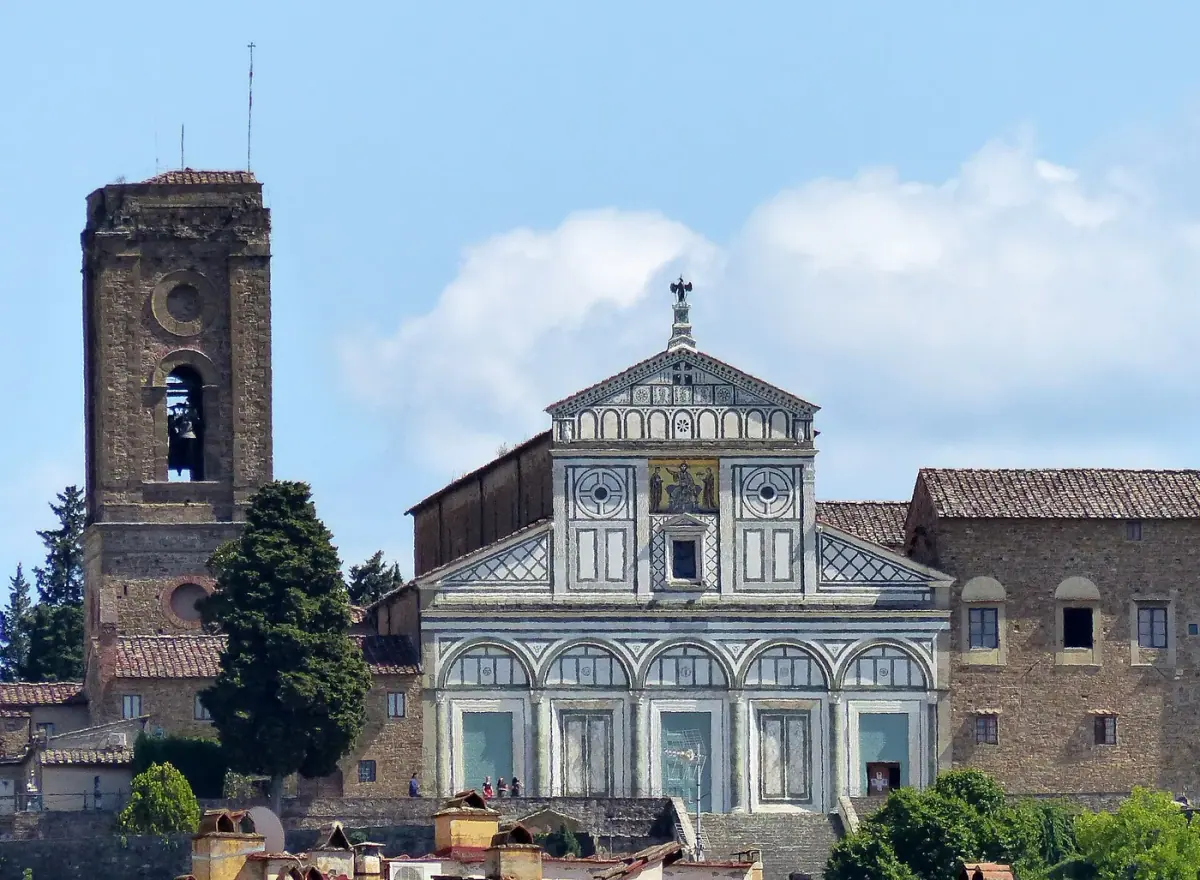

San Miniato al Monte adds another architectural period, as well as views, to the hill itinerary. The Romanesque building can be considered separately from the centre’s grand Renaissance narrative. Examine the façade and setting first, then the interior volume and surfaces.
Count reaching it as a strenuous part of the family day. Arriving at Piazzale Michelangelo does not oblige you to continue higher. Check worship conditions and open areas on the day. Information source.
Why go? The thousand-year-old church at Florence’s highest point is one of the city’s finest Romanesque buildings. The monks’ evening Gregorian chants combine with the view for an unforgettable atmosphere.
Visit summary
- Area: Viewpoint hill and gardens
- Highlight: Romanesque church in an elevated setting
- Suggested visit length: About 45–60 minutes
- Type of visit: Indoors / outdoors
- Admission: Free
- Nearby map stops: Piazzale Michelangelo, Rose Garden (Giardino delle Rose)
- Open map: Search for this place on Google Maps
Bardini Garden
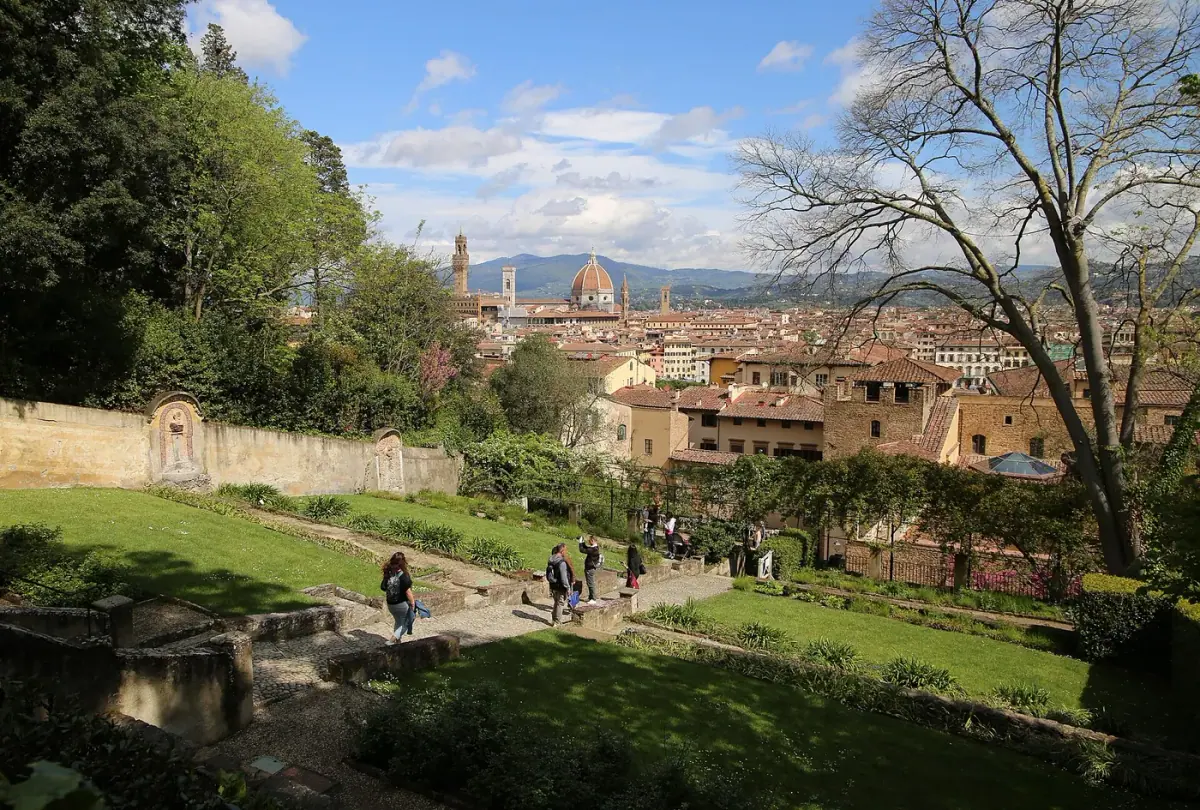

Bardini Garden offers a way to explore the slopes across the Arno through plants and views. The connections between terraces show that it is more than a flowery photo spot. Look at the landscape design without treating seasonal blossoms as a permanent promise.
Allow for slopes and rest breaks with children. Choose it or Boboli rather than turning the day into one long garden visit, and spend the remaining time in the neighbourhood. Check ticket and open-area coverage. Information source.
Why go? Terraced gardens, a wisteria tunnel and city views in a much quieter setting than busy Boboli. When the wisteria blooms in spring, it is one of Florence’s most photogenic corners.
Visit summary
- Area: Viewpoint hill and gardens
- Highlight: Terraced garden and city perspectives
- Suggested visit length: About 60–90 minutes
- Type of visit: Outdoors / garden
- Admission: Paid admission.
- Nearby map stops: Rose Garden (Giardino delle Rose), Piazzale Michelangelo
- Open map: Search for this place on Google Maps
Oltrarno: Santo Spirito and Pitti
Piazza Santo Spirito
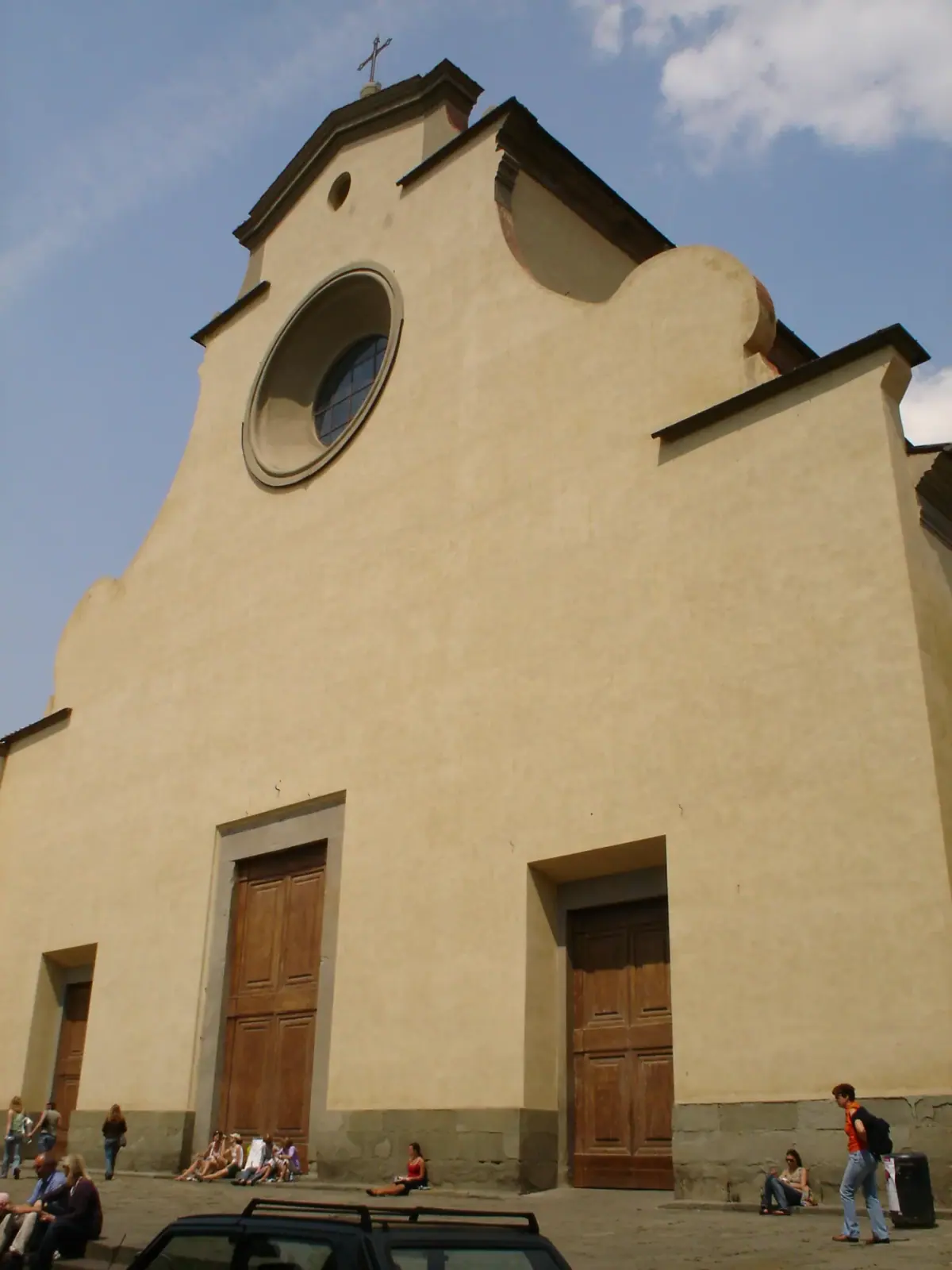

Santo Spirito square offers a more everyday neighbourhood scale across the river from the large museums. Watching the relationship between the church façade, open space and adjoining streets prevents reducing Oltrarno to palaces and gardens alone.
Take a short family outdoor pause here. The square is not the basilica; you can explore the space without entering the church. Compare directions on the map when linking the Pitti and Brancacci branches. Information source.
Why go? Oltrarno’s heart, away from tourist crowds, where local people gather in the evenings. The morning market and square’s cafés offer a glimpse of Florence’s real neighbourhood life.
Visit summary
- Area: Oltrarno: Santo Spirito and Pitti
- Highlight: Neighbourhood square
- Suggested visit length: About 20–30 minutes
- Type of visit: Outdoor walk
- Admission: Free (outdoors)
- Nearby map stops: Santo Spirito Basilica, Pitti Palace
- Open map: Search for this place on Google Maps
Santo Spirito Basilica
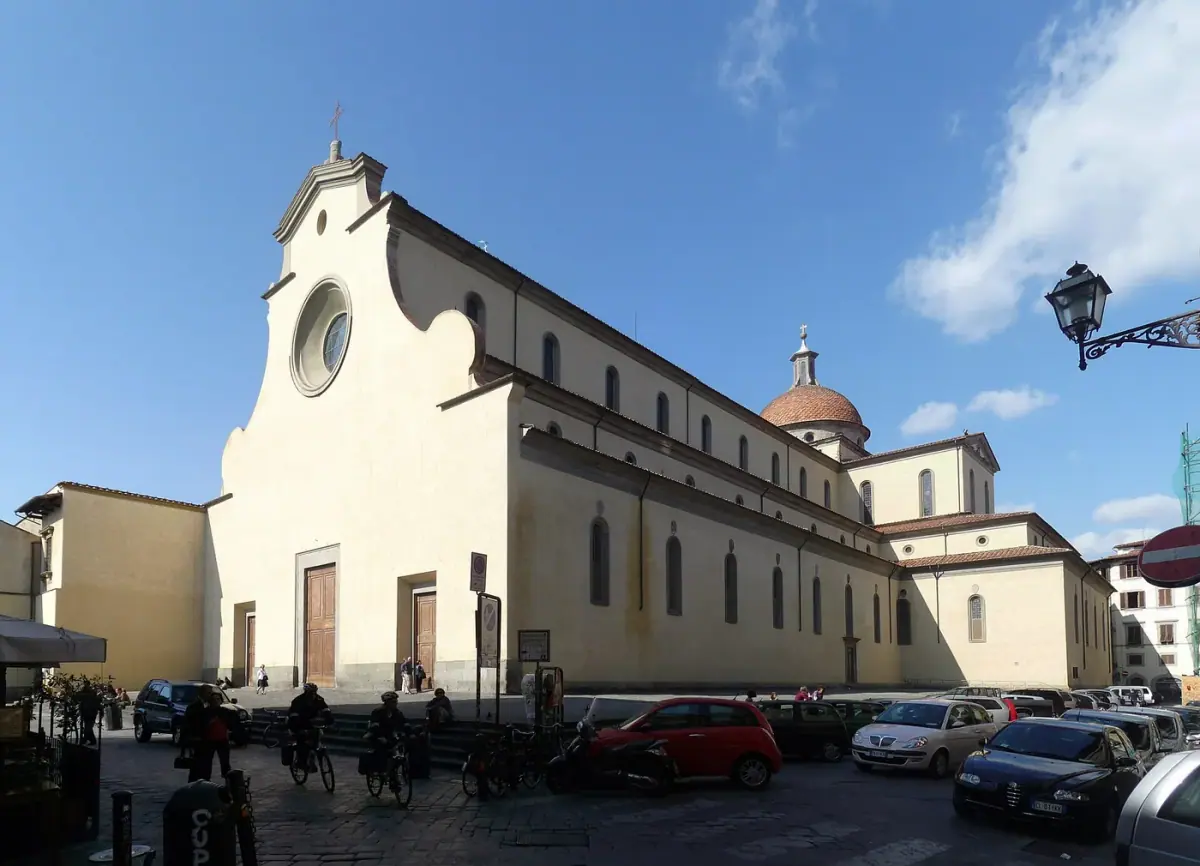

At Santo Spirito, comparing the plain façade on the square with the rhythm of the interior underpins the visit. After the cathedral’s ornate exterior, this is a different design approach. Rather than surveying every artwork, look at proportions and the arrangement of supports.
Combine the square with a short family interior visit. Do not assume tourist entry, worship access and special sections have the same coverage; check current conditions. Information source.
Why go? Brunelleschi’s last work hides an interior of perfect proportions behind a simple façade. A wooden crucifix by the young Michelangelo is also inside.
Visit summary
- Area: Oltrarno: Santo Spirito and Pitti
- Highlight: Simple façade and interior architectural order
- Suggested visit length: About 30–45 minutes
- Type of visit: Indoors / exterior view
- Admission: Free
- Nearby map stops: Piazza Santo Spirito, Pitti Palace
- Open map: Search for this place on Google Maps
Forte di Belvedere
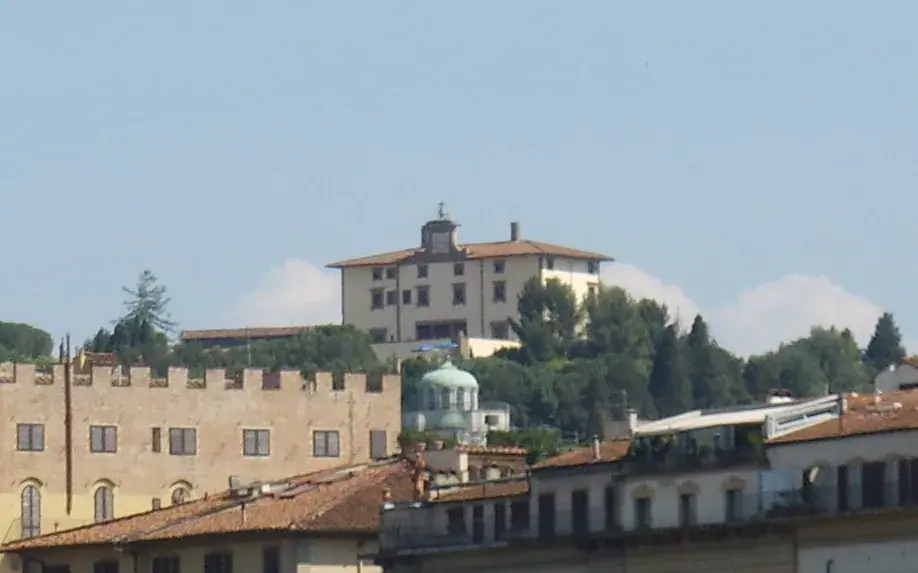

Belvedere’s position above the palace and gardens links a defensive structure with city views. Do not plan it as a park open every day; season, events and weather can affect access. Check current notices on the official municipal page before adding it.
Do not make Pitti, Boboli and Belvedere a compulsory family chain in one day. Uphill and large-area walking add up. If access cannot be confirmed, keep the plan workable with other Oltrarno stops. Information source.
Why go? The Medici-built hill fortress offers Florence panoramas in a quieter setting. Summer outdoor exhibitions combine art and views.
Visit summary
- Area: Oltrarno: Santo Spirito and Pitti
- Highlight: Historic hilltop fortress
- Suggested visit length: About 30–60 minutes, if accessible
- Type of visit: Outdoor area subject to season/programme
- Admission: Varies with exhibitions; generally free.
- Nearby map stops: Pitti Palace, Boboli Gardens
- Open map: Search for this place on Google Maps
Brancacci Chapel
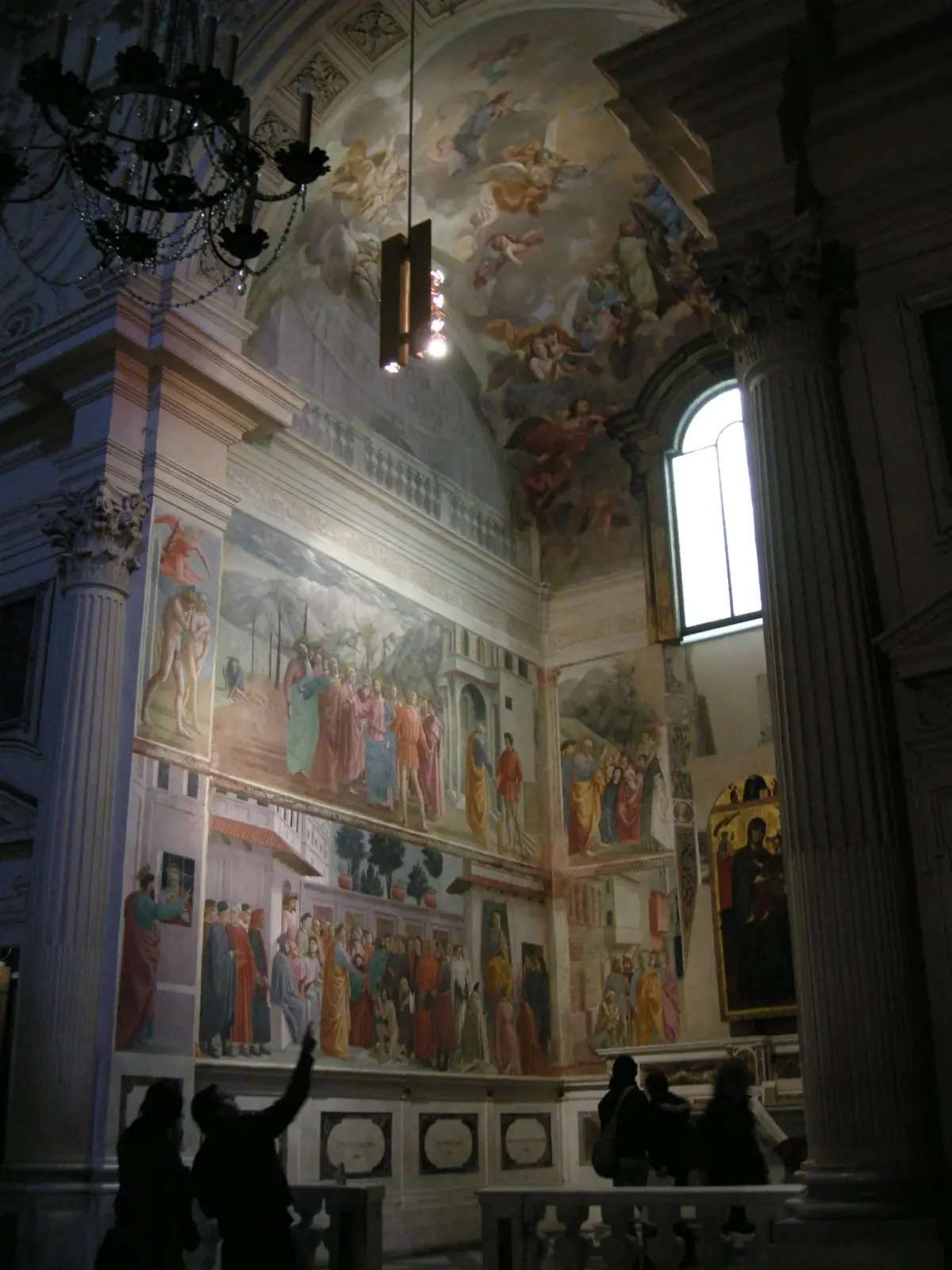

The Brancacci Chapel lets you focus on a particular fresco ensemble rather than an extensive collection. Study how figures occupy space and stories are sequenced in frescoes associated with Masaccio and Masolino. Treat it as an art destination with its own visiting arrangements rather than a church corner to rush through.
An alternative for families seeking a shorter but concentrated art visit. Confirm reservations and current access through municipal or museum channels; pair it with the Santo Spirito area walk. Information source.
Why go? Masaccio’s frescoes are considered the beginning of Renaissance painting; even young Michelangelo studied these walls while practising drawing. Small-group visits provide a rare chance to see art history up close.
Visit summary
- Area: Oltrarno: Santo Spirito and Pitti
- Highlight: Early Renaissance frescoes
- Suggested visit length: About 45–60 minutes
- Type of visit: Indoors, booking required
- Admission: Paid admission · by reservation, about €12 per adult.
- Nearby map stops: Piazza Santo Spirito, Santo Spirito Basilica
- Open map: Search for this place on Google Maps
Boboli Gardens
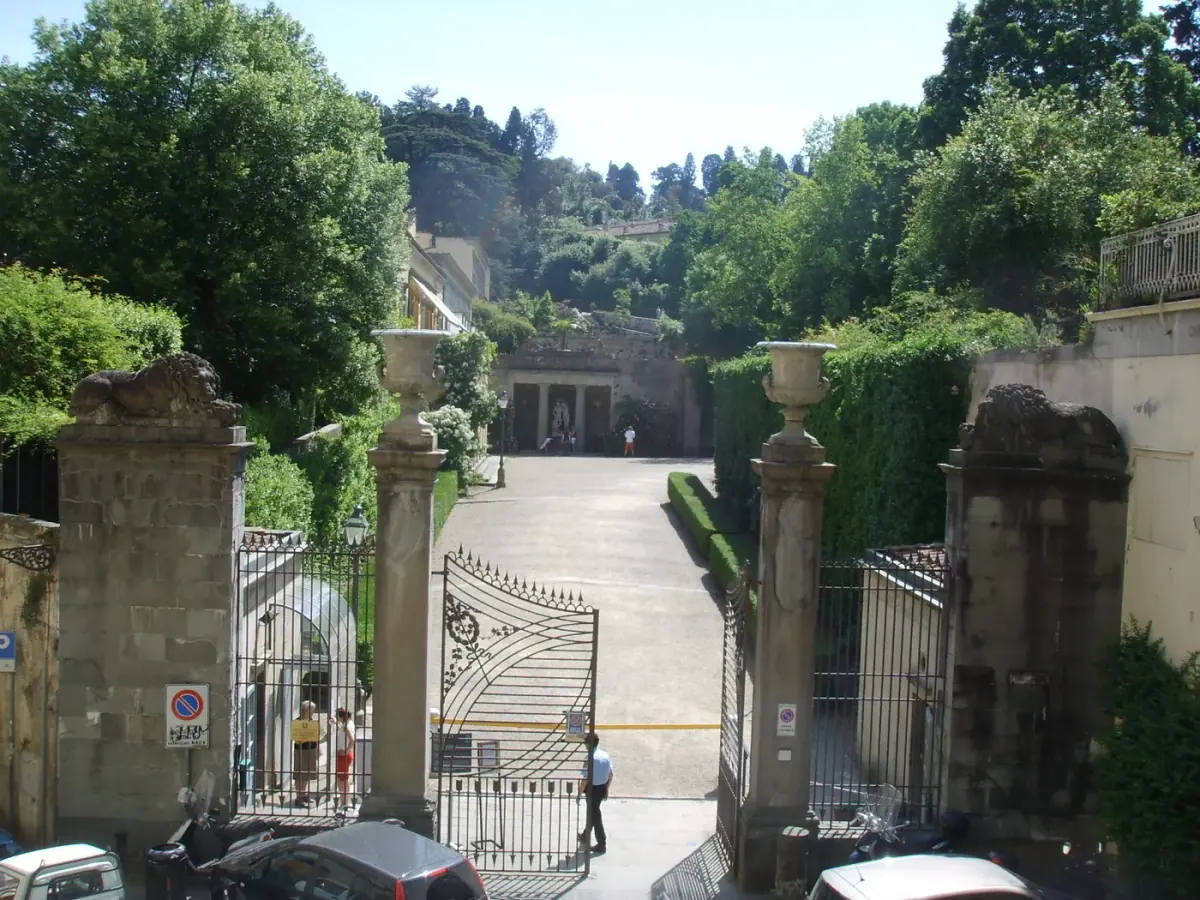

Boboli is a vast garden world behind Pitti, not a small neighbourhood park. Choose a route among axes, terraces, sculptures and openings onto views. A single map marker does not mean the entire garden can be seen from one point.
Plan entrances, exits and rest breaks with children; account for sloping paths and weather. Adding the Pitti interior that day lengthens the visit. Focusing on a few garden sections may be easier than trying to finish everything. Information source.
Why go? An enormous Renaissance garden behind Pitti Palace, filled with sculptures, grottoes, fountains and city-facing terraces. Exploring the stone grotto at Grotta del Buontalenti and running on the lawns can be the children’s highlight.
Visit summary
- Area: Oltrarno: Santo Spirito and Pitti
- Highlight: Palace landscape and outdoor art
- Suggested visit length: About 90–150 minutes
- Type of visit: Outdoors / garden
- Admission: Paid admission · about €15 per adult (high season), cheaper in winter. Under-18s free.
- Nearby map stops: Pitti Palace, Forte di Belvedere
- Open map: Search for this place on Google Maps
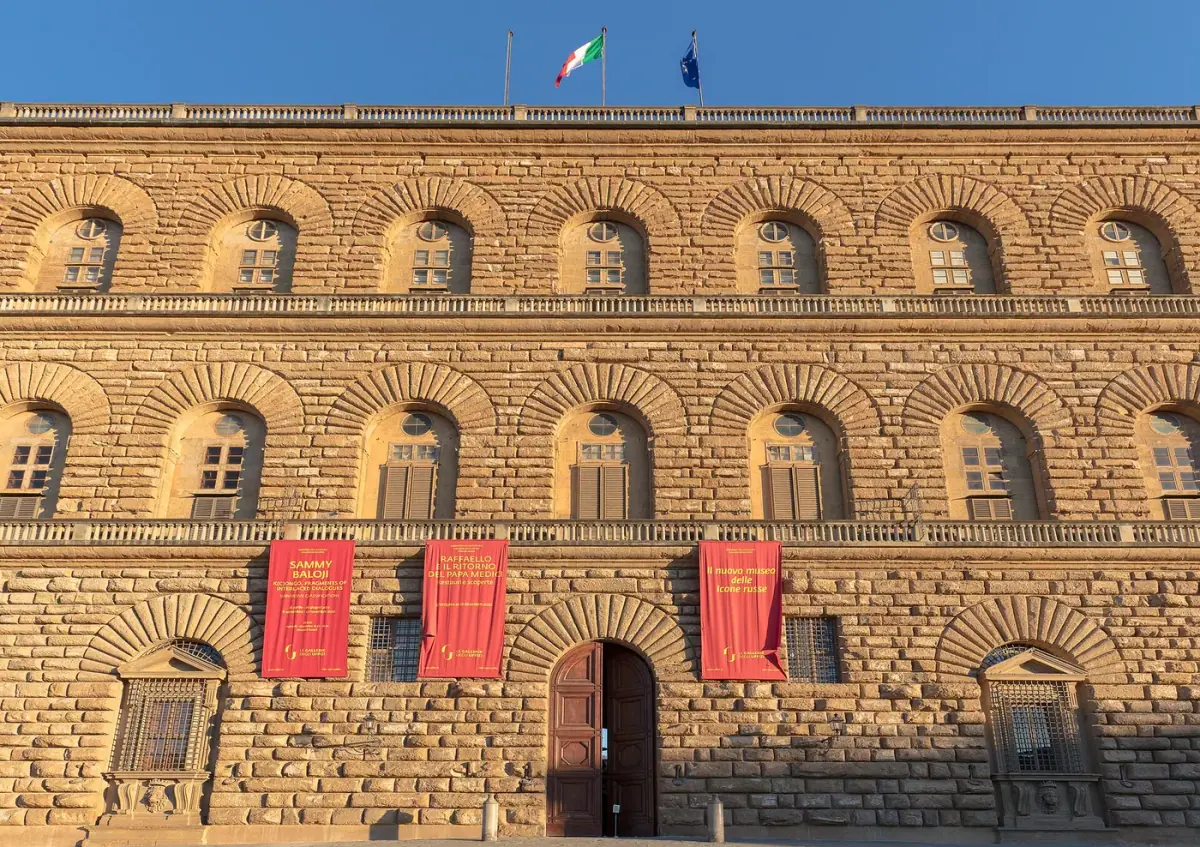
Pitti Palace
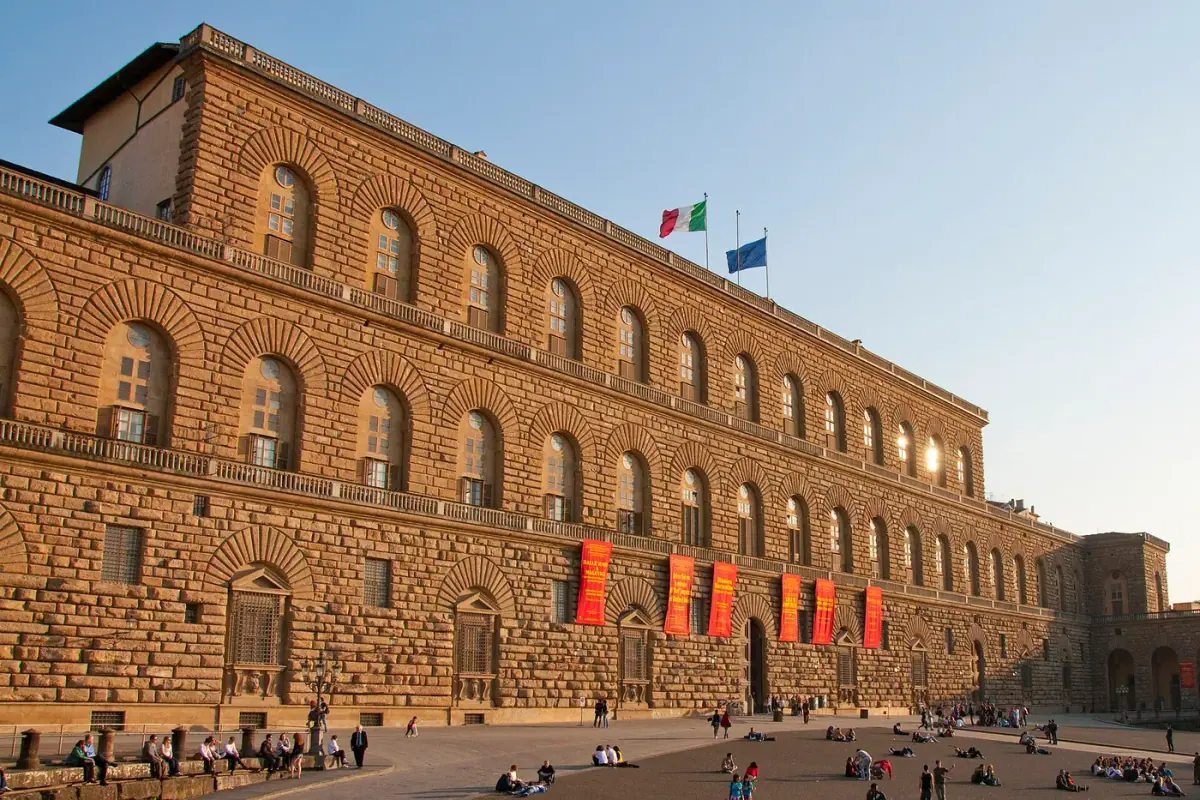

Pitti is a palace visit requiring substantial time in its own right, from the massive stone façade to the interior collections. Do not think of it as a single sequence of rooms; choose museums and sections from the official ticket and visit page. Seeing artworks and room decoration together makes it different from a painting gallery.
It can be the family day’s main indoor focus. Do not then make completing all Boboli compulsory. On a short trip, preserve Oltrarno’s pace by choosing among the palace exterior, Santo Spirito and one garden. Information source.
Why go? Home to the Medici and later Italy’s kings, the palace reaches the height of splendour with the Raphael-filled Palatine Gallery and royal apartments. Moving from palace to garden can make a full day of royal surroundings.
Visit summary
- Area: Oltrarno: Santo Spirito and Pitti
- Highlight: Palace collections and ceremonial spaces
- Suggested visit length: About 2–3 hours
- Type of visit: Indoors / exterior view
- Admission: Paid admission · about €22 per adult (high season). Under-18s free.
- Nearby map stops: Piazza Santo Spirito, Santo Spirito Basilica
- Open map: Search for this place on Google Maps
Food and drink stops
Our Florence food list has five separate businesses. These are places we tried and saved on the map; as no notes were shared on how we rated individual dishes, we do not add scores or rank favourites. Mercato Centrale appears both as an architectural stop above and as a food-break option in the plan note below.
The list below keeps the map’s food and drink choices separate. Menus, prices, opening times and booking conditions can change; check the linked business listing and its own page before visiting. The order here is not a quality ranking.
| Place | Known for | Average price (per person) | Location |
|---|---|---|---|
| Trattoria Zà Zà Nearby stop: Mercato Centrale | Bistecca alla fiorentina and Tuscan dishes | ~€25–50 | Open map |
| All’Antico Vinaio Nearby stop: Palazzo Vecchio (Vecchio Palace) | Where the chain began: huge schiacciata sandwiches | Up to ~€10 | Open map |
| Osteria del Cinghiale Bianco Nearby stop: Santo Spirito Basilica | Tuscan classics: ribollita soup and bistecca alla fiorentina (beef) | ~€10–25 | Open map |
| Osteria Belle Donne Nearby stop: Palazzo Strozzi | Seasonal Tuscan cuisine | ~€10–25 | Open map |
| Vivoli Nearby stop: Bargello National Museum | Florence’s historic gelateria; affogato | Up to ~€10 | Open map |
Open the food plan separately: filter by area and search places →
Sources and visitor information
The Duomo dome requires a timed reservation; there is no lift on the 463-step climb. Cathedral, baptistery, tower and dome are separate visits. Use the official ticket site for the Uffizi and Pitti. Verify the visit date separately for places with changing capacity or seasons, such as Brancacci and Belvedere. We also used our stroller to carry bags on outings; strollers cannot continue on tower and dome routes with stairs.
The selection of stops comes from a personal My Maps map. Information sources appear in the relevant paragraphs. Individual location links are Google Maps searches using place names. Nearby pairings are based on map locations; check the actual walking route on the map.
- Personal Florence map
- Florence municipal tourism guide
- Duomo official visitor information
- Uffizi, Pitti and Boboli
- Bargello museums
Where we stayed
We spent two nights in Florence at Moro Apartment on Via del Moro in the Santa Maria Novella area. It is within walking distance of Santa Maria Novella station, where the train from Rome arrives.
Browse Florence hotels and apartments on Booking.com. With children, we recommend checking walking distance to the centre, a lift and family room options.
Our travel map
The personal map behind this guide’s stops. Toggle layers to explore sights and any food and drink markers separately.