Barcelona Travel Guide: Family Routes through Gaudí, the Old Town and the Coast
A family route through Barcelona’s Gaudí buildings, Gothic Quarter, El Born and Montjuïc. Stops from our map, photographs and places where we ate.
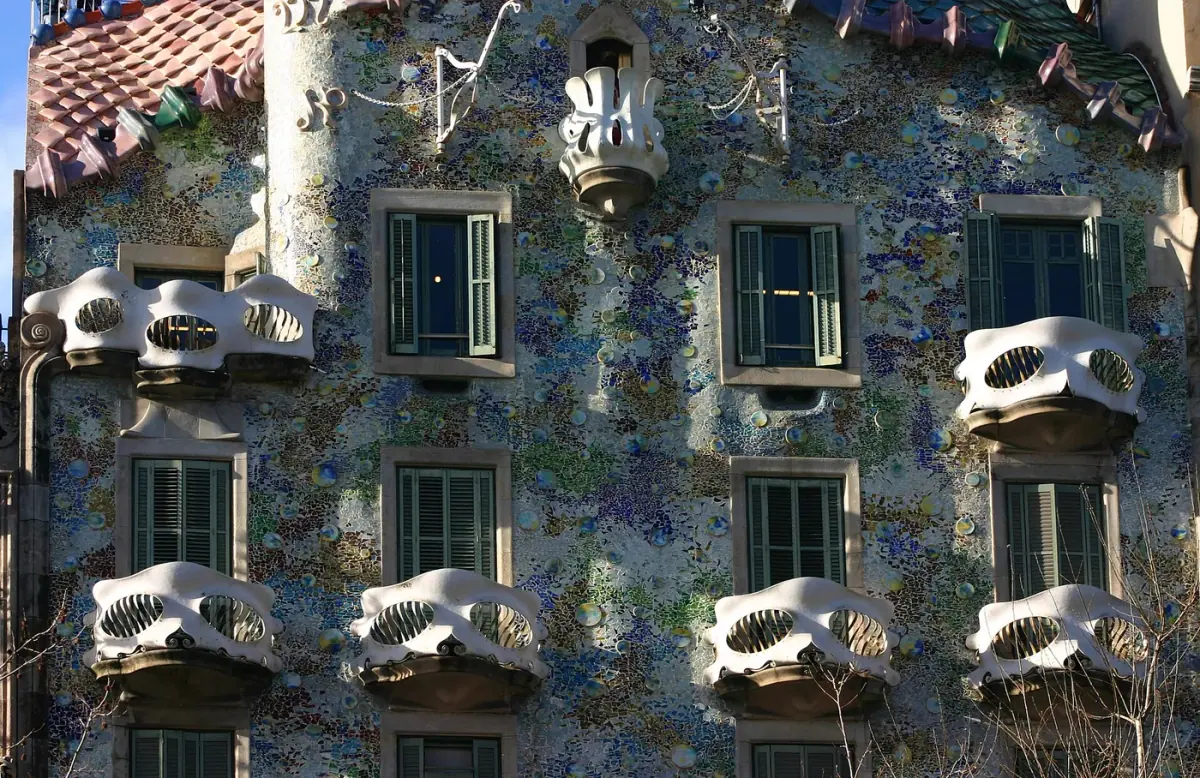
A single list can be difficult to follow in Barcelona: Gaudí’s buildings, narrow old-town streets, harbour and Montjuïc require different paces. We arrived by train from Madrid and stayed three nights. We have divided our map of places explored as a family into areas to show what makes sense to consider together in one day.
The first section covers Gothic Quarter squares and historic buildings, with El Born and streets leading to the coast on another branch. Choosing interiors in Eixample’s major modernist buildings beforehand makes planning easier than deciding at the door. Outlying areas such as Park Güell, Pedralbes and Montjuïc are kept separate to avoid constantly crossing the city.
The three-day suggestion is not a race to complete every marker. With children, reduce it to one main building or museum followed by outdoor time. Five food-layer places appear at the end, paired with nearby sights. Business and performance markers are also retained, but described by their real functions rather than confused with monuments and museums.
Before you go: key notes
How many days should you spend in Barcelona?
At least three days for Gaudí’s buildings, the Gothic Quarter and the coast; we also stayed three nights.
Should you book Sagrada Família tickets ahead?
Absolutely. Entry is timed and finding tickets at the door is almost impossible. Booking through the official site is cheapest and safest; under-11s enter free.
Is Barcelona suitable for children?
Park Güell’s dragon, the Magic Fountain show, beaches, Poble Espanyol and Ciutadella Park make Barcelona very entertaining for children.
Should you watch out for pickpockets in Barcelona?
Yes; especially on La Rambla, the metro and crowded tourist spots, keep bags and phones in front and secured.
Plan at a family pace: The days below are suggested itineraries based on the locations on the map. Shorten the route to suit your time inside museums and monuments; approximate visit lengths exclude queues and transport.
Suggested itinerary
| Plan | Geographical flow | Family pace |
|---|---|---|
| Day 1: old town | Cathedral → Pont del Bisbe → Sant Jaume → Plaça del Rei → El Born → Santa Maria del Mar → Ciutadella | Shorten the street route if choosing the Picasso Museum. |
| Day 2: modernist Barcelona | Sagrada Família and Plaça de Gaudí → Sant Pau; Passeig de Gràcia and Batlló or Milà as a separate branch | Two major interiors may suffice. Adding Park Güell that day is not compulsory. |
| Day 3: choose one outer area | A: Montjuïc and Poble Espanyol; B: Park Güell and Casa Vicens; C: coast, Barceloneta and Poblenou | Do not combine three distant options. Pedralbes is an extra-day alternative. |
Tickets and tours: Timed tickets for popular places such as Sagrada Família and Park Güell can sell out ahead. Browse Barcelona tickets and tours on Tiqets to compare skip-the-line admission and guided tours.


Where to stay in Barcelona with kids
We stayed 3 nights at an Ibis hotel in Barcelona. With kids, where your hotel is decides how often you’ll say “shall we head back?”; being able to return for a midday break is a big relief.
| Area | Good for | Watch out | Stay |
|---|---|---|---|
| Eixample | Flat, wide pavements (easy with a stroller), close to the Sagrada Família and Passeig de Gràcia | Some streets have heavy traffic | See on Booking |
| Gothic Quarter and El Born | In the historic centre, everything on foot | Narrow streets, night noise; watch out for pickpockets | See on Booking |
| Gràcia | A calm choice for families, with squares, playgrounds and a local feel | You need the metro to the centre | See on Booking |
| Barceloneta and Poblenou | Staying close to the beach | Very busy in summer; some parts are far from the centre | See on Booking |
| Sants | Travelling on by train to Madrid and other cities | Far from the tourist centre | See on Booking |
What we look at when choosing: A lift (does the stroller fit without folding?), being close to the train or metro, a family room for three or an apartment with a kitchen, and air conditioning in summer.
Accommodation: Compare hotels and apartments in Barcelona on Booking.com; choosing free cancellation keeps your plans flexible.
Contents
- Before you go: key notes
- Where to stay in Barcelona with kids
- El Born and Ciutadella
- Montjuïc and Sants
- Gothic Quarter and old centre
- Raval and La Rambla
- Coast and Barceloneta
- Eixample and Modernist façades
- Gaudí and the northeast
- Poblenou: a separate coastal branch
- Gràcia and northern parks
- Pedralbes: a separate cultural route
- Food and drink stops
- Sources and visitor information
El Born and Ciutadella
Arc de Triomf
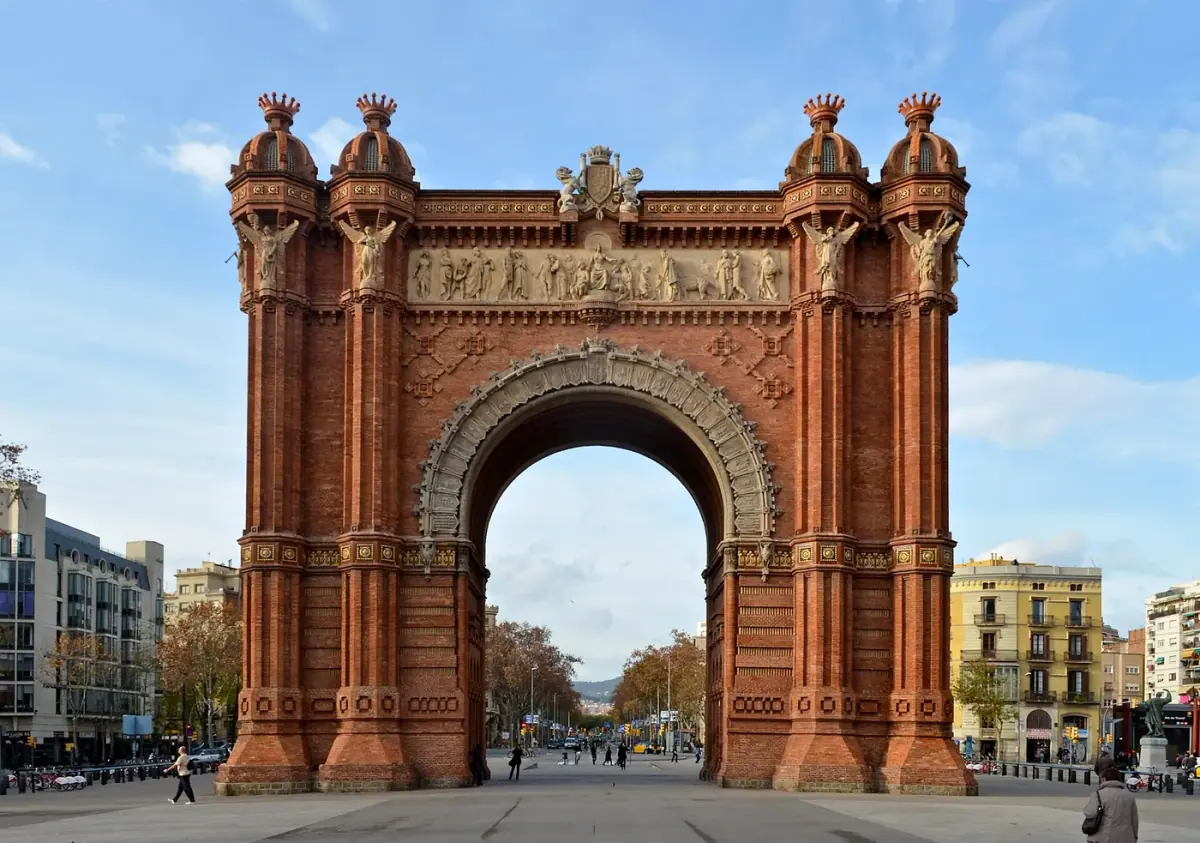

Arc de Triomf is a stop for seeing a large arch with its broad pedestrian surroundings. Take in the brickwork, reliefs and openings as a whole from afar, then close up. It clearly shows how a building creates direction and focus within a city.
A suitable outdoor family start on the way to Ciutadella. You need not combine the arch walk with completing the entire park. Information source.
Why go? Built as the entrance to the 1888 World’s Fair, the red-brick triumphal arch celebrates peace and art rather than war. Its broad, palm-lined pedestrian avenue is a pleasant space where children ride bicycles and scooters.
Visit summary
- Area: El Born and Ciutadella
- Highlight: Brick arch and broad pedestrian axis
- Suggested visit length: About 15–25 minutes
- Type of visit: Exterior view
- Admission: Free (outdoors)
- Nearby map stops: Ciutadella Park, Palau de la Música Catalana
- Open map: Search for this place on Google Maps
Fossar de les Moreres
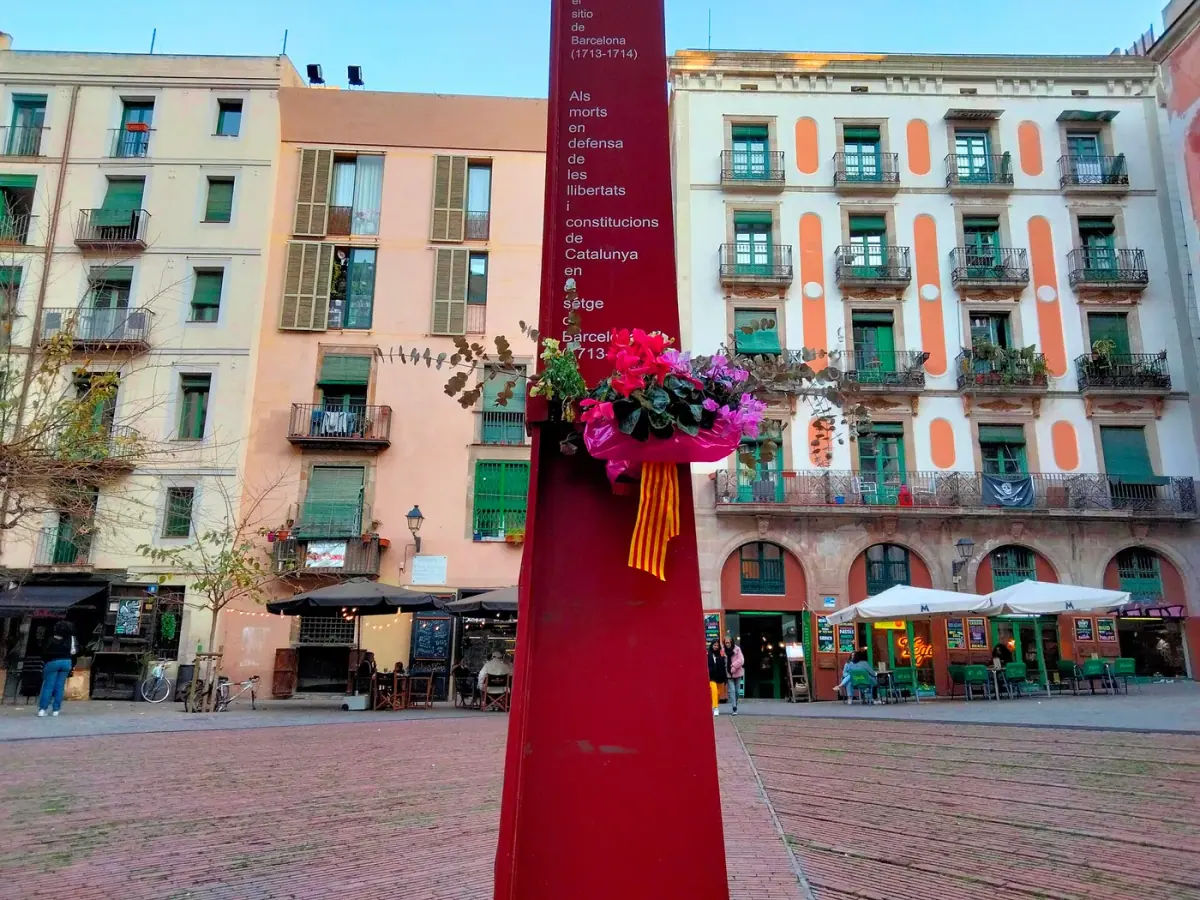

Fossar de les Moreres is a memorial space rather than an ordinary square near Santa Maria del Mar. Its openness, inscriptions and symbolic arrangement express the city’s historical memory. Treat it as a respectful short observation, not just a photo break.
A few age-appropriate sentences suffice with children. Combine it with the basilica and Passeig del Born on one walk. Information source.
Why go? The memorial where those killed in Barcelona’s 1714 siege were buried holds deep meaning for Catalans. A quiet stop beside Santa Maria del Mar for understanding the city’s identity.
Visit summary
- Area: El Born and Ciutadella
- Highlight: Public memory of Catalan history
- Suggested visit length: About 15–20 minutes
- Type of visit: Outdoors / memorial space
- Admission: Free (outdoors)
- Nearby map stops: Santa Maria del Mar, El Born
- Open map: Search for this place on Google Maps
Correus Post Office Building
Correus presents a grand public façade on the transition from old town to coast. Compare the rhythm of entrances and windows with the surrounding street scale. Current services and uses inside differ from a freely accessible museum visit.
Add a short family exterior look on the Born-to-coast route. Check map connections towards La Gamba and the sea. Information source.
Why go? The imposing waterfront post office shows ambitious early-twentieth-century public architecture. Its frescoed hall makes even an ordinary postal errand special.
Visit summary
- Area: El Born and Ciutadella
- Highlight: Monumental public building on the coastal transition
- Suggested visit length: About 15–20 minutes
- Type of visit: Exterior view
- Admission: Free (exterior view)
- Nearby map stops: Fossar de les Moreres, Santa Maria del Mar
- Open map: Search for this place on Google Maps
El Born
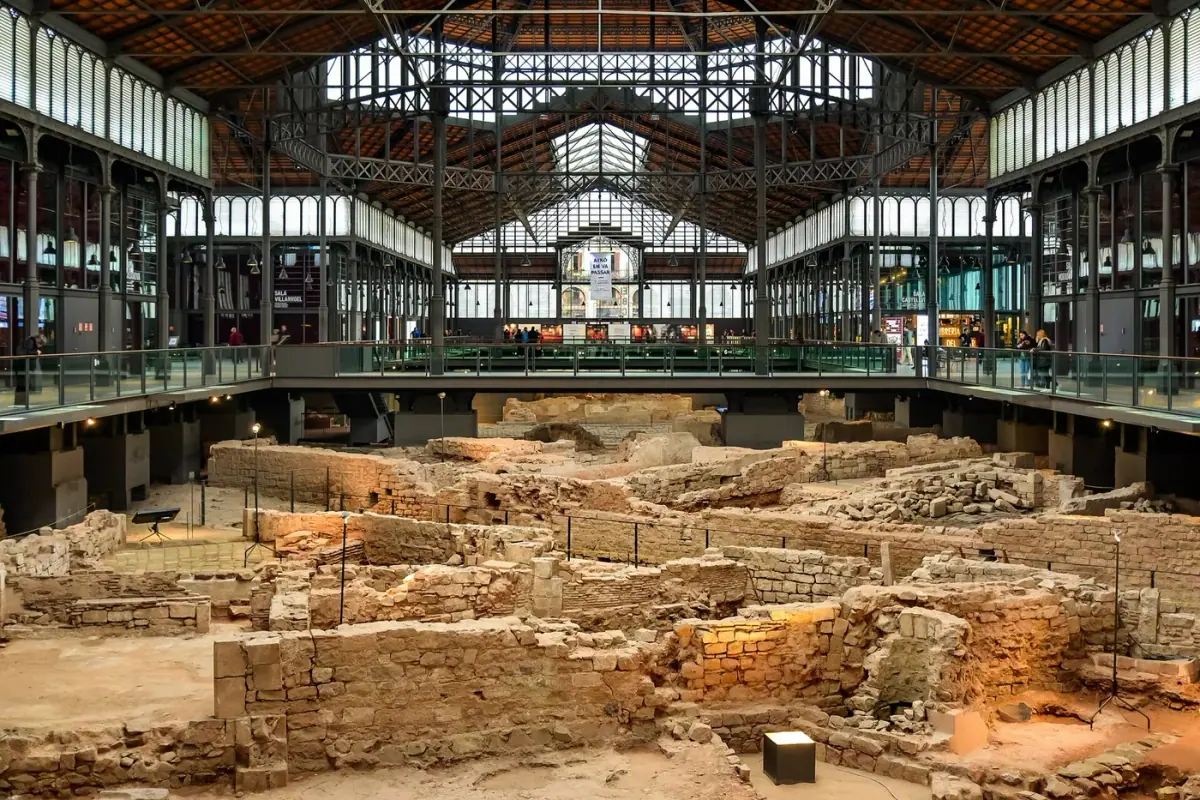

El Born is a broad neighbourhood entry bringing individual sights such as the Picasso Museum, Santa Maria del Mar and Montcada into one urban fabric. Do not count it as an extra distant point. Choose a short loop and observe changing street scales.
Balance one family museum with an outdoor walk afterwards. Neighbourhood time does not include every museum interior. Information source.
Why go? Medieval streets, boutiques and tapas bars make one of Barcelona’s favourite neighbourhoods. Quieter than the Gothic Quarter but with the same historic fabric.
Visit summary
- Area: El Born and Ciutadella
- Highlight: Art, historic streets and neighbourhood fabric
- Suggested visit length: About 60–90 minutes for selected streets
- Type of visit: Neighbourhood walk
- Admission: Free (outdoors)
- Nearby map stops: Santa Maria del Mar, Passeig del Born
- Open map: Search for this place on Google Maps
Ciutadella Park
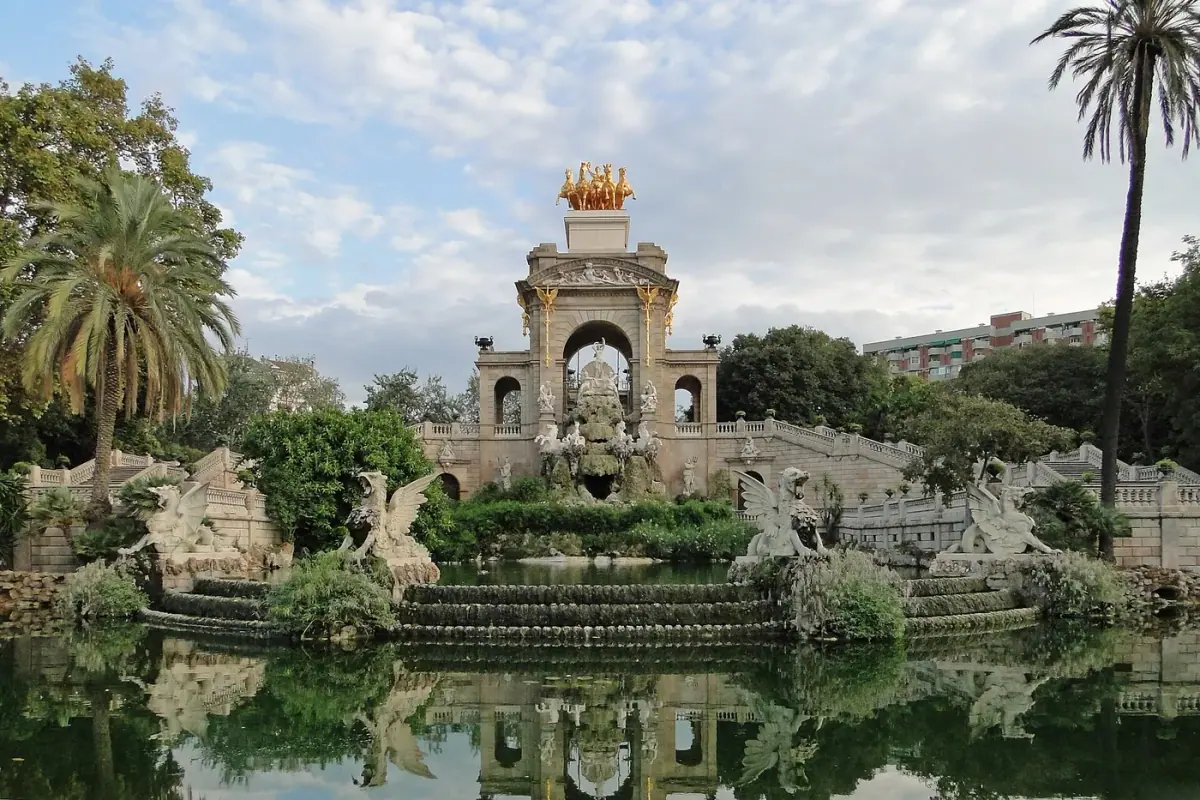

Ciutadella offers a freer outdoor programme after the old town’s busy streets. It is more than one photo point; choosing a section and exit direction makes family walking easier. Not every business or institution in the park is automatically added to the map’s scope.
Make rest before or after a museum a real part of the family plan. Pair it with Arc de Triomf and Born on the same eastern-central branch. Information source.
Why go? The city’s main park has a boating lake and the grand Cascada fountain, to which Gaudí contributed. Playgrounds and the zoo within make it a full family destination.
Visit summary
- Area: El Born and Ciutadella
- Highlight: Broad green break near the centre
- Suggested visit length: About 45–90 minutes
- Type of visit: Outdoor walk
- Admission: Park free; zoo inside charges admission.
- Nearby map stops: Passeig del Born, El Born
- Open map: Search for this place on Google Maps
Passeig del Born
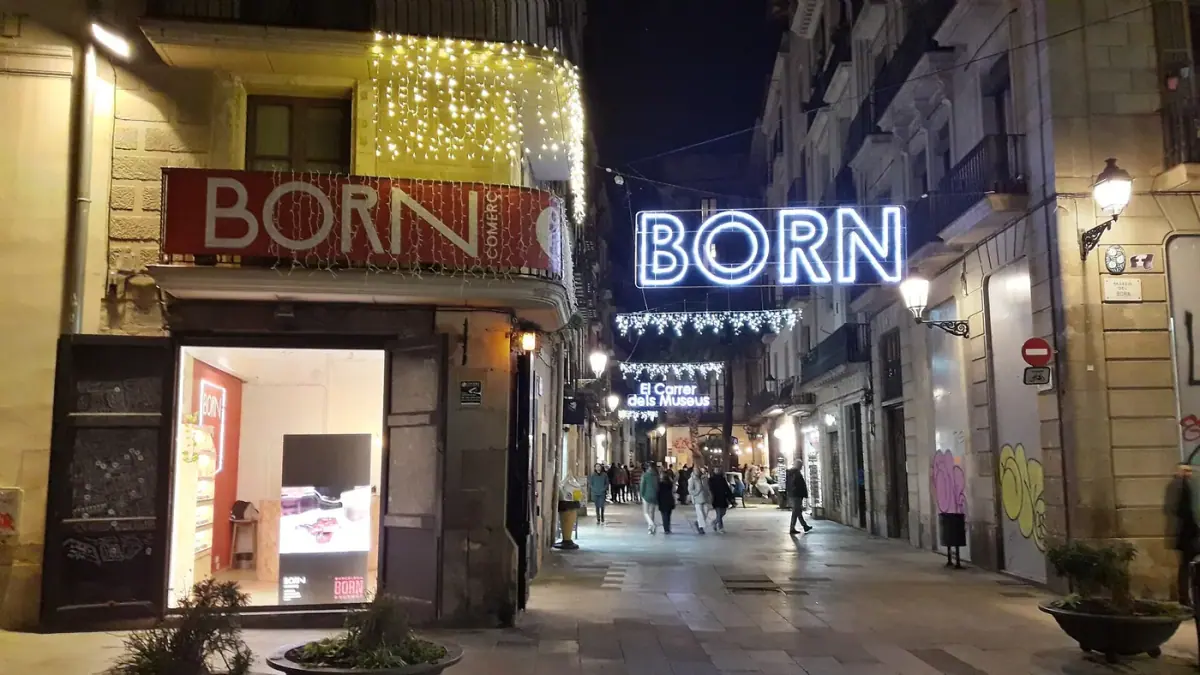

Passeig del Born is a more specific walking space than the Born neighbourhood as a whole. See how narrow streets around Santa Maria del Mar connect with a broader direction. Limiting it to nightlife or dining misses its historic urban role.
A short family outdoor section between the basilica and Montcada. Link stops without returning to the same neighbourhood. Information source.
Why go? The long square once used for medieval jousting is now a café-lined promenade. Excavated eighteenth-century streets can be seen in El Born Cultural Centre at its end.
Visit summary
- Area: El Born and Ciutadella
- Highlight: The neighbourhood’s historic backbone
- Suggested visit length: About 20–30 minutes
- Type of visit: Street / outdoor walk
- Admission: Free (outdoors)
- Nearby map stops: El Born, Santa Maria del Mar
- Open map: Search for this place on Google Maps
Carrer de Montcada
Montcada’s courtyards and old urban houses behind street façades define the area’s architecture. On the way to the Picasso Museum, look beyond the destination door at surrounding building scale. Do not assume every courtyard allows free access.
A good family branch combining a museum and outdoor walking. Link it with Born and Santa Maria del Mar on one outing. Information source.
Why go? Gothic palaces of noble families line this elegant face of medieval Barcelona. The Picasso Museum occupies five of them.
Visit summary
- Area: El Born and Ciutadella
- Highlight: Historic urban houses and museum surroundings
- Suggested visit length: About 20–30 minutes
- Type of visit: Street walk
- Admission: Free (outdoors)
- Nearby map stops: Picasso Museum, El Born
- Open map: Search for this place on Google Maps
Santa Maria del Mar
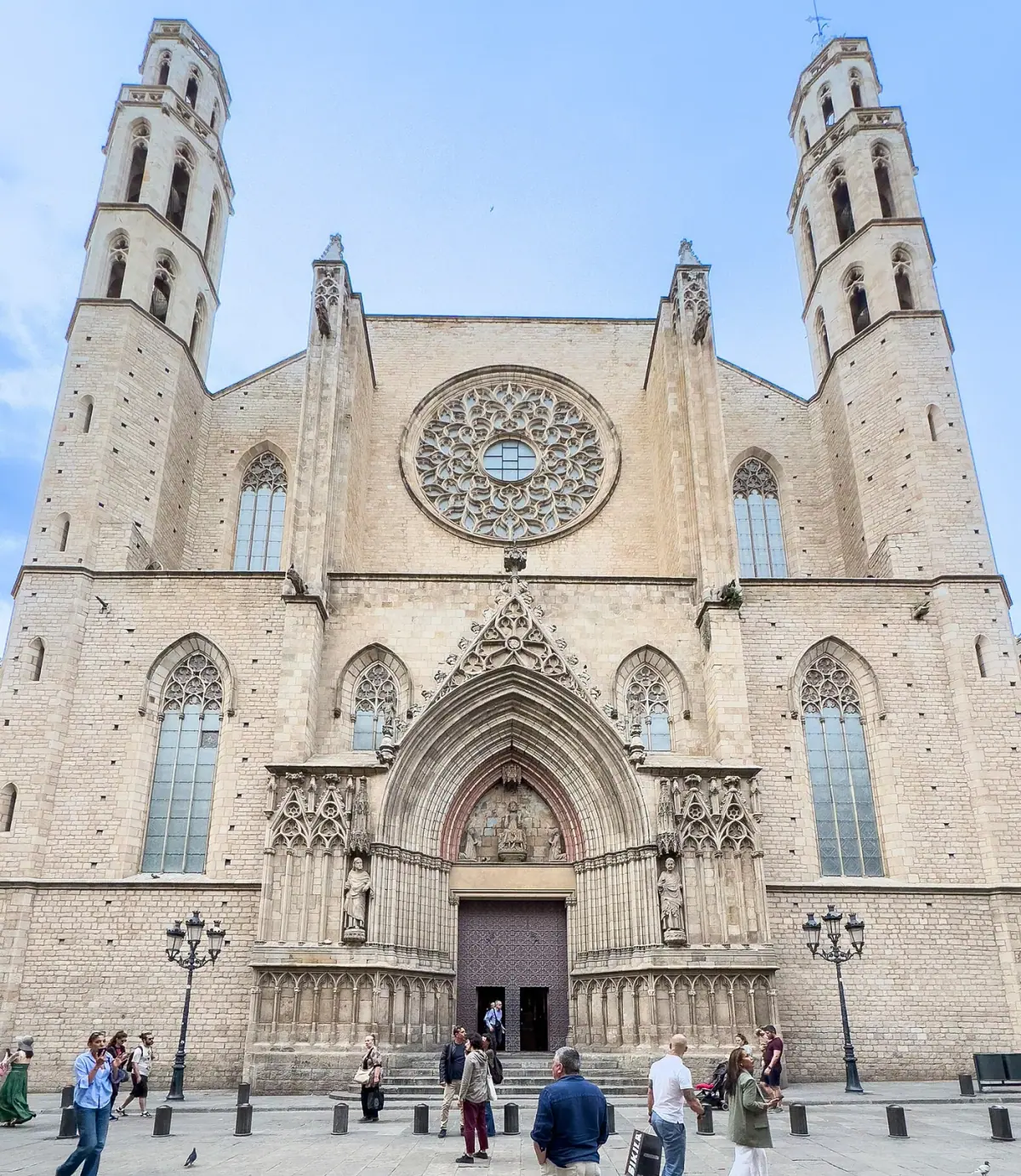

Santa Maria del Mar shifts clearly from neighbourhood streets into a large, orderly interior. Looking at column spacing, height and light explains the building without a long artwork list. Check coverage of the main worship space and additional visits.
A short, focused family interior visit works. Fossar de les Moreres and Passeig del Born share the surroundings; limit indoor time if also choosing the Picasso Museum. Information source.
Why go? A Catalan Gothic masterpiece built with stones carried by sailors and dockworkers. Slender columns and a light-filled interior create an atmosphere enchanting in its simplicity.
Visit summary
- Area: El Born and Ciutadella
- Highlight: Gothic space in Born
- Suggested visit length: About 45–60 minutes
- Type of visit: Indoors / exterior view
- Admission: Free entry periods; paid admission during tourist hours and for rooftop tours.
- Nearby map stops: Fossar de les Moreres, El Born
- Open map: Search for this place on Google Maps
Picasso Museum
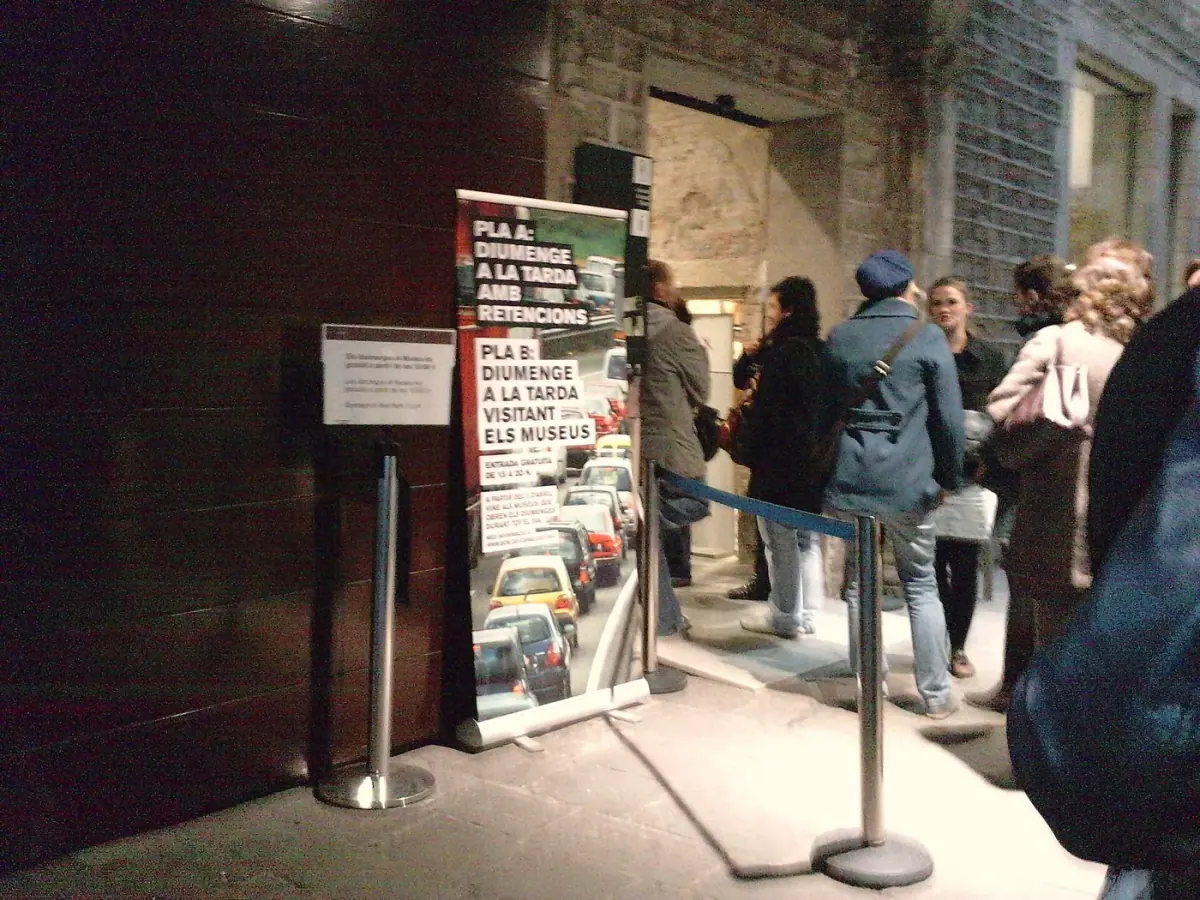

Do not visit the Picasso Museum expecting only the artist’s most famous period. Comparing works through development and different expressive approaches is more meaningful. The historic buildings are also part of the visit’s spatial experience.
With children, follow changes in figures and lines in a few works. Check open collections and ticket conditions. Pair it with Montcada; do not try to complete every Born interior that day. Information source.
Why go? One of the most extensive collections tracing a genius’s development through childhood and youth. The series reinterpreting Velázquez’s Las Meninas is especially impressive.
Visit summary
- Area: El Born and Ciutadella
- Highlight: Collection tracing the artist’s development
- Suggested visit length: About 90–120 minutes
- Type of visit: Indoors
- Admission: Paid admission · about €14–15 per adult. Free first Sunday of each month (by reservation).
- Nearby map stops: Carrer de Montcada, El Born
- Open map: Search for this place on Google Maps
Palau de la Música Catalana
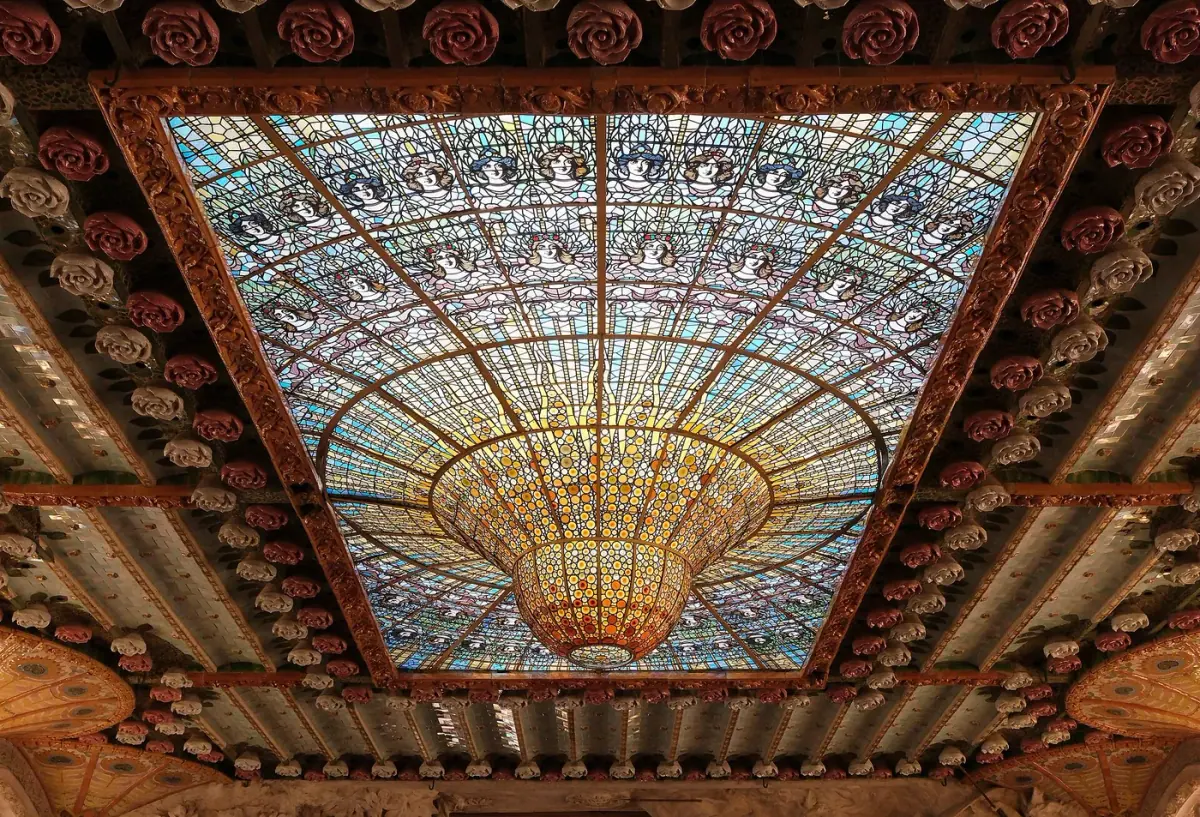

At the Palace of Catalan Music, architecture, light and performance combine. Building tours and concerts are different visits; select the appropriate official programme if only seeing the hall. Consider the decoration as part of a musical space, not disconnected objects.
Choose a short family tour or suitable concert. Check duration and age conditions; do not automatically add it as a second long event on a Born museum day. Information source.
Why go? Among the world’s most ornate concert halls, with mosaics, stained glass and a huge coloured-glass ceiling dome. This UNESCO-listed Catalan Modernist masterpiece is worth a concert ticket to enter.
Visit summary
- Area: El Born and Ciutadella
- Highlight: Modernist concert hall
- Suggested visit length: About 60–90 minutes
- Type of visit: Guided/visitor ticket / concert
- Admission: Paid admission · guided or audio-guided visit about €15–20; concerts require separate tickets.
- Nearby map stops: Picasso Museum, Carrer de Montcada
- Open map: Search for this place on Google Maps
Montjuïc and Sants
Venetian Towers (Torres Venecianes)
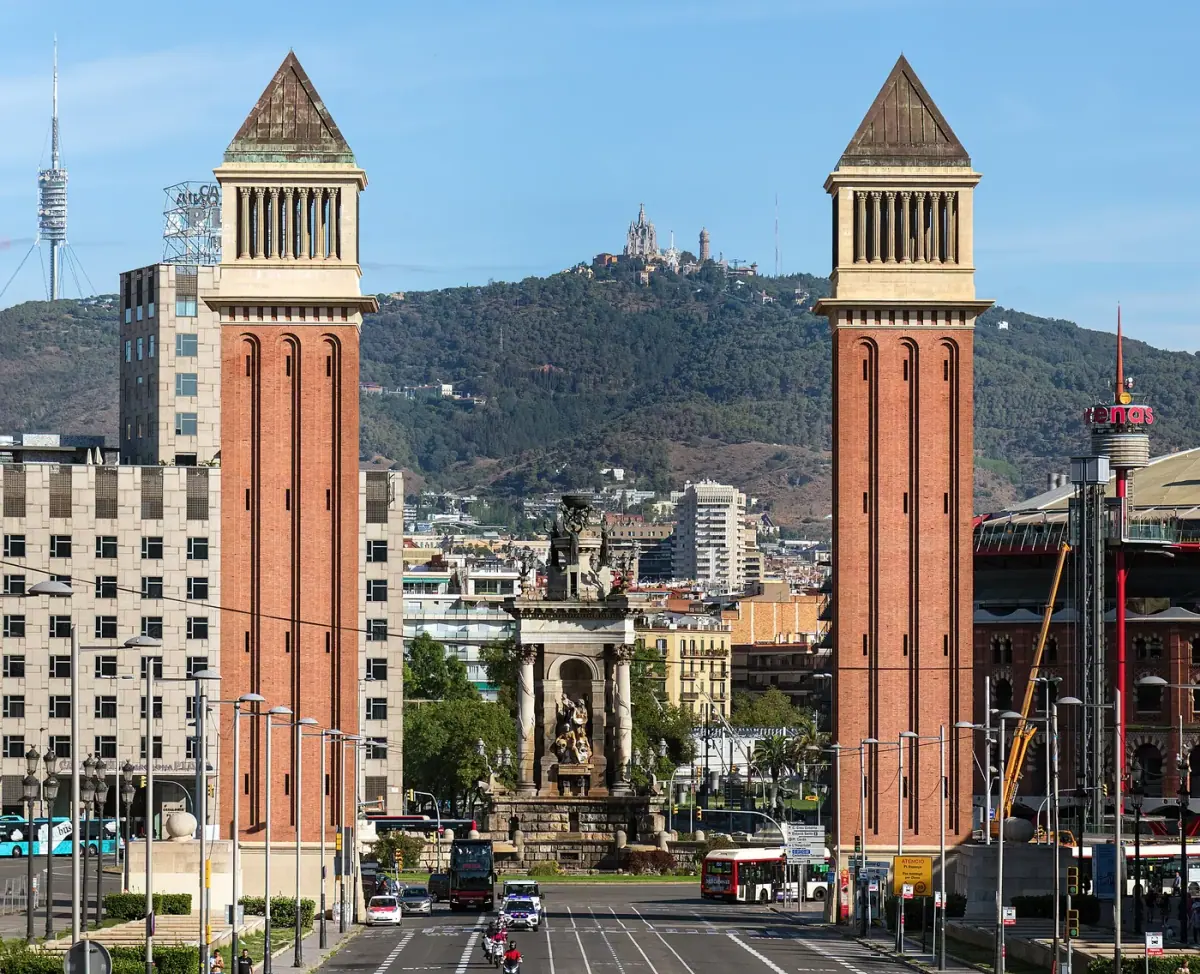

The Venetian Towers frame both sides of the axis towards Montjuïc. Their name evokes Venice visually, but they belong to Barcelona’s exhibition-area layout. View them with the street perspective between rather than in isolation.
A short family exterior stop suffices. Place them on the same geographical branch towards the Magic Fountain; do not assume free access inside the towers. Information source.
Why go? Inspired by Venice’s St Mark’s bell tower, the twin towers begin the grand route up Montjuïc. Marking the 1929 World’s Fair entrance, they make a lovely photographic frame.
Visit summary
- Area: Montjuïc and Sants
- Highlight: Ceremonial entrance to exhibition grounds
- Suggested visit length: About 10–20 minutes
- Type of visit: Exterior view
- Admission: Free (outdoors)
- Nearby map stops: Montjuïc Magic Fountain (Font Màgica), Poble Espanyol
- Open map: Search for this place on Google Maps
Montjuïc Magic Fountain (Font Màgica)
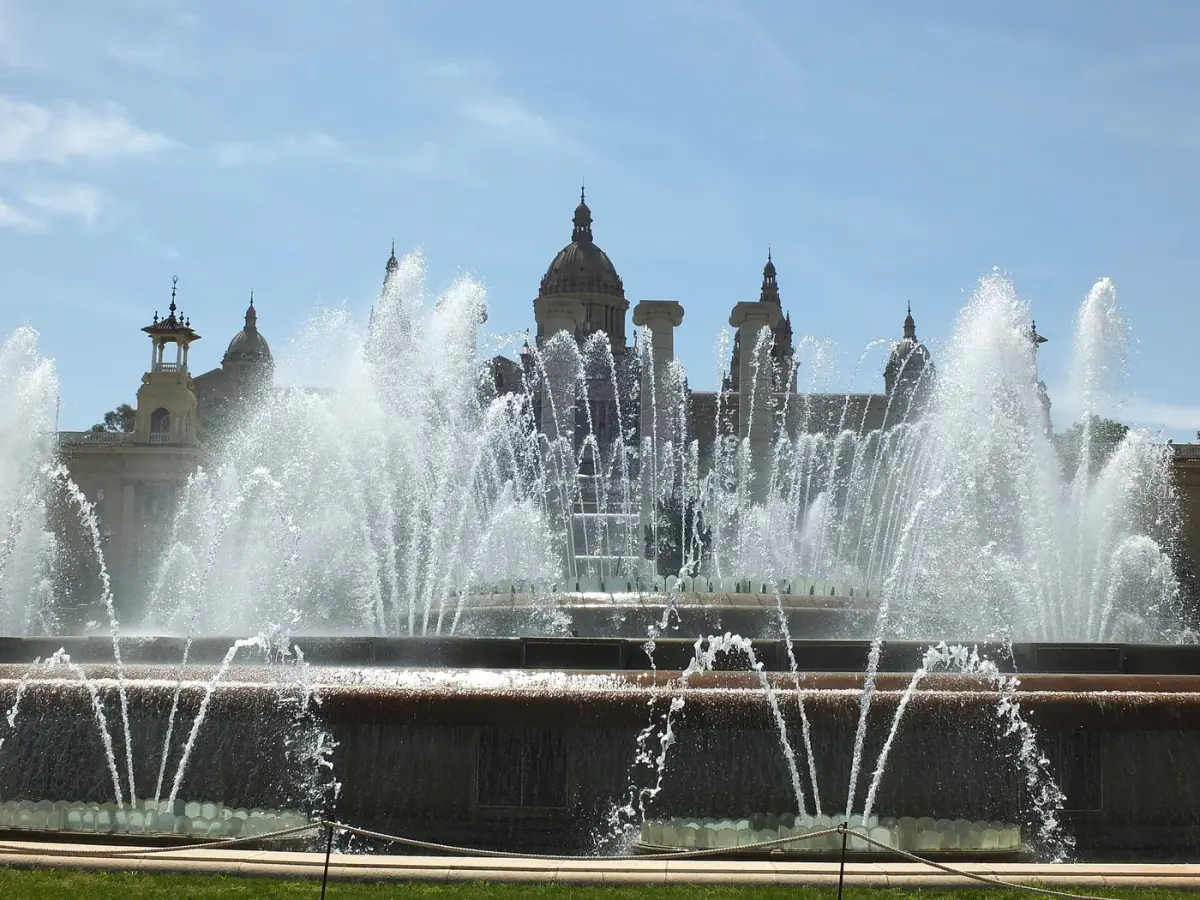

Consider the Magic Fountain with its surrounding steps and exhibition-area axis. A show differs from a daytime architectural walk. Maintenance and water management can alter operation, so we give no fixed evening time.
Check that week’s municipal announcement before basing a family night around it. Without a show, include it in an exterior Montjuïc walk; do not build children’s expectations solely on old videos. Information source.
Why go? Illuminated waters dancing to evening music have been one of Barcelona’s favourite free shows since 1929. An unforgettable family evening programme that makes children’s eyes light up.
Visit summary
- Area: Montjuïc and Sants
- Highlight: Water feature and grand urban axis
- Suggested visit length: About 20–30 minutes; extra time if a show is running
- Type of visit: Outdoors / show subject to programme
- Admission: Free (show dates and times vary by season).
- Nearby map stops: Venetian Towers (Torres Venecianes), Poble Espanyol
- Open map: Search for this place on Google Maps
Espanya Industrial Park
Espanya Industrial shows Barcelona beyond old town and modernist houses. Read the shift from industrial past to public open space through landscaping and surrounding uses. It is not one park with all Montjuïc’s areas.
A separate family break around Sants. Add it by location rather than travelling from the other side of the city simply to complete a marker. Information source.
Why go? A modern park on a former textile factory site; lighthouse-shaped towers and a huge dragon sculpture are favourites with children. Near Sants station, it can fit even while waiting for a train.
Visit summary
- Area: Montjuïc and Sants
- Highlight: Post-industrial urban park
- Suggested visit length: About 30–45 minutes
- Type of visit: Outdoor walk
- Admission: Free (outdoors)
- Nearby map stops: Venetian Towers (Torres Venecianes), Poble Espanyol
- Open map: Search for this place on Google Maps
Mossèn Costa i Llobera Gardens
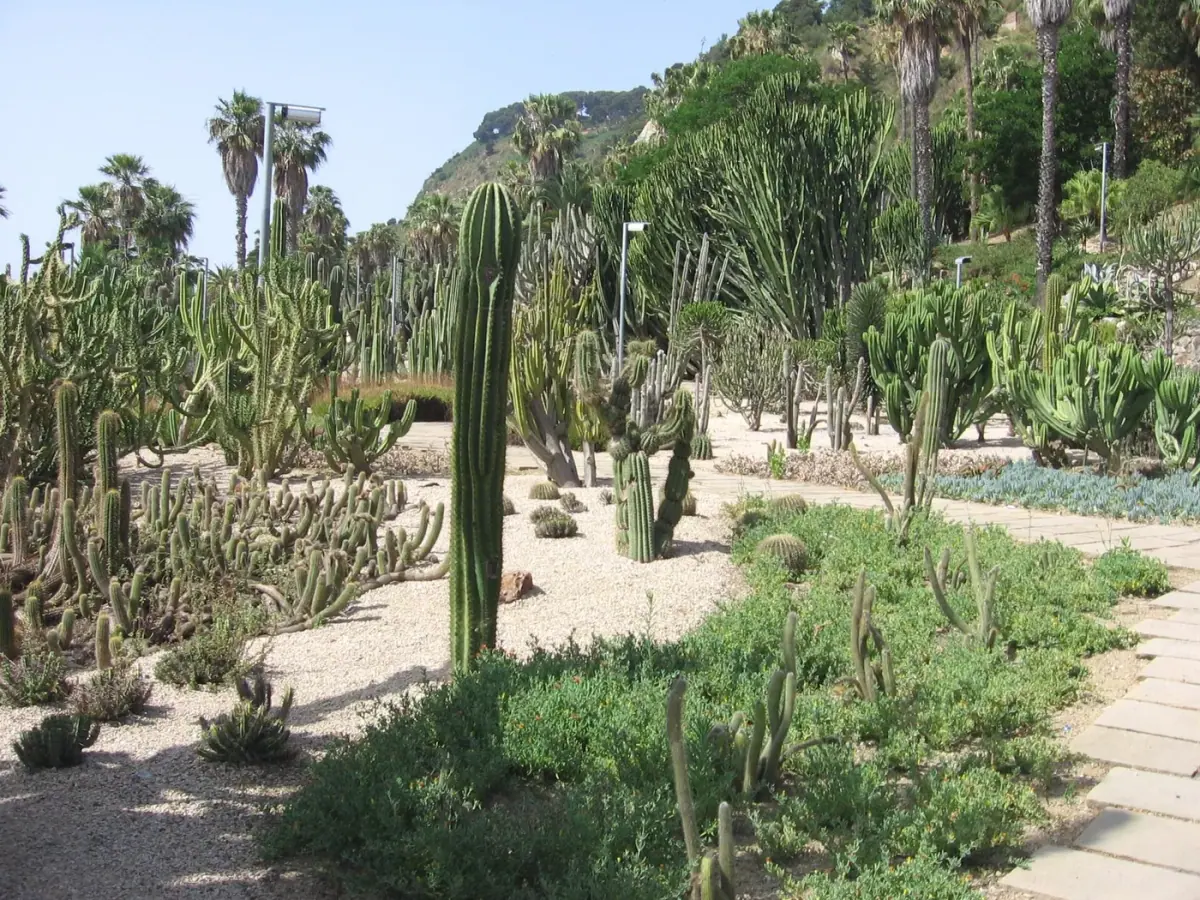

Succulent and cactus shapes stand out here rather than conventional flowerbeds. Comparing stems, spines and growth forms makes a visual family discovery. Observe without touching plants or crossing boundaries.
On Montjuïc’s slopes, allow for walking effort. Check municipal entry and maintenance information; do not make the castle and entire hill compulsory on the same long day. Information source.
Why go? A sea-view garden on Montjuïc’s slope growing cacti and succulents from around the world. Walking among giant cacti feels like another planet for children.
Visit summary
- Area: Montjuïc and Sants
- Highlight: Succulent and cactus landscape
- Suggested visit length: About 45–60 minutes
- Type of visit: Outdoors / garden
- Admission: Free
- Nearby map stops: Montjuïc Castle, Montjuïc Magic Fountain (Font Màgica)
- Open map: Search for this place on Google Maps
Poble Espanyol
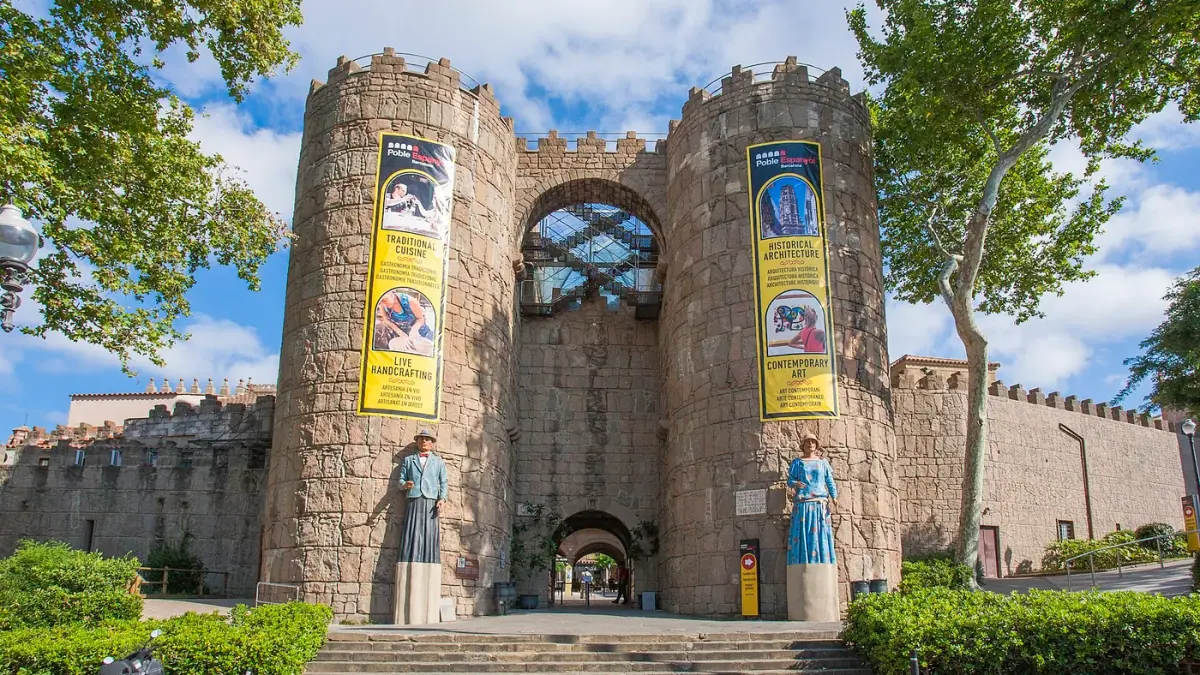

Poble Espanyol compares Spain’s different architectural traditions within one complex. It is not one organically grown historic village, but a setting created for representation and exhibition. Knowing the distinction sets realistic expectations.
Combine outdoor spaces with small interiors as a family. Do not assume events and workshops feature with every ticket or time. It can be the day’s main Montjuïc choice. Information source.
Why go? An open-air museum with full-size replicas of over a hundred buildings from different Spanish regions. Touring all Spain in one afternoon and watching craftspeople work is fun for children.
Visit summary
- Area: Montjuïc and Sants
- Highlight: Different building traditions presented together
- Suggested visit length: About 90–150 minutes
- Type of visit: Outdoors / selected interiors
- Admission: Paid admission · about €14–16 per adult; ages 4–12 about €9–10, under-4s free.
- Nearby map stops: Montjuïc Magic Fountain (Font Màgica), Venetian Towers (Torres Venecianes)
- Open map: Search for this place on Google Maps
Montjuïc Castle
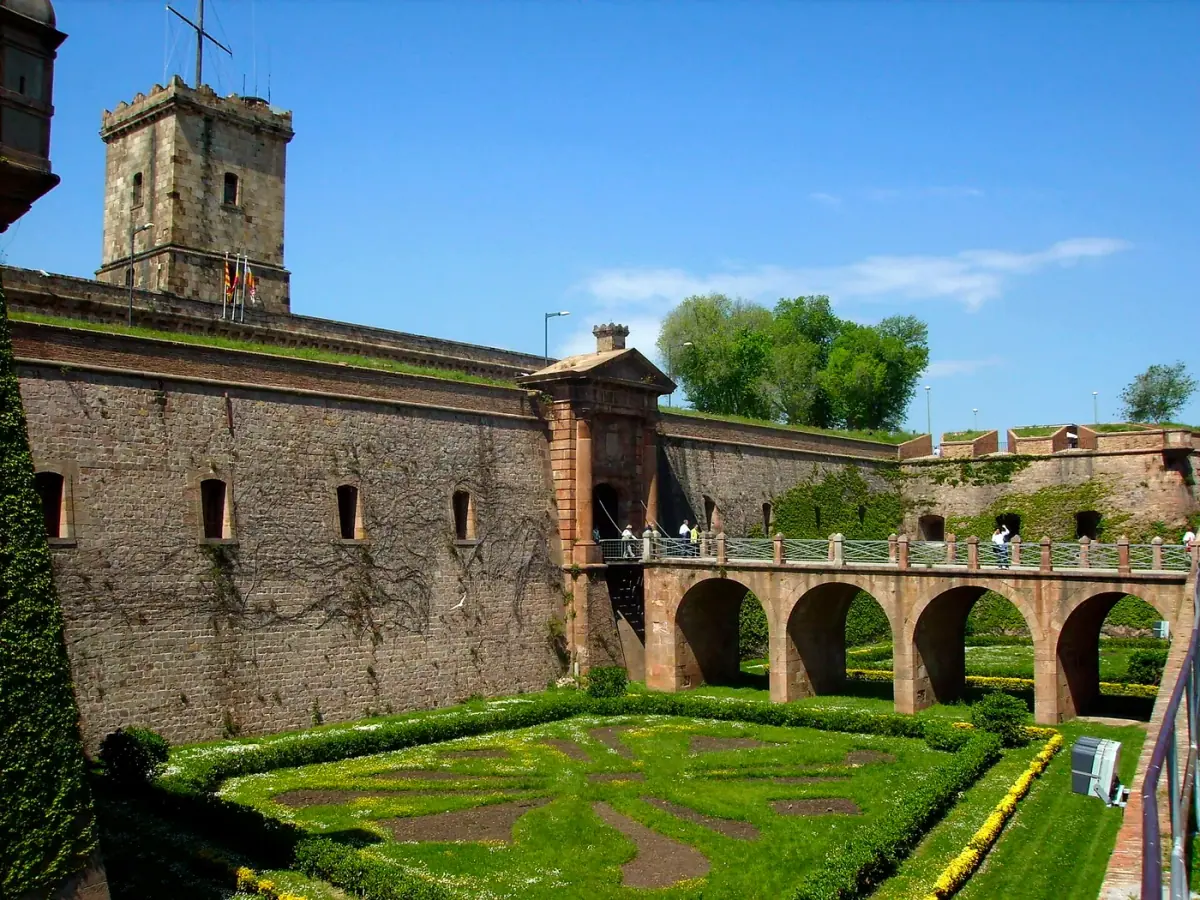

Montjuïc Castle is a structure of defence and city history, not merely a hill for views. Considering walls, courtyards and outlooks together enriches the visit. Check municipal information for open sections and exhibitions.
Plan family ascent and return separately; castle visiting time excludes transport. Choose rather than trying to complete Poble Espanyol and every garden that day. Information source.
Why go? The star-shaped hilltop fortress offers magnificent harbour and city views. Taking the cable car up can be the trip’s most exciting part.
Visit summary
- Area: Montjuïc and Sants
- Highlight: Defensive building and city history
- Suggested visit length: About 60–90 minutes
- Type of visit: Indoors / outdoors
- Admission: Paid admission · about €5; free Sunday afternoons.
- Nearby map stops: Mossèn Costa i Llobera Gardens, Montjuïc Magic Fountain (Font Màgica)
- Open map: Search for this place on Google Maps
Gothic Quarter and old centre
Roman City Walls
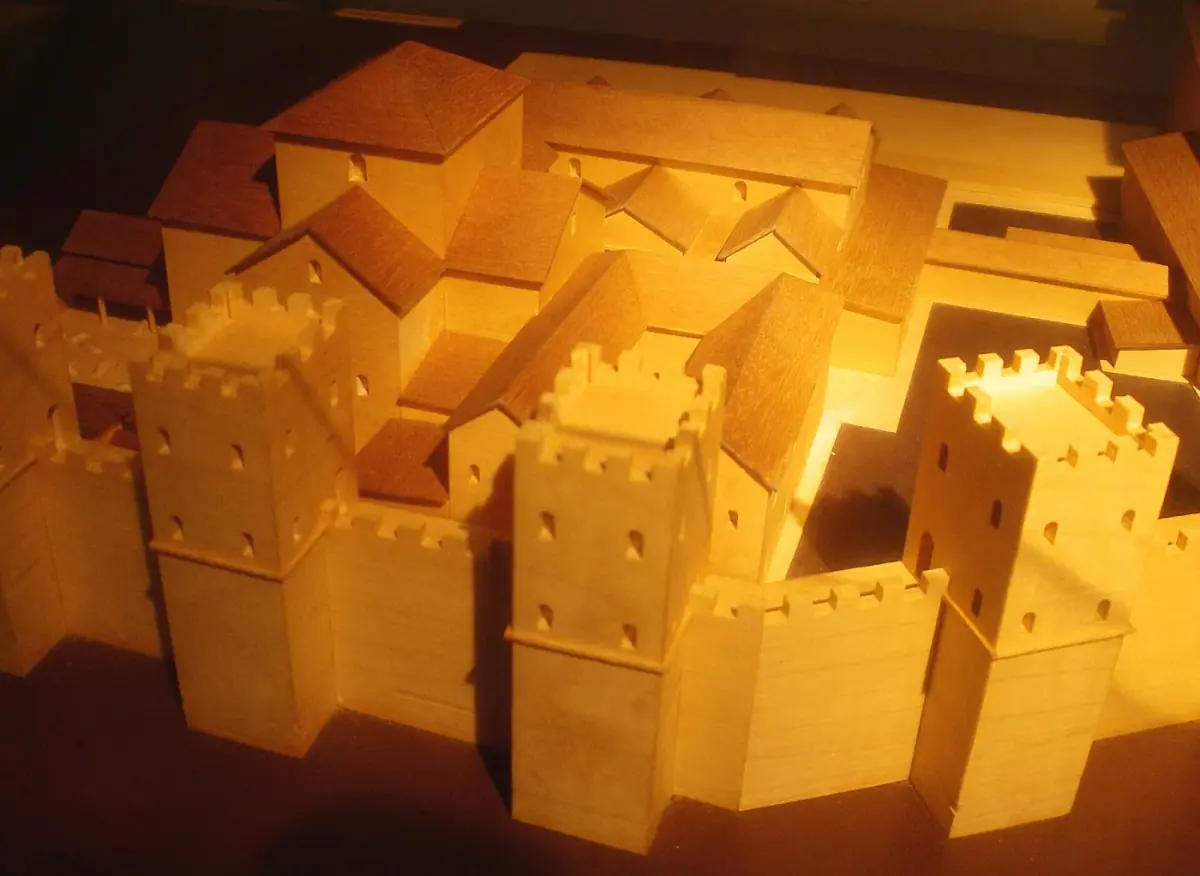

Roman walls make an older boundary beneath today’s Barcelona tangible. Treat the marker as a preserved city fragment rather than a continuously accessible wall-line park. Look at masonry in relation to later buildings.
Briefly explain to children where the city once ended. Add it to the same walk around the cathedral and Casa de l’Ardiaca. Information source.
Why go? Two-thousand-year-old walls of Roman Barcino still stand in the Gothic Quarter. The most tangible way to see the city’s age while walking.
Visit summary
- Area: Gothic Quarter and old centre
- Highlight: Defensive traces of old Barcino
- Suggested visit length: About 20–30 minutes
- Type of visit: Exterior view
- Admission: Free (outdoors)
- Nearby map stops: Casa de l’Ardiaca, Barcelona Cathedral
- Open map: Search for this place on Google Maps
Bishop’s Bridge (Pont del Bisbe)
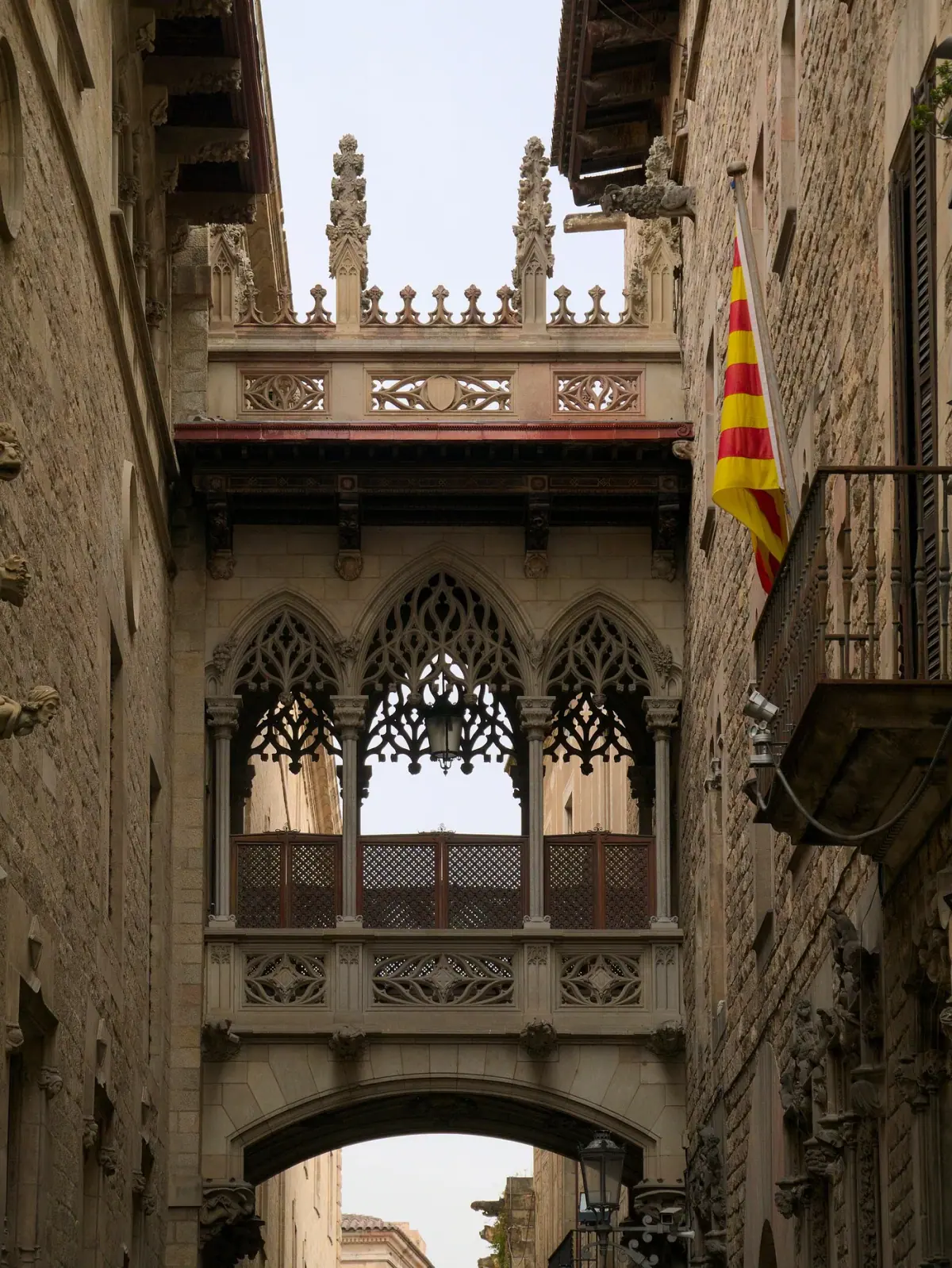

Pont del Bisbe is a decorative passage between buildings over a narrow street. Its historic-looking atmosphere does not mean every detail is medieval; the Gothic Quarter includes interventions from different periods. Look at arches and decoration with the street perspective.
A short stop between the cathedral and Sant Jaume. With children in crowds, look from a suitable opening and continue rather than waiting long for photographs. Information source.
Why go? Contrary to appearances, this lace-like stone bridge over a narrow Gothic Quarter street was built in 1928. Its skull-and-dagger legend sparks children’s curiosity.
Visit summary
- Area: Gothic Quarter and old centre
- Highlight: Neo-Gothic passage over a narrow street
- Suggested visit length: About 10–15 minutes
- Type of visit: Exterior view
- Admission: Free (outdoors)
- Nearby map stops: Palau de la Generalitat de Catalunya, Barcelona Cathedral
- Open map: Search for this place on Google Maps
Kiss Mosaic (El món neix en cada besada)
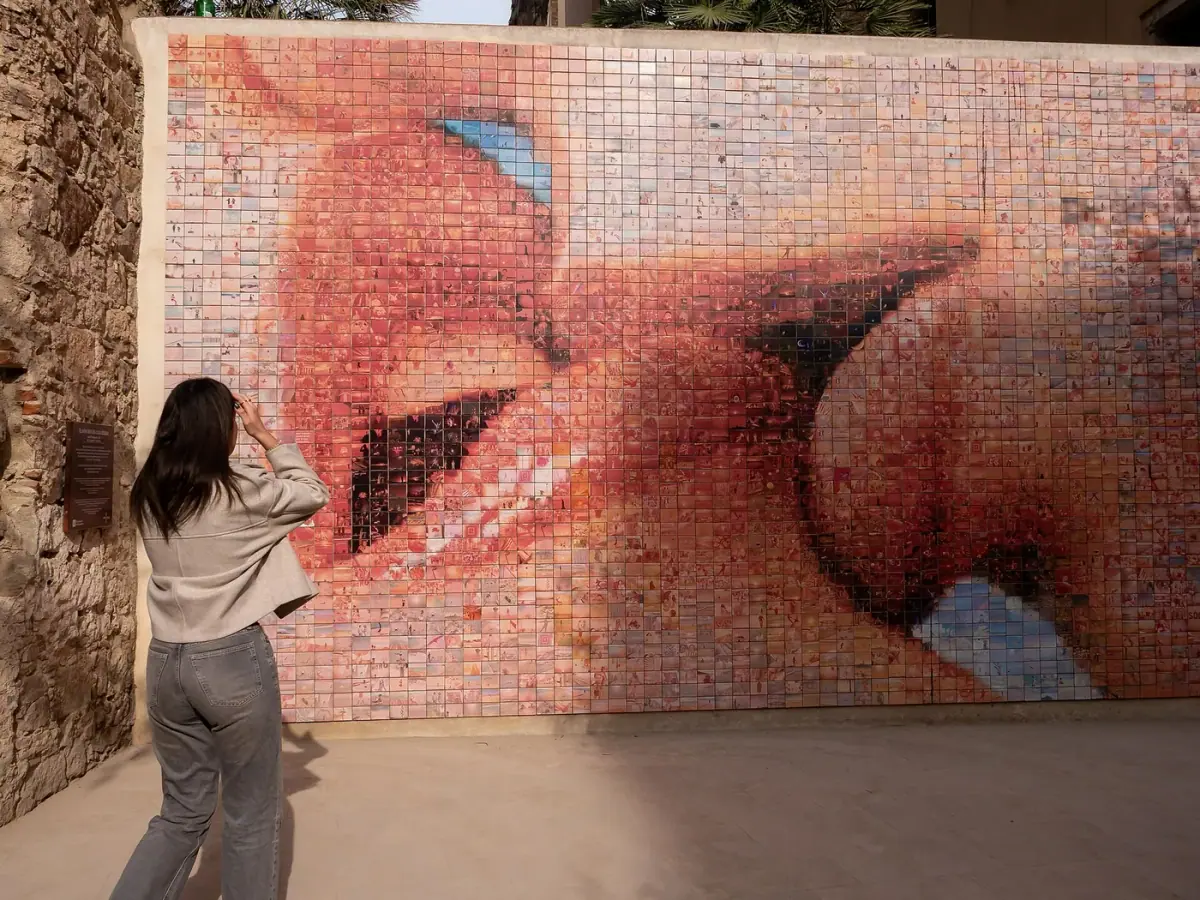

In this photographic mosaic associated with Joan Fontcuberta, a kiss seen from afar separates into many small images up close. Moving between these scales is the visit’s interest. After seeing the overall image, approach individual pictures to examine its construction.
A short family visual-discovery stop on the central cathedral walk. Searching the local artwork title as well as the map’s English name helps. Information source.
Why go? Thousands of little photographs form one giant kiss from a distance. Discovering the difference up close and far away is a small game for children.
Visit summary
- Area: Gothic Quarter and old centre
- Highlight: Large image made from small photographs
- Suggested visit length: About 10–20 minutes
- Type of visit: Exterior view
- Admission: Free (outdoors)
- Nearby map stops: Casa de l’Ardiaca, Roman City Walls
- Open map: Search for this place on Google Maps
Casa de l’Ardiaca

Casa de l’Ardiaca reveals architectural layers from different periods near the cathedral. Its historic courtyard and façade help explain space behind a narrow street frontage. Current archive and institutional uses mean not all sections are open to tourist circulation.
Take a brief family courtyard or exterior look. Add it to the same central loop with Roman walls and cathedral. Information source.
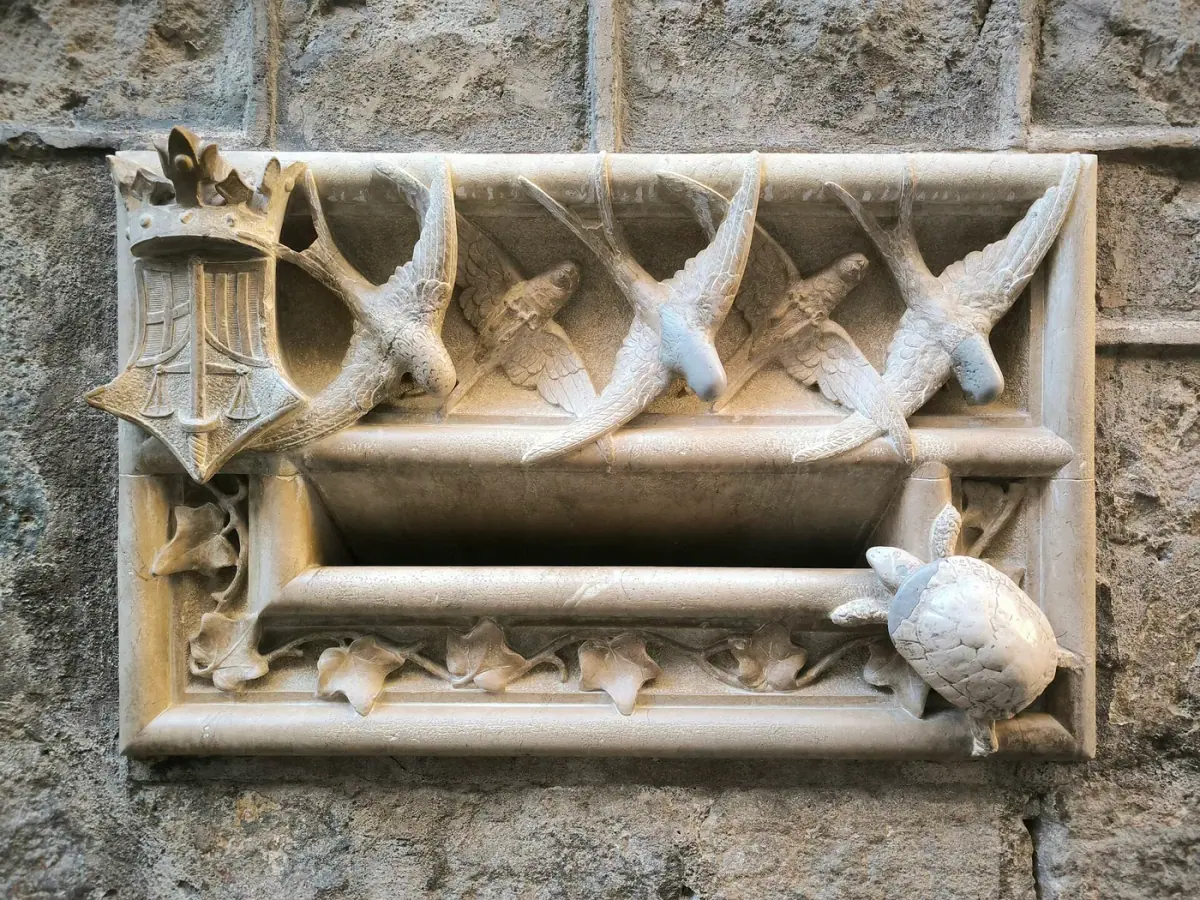
Why go? A palm and fountain in the Gothic courtyard beside the cathedral offer calm amid crowds. The mailbox with a tortoise and swallows at the door is a Modernist surprise.
Visit summary
- Area: Gothic Quarter and old centre
- Highlight: Historic house and city archive surroundings
- Suggested visit length: About 20–30 minutes
- Type of visit: Exterior view / accessible courtyard
- Admission: Courtyard free.
- Nearby map stops: Barcelona Cathedral, Roman City Walls
- Open map: Search for this place on Google Maps
Santa Anna Church
Santa Anna offers a different historic and religious space beside the centre’s shopping crowds. Its entrance and courtyard show how small spaces hide within the old town. Accessible areas can vary with worship and institutional programmes.
Consider a short family indoor stop. Add it by location around Portal de l’Àngel and Catalunya; do not assume every section is always open. Information source.
Why go? Beside Portal de l’Àngel, a hidden Gothic cloister makes one of the city’s most peaceful corners. Silence lies just a few steps from shopping crowds.
Visit summary
- Area: Gothic Quarter and old centre
- Highlight: Church and courtyard in the busy centre
- Suggested visit length: About 20–40 minutes
- Type of visit: Indoors / exterior view
- Admission: Paid admission (small entry fee).
- Nearby map stops: Portal de l’Àngel, Kiss Mosaic (El món neix en cada besada)
- Open map: Search for this place on Google Maps
Palau de la Generalitat de Catalunya
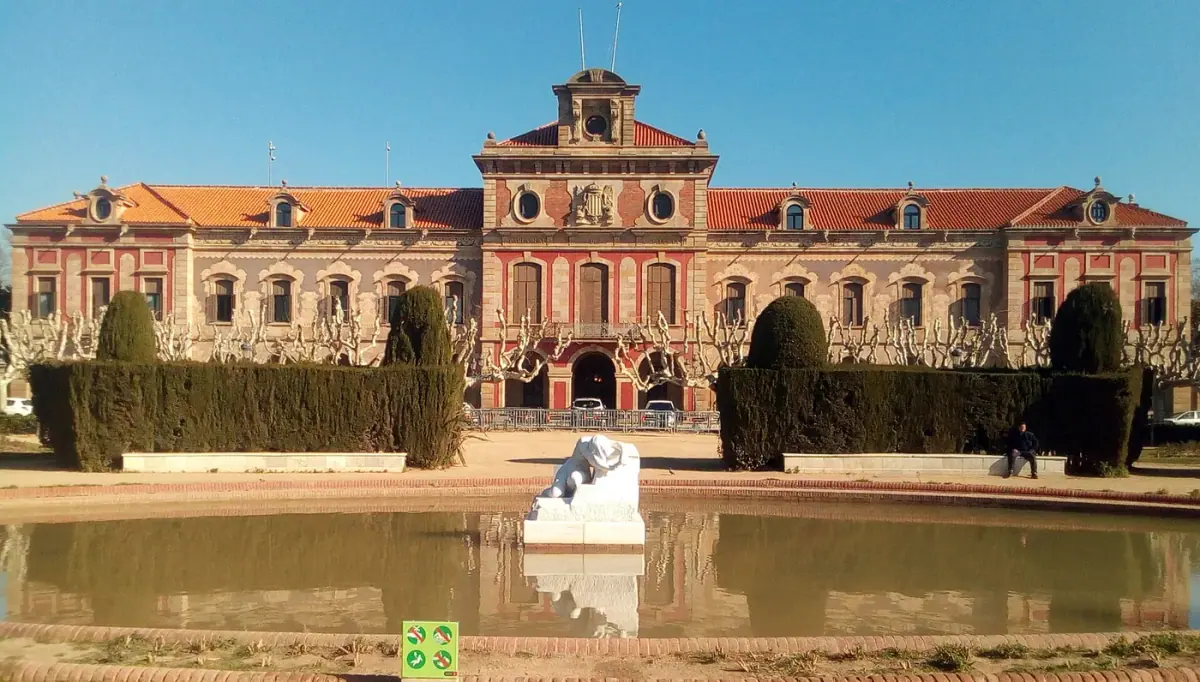

The Generalitat Palace combines a historic façade with current government use. Viewing it from Sant Jaume reveals politics’ spatial presence in the city. It is not an independent museum open at any moment.
Check official open days or reservations for a family interior visit. A short exterior look completes the cathedral and Pont del Bisbe branch. Information source.
Why go? A Gothic palace serving Catalonia’s government for six hundred years. It opens to everyone on Sant Jordi day, 23 April, with an impressive orange-tree courtyard.
Visit summary
- Area: Gothic Quarter and old centre
- Highlight: Living government in a historic building
- Suggested visit length: About 15–25 minutes for the exterior
- Type of visit: Exterior view / scheduled interior visit
- Admission: Free · scheduled visits by reservation only.
- Nearby map stops: Plaça de Sant Jaume, Bishop’s Bridge (Pont del Bisbe)
- Open map: Search for this place on Google Maps
Gothic Quarter (Barri Gòtic)
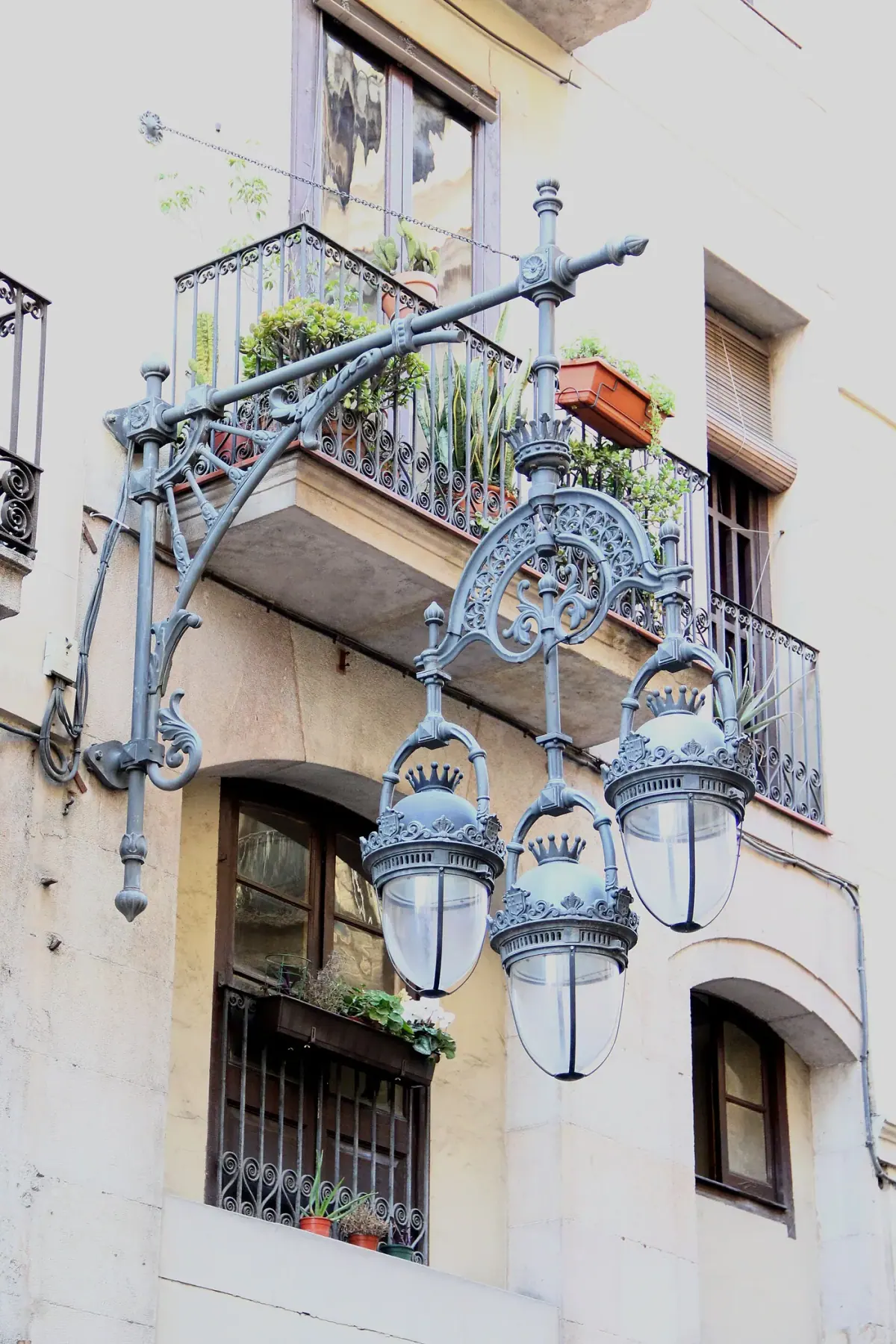

Barri Gòtic does not mean everything shares one date. Roman remains, medieval buildings and later interventions stand in the same streets. A selected loop from the cathedral to Sant Jaume and Plaça del Rei clarifies these layers.
Choose a few main family stops instead of completing every narrow street. Museum and church interiors add time beyond this neighbourhood walk. Information source.
Why go? Labyrinthine streets intertwine two thousand years of history, from Roman walls to medieval palaces. Putting down the map and getting lost is one of Barcelona’s loveliest experiences.
Visit summary
- Area: Gothic Quarter and old centre
- Highlight: Urban fabric layered across periods
- Suggested visit length: About 60–120 minutes for selected streets
- Type of visit: Neighbourhood walk
- Admission: Free (outdoors)
- Nearby map stops: Plaça de Sant Jaume, Palau de la Generalitat de Catalunya
- Open map: Search for this place on Google Maps
Plaça del Rei
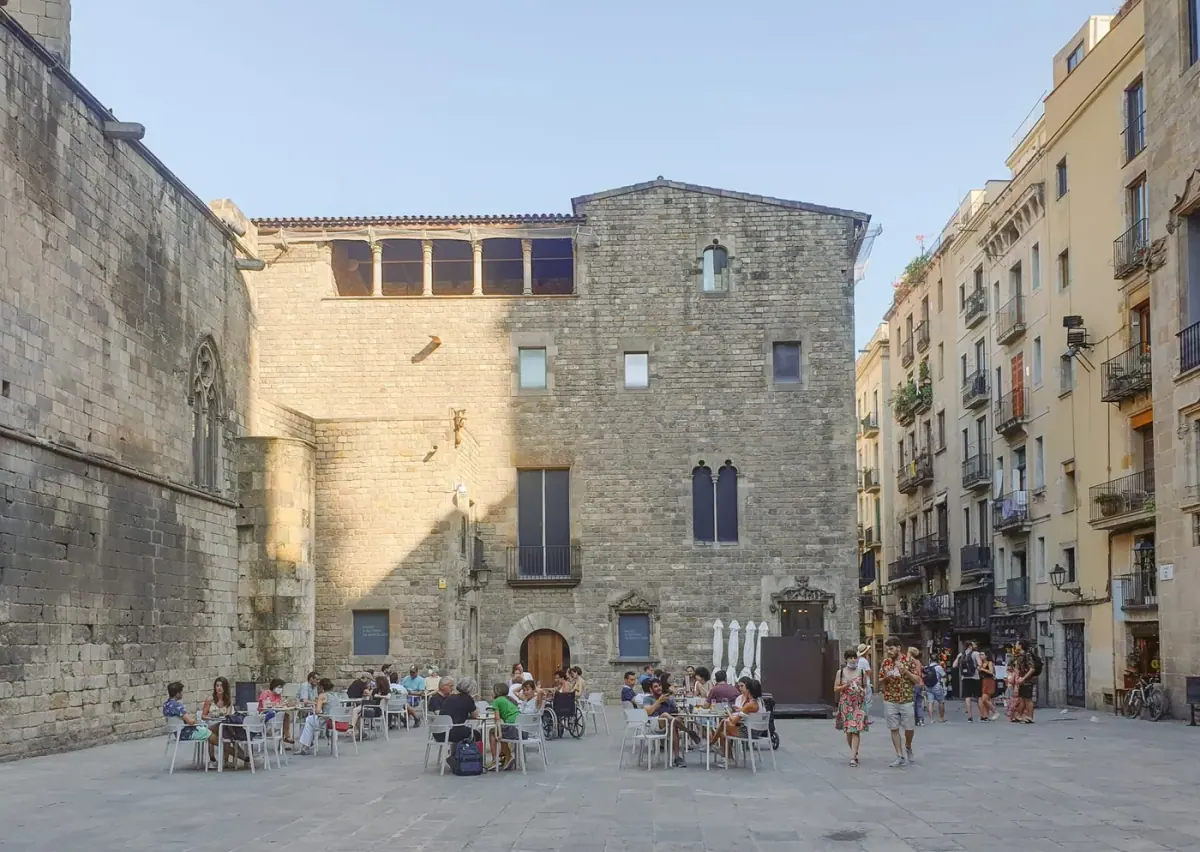

Plaça del Rei and its historic surroundings form a more enclosed, defined urban stage. Tall façades and a small open space contrast with broad Plaça de Catalunya. This guide covers the mapped area only; we do not multiply every nearby museum into an extra stop.
Add it to a short family cathedral loop. Check current access separately for any institution you choose to enter. Information source.
Why go? Surrounded by the kings of Aragon’s palace, the square is said to be where Columbus met the king after returning from America. Roman remains beneath are accessible through the City History Museum.
Visit summary
- Area: Gothic Quarter and old centre
- Highlight: Square enclosed by old government buildings
- Suggested visit length: About 20–30 minutes
- Type of visit: Outdoors / exterior view
- Admission: Free (outdoors)
- Nearby map stops: Barcelona Cathedral, Bishop’s Bridge (Pont del Bisbe)
- Open map: Search for this place on Google Maps
Plaça de Sant Jaume
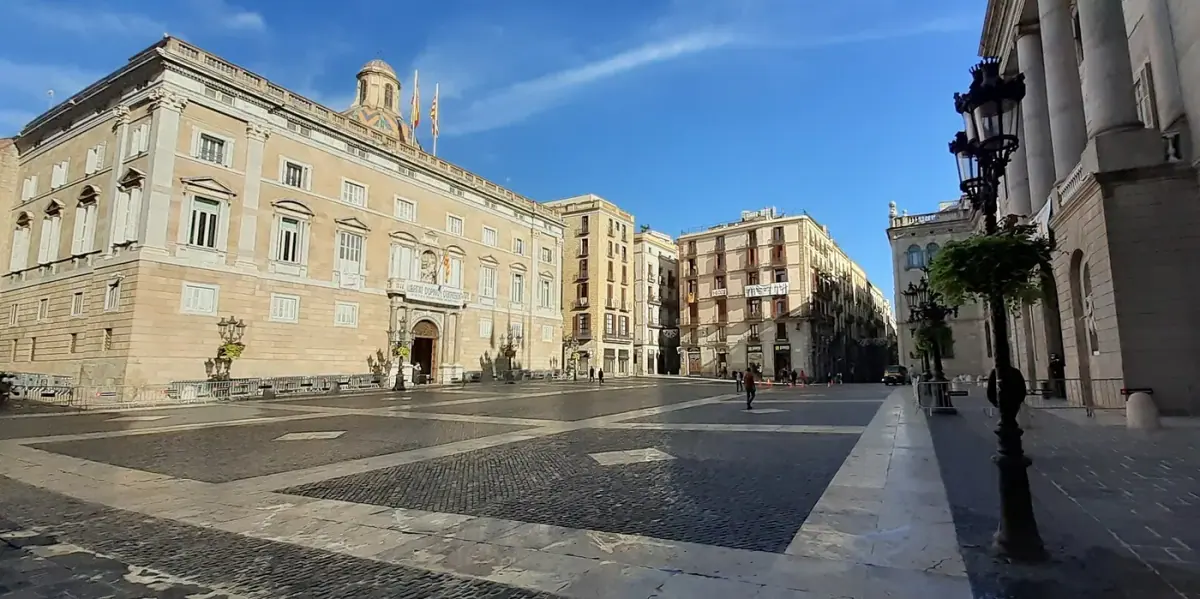

Sant Jaume combines historic buildings and current government functions in one square. Look at institutions facing each other as well as façades. Events and official uses can change the layout.
A brief family exterior look and walk suffice. Generalitat Palace and Pont del Bisbe have separate markers but share one central branch; do not assume unrestricted institutional entry. Information source.
Why go? On the Roman forum site, Catalonia’s government and Barcelona’s city hall now face each other. The city’s political centre for two thousand years.
Visit summary
- Area: Gothic Quarter and old centre
- Highlight: Living government square
- Suggested visit length: About 15–25 minutes
- Type of visit: Outdoors / exterior view
- Admission: Free (outdoors)
- Nearby map stops: Palau de la Generalitat de Catalunya, Bishop’s Bridge (Pont del Bisbe)
- Open map: Search for this place on Google Maps
Portal de l’Àngel
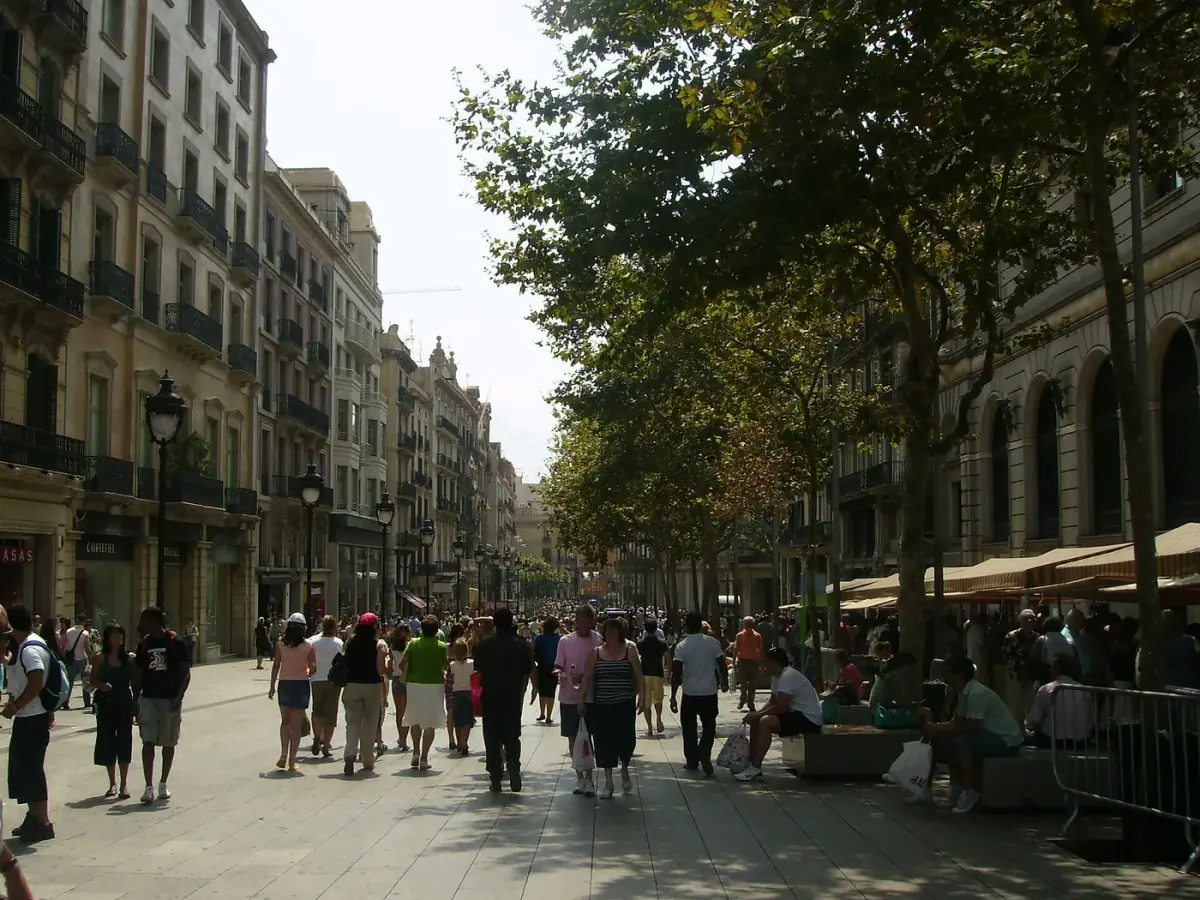

Portal de l’Àngel is commercially busy today; here it serves as a pedestrian link between Catalunya and old town rather than a shopping recommendation. Look at upper façades and street scale as well as shop windows.
Use it as a short family transition. Combine Santa Anna and cathedral directions to reduce repeated returns to the same centre. Information source.
Why go? One of Spain’s busiest shopping streets, leading from Plaça de Catalunya to the cathedral. A lively pedestrian route naturally crossed on entering the Gothic Quarter.
Visit summary
- Area: Gothic Quarter and old centre
- Highlight: Central pedestrian link
- Suggested visit length: About 15–25 minutes
- Type of visit: Pedestrian street walk
- Admission: Free (outdoors)
- Nearby map stops: Santa Anna Church, Kiss Mosaic (El món neix en cada besada)
- Open map: Search for this place on Google Maps
Carrer de Petritxol
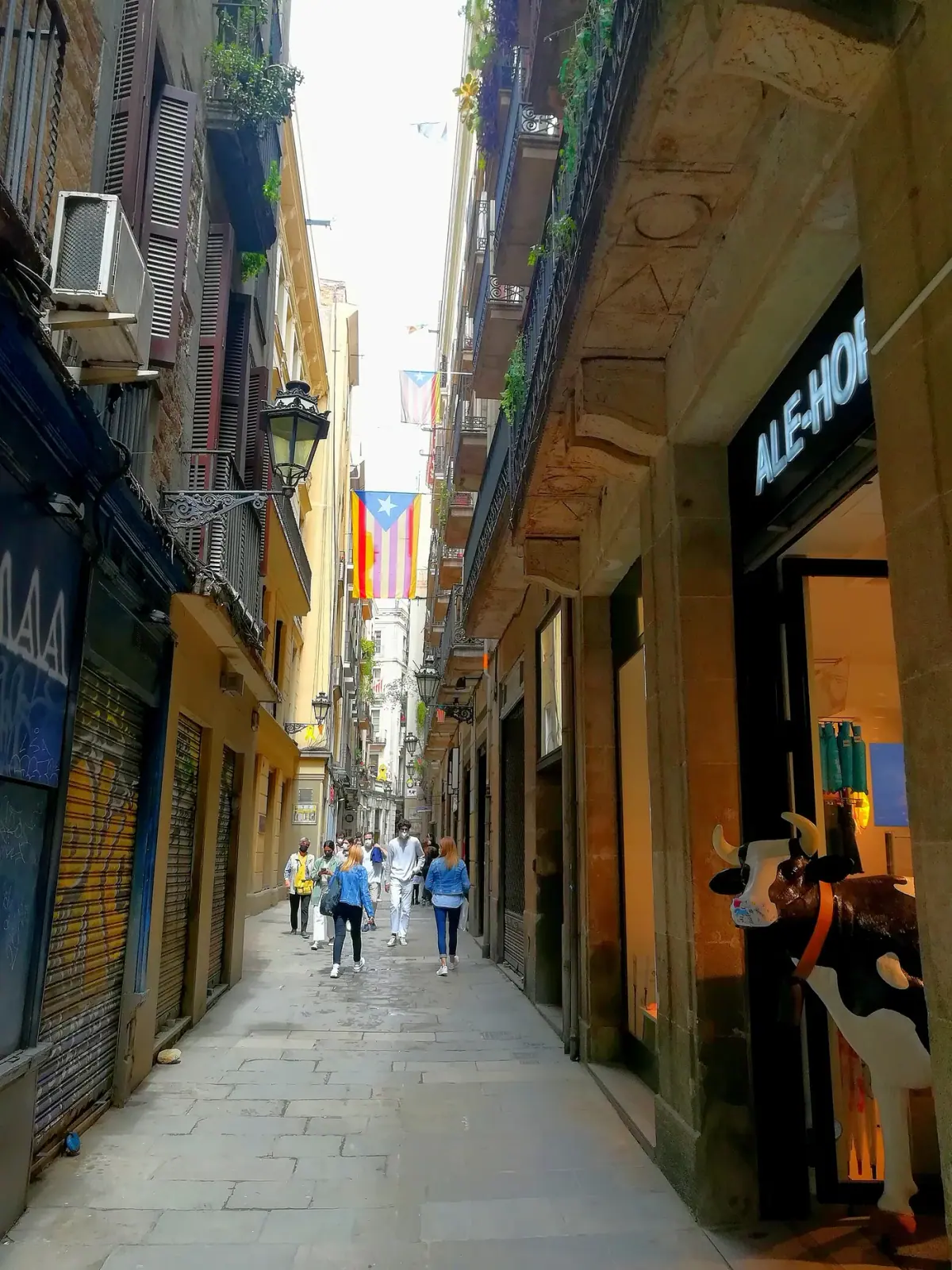

Petritxol gives a short, narrow street scale different from broad avenues. Façade and wall details show that not every map marker must be a grand monument. Food businesses remain in a separate list.
A short family passage and visual discovery. La Pallaresa is separately paired here as your mapped food choice; we add no personal product review. Information source.
Why go? The charming narrow street is famous for traditional cocoa shops, or granjas. Barcelona’s sweetest address for thick hot chocolate and churros.
Visit summary
- Area: Gothic Quarter and old centre
- Highlight: Urban details in a narrow passage
- Suggested visit length: About 15–25 minutes
- Type of visit: Street walk
- Admission: Free (outdoors)
- Nearby map stops: Roman City Walls, Casa de l’Ardiaca
- Open map: Search for this place on Google Maps
Barcelona Cathedral
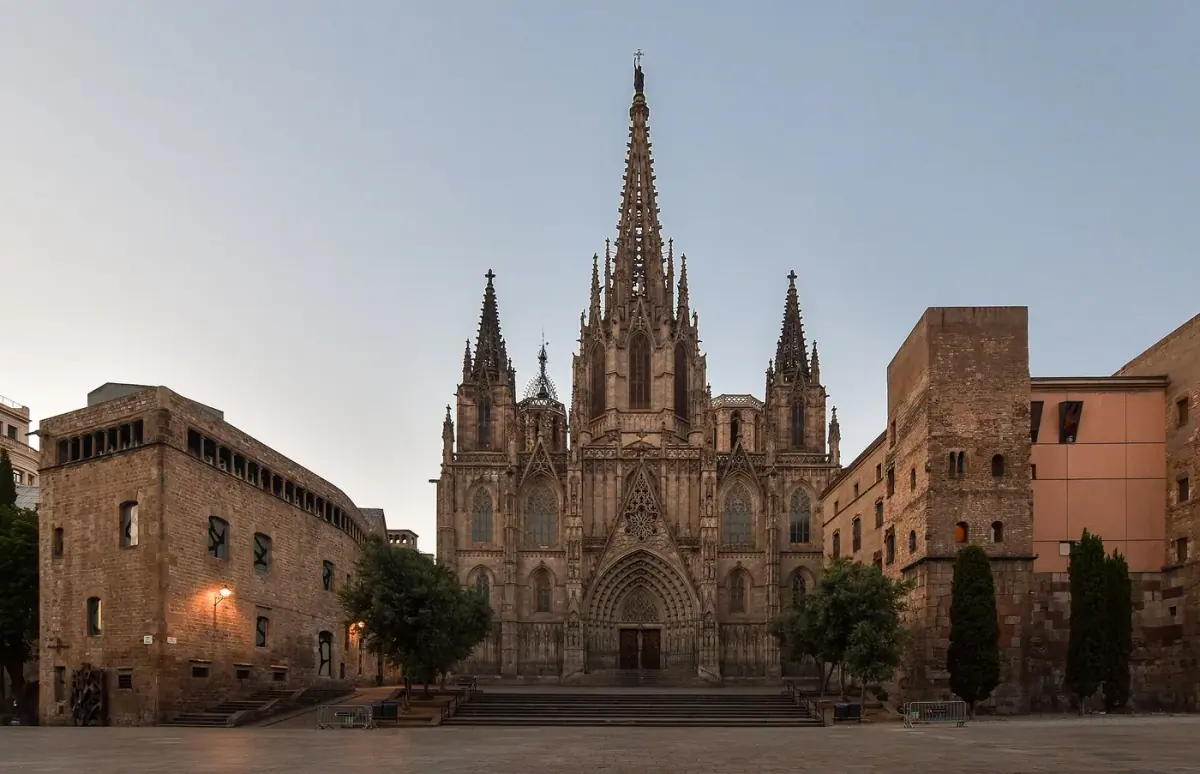

Barcelona Cathedral is not Sagrada Família; it offers separate history and architecture at the Gothic Quarter’s heart. Examine the façade from the square, then how supports and light organise the interior. Extra-area visiting coverage can vary.
Choose it as the family old-town day’s main interior. Casa de l’Ardiaca, walls and Pont del Bisbe share the same loop. Check worship and tourist entry separately. Information source.
Why go? The Gothic façade and cloister with 13 white geese make one of the city’s most impressive churches. Rooftop views over Gothic Quarter towers are another reward.
Visit summary
- Area: Gothic Quarter and old centre
- Highlight: The old town’s religious focus
- Suggested visit length: About 45–75 minutes
- Type of visit: Indoors / exterior view
- Admission: Free during services; tourist visit (including rooftop) charges admission.
- Nearby map stops: Casa de l’Ardiaca, Bishop’s Bridge (Pont del Bisbe)
- Open map: Search for this place on Google Maps
Raval and La Rambla
Botero’s Cat (El Gat)
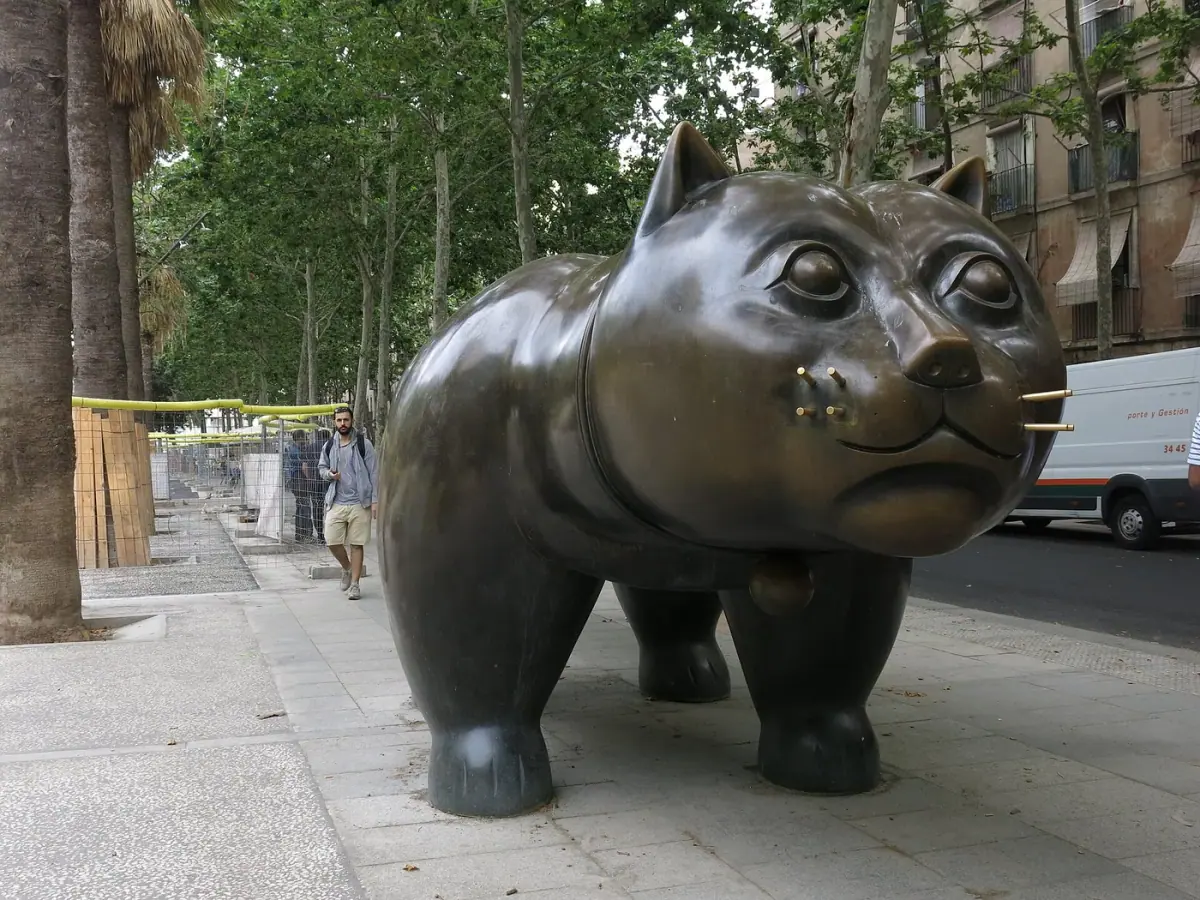

Botero’s cat adds a playful visual stop to a square or street walk. Rounded forms and large scale exemplify the artist’s approach. Seeing it from several sides can be more interesting than only photographing its front.
Choose a short family art break. Pair it broadly with Raval’s old hospital; we do not recommend climbing the artwork as part of visiting. Information source.
Why go? Colombian artist Botero’s enormous plump cat makes a cheerful stop on Rambla del Raval, where children climb and pose for photographs.
Visit summary
- Area: Raval and La Rambla
- Highlight: Large-scale public sculpture
- Suggested visit length: About 10–15 minutes
- Type of visit: Exterior view
- Admission: Free (outdoors)
- Nearby map stops: Old Santa Creu Hospital, Boqueria Market
- Open map: Search for this place on Google Maps
Canaletes Fountain
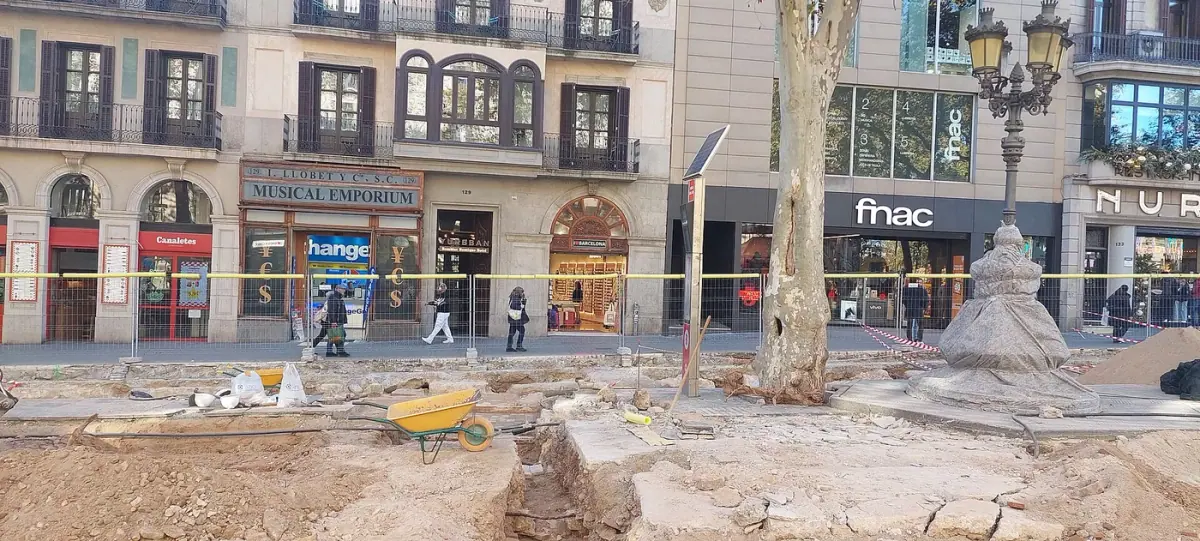

Canaletes is a small fountain requiring less time than major monuments. Consider how this street-furniture-sized object became a city-memory symbol. We do not present return or luck stories as guaranteed results.
A brief look on upper La Rambla suffices. Stop without blocking busy pedestrian flow with children, then continue; this marker does not require walking the full boulevard. Information source.
Why go? Legend says drinking here brings you back to Barcelona; Barça fans celebrate championships here too. A short but storied stop at the start of La Rambla.
Visit summary
- Area: Raval and La Rambla
- Highlight: Small urban symbol on La Rambla
- Suggested visit length: About 10 minutes
- Type of visit: Exterior view
- Admission: Free (outdoors)
- Nearby map stops: Boqueria Market, La Rambla
- Open map: Search for this place on Google Maps
Old Santa Creu Hospital
The old hospital complex offers public-building history different from religious monuments. Courtyards and passages make old healthcare institutions’ urban role tangible. Distinguish current institutional uses from historic architecture.
A calmer family pause on a Raval walk. Do not assume open courtyards and working areas share access; follow signs on site. Information source.
Why go? The medieval hospital’s Gothic courtyard, orange trees and silence form a hidden Raval garden. Also known as the hospital where Gaudí spent his final days after a tram accident.
Visit summary
- Area: Raval and La Rambla
- Highlight: Historic healthcare building’s urban life
- Suggested visit length: About 30–45 minutes
- Type of visit: Courtyard / exterior view / open areas
- Admission: Courtyard and garden free.
- Nearby map stops: Boqueria Market, Botero’s Cat (El Gat)
- Open map: Search for this place on Google Maps
La Rambla
La Rambla is a long walking route linking streets and stops, not one square. Upper Canaletes and the waterfront Columbus Monument are not at the same point. Choose side branches and avoid unnecessary backtracking.
Short stretches are easier with children amid busy pedestrian traffic. Choose by interest rather than adding Boqueria, Raval and Plaça Reial to one long day. Information source.
Why go? The famous tree-lined pedestrian boulevard from port to Plaça de Catalunya offers a lively walk of street performers and florists. Searching for Miró’s pavement mosaic makes a little treasure hunt.
Visit summary
- Area: Raval and La Rambla
- Highlight: Pedestrian backbone between old town and coast
- Suggested visit length: About 30–60 minutes for a selected section
- Type of visit: Boulevard walk
- Admission: Free (outdoors)
- Nearby map stops: Boqueria Market, Old Santa Creu Hospital
- Open map: Search for this place on Google Maps
Boqueria Market
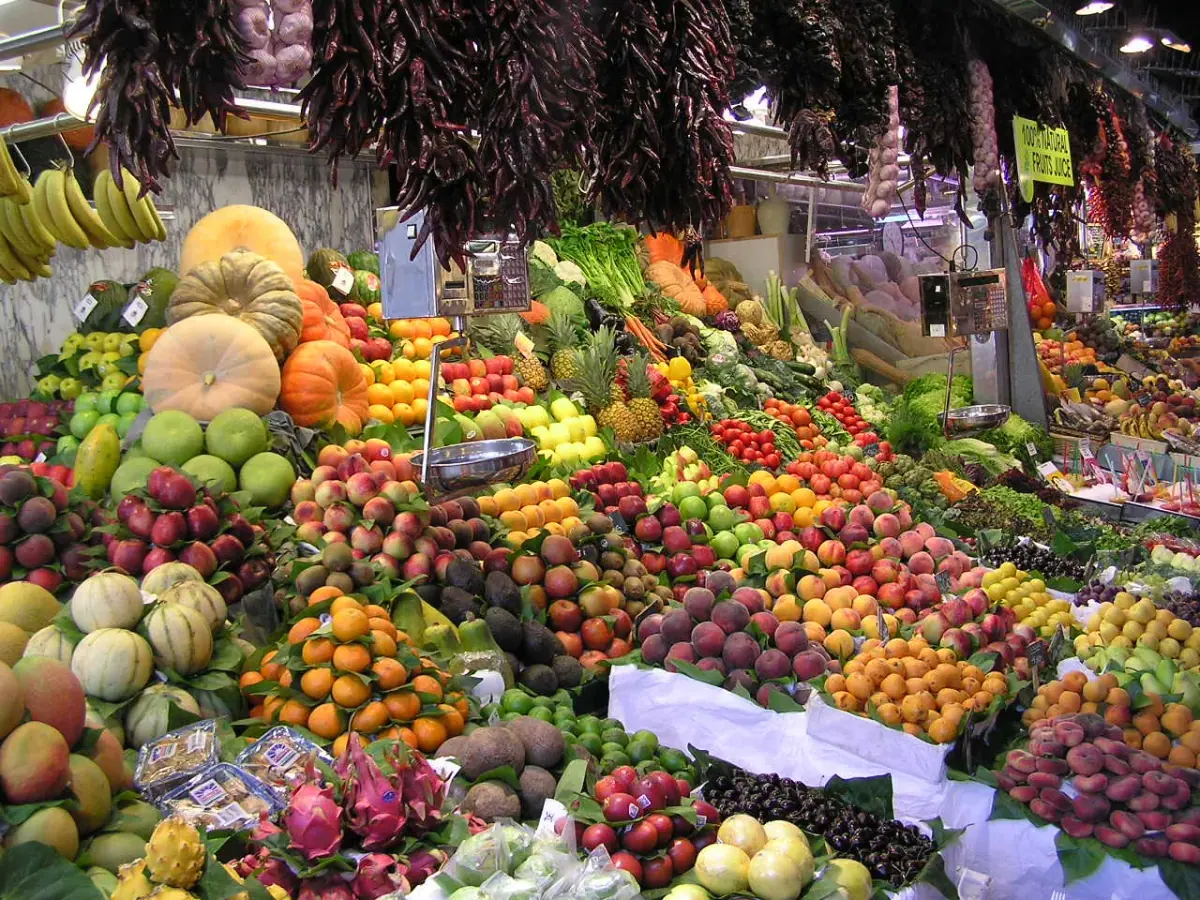

Boqueria is a stop for market layout and city life as well as food variety. We observe products, roofing and circulation rather than rating stalls. The experience varies by day and time.
Take a family break, but do not assume we ate at a particular vendor. Tried businesses appear separately below. When busy, tour briefly without blocking passageways. Information source.
Why go? Colourful fruit stalls, fresh juices and tapas bars make one of the world’s most famous markets. A feast for eyes and taste buds where children choose their own juice.
Visit summary
- Area: Raval and La Rambla
- Highlight: Everyday use of a historic market
- Suggested visit length: About 30–45 minutes
- Type of visit: Market walk
- Admission: Free (food costs extra).
- Nearby map stops: La Rambla, Old Santa Creu Hospital
- Open map: Search for this place on Google Maps
Plaça Reial
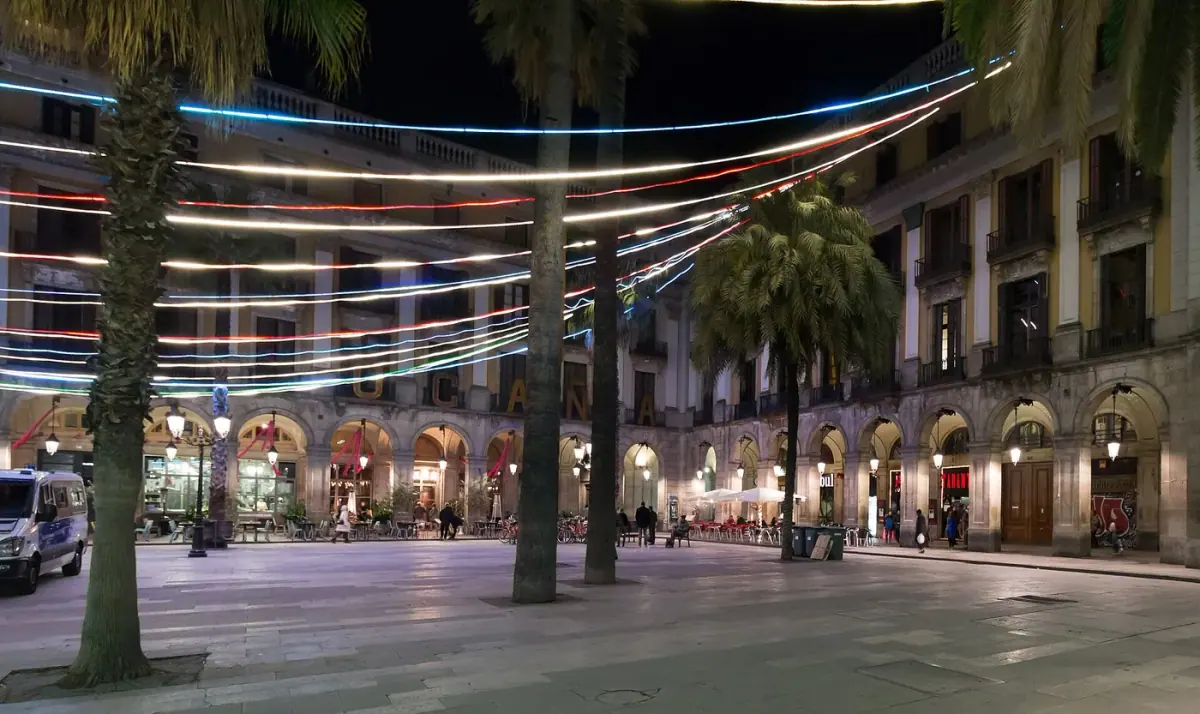

Plaça Reial provides a more defined square after branching off busy La Rambla. Looking at façade rhythm, arcades and open-space proportions takes it beyond a set of businesses.
Useful for a short family break and orientation. Los Tarantos is a separate performance option here; seeing the square requires no show attendance. Information source.
Why go? An elegant square of palms, arcaded buildings and street lamps designed by the young Gaudí. Ideal for a coffee break away from La Rambla’s noise.
Visit summary
- Area: Raval and La Rambla
- Highlight: Urban square with coordinated façades
- Suggested visit length: About 20–30 minutes
- Type of visit: Outdoor walk
- Admission: Free (outdoors)
- Nearby map stops: Los Tarantos, Güell Palace (Palau Güell)
- Open map: Search for this place on Google Maps
Güell Palace (Palau Güell)
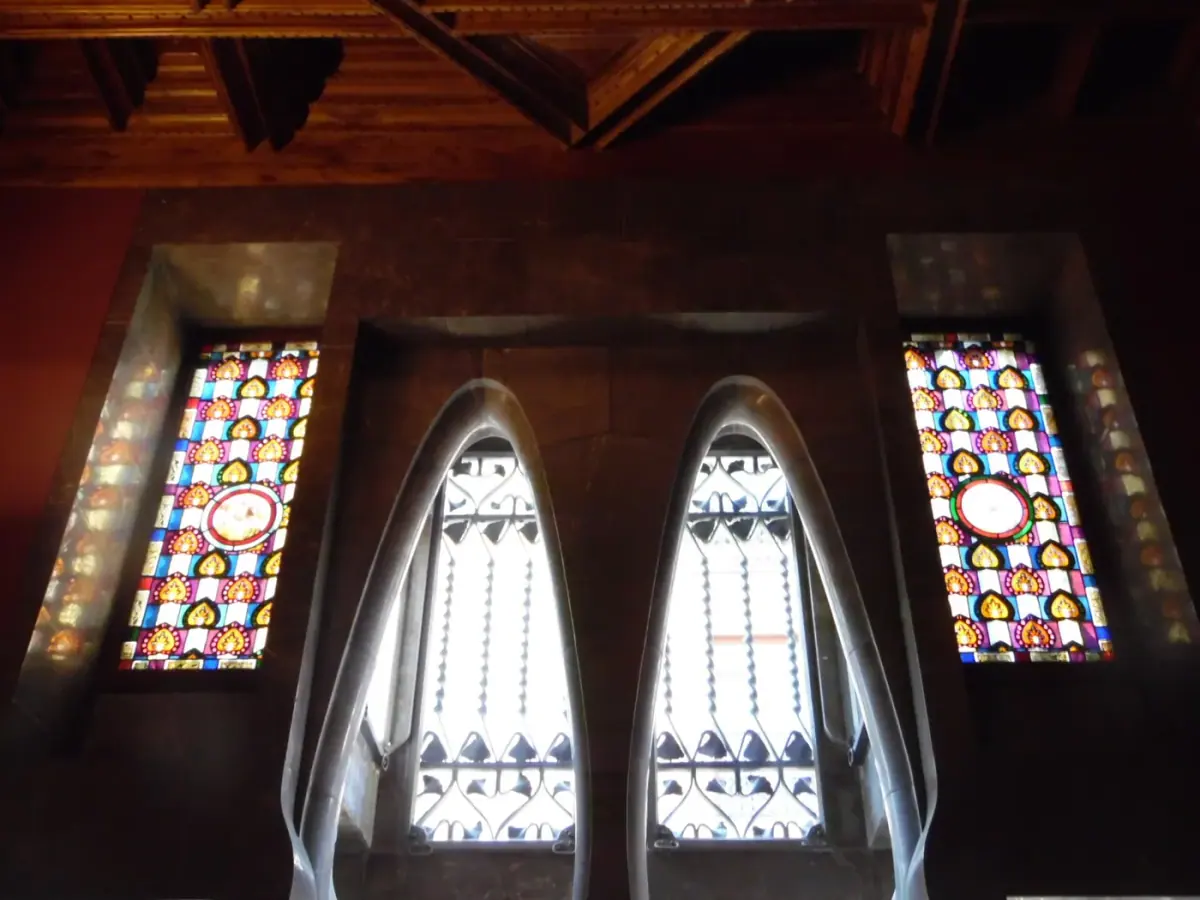

Unlike Eixample houses, Palau Güell offers a palace experience in tighter old-town fabric. The relationship between entrance, interior and upper levels underpins the visit. Check that sections differ in access and physical conditions.
Make it the family Raval and La Rambla day’s main interior. Splitting other Gaudí houses by area instead of completing them all that day reduces unnecessary travel. Information source.
Why go? Gaudí’s early palace for the Güell family becomes a fairy-tale world on its roof with colourful mosaic chimneys. One of the first major demonstrations of his genius.
Visit summary
- Area: Raval and La Rambla
- Highlight: Gaudí palace in the old town
- Suggested visit length: About 60–90 minutes
- Type of visit: Indoors / exterior view
- Admission: Paid admission · about €15 per adult.
- Nearby map stops: Los Tarantos, Plaça Reial
- Open map: Search for this place on Google Maps
Los Tarantos
Although labelled a museum on the map, Los Tarantos is a flamenco venue, not a permanent exhibition. Plan timed performances rather than a building tour. Confirm programme, duration and child admission on the official business page.
Add it to a Plaça Reial walk if a suitable time is available. We add no review or rating because no personal assessment of a specific show was shared. Information source.
Why go? Short flamenco shows in a small Plaça Reial hall offer an intimate look at this passionate art. Their short length also suits families.
Visit summary
- Area: Raval and La Rambla
- Highlight: Flamenco performance experience
- Suggested visit length: Duration of the chosen session
- Type of visit: Ticketed show
- Admission: Paid admission · flamenco show ticket.
- Nearby map stops: Plaça Reial, Güell Palace (Palau Güell)
- Open map: Search for this place on Google Maps
Coast and Barceloneta
La Gamba Sculpture
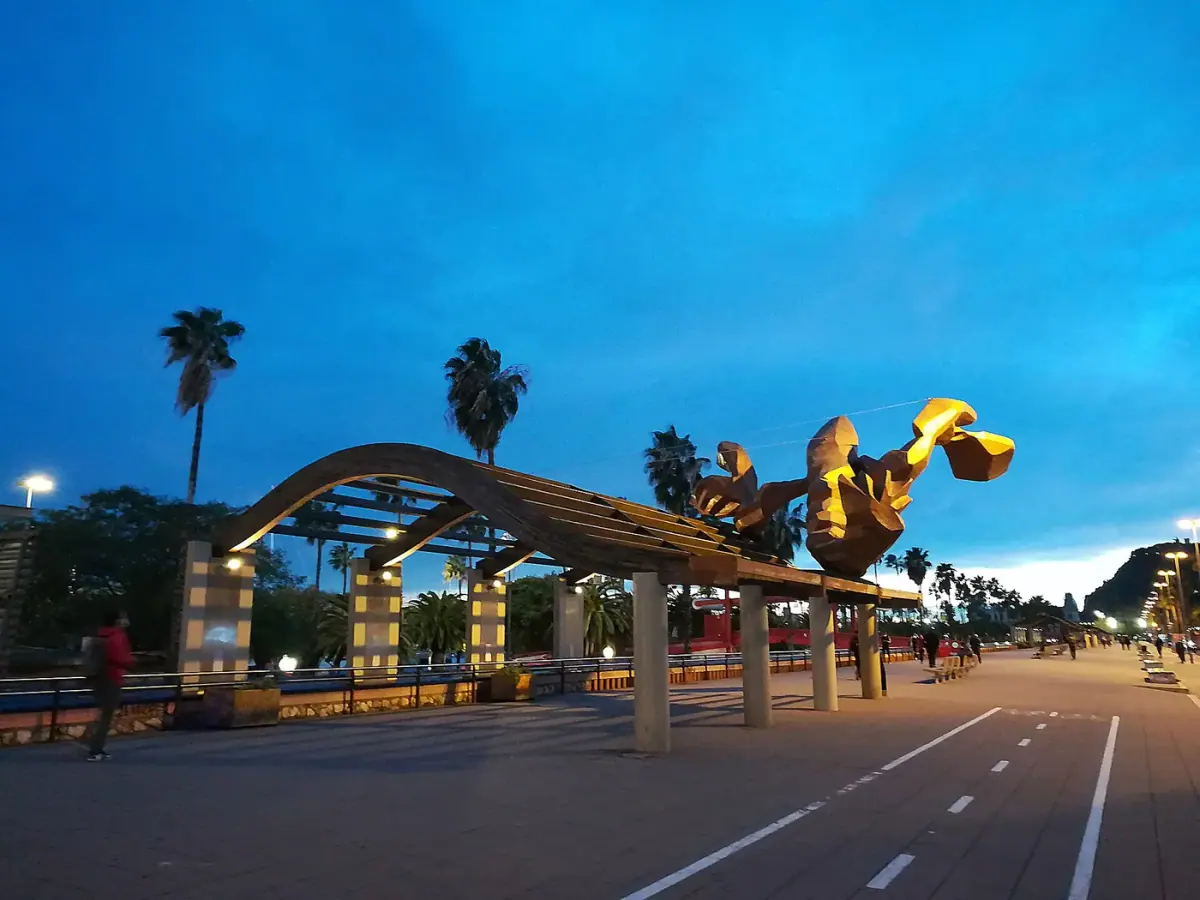

La Gamba replaces a grand waterfront monument with a humorous figure. Its shape and placement in everyday urban space make a brief visit. Treat it as public art seen while walking, not a museum or interior.
It helps break a family coastal route into small discoveries. Compare its location with Correus and the waterfront walk before adding it. Information source.
Why go? The huge smiling prawn on the harbour is a playful late-1980s city symbol. An odd, cheerful figure children often pose beside.
Visit summary
- Area: Coast and Barceloneta
- Highlight: Humorous waterfront public art
- Suggested visit length: About 10–15 minutes
- Type of visit: Exterior view
- Admission: Free (outdoors)
- Nearby map stops: Rambla de Mar, Christopher Columbus Monument
- Open map: Search for this place on Google Maps
Christopher Columbus Monument
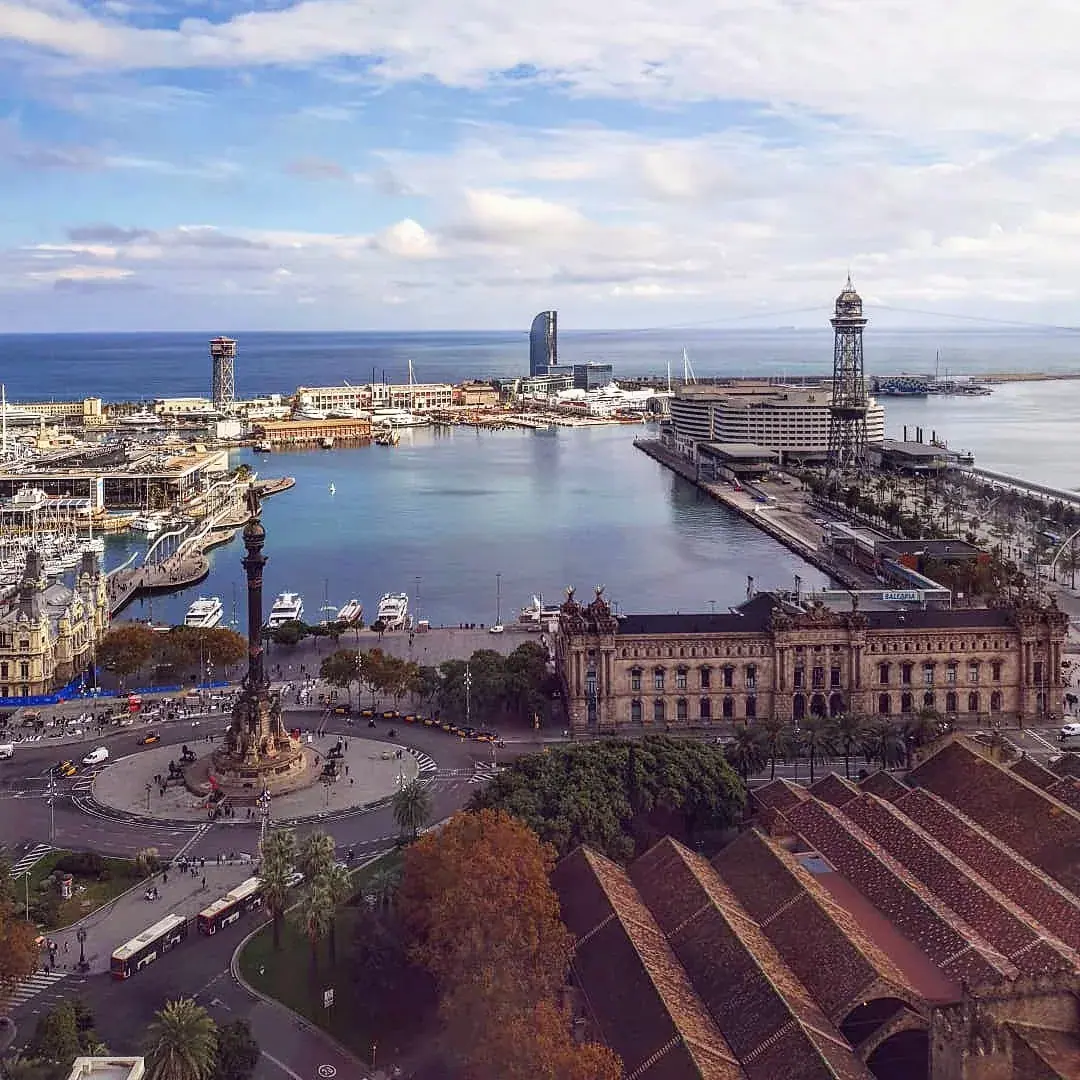

The Columbus Monument defines the perspective where La Rambla opens onto the sea. View column, figure and base together to understand scale. Confirm upper access is currently open and accessible; an exterior look needs none.
A short family coastal stop. Treat it as historical representation, without reducing all consequences of maritime journeys to heroism. Information source.
Why go? Columbus points towards the sea atop a 60-metre column; an internal lift offers harbour views. A landmark marking La Rambla’s seaward end.
Visit summary
- Area: Coast and Barceloneta
- Highlight: Monument at La Rambla’s coastal end
- Suggested visit length: About 15–25 minutes for the exterior
- Type of visit: Exterior view / ascent subject to access
- Admission: Exterior free; lift to upper viewpoint charges admission.
- Nearby map stops: Rambla de Mar, La Gamba Sculpture
- Open map: Search for this place on Google Maps
Gehry’s Fish Sculpture (El Peix)
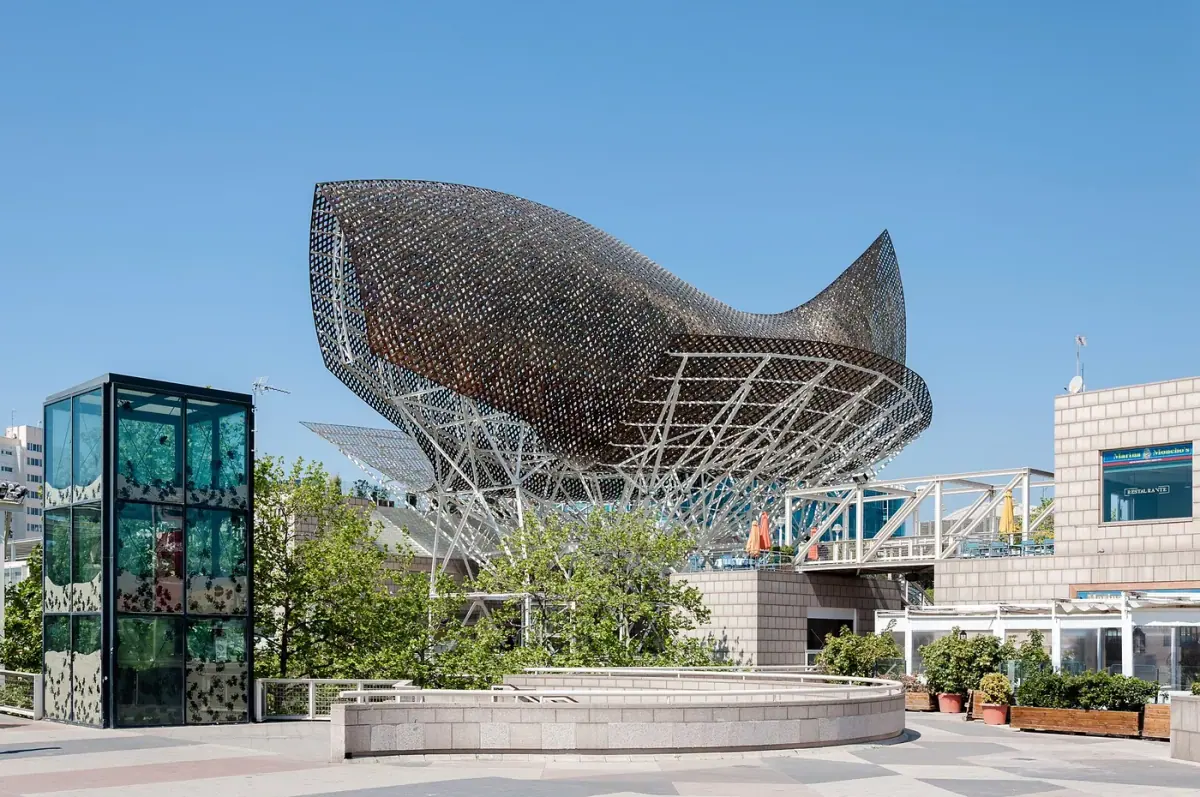

El Peix is Frank Gehry’s large metal fish on the coast. Observing changing light and its framework from several angles explains more than recognising the shape afar. It is not a museum to enter.
A tangible family design stop on a coastal walk. Compare its map location between Barceloneta and Poblenou; not all coast markers are a short distance apart. Information source.
Why go? Gehry’s enormous copper-coloured fish gleams in sunlight as an Olympic Port landmark. A striking point on the Barceloneta waterfront walk.
Visit summary
- Area: Coast and Barceloneta
- Highlight: Metal structure changing with light
- Suggested visit length: About 15–20 minutes
- Type of visit: Exterior view
- Admission: Free (outdoors)
- Nearby map stops: Barceloneta Beach, La Gamba Sculpture
- Open map: Search for this place on Google Maps
Barceloneta Beach
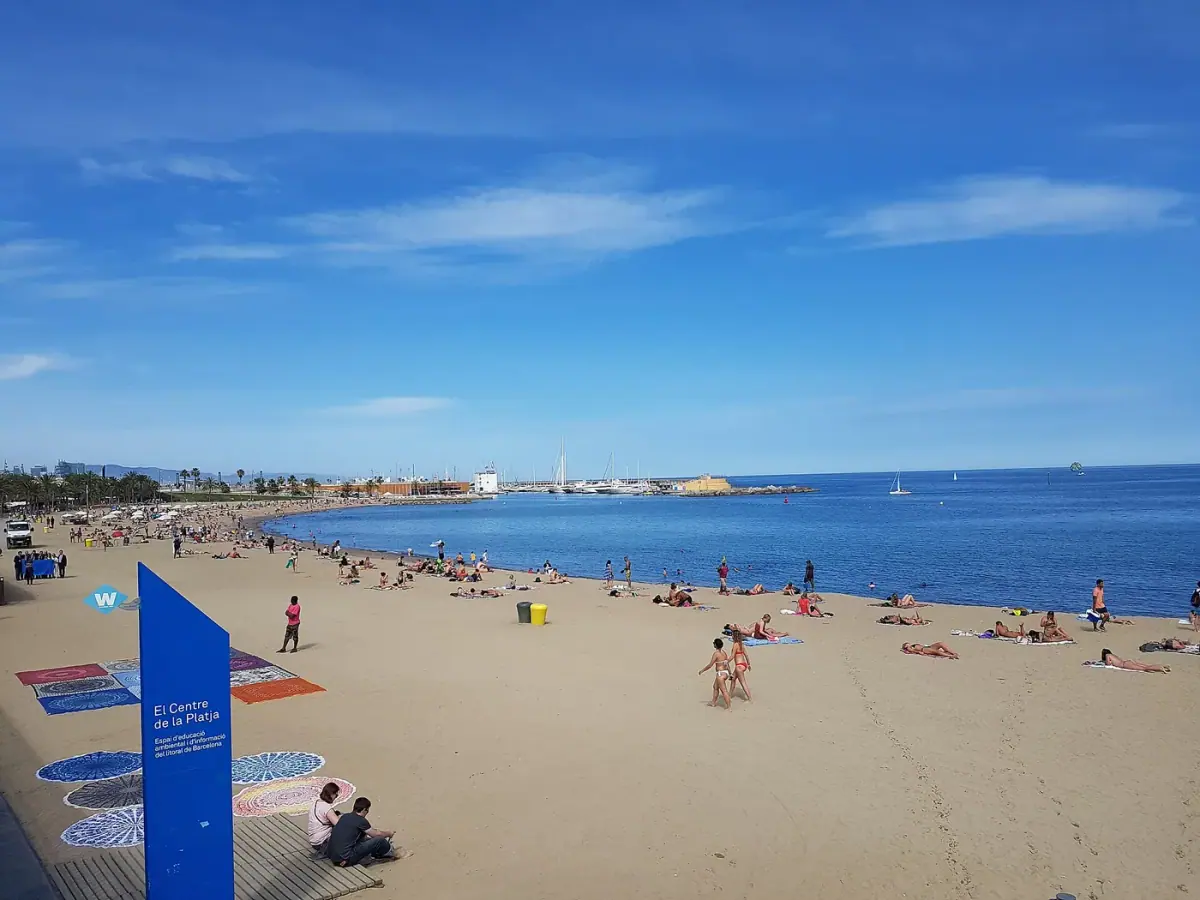

Visiting Barceloneta can mean seeing urban coastal use and seaside walkways, not only swimming. Beach conditions depend on season and weather; do not expect an identical sea day on every date. An outdoor branch changing the pace for families from the centre.
Build a selected coastal walk with Born or harbour surroundings. Make either the museum or long beach time the family day’s main focus rather than overloading it. Information source.
Why go? A long sandy beach within walking distance of the centre makes Barcelona both city and holiday destination. Sand and sea for children, a coastal paella break for adults.
Visit summary
- Area: Coast and Barceloneta
- Highlight: The old town’s seaward face
- Suggested visit length: About 45–90 minutes
- Type of visit: Outdoors / coastal walk
- Admission: Free (outdoors)
- Nearby map stops: La Gamba Sculpture, Gehry’s Fish Sculpture (El Peix)
- Open map: Search for this place on Google Maps
Rambla de Mar
Although Rambla de Mar can be seen as La Rambla’s waterfront continuation, the over-water pedestrian connection has its own experience. Harbour space, water and passage design replace façades as the focus. Weather and operating conditions may affect circulation.
Plan a short family coastal break via the Columbus Monument area. It need not be limited to reaching shopping facilities. Information source.
Why go? The undulating wooden pedestrian bridge over the old harbour leads to Maremagnum and the aquarium. A pleasant passage feeling like walking in the sea.
Visit summary
- Area: Coast and Barceloneta
- Highlight: Pedestrian link between city and harbour
- Suggested visit length: About 20–30 minutes
- Type of visit: Waterfront / passage walk
- Admission: Free (outdoors)
- Nearby map stops: Christopher Columbus Monument, La Gamba Sculpture
- Open map: Search for this place on Google Maps
Eixample and Modernist façades
Casa Rocamora
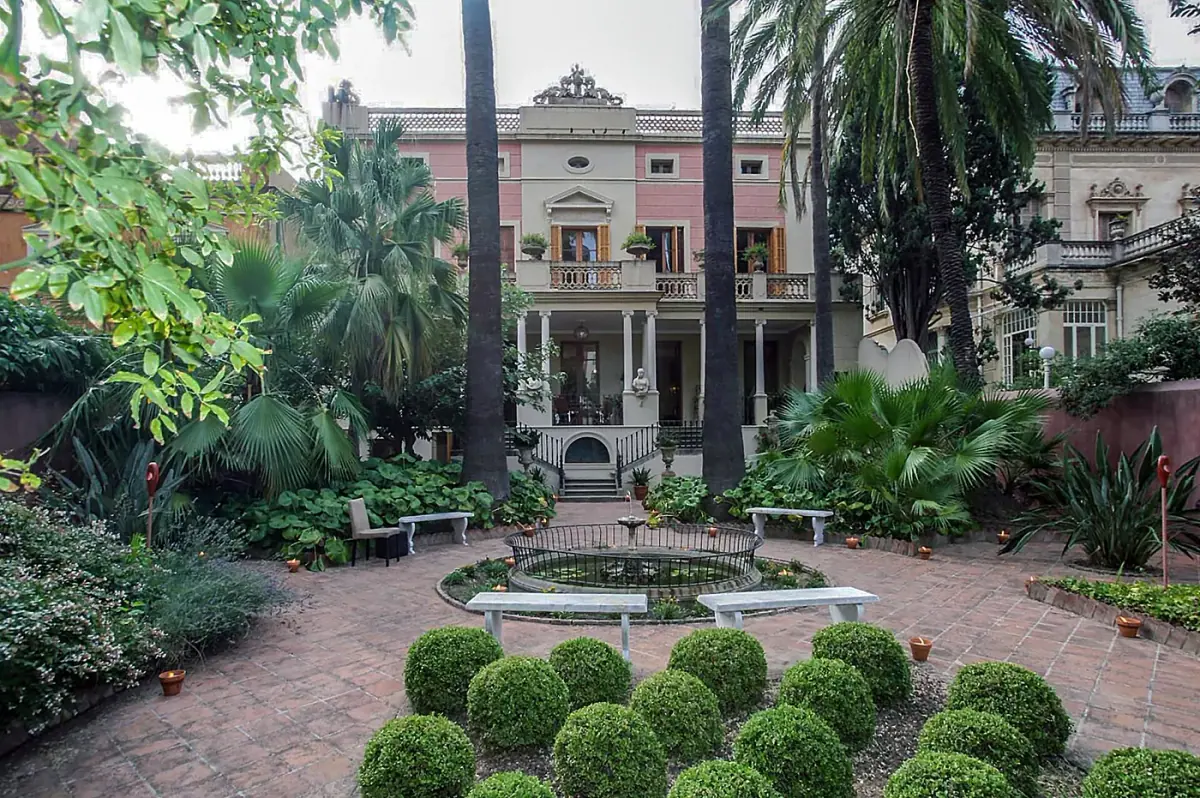

Casa Rocamora shows why looking up around Passeig de Gràcia is worthwhile. Examine its corner, balconies and rooflines together. Use the map location to avoid confusing the name with other collections or addresses.
A short family exterior observation suffices. Make it a small part of the walk, separate from time inside Casa Batlló or Milà. Information source.
Why go? The neo-Gothic corner building on Passeig de Gràcia resembles a castle with pointed towers. A façade not to miss among modernist buildings.
Visit summary
- Area: Eixample and Modernist façades
- Highlight: Central corner façade and roofline
- Suggested visit length: About 15–20 minutes
- Type of visit: Exterior view
- Admission: Free (exterior view)
- Nearby map stops: Passeig de Gràcia, Plaça de Catalunya
- Open map: Search for this place on Google Maps
University of Barcelona Historic Building
The university’s historic building adds education and public architecture to the city trip. Its façade, entrance and courtyard where open show students’ institutional use alongside tourism. Do not assume free access to classrooms or working areas.
Choose a short family architectural stop. Check conditions with the institution; an alternative broadening an Eixample walk beyond Gaudí. Information source.
Why go? The neo-Romanesque building’s courtyards and garden are open to everyone, offering calm in the busy centre. The magnificent Paraninfo hall shows the period’s grandeur.
Visit summary
- Area: Eixample and Modernist façades
- Highlight: Historic architecture in a living educational institution
- Suggested visit length: About 20–40 minutes
- Type of visit: Exterior view / open courtyards
- Admission: Courtyards and garden free.
- Nearby map stops: Plaça de Catalunya, Casa Rocamora
- Open map: Search for this place on Google Maps
Casa Sayrach
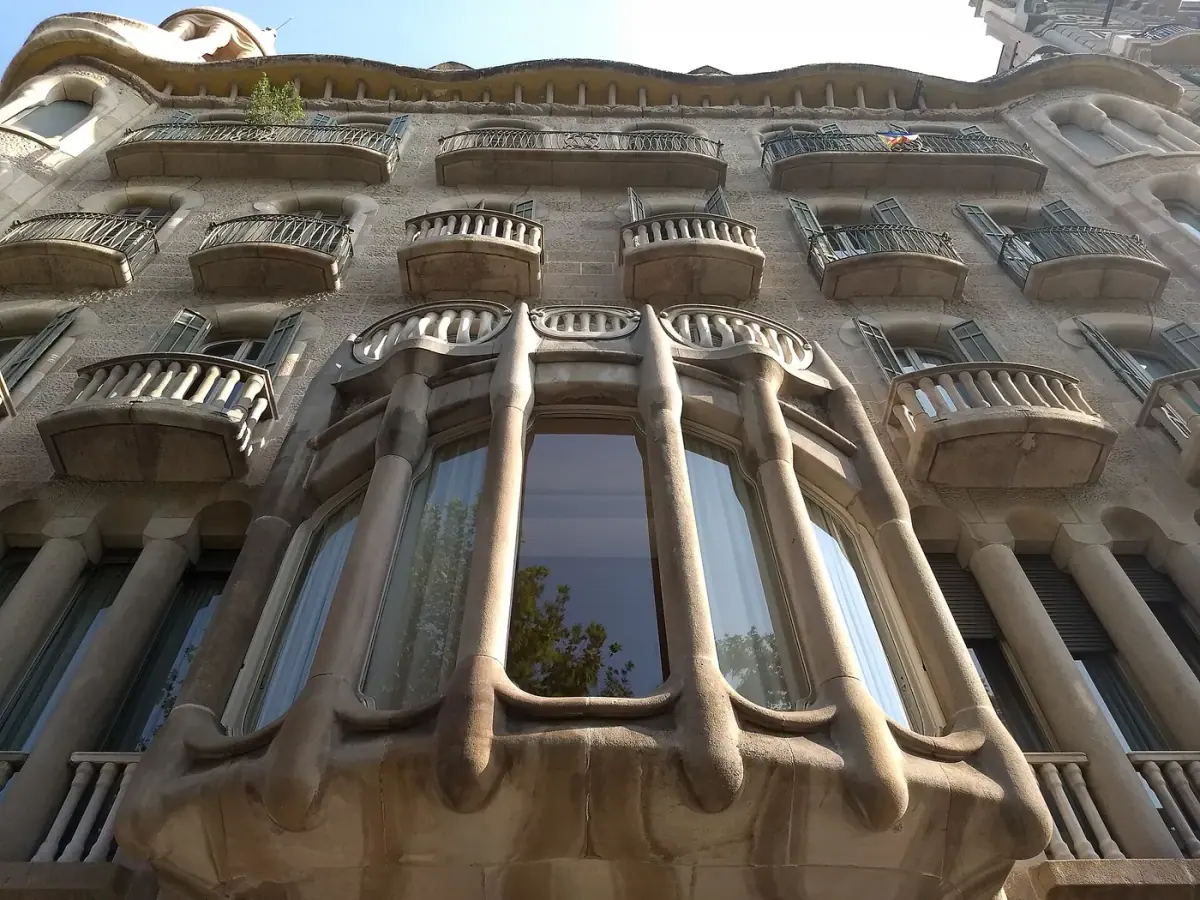

Casa Sayrach stands out on Diagonal for undulating surfaces and organic details. Although Gaudí’s influence appears, do not attribute it to him. View the corner tower, doorway and balconies in a brief exterior visit.
Compare façades without planning to enter every modernist house as a family. Do not assume residential or commercial spaces are freely accessible touring areas. Information source.
Why go? Its wavy Diagonal façade takes inspiration from Gaudí, with a fairy-tale corner tower. A lesser-known but photogenic Modernist example.
Visit summary
- Area: Eixample and Modernist façades
- Highlight: Organic lines on a late Modernist façade
- Suggested visit length: About 15–20 minutes
- Type of visit: Exterior view
- Admission: Free (exterior view)
- Nearby map stops: Casa Milà (La Pedrera), Casa Batlló
- Open map: Search for this place on Google Maps
Puríssima Concepció Church
Puríssima Concepció adds religious architecture among Eixample’s regular blocks. Compare its façade, calmer interior and courtyard where open. Church access differs from surrounding house museums’ ticket arrangements.
A short family interior look works. If already visiting several major buildings, the exterior may suffice; check worship access. Information source.
Why go? A medieval church and cloister moved stone by stone from the old town into Eixample. An unexpected Gothic oasis among modern buildings.
Visit summary
- Area: Eixample and Modernist façades
- Highlight: A different historical layer in Eixample
- Suggested visit length: About 20–40 minutes
- Type of visit: Indoors / exterior view
- Admission: Free
- Nearby map stops: Casa Amatller, Casa Batlló
- Open map: Search for this place on Google Maps
Plaça de Catalunya
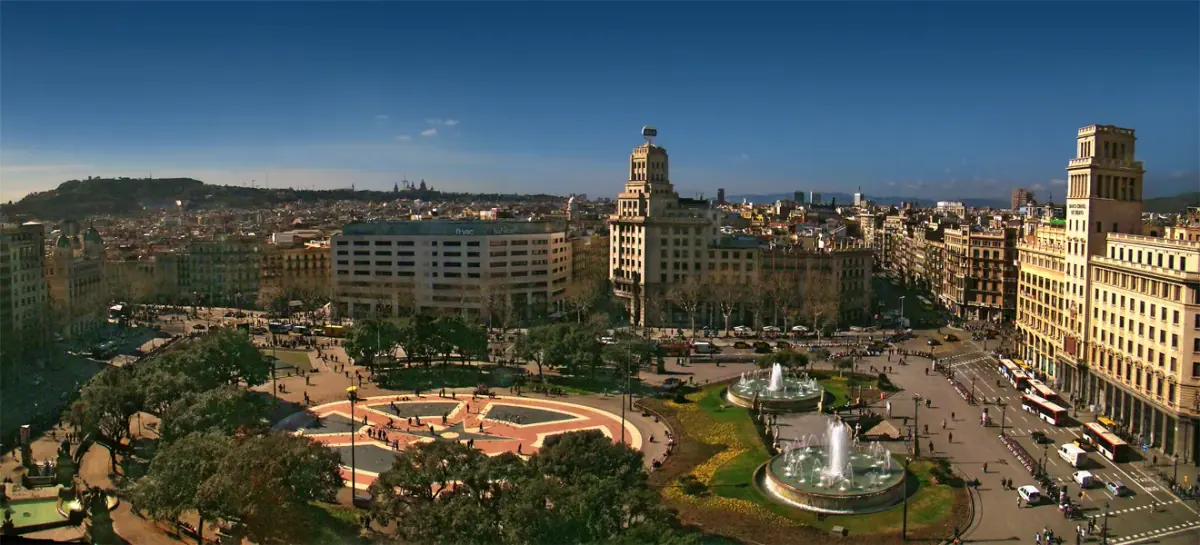

Plaça de Catalunya is where you change direction between old-town streets and Eixample’s broad avenues. Use it as a threshold joining routes rather than one monument. Façades and open-space scale reveal this transition.
Take a short family pause and choose the next area. There is no obligation to walk Passeig de Gràcia and La Rambla in one go. Information source.
Why go? This enormous square linking old town and Eixample is Barcelona’s centre, with pigeons and sculptures. Almost every route starts or crosses here.
Visit summary
- Area: Eixample and Modernist façades
- Highlight: Threshold between old town and broad avenues
- Suggested visit length: About 15–30 minutes
- Type of visit: Outdoors / square walk
- Admission: Free (outdoors)
- Nearby map stops: Passeig de Gràcia, Casa Rocamora
- Open map: Search for this place on Google Maps
Passeig de Gràcia
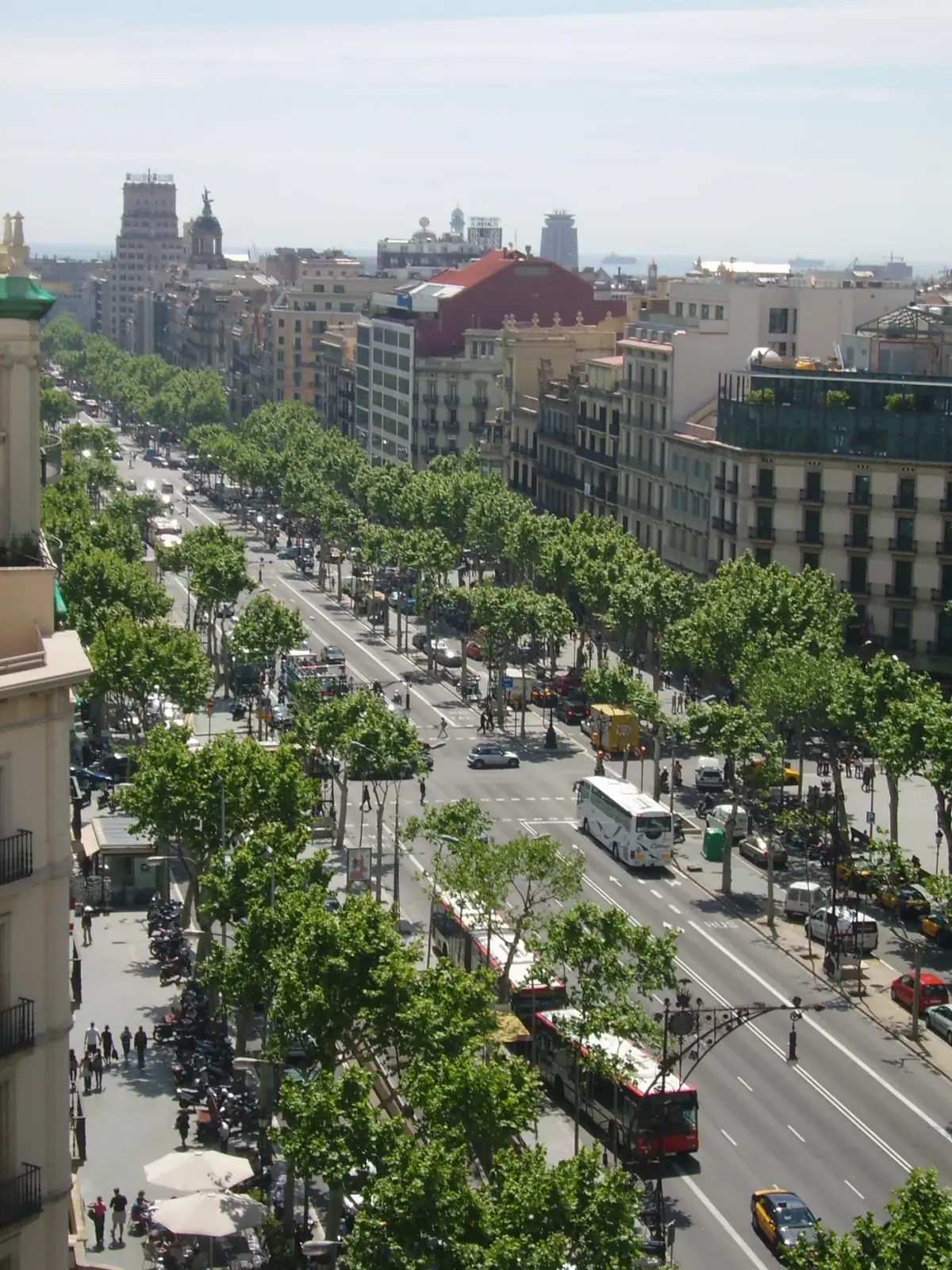

Consider Passeig de Gràcia a façade and urban-design walk, not only shops. Ordering Batlló, Amatller and Milà geographically reduces backtracking. Look at upper floors and rooflines.
Balance one family house interior with exterior comparisons of the others. Avenue time excludes long house tours. Information source.
Why go? An elegant boulevard lined with famous Modernist buildings including Gaudí’s Casa Batlló and La Pedrera. Even the marine-pattern pavement tiles are Gaudí’s design.
Visit summary
- Area: Eixample and Modernist façades
- Highlight: Grand urban axis linking Modernist houses
- Suggested visit length: About 45–75 minutes for a selected section
- Type of visit: Avenue walk
- Admission: Free (outdoors)
- Nearby map stops: Casa Rocamora, Plaça de Catalunya
- Open map: Search for this place on Google Maps
Casa Batlló
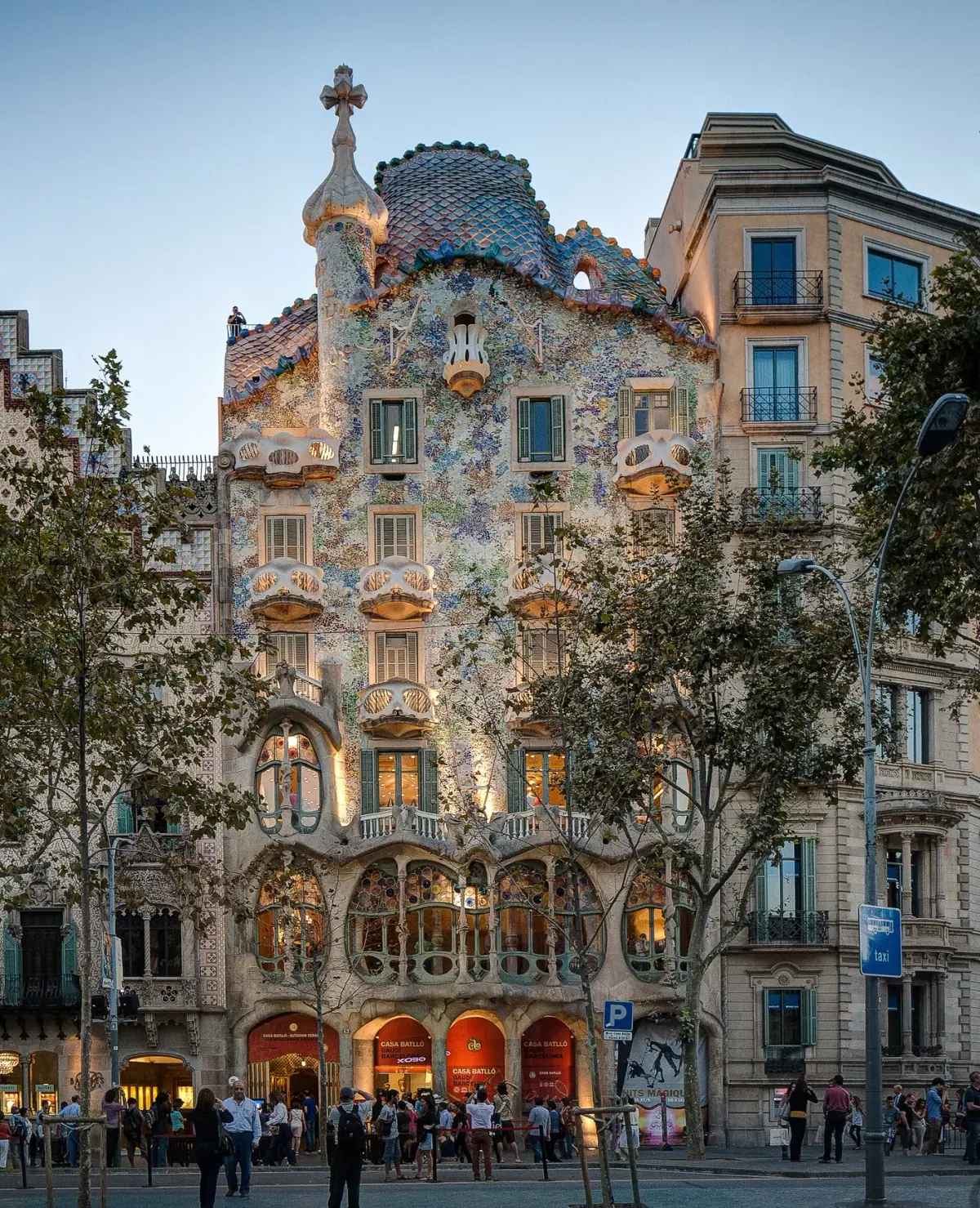

Casa Batlló’s colourful organic façade begins the light and circulation design inside. Seeing the exterior and touring rooms are separate experiences; choose official ticket coverage for areas and presentations. Different visit types do not all contain the same content.
Read the building through shapes with children: ask how windows, doors or stairs differ from familiar forms. Choose one main residential visit rather than entering Milà and every other house that day. Neighbouring Amatller is a separate building by another architect. Information source.
Why go? Gaudí’s most fairy-tale house, with a dragon-back roof, bone-like balconies and an underwater-inspired interior. The smart-tablet tour gives children a magical-world experience.
Visit summary
- Area: Eixample and Modernist façades
- Highlight: Gaudí’s residential design
- Suggested visit length: About 75–120 minutes
- Type of visit: Indoors / exterior view
- Admission: Paid admission · about €29–35 per adult (cheaper online). Under-12s free.
- Nearby map stops: Casa Amatller, Puríssima Concepció Church
- Open map: Search for this place on Google Maps
Casa Milà (La Pedrera)
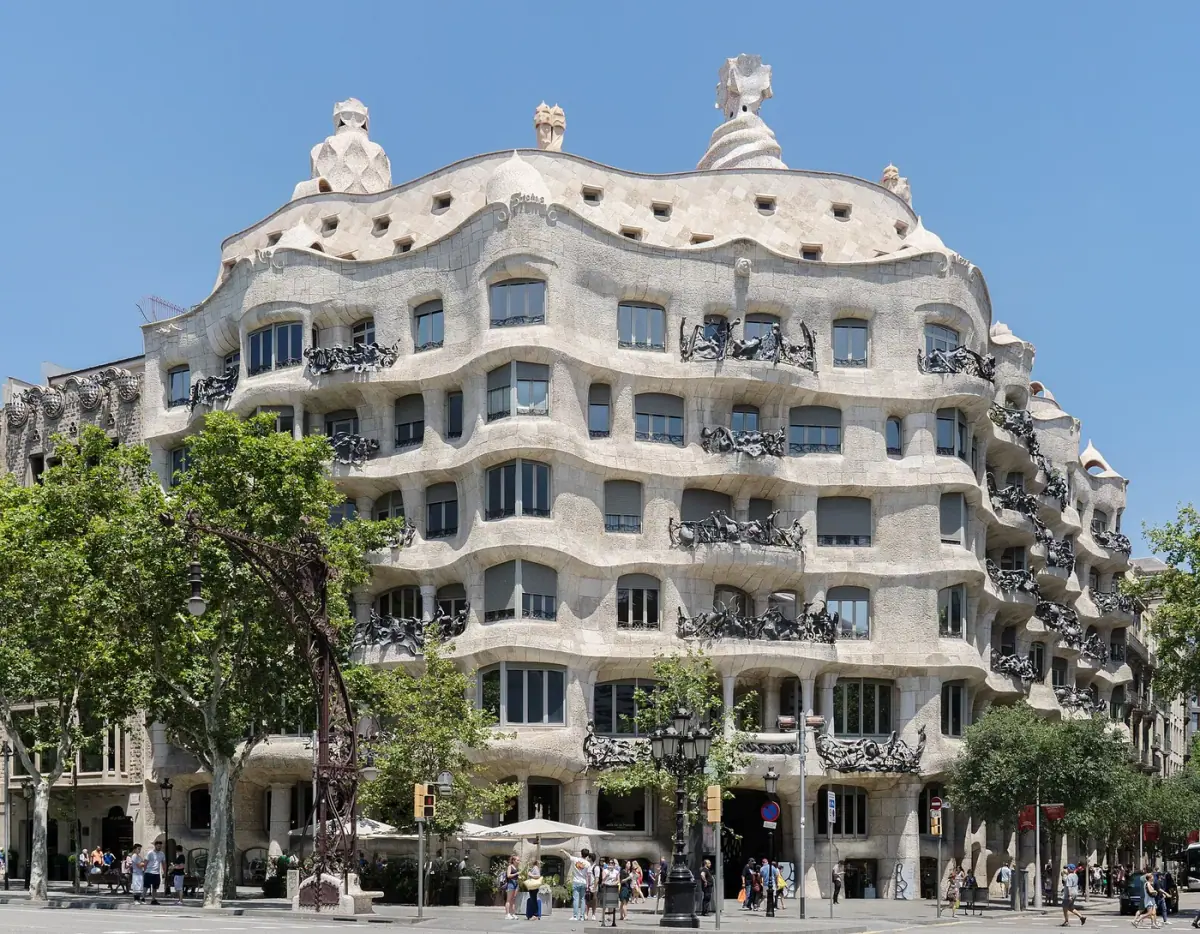

Casa Milà’s undulating exterior shows how a residence relates to the city frontage. Courtyard, apartment and upper-level coverage depends on the programme; access conditions differ. Even an exterior look allows comparison with Batlló.
Consider interest and your child’s pace when choosing one main house interior. Verify rooftop or special-programme age and mobility conditions officially. Pair it with outdoor time on Passeig de Gràcia. Information source.
Why go? An unforgettable quarry-like wavy façade and rooftop chimneys resembling warriors’ heads. A must for seeing Gaudí turn an apartment building into sculpture.
Visit summary
- Area: Eixample and Modernist façades
- Highlight: Undulating stone façade and domestic architecture
- Suggested visit length: About 75–120 minutes
- Type of visit: Indoors / exterior view
- Admission: Paid admission · about €28–29 per adult; child discounts available.
- Nearby map stops: Puríssima Concepció Church, Casa Batlló
- Open map: Search for this place on Google Maps
Casa Amatller
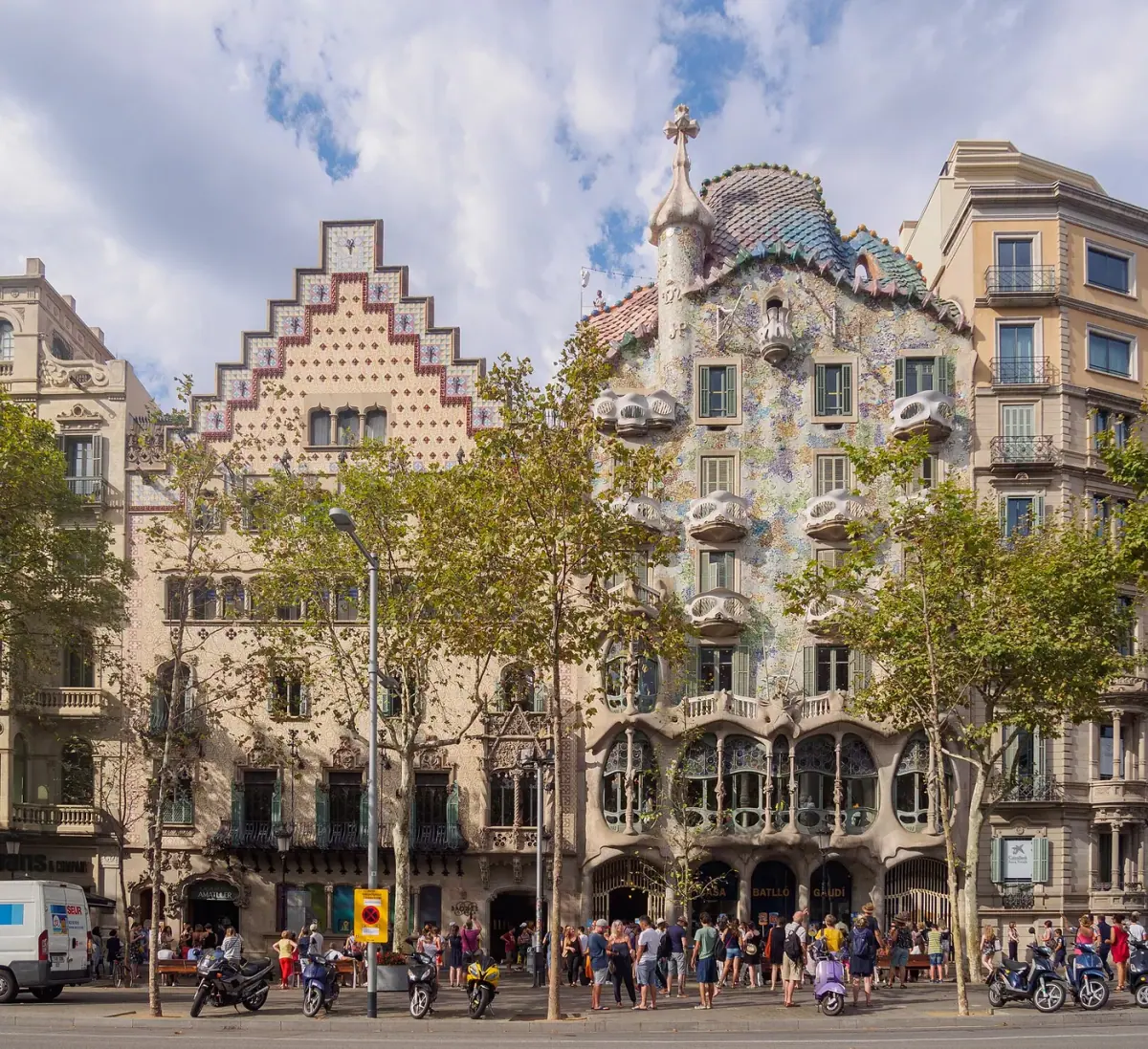

Casa Amatller is beside Batlló but neither the same building nor the same architect’s work. Comparing roofline, façade and decoration shows Modernism is not one form. Even a short exterior comparison is meaningful.
Check its own programme if entering; do not assume neighbouring tickets cover it. Choosing one interior may be easier than consecutive family house tours. Information source.
Why go? Its stepped Flemish-style façade beside Batlló forms part of the Block of Discord. A chocolate family’s home, with a ground-floor chocolate shop sweetening the visit.
Visit summary
- Area: Eixample and Modernist façades
- Highlight: Different Modernism beside Gaudí’s house
- Suggested visit length: About 15 minutes for the exterior; including the interior 60 minutes
- Type of visit: Exterior view / scheduled interior visit
- Admission: Paid admission · guided tours only.
- Nearby map stops: Casa Batlló, Puríssima Concepció Church
- Open map: Search for this place on Google Maps
Gaudí and the northeast
Plaça de Gaudí
Plaça de Gaudí opposite Sagrada Família offers a wider view of the building. Treat it as a separate outdoor stop rather than one entrance included in the basilica interior visit. Study the view combining water, trees and architecture.
A short family break before a reserved time or outdoor pause afterwards. The square does not replace ticketed basilica areas, but complements understanding the exterior. Information source.
Why go? The best place for Sagrada Família’s reflection in the pond. A break where children play before or after the basilica.
Visit summary
- Area: Gaudí and the northeast
- Highlight: Understanding Sagrada Família from outside
- Suggested visit length: About 20–40 minutes
- Type of visit: Outdoors / square walk
- Admission: Free (outdoors)
- Nearby map stops: Sagrada Família, La Monumental Arena
- Open map: Search for this place on Google Maps
Sagrada Família
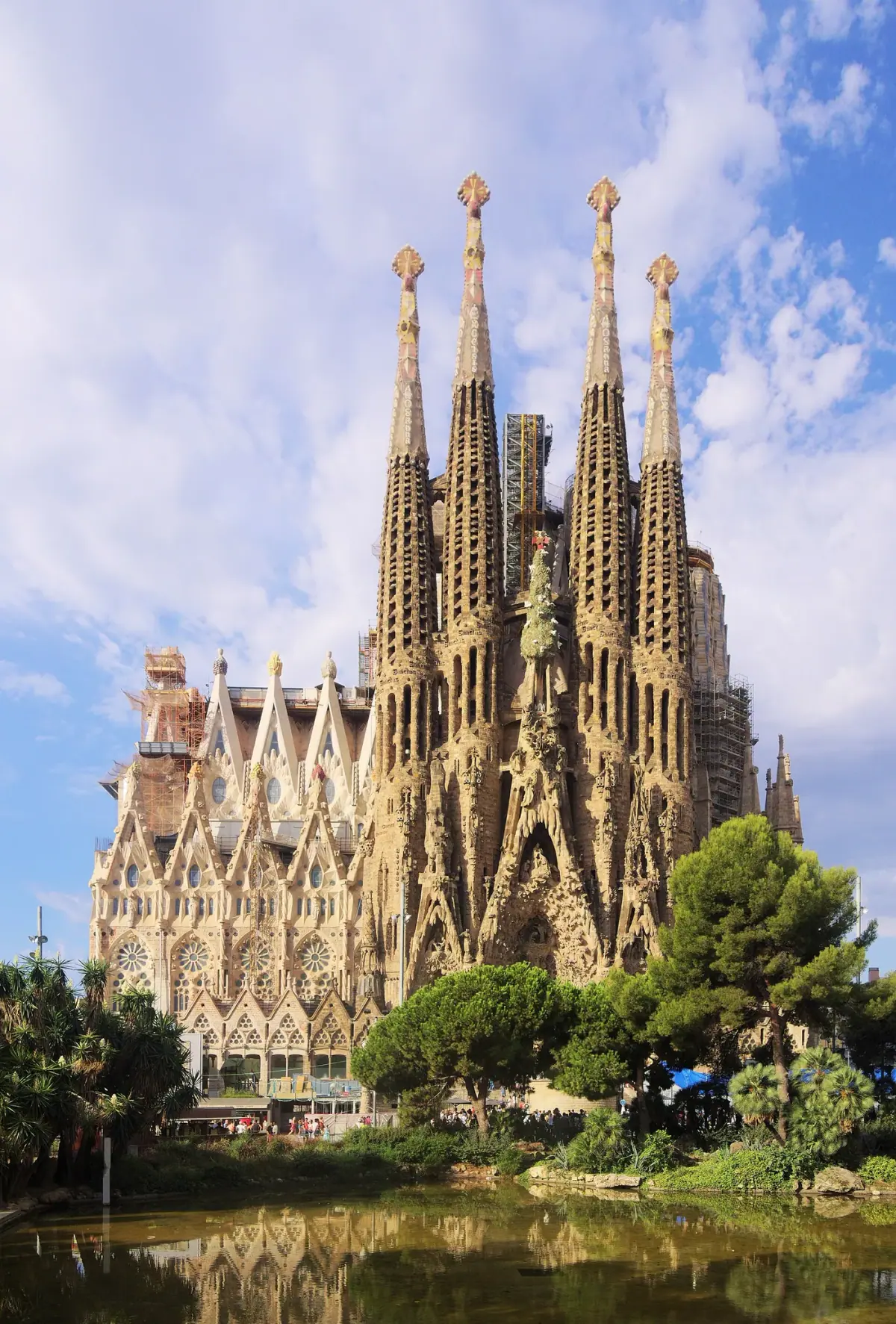

Sagrada Família’s façade narratives and interior light and supports offer different experiences. Seeing its faces before entering allows comparison instead of repeatedly viewing one façade. Inside, a few details can work better than decoding every symbol.
Select an official ticket type and time for a family visit. Tower access may have different physical and age conditions from general basilica entry; do not assume inclusion. An outdoor break in Plaça de Gaudí afterwards is easier than rushing to a second major museum. Information source.
Why go? Gaudí’s masterpiece, under construction for over 140 years, is among the world’s most visited buildings. Tree-like branching columns and stained-glass colour enchant everyone inside.
Visit summary
- Area: Gaudí and the northeast
- Highlight: Light, structure and symbolic architecture
- Suggested visit length: About 90–120 minutes
- Type of visit: Indoors / exterior view
- Admission: Paid admission · about €26 per adult (official site, audio guide included); about €36 with tower. Under-11s free. Book ahead.
- Nearby map stops: Plaça de Gaudí, La Monumental Arena
- Open map: Search for this place on Google Maps
La Monumental Arena
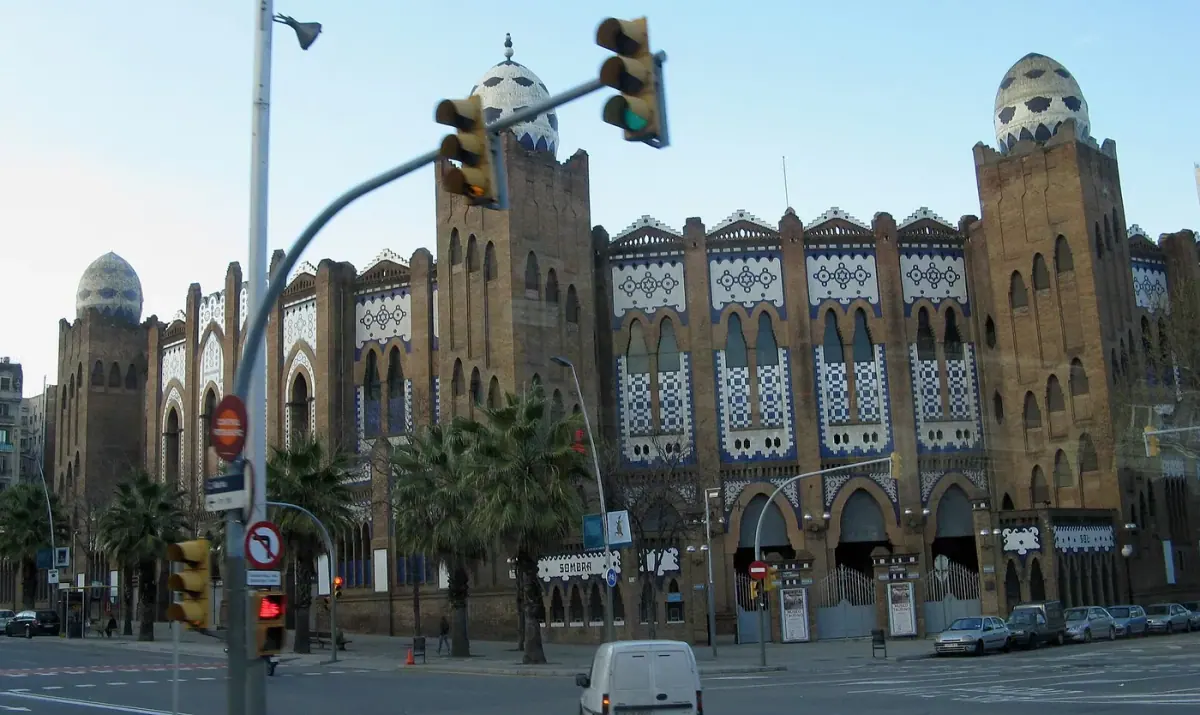

La Monumental offers circular arena architecture and decorative façades. We discuss architecture and cultural history rather than recommending bullfighting. Current uses and open areas depend on the programme.
Keep it to a short family exterior look. Account for total walking and indoor time when adding it to the northeastern Sagrada Família branch. Information source.
Why go? A former bullring with egg-shaped towers decorated in Moorish-style ceramics. With no bullfighting here since 2011, its architecture is now the attraction.
Visit summary
- Area: Gaudí and the northeast
- Highlight: Arena architecture
- Suggested visit length: About 20–45 minutes
- Type of visit: Exterior view / interiors subject to programme
- Admission: Free (exterior view)
- Nearby map stops: Plaça de Gaudí, Sagrada Família
- Open map: Search for this place on Google Maps
Sant Pau Modernist Site
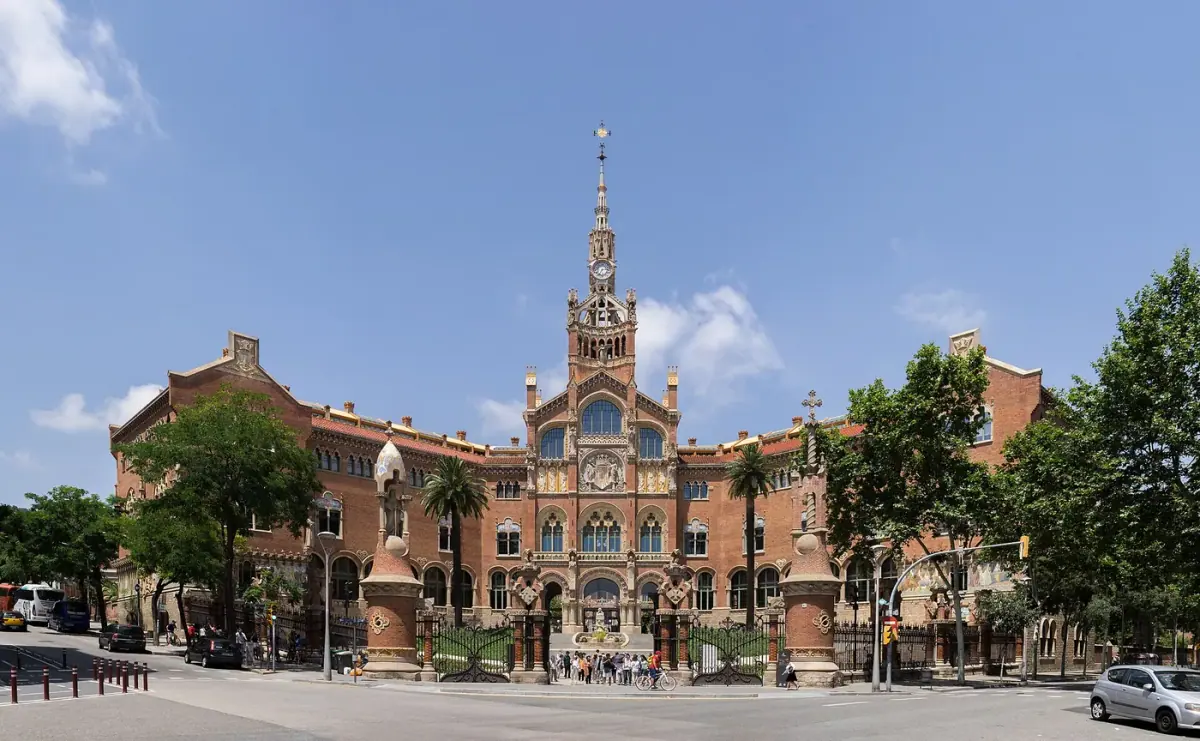

Unlike a single house façade, Sant Pau is a healthcare-designed complex. Open spaces and circulation show how architecture organises daily life. Open pavilions and exhibitions can vary by date.
Combine one family interior with a garden walk. Though geographically linked to Sagrada Família, fully visiting both takes time; choose a main focus according to your child’s pace. Information source.
Why go? Buildings worthy of being called the world’s most beautiful hospital, with colourful domes, mosaics and gardens. A UNESCO-listed Modernist masterpiece without Sagrada Família’s crowds.
Visit summary
- Area: Gaudí and the northeast
- Highlight: Architecture and gardens in a healthcare complex
- Suggested visit length: About 90–120 minutes
- Type of visit: Indoors / outdoors
- Admission: Paid admission · about €17 per adult.
- Nearby map stops: Plaça de Gaudí, Sagrada Família
- Open map: Search for this place on Google Maps
Poblenou: a separate coastal branch
Rambla del Poblenou
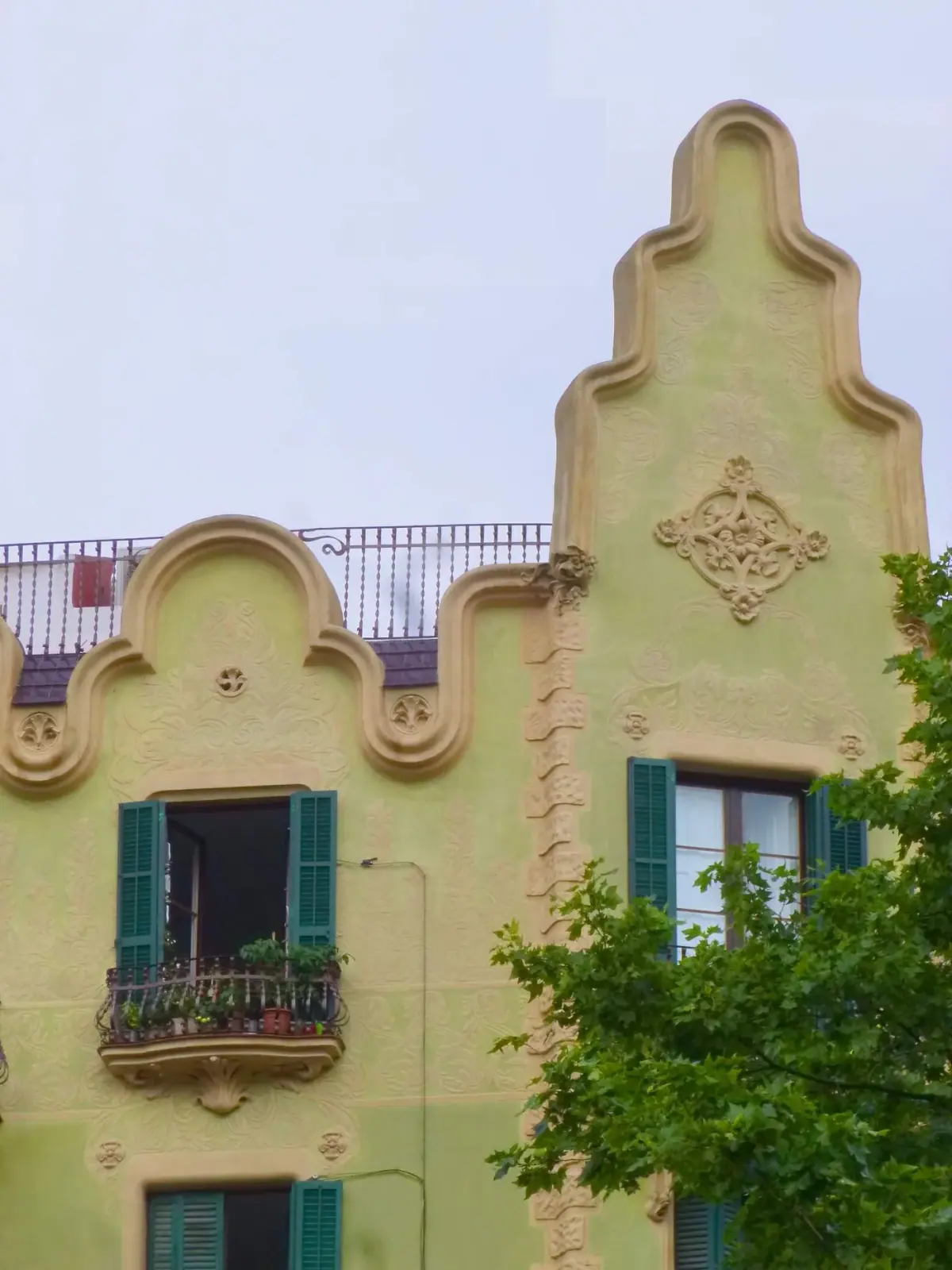

Rambla del Poblenou is not La Rambla but a different neighbourhood branch. Street rhythms, open space and everyday life replace monument hunting. Walking a selected stretch suffices rather than treating it as one building marker.
Complete a family coastal day with a neighbourhood walk. It is not a short old-town side street; plan transport and return separately. Information source.
Why go? The former industrial neighbourhood’s tree-lined pedestrian street has local cafés and calm away from tourist crowds. A lovely starting point for walking to the beach.
Visit summary
- Area: Poblenou: a separate coastal branch
- Highlight: Neighbourhood life beyond the coast
- Suggested visit length: About 30–60 minutes
- Type of visit: Neighbourhood walk
- Admission: Free (outdoors)
- Nearby map stops: There are no other stops in this area on this map; plan a separate visit.
- Open map: Search for this place on Google Maps
Gràcia and northern parks
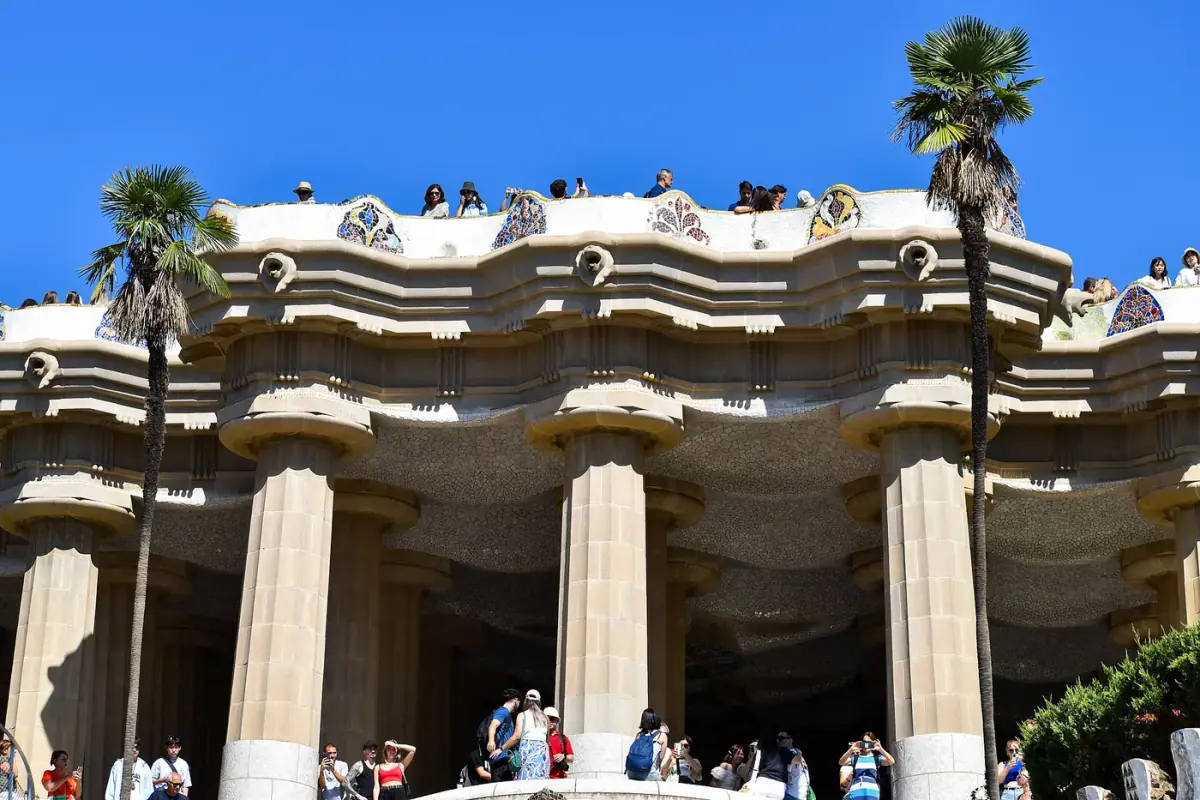
Park Güell
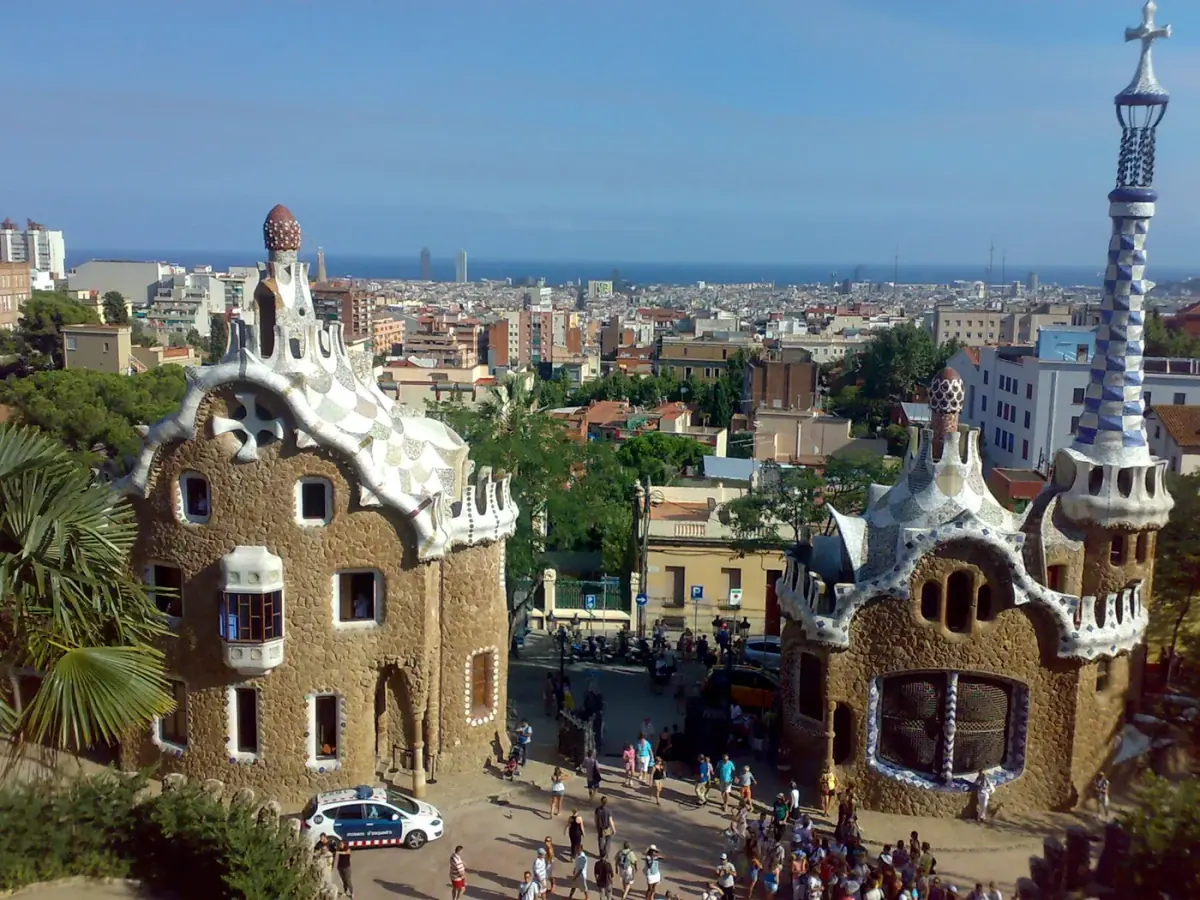

Park Güell is more than a green park or one mosaic bench; paths, structures and views are designed together. Observe connections between buildings, slope and different levels. The famous photographed terrace differs from the park’s full circulation.
Select a family route accounting for slopes, stairs and weather. Check official tickets and entrances ahead. A long Sagrada Família interior need not share the day; pairing Casa Vicens on a northern branch is another interest-based choice. Information source.
Why go? Gaudí’s mosaic dragon, fairy-tale gatehouses and wavy city-facing bench make Barcelona’s most cheerful place. A park where children meet his colourful world directly.
Visit summary
- Area: Gràcia and northern parks
- Highlight: Gaudí’s architecture within the landscape
- Suggested visit length: About 90–150 minutes
- Type of visit: Ticketed outdoors / architectural visit
- Admission: Paid admission · about €18 per adult; ages 7–12 reduced, under-7s free. Book timed tickets ahead.
- Nearby map stops: Casa Vicens
- Open map: Search for this place on Google Maps
Casa Vicens
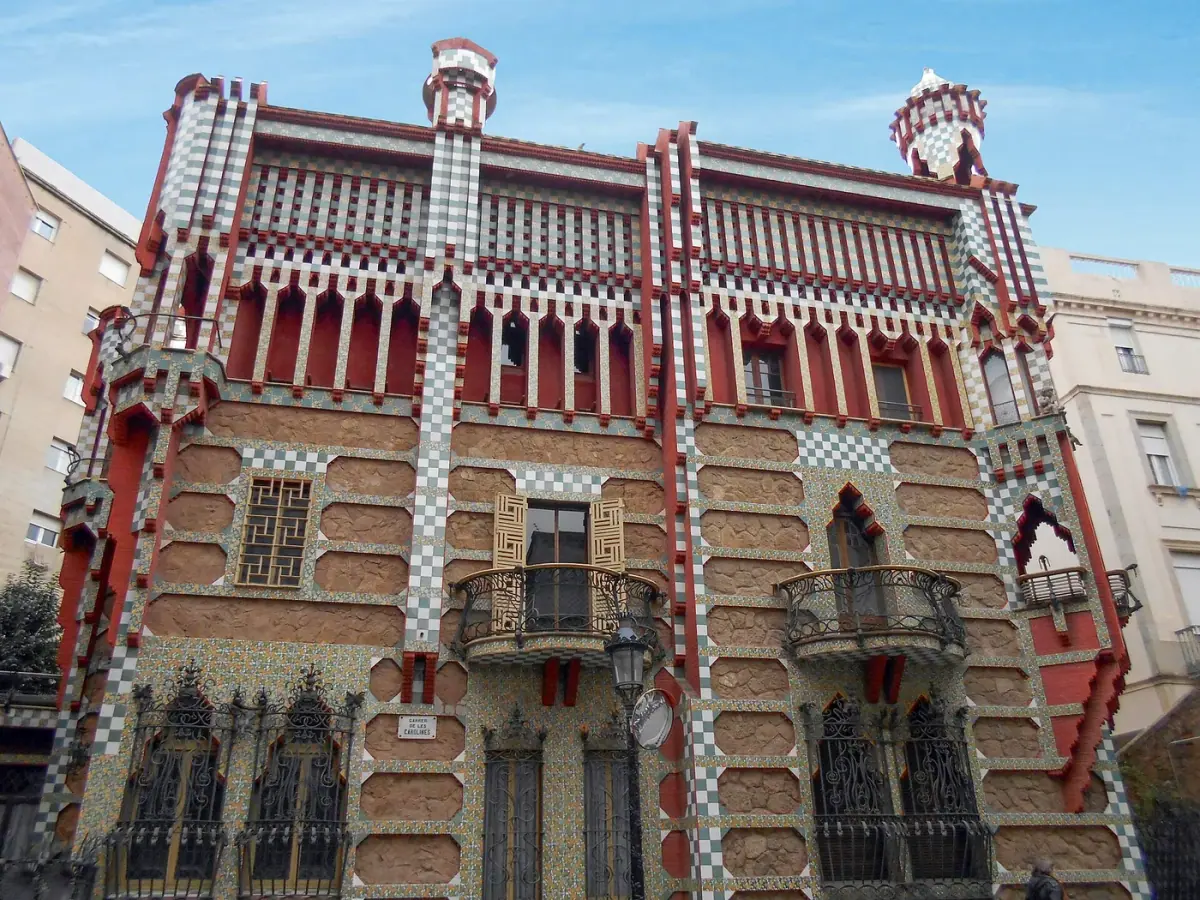

Casa Vicens adds a different period and material language of Gaudí on the northern branch. Comparing colours, surfaces and geometry with Batlló or Milà shows that his houses do not all look alike. Choose interior coverage and entry time officially.
Plan one main family house visit. If combining Park Güell, account for slopes and total duration; the addresses are not one entrance. Information source.
Why go? Gaudí’s first major house foreshadows later works with colourful tiles and Moorish decoration. A quieter Gaudí experience in Gràcia’s calm streets.
Visit summary
- Area: Gràcia and northern parks
- Highlight: One of Gaudí’s early houses
- Suggested visit length: About 60–90 minutes
- Type of visit: Indoors / exterior view
- Admission: Paid admission.
- Nearby map stops: Park Güell
- Open map: Search for this place on Google Maps
Pedralbes: a separate cultural route
Pedralbes Monastery
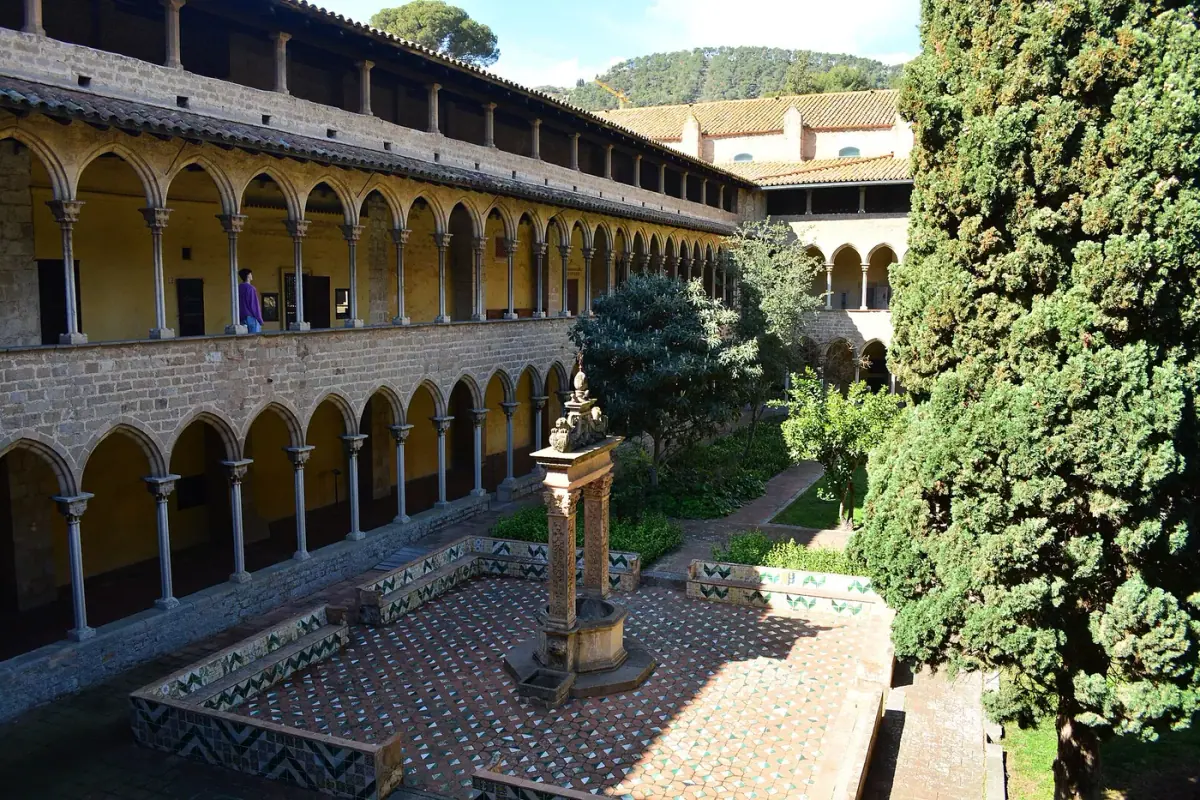

Pedralbes offers a fuller visit around monastic organisation and a courtyard than the centre’s narrow-street churches. The relation of rooms and open space encourages thinking about past daily life through architecture.
Choose a calmer family cultural day, but it is not within the old town’s short walking loop. Allow separate travel and time from the centre; check official museum access and tickets. Information source.
Why go? The fourteenth-century monastery above the city has one of Europe’s finest three-storey Gothic cloisters. Its quiet garden and nuns’ cells feel suspended in time.
Visit summary
- Area: Pedralbes: a separate cultural route
- Highlight: Monastic life and Gothic architecture
- Suggested visit length: About 60–90 minutes
- Type of visit: Indoors / courtyard
- Admission: Paid admission · about €5; free Sunday afternoons.
- Nearby map stops: There are no other stops in this area on this map; plan a separate visit.
- Open map: Search for this place on Google Maps
Food and drink stops
We tried each of the five Barcelona food and drink stops on the map. Sercotel Rosellón is a hotel marker, so we do not present it as an independent restaurant; check current terrace or dining reservation conditions with the business.
The list below keeps the map’s food and drink choices separate. Menus, prices, opening times and booking conditions can change; check the linked business listing and its own page before visiting. The order here is not a quality ranking.
| Place | Known for | Average price (per person) | Location |
|---|---|---|---|
| Irati Taverna Basca Nearby stop: La Rambla | Basque pintxos (paid by counting toothpicks) | ~€10–25 | Open map |
| Ciutat Comtal Nearby stop: Casa Rocamora | Busy tapas bar; montaditos and seafood | ~€10–25 | Open map |
| The Benedict Brunch Nearby stop: Correus Post Office Building | Eggs Benedict varieties and brunch | ~€10–25 | Open map |
| Sercotel Rosellón Nearby stop: Sagrada Família | A hotel; rooftop views of Sagrada Família | ~€10–25 | Open map |
| La Pallaresa Xocolateria Xurreria Nearby stop: Carrer de Petritxol | Thick hot chocolate and churros (xocolata amb xurros) | Up to ~€10 | Open map |
Open the food plan separately: filter by area and search places →
Other markers on the map
I have kept these points as part of the list too; distinguishing their functions from sightseeing stops makes the plan clearer.
- Building – Galeria Maxó: Galeria Maxó is an art gallery/business marker; kept separate as exhibition and sales space, without assuming a particular artwork or workshop experience. Open map.
Sources and visitor information
Plan Sagrada Família, Park Güell and major Gaudí houses according to dates, times and access on official ticket pages. Montjuïc fountain shows can change with maintenance and water management; no fixed evening time is given below. Tower and rooftop access can differ from a building’s general accessibility. Distinguish tourist entry and worship access in religious buildings.
The selection of stops comes from a personal My Maps map. Information sources appear in the relevant paragraphs. Individual location links are Google Maps searches using place names. Nearby pairings are based on map locations; check actual walking routes on the map.
- Personal Barcelona map
- Barcelona official tourism website
- Barcelona City Council
- Sagrada Família
- Park Güell
Where we stayed
We stayed at an Ibis hotel on our Barcelona trip.
Browse Barcelona hotels and apartments on Booking.com. With children, we recommend checking walking distance to the centre, a lift and family room options.
Our travel map
The personal map behind this guide’s stops. Toggle layers to explore sights and any food and drink markers separately.